Chapter Summaries

Introduction

This chapter describes the objective of the book, and explains its contents.

“Given the challenges facing higher education today, we aim to offer the reader a theoretical foundation in the form of the theory of transactional distance and a practical method in system dynamics to systemically and systematically envision and implement a desirable plan for the future of the institution in which they serve.”


Chapter One: Conceptual Framework

This chapter establishes the theory of transactional distance as the foundation for the book and describes the methods of analysis that have been used for writing the book. It also explains that how the readers can use the same methods in planning the future of their institution of higher education.

“Theory of transactional distance offers a fundamentally different form of postmodern education as compared to today’s system of higher education; a system that primarily was established, organized and matured to its current form during the modern era.”


Chapter Two: Scholarship About the Theory of Transactional Distance

This chapter provides a comprehensive review of selected studies about:

    • Studies on the primary constructs of the theory of transactional
    • Studies on the perception of and satisfaction with transactional distance
    • Studies on critical analysis of the theory of transactional distance


Chapter Three: Instructional Design, A Transactional Distance Perspective

 “In this chapter, we will expand on instructional design factors in the language of system dynamics and put forward the proposition that the instructional design models that have been presented as dichotomous choices in the literature represent a range of possibilities between two ends of a spectrum. That is, models such as learner-centered design vs, instructor-centered design, constructivist vs behaviorist, or individualized, vs collaborative learning are not mutually exclusive. Each of these bifurcated factors either enhances learner autonomy or structure as determined by the instructor through learner-instructor interaction during an instructional/learning period.”


Chapter Four: Adaptive Learning Systems

“In this chapter we will focus on the available technologies and their underlying conceptual frameworks for implementation of the TTD. We will concentrate on the adaptive learning systems that provide the instructor and learner a range of possibilities at each moment in the process of teaching and learning in real time, and not an either/or solution. Adaptive leering systems are the best tools we have today to provide the range of possibilities to learners and instructors in the wide spectrum between maximum autonomy/minimum structure, and maximum structure/minimum autonomy by implementing one or more instructional design models to create learning strategies that are optimized for each individual learner.”   


Chapter Five: The Theory of Transactional Distance, The Broader Context

“In this chapter we will demonstrate how implementation of the pedagogy of the TTD in individualizing and personalizing learning impacts organizational factors that are present in an institution of higher education. The pedagogy of the TTD is rooted in the idea of individualized communication between the instructor and the learner, as well as the autonomy that each learner brings to the learning situation, and the structure that the instructor or the instructional organization (e.g. a university) requires in each moment in time. Because of its focus on the individual learner, the theory shifts the orientation of the educational enterprise from providing standardized mass education to large groups of students to attending to the learning needs of each learner.”

This chapter is followed by a case study to clearly illustrate the practical effect of the TTD.


Chapter Six: Hardware Systems

“We contend that one reason that despite billons of dollars of investment in information technology the cost of education to society has not decreased nor the quality of instruction for individual students has dramatically improved is because information technology selection and deployment has not been in direct relation to the implementation of the key concepts of the TTD to enable faculty to regulate the rate of instructor control and students to adjust the rate of learner control.”

This chapter is followed by a case study to clearly illustrate the practical effect of the TTD.


Chapter Seven: Software Systems

For this level of systems analysis we set forward three categories here. Admittedly, this is not a comprehensive classification but it is adequate for our analytical purpose.

    • Applications that facilitate dialogue and structure in distance education
    • Applications that directly contribute to the behavioral, cognitive, and affective development of learners
    • Digital instructional materials than enhance instructor and learner control

This chapter is followed by a case study to clearly illustrate the practical effect of the TTD.


Chapter Eight: Telecommunications Systems

“Provision of access to educational services is the most important implication of telecommunication systems in implementing the TTD. Educators and students need to have access to at least 10 Mbps of download speed to maintain academic interactions that would lead to desired rate of dialogue by learners; as well as social, teaching and cognitive presence by educators.”

This chapter is followed by a case study to clearly illustrate the practical effect of the TTD.


Chapter Nine: Instructional Systems

“The concept of transactional distance is a serious challenge to the lecture-based classroom instructional model. A presupposition of the theory of transactional distance is that in an instructional session each individual learner has a direct input in setting learning objectives, deciding on learning activities and determining when s/he has met the instructional objectives. This dynamic model of instructor-learner communication is fundamentally different than the static model of classroom instruction in which the learner is a passive observer who rarely has an opportunity to have an input in what is interesting for him/her to learn, how s/he wants to learn it, and how s/he knows when s/he has mastered the learning objectives.

The dynamic model of teaching and learning has a direct influence on management and governance of universities. Because it is fundamentally different than the prevalent static model of teaching and learning, it has the potential to change the structure of the universities in the years to come.”

This chapter is followed by a case study to clearly illustrate the practical effect of the TTD.


Chapter 10: Curricular Systems

“Certain policies and procedures that regulate offering courses, however, will prevent individual learners and institutions in which they study to benefit from academic and economic advantages of that the TTD offers. A major policy constraining advantages of flexible educational practices is that students receive credit based on the duration of their presence (seat time) in a face-to-face or an on line instructional session. Because institutions receive funding for students based on attendance and not how well learners learn there is no incentive in making courses flexible to improve learning activities that would eventuate in reducing completion time of a course and enabling learners to attain a degree in a shorter period of time.“

This chapter is followed by a case study to clearly illustrate the practical effect of the TTD.


Chapter 11: Management Systems

“The American system of higher education is greatly challenged to succeed in its traditional role of offering a world class and meeting its primary obligations. These would include:

    • Expanding accessibility to the increasing divers traditional and non-traditional students.
    • Becoming more affordable to those who wish to seek post-secondary education.
    • Offering the workplace skills students need to adapt to a rapidly changing economy.
    • Generating new knowledge at the current rate.
    • Contributing to economic prosperity and global competitiveness of US citizens”

This chapter is followed by a case study to clearly illustrate the practical effect of the TTD.


Chapter 12: Societal Systems

“Currently, businesses and state governments are not getting the talent they want, and students and job seekers are not getting the jobs need. There are problems with quality. For instance, employers responding to a recent survey estimated that 40 percent of college graduates available to them do not have the necessary applied skills required to meet their needs.  Almost one-third of U.S. manufacturing companies say they are suffering from some level of skill shortage.  There are also problems with quantity. In the health sector, for instance, there is a shortage of nurses.”

This chapter is followed by a case study to clearly illustrate the practical effect of the TTD.


Chapter 13: Global Systems

“Undoubtedly we live in a dynamic global environment that is subject to dramatic changes as the 21st century unfolds. Globalization, Nerad (2010, p. 2) asserted, is ‘a force more powerful than industrialization, urbanization, or secularization combined.” With direct effect on planning for the future of higher education, it is a process that educators must monitor closely and assess its impact on their particular institution.’”


Chapter 14: From theory to Practice

This chapter provides the rationale, examples, and guidelines for developing a systems dynamic model of an institution of higher education that its stakeholders can use in planning for the future.

The guidelines include:

    • Defining the essential problem(s) in an institution of higher education
    • Conceptualizing the components of the problem(s) and their relationships in causal loop diagrams
    • Representing the causal loop diagrams in a flow diagram, as well as related system dynamics equations
    • Simulating the model behavior in a test run on a computer
    • Evaluating the behavior of the model
    • Running the model using real data from normal operation of the university
    • Running the model based on different assumptions and data sets
    • Evaluating policy choices based on various runs of the simulation

 “Learning in the university of the future is very different from how it is practiced today. There is no set curriculum to study or time- and space-based classes to attend. Because of these major differences, students enrolling in the institution of the future must go through an intense training process to learn how to learn and become fully cognizant of their metacognitive abilities

Abstract

Transactional Distance and Adaptive Learning takes a fresh look at one of the pioneering educational theories that accommodates the impact of information and communications technologies in learning. The theory of transactional distance (TTD) provides a distinct analytical and planning foundation for educators to conduct an overarching inquiry into transitioning from mass instructional and management systems in higher education to dynamic and transformational futures that focus on each individual learner.

Based on the TTD, this pragmatic approach offers instructors, administrators, students, and other stakeholders a comprehensive planning method to assess the current state of their instructional, learning, and management practices and to develop alternative models to prescribe future improvements in their institution. This complex, self-organized, and adaptive method includes current and emergent properties of:

  • hardware, software, and telecommunications systems that allow faculty, students, and administrators to communicate;
  • instructional and curriculum systems that provide teaching and learning environments for faculty and students; and
  • management, societal, and global systems that influence how institutions are supported, funded, and managed.

Short-Term and Long-Term Planning

Introduction

By 1976, ERTI had experienced three years of steady growth, adding hundreds of new staff members and embarking on a significant technology transfer project to train them. This training initiative confirmed the effectiveness of the systems approach in building human resource capacity (see Chapter Five). Additionally, managing the organization through a systems approach required meticulous short-term planning, as consultants from Stanford University were concurrently developing a long-term strategy.

In the short term, the organization needed to address several key questions:

  • How should ERTI allocate its limited resources to achieve its goals over the next two to four years?
  • How could the management and staff better understand the relationships between the various units of ERTI to optimize their effectiveness?
  • How could management and staff improve their understanding of how ERTI’s operations interacted with the MOE?

To address these questions, it was necessary to build a model of the organization using the systems approach. System models illustrated how the core activities within the organization were interrelated, highlighting which actions reinforced or weakened others. Moreover, the models helped clarify the broader context in which the organization operated, including its relationships with clients and how it secured the financial resources needed to sustain its operations.

System Dynamics Method of Model Building

In the 1960s, Jay W. Forrester (1918–2016) pioneered the concept of understanding organizational behavior through mathematical modeling at the Massachusetts Institute of Technology (Forrester, 1961; Roberts, Andersen, Deal, & Shaffer, 1994). His approach, known as System Dynamics, proved to be highly versatile, applicable to a wide range of institutions—from industrial units and government agencies to private corporations, urban systems, and even entire countries (Meadows, 1974 , et al.)

System modeling enabled professionals within an organization to:

  • Represent the functions of their organization as multiple interacting, non-linear feedback loops.
  • Incorporate delays between actions in one part of the system and the reactions they triggered in other parts.
  • Observe the current performance of the organization over different time intervals.
  • Analyze the organization’s performance under various hypothetical conditions or policy changes.
  • Adjust conditions or policies to optimize the organization’s performance.

Limitations of the System Dynamics Method of Model Building

While using System Dynamics to build organizational models offers valuable insights, it also has several limitations. First, social organizations are inherently complex, involving many individuals performing interconnected functions. To maintain clarity, modelers can only include a small subset of these interactions, which presents the challenge of identifying the most critical functions.

Second, organizations are dynamic and evolve over time due to fluctuating internal and external factors. Modelers must account for these changes, some of which may not be immediately apparent or predictable.

Third, modelers may unintentionally introduce bias, especially if they are also decision-makers within the organization. This can result in models that fail to accurately represent reality, leading to misleading conclusions about the organization’s current and future performance.

In addition, critics of system modeling often view it as an impersonal, computer-driven process. However, this critique frequently stems from poorly designed or biased models, rather than an inherent flaw in the method itself.

Implementing the Model Building Effort

As stated, many critics of system modeling often view it as an impersonal, computer-driven process. However, to enhance the realism of models and minimize bias, it is essential to involve multiple stakeholders in the model-building process. Model creation is a collaborative effort aimed at deepening the understanding of an organization’s complexities. While computer models are tools for understanding these complexities, they are not the soulless, mechanical products that people often perceive them to be, but rather, a reflection of the people who build them.

To manage the short-term planning process by building a system model of ERTI, this author enlisted Mr. Rahmanzadeh to chair a steering committee. This committee included Dr. Augustin (Gus) Root, a seasoned professor from Syracuse University specializing in systems modeling, and Mr. Djalil Salamatian, a system analyst from NIRT’s Strategy and Planning Unit (Saba & Root, 1977; Salamatian & Root, 1976).

In constructing a more comprehensive and realistic model, the steering committee made a concerted effort to inform as many staff members as possible about the importance of incorporating their perspectives—not only on their own roles, but also on the roles of others in the organization. These staff perspectives were crucial for building a representative model of ERTI.

The committee further emphasized that running the model on a computer would reveal both the desirable and undesirable effects of each unit’s performance on the organization’s overall functioning, both in the present and in the future. In real life, by the time the negative effects of a policy become apparent, it is often too late to make meaningful changes. However, through repeated simulations using different assumptions, the computer model can show how the organization may behave under various conditions, extending far into the future. If a new policy or decision produces negative results in the model, managers and staff will have the opportunity to adjust before real harm is done. In this sense, computer models serve as laboratories, allowing organizations to test the potential outcomes of decisions and policies before implementing them in the real world.

Building the Model

To initiate the model-building process, members of the steering committee conducted one-on-one interviews with a broad cross-section of staff, including unit managers, producers, educational technologists, graphic artists, technicians, and others. These interviews prompted each staff member to contemplate their role and how their work related to the work of the others. This reflective process was as significant as the final model itself, as it helped clarify the role of each individual within the larger organization.

Testing the model on a computer served two main purposes:

  1. It allowed staff members to observe the behavior of the organization as a whole under its current conditions.
  2. It provided a platform to experiment with alternative policies aimed at improving the organization’s future performance.

The interviews revealed that most staff had a strong understanding of the complex challenges they were facing. They were also acutely aware of what needed to be done to support the MOE on a nationwide scale. However, they recognized that ERTI, in its current capacity, could only address a small fraction of the MOE’s needs.

Based on staff feedback and observations, the steering committee developed a causal loop diagram that illustrated ERTI’s current operations and its interactions with organizations such as the MOE that utilized its services, and the government, which provided its funding (see Figure 10.1).

Figure 10.1 Causal Loop Diagram of ERTI’s Operations, updated from Salamatian and Root (1976).

The causal loop diagram showed that the ultimate goal of ERTI was to improve learning of students in schools. Achieving this goal would boost ERTI’s reputation among learners, trainees, and the broader audience who watched or listened to its broadcasts at home. In turn, this enhanced reputation would prompt government policymakers to allocate more resources to ERTI.

These additional resources would improve four critical factors in ERTI’s operations:

  1. The materials and facilities available to the organization.
  2. The professional time that staff could dedicate to program development.
  3. The professional competence with which staff carried out their tasks.
  4. The management competence among both staff and leadership.

Elevating these four factors would lead to better broadcasting services and improved direct services for users. These improvements, in turn, would enhance the users’ competence, ultimately resulting in increased learning.

Coding the Model

The steering committee then prepared a computational flow diagram based on the previously developed causal loop diagram and translated it into mathematical equations using the System Dynamics modeling language DYNAMO (DYNAmic MOdels) (Salamatian & Root, 1976). Mr. Salamatian ran the model using initial values that reflected the current performance levels of the factors in the flow diagram. These values were derived from interviews with unit managers and staff, representing their best estimates of each factor’s performance at the time. For instance, the staff assessed ERTI’s current reputation as 20 on a scale of 0 to 50.

The results of the first simulation run showed that ERTI’s reputation steadily declined over a two-year period. In just 18 months of simulated time, the organization’s reputation dropped to such a low point that the allocation of national resources became insufficient to sustain its operations. This outcome made it clear to the unit managers involved in the project that new policies and procedures were necessary to prevent this likely scenario. Attention then shifted to the question: Which new strategies could improve ERTI’s performance and enhance its reputation? To explore potential solutions, the model was run multiple times with different initial values.

Model Modification

During deliberations to assess the model’s performance under various scenarios, the steering committee concluded that over the next four years, the MOE would not be able to retrain enough teachers to fully maximize the use of educational television in classrooms. Additionally, after running several policy simulations, it became evident that ERTI would need to allocate at least 40% of its staff to improving the skills of MOE teachers by offering them IIDI workshops. Those teachers who participated in IIDI workshops would then be able to use educational television programs more effectively in their classrooms. Without this investment, ERTI would struggle to secure sufficient government resources to sustain itself. In other words, ERTI needed to prioritize teacher retraining for the MOE far more than originally anticipated.

Initially, ERTI unit managers were optimistic that the MOE would retrain enough teachers and establish effective classroom policies to support the use of educational television. This confidence was partly driven by UNESCO’s offer of technical assistance. However, progress on the UN program was slow, and it quickly became clear that the MOE’s plans for scaling up teacher retraining were inadequate. In response, ERTI unit managers shifted their strategy. They focused on increasing IIDI workshops for teachers in select schools in Tehran, with the hope that, as more educational technologists were trained, these workshops could be expanded to other cities. Additionally, they organized more field trips to ERTI headquarters, where participants gained insights into how television programs were produced. These trips were designed to demonstrate to students, teachers, and administrators the value and importance of television programs as an educational resource.

A Second Look at the Causal Loop Diagram

The need for allocating a substantial number of educational technologists and their administrative staff to retrain MOE teachers was an unexpected outcome of the simulation exercise. Steering committee members, unit managers, and other key personnel felt that this development warranted further analysis of the model. They also observed that the modeling exercise coincided with an unprecedented increase in ERTI’s budget, driven by rising oil revenues.

Suddenly, the government had the financial resources to support expanded social services, including the provision of education to a broader segment of the population, particularly those living in agricultural villages. Other beneficiaries of these services included industrial workers, as well as others who lived in urban areas. With this increased revenue, the government also declared that education would be free for all school-aged children. However, this policy placed additional strain on the already overburdened MOE, which struggled to provide educational services to half the school-aged population, let alone to all of them.

These developments underscored the reality that increased financial resources for ERTI or the MOE did not automatically translate into improved organizational performance to meet the needs of underserved segments of society. Both organizations’ ability to improve performance hinged on raising the competency levels of their staff, rather than simply having more financial resources at their disposal.

Money Was Not Enough!

Emerging from a prolonged period of poverty, many professionals in developing countries believed that the primary barrier to achieving national development goals was a lack of adequate financial resources. This belief was reflected in the causal loop diagram of ERTI operations (Figure 10.1). The underlying assumption in creating this diagram was that ERTI needed to maintain its reputation to secure more government funding which would lead to successfully expanding its operations.

However, with the surge in oil revenue generating unprecedented wealth for the government, the steering committee came to a new realization; the critical resource for ERTI’s success was not financial, but human—specifically, skilled personnel. The challenge now was how effectively ERTI could leverage its increased financial resources to enhance the skills of its current staff and train new employees within a relatively short period of time.

This realization led the steering committee, unit managers, and ERTI staff to conclude that two primary factors would determine their short-term success:

  1. Their professional competence in producing and distributing effective educational radio and television programs, as well as delivering in-person training workshops.
  2. Their management competence in executing these and other professional tasks.

A New Direction for ERTI?

Reallocating up to 40% of its staff to in-person training for MOE teachers marked a major shift for ERTI. This change brought a renewed sense of purpose to the staff, visibly boosting their activity and enthusiasm as they worked to offer more IIDI workshops to as many teachers and administrators as possible. However, the system modeling and simulation project also sparked a deeper conversation among unit managers and key staff, leading some to question the wisdom of continued cooperation with the MOE.

Some producers and educational technologists argued that instead of allocating scarce human resources to supporting an inefficient MOE, ERTI could serve school-aged children and adults outside of the formal education system. By doing so, ERTI could directly provide vital educational services to the broader population. Dr. Hudspeth, the lead UCIDT consultant, suggested expanding the number of learning resource centers (LRCs) across the country to offer direct learning support to those engaged with ERTI’s educational programs.

Informal observations and anecdotal reports supported these ideas. Many parents and grandparents, along with their children, were reportedly using educational television programs at home during the day. However, no systematic survey had been conducted to confirm the extent of this phenomenon. Moreover, there was no government-approved budget to support these viewers, as the Majlis allocated funds to ERTI specifically for supporting the MOE, not for serving the broader NIRT audience. Despite this, many within both ERTI and NIRT believed that radio and television could play a more significant role in educating people outside the confines of MOE classrooms.

ERTI personnel and their consultants were not alone in rethinking the role of radio and television in education. In a memo to the author, Dr. Amiri, Director of the MOE’s Institute for Research and Innovation in Education, also advocated for a shift in ERTI’s focus from classroom students to the general audience (exact date of the memo is unclear). Dr. Amiri urged ERTI to produce supplemental educational programs rather than duplicating the MOE’s role by broadcasting the exact school curriculum on television. He also suggested that ERTI develop content to help parents better support their children’s education.

The lengthy memo contained additional recommendations, such as creating programs to provide “learning assistance” to preschool children to increase their readiness for formal schooling. It also called for a series of programs aimed at encouraging students to attend technical and vocational schools, introducing them to various career paths in business and industry. Lastly, the memo emphasized the importance of motivating teachers to improve their performance through targeted programming.

However, the memo failed to address the core issue—the MOE’s inability to provide formal education for all eligible children due to a severe shortage of teachers. It also overlooked the fact that, from the perspective of NIRT leaders, Majlis deputies, and the prime minister, ERTI’s primary purpose was to directly support the MOE in the classroom. Any shift in this policy would require meticulously collected evidence to prove that ERTI could be more effective outside the framework of formal education.

Increased Broadcast of ERIT Programs in Prime Time

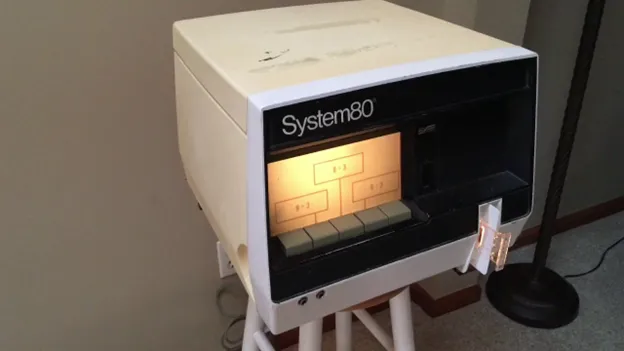
Although ERTI’s primary mission was to provide educational programs for classroom use, the organization invited network and production managers from its sister channels, Networks One and Two, for a visit. By 1976, ERTI staff had perfected the art of showcasing their capabilities through field trips. These trips highlighted ERTI’s extensive range of broadcast and non-broadcast services, including radio and television programs, books, printed instructional materials, multimedia sound-slide presentations, real-time in-person role-playing and simulations, audio and video tapes, and programmed instruction via System 80. The highly articulate educational technologists and producers presented these materials in a well-organized seminar and workshop to their colleagues from Networks One and Two, as well as other high-ranking NIRT officials in attendance. The demonstration of ERTI’s capabilities was awe-inspiring for most attendees.

As a result, in the summer of 1976, Mr. Touraj Farazmand (1922-2006), the manager of NIRT’s Network One, decided to further increase the broadcasts of ERTI programs during prime time for general audiences. Mr. Farazmand, a witty and skeptical figure not easily impressed, declared that ERTI’s programs were so creatively designed and developed that they would be well-received by both adults and school-aged children during evening broadcast hours. Mr. Farazmand had often argued that NIRT’s use of high-culture formal Farsi alienated much of the audience, appealing only to the elite. However, he asserted that ERTI’s programs were created with the broader audience in mind. Despite dealing with complex concepts, they were easily understood by both children and adults.

Long-Term Planning

The 1970s marked a pivotal era for the adoption and use of satellites to expand national and regional telecommunications’ infrastructures worldwide. In 1972, NIRT signed a contract with Stanford University’s Radio Science Laboratory (RSL) to design, build, and launch a telecommunications satellite. NIRT leadership envisioned ERTI as a major user of this satellite to disseminate educational programs. Consequently, a key component of the RSL project was to develop a 20-year master plan (1972–1992) for ERTI’s long-term growth and development (Cooney, Nelson, & Starlin, 1978). Recognizing the project’s importance, NIRT appointed Mr. Robben Hakopian, a high-ranking engineer from its Technical Unit, to reside in Palo Alto, California, to oversee the design, development, and launch of the proposed satellite.

Stanford University was chosen for this critical project due to its groundbreaking research and development (R&D) in various forms of communications, particularly in the emerging field of information and communication technologies. These advanced R&D initiatives positioned the university as a key contributor to the rise of Silicon Valley as a world-renowned center of innovation.

Additionally, from the early days of educational television experimentation, Wilbur Schramm (1907–1987), a professor of communication at Stanford, conducted seminal research on the use of television in education. His work demonstrated the effectiveness of educational television and laid the foundation for continued research in the field for decades to come (National Educational Television and Radio Center. & Schramm, 1960; Saba, 2000; Schramm, 1962).

Conceptualizing the Long-Term Role of ERTI

As work progressed on procuring a satellite, consultants from Stanford University created two reports to shape the future of ERTI. The first, a Master Plan, presented three organizational concepts for NIRT to consider in building the future of ERTI (Cooney et al., 1978). The second report, Statement of Purpose for Educational Radio and Television of Iran, outlined in great detail specific educational program areas for broadcasting over the next 20 years (Brekka, 1976).

The Master Plan envisioned ERTI’s role extending beyond producing and broadcasting educational programs for the MOE. It proposed transforming ERTI into the primary national organization for educational technology services, supporting key institutions such as the Ministry of Labor and the Ministry of Agriculture and Rural Development.

At the time, Iran was rapidly industrializing. New manufacturing enterprises needed skilled managerial staff and specialized workers in emerging fields unfamiliar to most Iranians. Meanwhile, the land reforms of the 1970s had fundamentally changed the lives of farmers. Many who had lived in serfdom for centuries now needed new knowledge and skills to manage their own affairs. Additionally, new companies with large farming operations that now had access to capital and modern equipment required a skilled agricultural workforce to thrive.

To address this critical demand for workforce development across agriculture, industry, and an expanding service economy, Stanford University planners envisioned ERTI taking on a broad mandate. The Master Plan proposed three options for NIRT/ERTI to consider. The educational broadcast arm of NIRT could become:

  1. A Service Agency: Focused on producing instructional materials for other organizations.
  2. A Comprehensive Agency: A self-contained agency responsible for managing all aspects of national educational technology.
  3. A Hybrid Model: Combining elements of the first two types of organizations.

Option 1: ERTI as a Service Agency

In this concept, ERTI would function primarily as a production and dissemination center. Its primary role would be to respond to the needs of other organizations by producing and distributing mediated educational materials. While this approach allowed ERTI to focus on meeting specific demands, it came with significant drawbacks.

As a purely service-oriented agency, ERTI would not take on a leadership role, leaving strategic direction to other organizations. This model risked failing to deliver a “coherent, rational, quality service” on a national scale. Without a mechanism to prioritize the most critical national needs, the results would likely be inconsistent in quality and impact. Furthermore, ERTI would be heavily reliant on content specialists from client organizations who often lacked expertise in educational technology and media production. These specialists, who would “rotate through the production process,” could inadvertently introduce inconsistencies in program quality and fail to address the nation’s most pressing problems effectively (Cooney et al., 1978, p. 50).

Despite these limitations, the service agency model aligned more closely with the traditional mission of NIRT and broadcasting organizations worldwide. Historically, such organizations primarily focused on delivering entertainment, information, and news rather than addressing a country’s comprehensive educational needs. However, NIRT had already begun to transcend the conventional role of a broadcasting organization, engaging in a variety of initiatives that demonstrated its potential to lead in education and workforce development. For instance, NIRT managed the annual Shiraz Art Festival, which showcased a diverse range of traditional and experimental works by Iranian musicians, singers, dancers, and actors, as well as avant-garde contributions from international artists. Additionally, NIRT engaged in research on the role of communication in national development, published works by prominent literary figures, offered degree programs at its Graduate School of Cinema and Television, and provided technical assistance to neighboring countries. It was even exploring the possibility of manufacturing affordable television sets for schools.

These wide-ranging activities highlighted NIRT’s capacity to assume a broader role. Expanding its efforts into education and workforce development seemed a natural extension of its evolving mission.

Option 2: ERTI as a Comprehensive Educational Agency

The comprehensive educational agency model proposed by Stanford University consultants envisioned ERTI as an autonomous organization with sweeping authority. In this model, ERTI would “establish a new, autonomous organization, bypassing and in some cases supplanting existing ones. In this case, the new organization has independent authority as well as responsibility for the total educational development from concept to final certification of achievement. This includes determining needs, within established national priorities, design and content of programming, utilization, and finally evaluation and certification” (Cooney et al., 1978, p. 51).

The primary advantage of this concept was that it allowed for “central planning along with concentration of effort and resources on specific and well-defined objectives.” However, significant challenges undermined its feasibility. ERTI lacked the legal authority to award formal degrees or credentials beyond the academic programs offered by NIRT’s Graduate School of Cinema and Television. While the Ministry of Sciences and Higher Education had authorized the graduate school to confer degrees, this permission did not extend to certifying learners who completed coursework via radio, television, or in-person workshops.

Additionally, the concept of ERTI as a comprehensive educational agency clashed with NIRT’s organizational ethos. NIRT prided itself on fostering collaboration with other government agencies and an increasing number of private organizations, striving to assist rather than compete or supplant. A shift to an autonomous and overarching educational role would inevitably place ERTI in direct competition with established institutions such as the MOE, creating unnecessary conflict and duplication of efforts. During early discussions of the Master Plan, Dr. Mahmoudi always reminded planners and managers that NIRT’s primary mission was broadcasting. He cautioned against adopting a strategy that could lead NIRT to “lose its identity and become redundant itself.” By overextending its role, ERTI risked compromising the core functions and collaborative spirit that had defined its success. Ultimately, the comprehensive educational agency model was deemed misaligned with ERTI’s mission and broader institutional goals.

Option 3: ERTI as a Primary Educational Technology Agency

This option was the most complex and challenging, yet it aligned most closely with the organizational culture of NIRT. It emphasized building relationships with large-scale, national organizations and supporting their educational and workforce training initiatives through education and communication technologies. Under this approach, ERTI would:

  1. Assess the national educational and workforce training needs of the country in collaboration with its client organizations.
  2. Define national educational and workforce training objectives of the country in consultation with the client organizations.
  3. Evaluate the readiness of its client organizations to meet their educational and workforce training objectives.
  4. Introduce innovations in educational technology and communication to help client organizations succeed in their training missions.

This model also offered the potential for ERTI to co-certify the performance of students and trainees in participating organizations, avoiding the need for ERTI to grant academic degrees independently. The goal would be to make each client organization self-sufficient in its educational and workforce training efforts as quickly as possible. Once an organization was able to function without ERTI’s support, the agency would gradually phase out its assistance and move on to serve other organizations in need. This approach mirrored ERTI’s existing relationship with the MOE and was closest to its primary role in educational technology support. Furthermore, it represented a more efficient use of ERTI’s limited resources, allowing for gradual expansion over the next decade as ERTI built its capacity in educational technology and communication.

As the Stanford University consultants stated: “Instead of absolute authority and responsibility, the organization is required to enlist the cooperation—which means the talents and other resources—of other agencies of government primarily the so-called ‘user agencies’ with active field staffs. At the same time, it has the initiative to proceed if necessary, without coordinate sign-off of competing agencies. Obviously, initiative is crucial under this operating pattern because it enables movement whereas joint or coordinate approval can and very often does result in immobilization. Indeed such immobilization often is one of the many political weapons for territorial infighting, a preoccupation of most established bureaucracies” (Cooney et al., 1978, p. 54).

Areas of Programming for ERTI

Stanford University consultants supplemented the Master Plan with a comprehensive 154-page document titled Statement of Purpose (Brekka, 1976). This report provided a detailed analysis of the workforce needs of an agricultural society transitioning to industrialization and, eventually, to a service-based economy requiring diverse job roles. Brekka’s analysis was rooted in the Plan and Budget Organization’s Fifth Five-Year Development Plan (1973–1978) and projections for the Sixth Five-Year Development Plan (1978–1983). These plans prioritized implementing social programs and addressing the needs of previously unserved or underserved segments of society.

Best Audience for Educational Broadcasting

A key priority of the Sixth Five-Year Development Plan was extending educational services and workforce training to unserved and underserved populations. These included the 41.13% of the population who were illiterate in 1976, villagers continuing as farmers in rural areas, and unemployed or displaced farmers who either stayed in rural communities or migrated to urban centers.

Research results presented in the Statement of Purpose revealed that educational broadcasting was particularly effective for adult learners. Compared to adolescents and pre-teens, adults demonstrated greater autonomy and motivation to engage with educational radio and television programs. Younger learners, on the other hand, required teacher supervision to benefit fully from such broadcasts. Moreover, educational broadcasting, was most effective for individuals with higher levels of education, such as pre-service teachers studying in institutions of higher education. These learners exhibited strong motivation, autonomy, and time management skills, making them exceptionally well-suited to benefit from educational programming.

Teacher Training: The Statement of Purpose highlighted the severe shortage of teachers across all three levels of education, particularly in mathematics and science. Other critical areas included occupational and vocational education as well as adult literacy, where thousands of additional specialized teachers were urgently needed. A review conducted by this author of elementary through high school statistics provided a clearer picture of the MOE’s future teach requirements.

In the 1973–1974 school year, out of a school-age population of 11.96 million, only 45.5% (5.44 million) were enrolled in MOE schools. These students were served by an instructional staff of 173,943, resulting in an average student-to-teacher ratio of 68.7 to 1. However, this ratio varied significantly by school level. While primary schools accommodated 79.3% of their age group, guidance cycle schools served just 37.6%, and high schools only 29.3%. To reach the 54.5% of school-age children not enrolled, thousands of new teachers were required, especially in specialized subject areas critical to the guidance cycle and high schools.

The Statement of Purpose provided a detailed analysis of the skills needed at each school level and identified subject areas with the greatest demand for teachers. Additionally, it proposed the use of television in formal university programs to reduce teacher preparation time by half. Pre-service and in-service teachers were considered ideal candidates for televised instruction, as they were generally self-motivated, demonstrated strong time management, and possessed the learning skills necessary to benefit from educational broadcasts.

Literacy Education: Another area of focus in the Statement of Purpose was literacy education. In the 1970s, Iran’s adult literacy program included instruction in reading, writing, and mathematics. This initiative was part of the United Nations’ National World Literacy Campaign (NWLC) targeting populations not enrolled in formal schools. Its goal was to reduce illiteracy by 15% among individuals aged 7 to 44 by 1988. At that time, an estimated 10 million people fell within this age group, while the country’s population had surpassed 30 million and was growing more quickly than in previous decades.

To meet this significant challenge, the NWLC programs in urban and rural areas provided:

  • Primary school equivalent courses for children aged 7–10 who did not have access to the MOE schools.
  • Prevocational literacy courses for adolescents aged 11–14.
  • Adult mass literacy courses for individuals aged 12–50.
  • Work-oriented functional literacy programs for individuals aged 15–50.
  • Basic literacy programs tailored for stationary and seasonally migrating tribal populations.

The Statement of Purpose proposed that ERTI support these programs through broadcasts and off-air services. Recommended broadcast initiatives included direct literacy instruction and motivational radio and television spots to encourage enrollment in programs suited to local community needs.

Non-broadcast services suggested in the document included producing films, videocassettes, slides, and print materials to support classroom instruction in local literacy classes, learning resource centers, and other local institutions. The document particularly emphasized the use of mobile vans to distribute educational materials in rural areas—a strategy inspired by Brazil’s successful implementation of mobile units for education.

Also, the document highlighted the potential of radio clubs, drawing from examples in countries with large illiterate populations, such as India, where literacy students showed greater motivation and learning outcomes when participating in group settings. Radio clubs encouraged collaborative learning as participants listened to broadcasts and followed printed instructions alongside peers. Stanford University consultants recommended that ERTI establish similar radio clubs in both urban and rural areas.

Agricultural Training: In the mid-1970s, farming was the largest single occupation in Iran. Approximately 3.3 million farmers worked directly on the land, supporting their families in rural areas where households had an average of three children. These farmers managed 2.5 million small- and medium-sized traditional farms, which accounted for 84% of cultivated agricultural land and produced over 77% of the country’s food supply.

In addition to farmers, thousands of other individuals in rural areas—referred to as khosh-neshines—earned their livelihoods through various occupations such as shopkeeping, baking, repairing, and crafting, including production of coveted Persian rugs. While several government agencies provided agricultural extension services to support rural populations, these programs addressed only a small fraction of the needs of the millions of farmers, their dependents, and khosh-neshines.

To augment these extension services, the Statement of Purpose recommended that ERTI dedicate a large segment of its future instructional programming to agricultural topics, including:

  • Farm management
  • Animal husbandry
  • Utilization of agricultural machinery
  • Soil science and conservation
  • Water conservation and crop irrigation
  • Fertilizer application
  • Weed control
  • Plant disease
  • Pest and insect control

The Stanford University planning document offered additional specific details for each of these topics. For example, in the area of animal husbandry, suggested instructional modules covered subjects such as the economic benefits of livestock, proper livestock housing, and effective feeding practices.

The Statement of Purpose underscored the importance of comprehensive and detailed program planning for agricultural education to address the vast needs of Iran’s rural population and ensure the long-term sustainability of its agricultural sector.

Occupational and Vocational Training: A major part of the long-term plan was devoted to occupational and vocational training that would address the immense need in a rapidly industrializing country. The Statement of Purpose detailed statistics on the projected demand for professionals across 17 major fields, including medical doctors and their nursing staff, engineers, technicians, economists, statisticians, system analysts, administrators, managers, transportation workers, and other service personnel. The report offered a comprehensive breakdown of the workforce required in each category.

Examples of the needs assessment highlighted requirements for instructional services to train both pre-service and in-service workers, such as carpenters, electricians, house painters, and hairdressers, among other occupations. The scale of training necessary to equip millions of professionals in such diverse vocations was both impressive and daunting, demanding the full mobilization of ERTI resources—and more.

However, the report cautioned that workforce estimates provided by government and private organizations were volatile, influenced by shifting organizational priorities, variable market conditions, and evolving government policies. In light of this uncertainty, consultants from Stanford University advised ERTI to focus on empowering client organizations to develop their own training capabilities rather than directly conducting large-scale professional training programs. This recommendation, though prudent, required additional clarification on how to evaluate the risks of committing to workforce education programs under changing conditions. The long development cycle—from completing a needs assessment to producing and distributing instructional materials—necessitated careful consideration of policy and market shifts that could affect program viability.

Expansion of Higher Education: The need to expand higher education was articulated in terms of increasing the capacity of colleges and universities from 20,102 students in 1972 to 31,000 by 1977 across all areas of sciences and arts. This represented significant growth in a short span of five years. However, even this ambitious target fell far short of the estimated 114,000 eligible students who could potentially enter higher education nationwide to meet the goals of the Fifth Five-Year Development Plan.

ERTI’s role in this expansion was envisioned as providing support to higher education institutions, particularly the newly established Free University of Iran (FUI). Founded in 1972 under the leadership of Dr. Abdol-al-Rahim Ahmadi, FUI was modeled after the British Open University (OU) and tasked with preparing graduates to deliver paramedical and educational services to rural communities. Dr. Ahmadi prioritized radio as the primary medium for reaching FUI students, avoiding television due to its higher production costs and time demands. To enhance and accelerate student learning, FUI supplemented its radio broadcasts with printed materials and laboratory kits, a combination that proved very successful in the case of the British Open University’s collaboration with the British Broadcasting Corporation (BBC). Following this method in the early 1970s, radio programs augmented by printed materials and lab kits, helped non-traditional students achieve their educational objectives when formal institutions in Britain could not accommodate the demand.

However, most universities in Iran were more interested in televising their courses. In this area, Stanford University consultants drew upon their own experience with academic programs that supported businesses and industries in Northern California through televised courses. During the 1960s and 1970s, Stanford University experimented with the use of broadcasting to deliver its courses to professionals working in rapidly expanding industries near its campus in what would later become known as Silicon Valley. Over more than two decades, Stanford University instructors taught increasingly sophisticated subjects in engineering and business administration, playing a significant role in the rapid growth and success of several world-class corporations in Silicon Valley.

Based on this success, the consultants recommended that ERTI adopt a similar model of televised courses to support higher education students in Iran. Their Statement of Purpose proposed to equip university classrooms with low-cost video production systems to broadcast courses to students who could not attend in person. They further proposed using the planned telecommunication satellite to distribute these lectures nationwide, enabling thousands of students to access higher education remotely.

The consultants estimated that televised courses could potentially reduce the demand for faculty and laboratory staff by half. This optimistic projection was based on research indicating that higher education students possessed the self-discipline and independent learning skills necessary to benefit from televised instruction, making it a more viable option for them compared to younger, less experienced learners in grade schools.

Moving ERTI to Mazandaran Province

On the afternoon of March 21, 1977, during the Iranian New Year celebrations, Mr. Ghotbi informed this author that ERTI must begin planning to transition into a semi-independent corporation and relocate its headquarters from Tehran to Mazandaran Province. It was a quiet holiday in his office; the usual flurry of activity was absent. The phones on his desk, typically ringing nonstop, were silent, and his secretary was not darting in and out with pressing matters. This rare tranquility allowed Mr. Ghotbi to spend an unusually long time discussing these unexpected plans with this author in an ad-hoc meeting.

Mr. Ghotbi explained that ERTI’s new status as an income-generating entity was not merely symbolic. The organization would need to work toward financial independence by generating revenue through the sale of non-broadcast products and services, such as books, multimedia kits, and consulting services. He envisioned a future where ERTI would capitalize on a growing and diversified domestic marketplace, with opportunities extending beyond Iran to the Asia-Pacific region. This shift required additional strategic planning. ERTI would need to gradually reduce its reliance on government funding while increasing its income from these new ventures.

Mr. Ghotbi further explained that ERTI’s headquarters in Tehran was no longer sufficient to accommodate its expanding activities. Consequently, the organization would relocate to Shir-Kola in Mazandaran Province. The new campus, spanning 2.47 acres, would be shared with the Free University of Iran (FUI) and the newly established Reza Shah Kabir University (RSKU).

The comprehensive campus plan included residential units for the staff of all three institutions, schools for their children, and a hotel and conference center. Additionally, it would feature dormitories to house thousands of RSKU students. While RSKU would serve traditional on-campus students, FUI would continue its focus on distance learning, delivering educational programs via radio to students in villages and towns across the country. Once fully developed, the new campus was envisioned as a thriving community accommodating approximately 50,000 residents. To develop the architectural master plan for relocating the headquarters of ERTI, FUI, and RSKU to Shir-Kola, NIRT selected Harvard University. Harvard assigned the overall management of the project to Mr. Thomas Huf, an architect and facility planner who had previously served in the Peace Corps in Iran from 1967 to 1971.

This author assigned two key staff members to assist Mr. Huff in this project: Ms. Shifteh Karimi, a Stanford University graduate and member of the ERTI Planning Unit, and Mr. Rahmanzadeh. From the start, Mr. Huf demonstrated a strong willingness to collaborate, actively listening to input from ERTI managers and staff regarding the organization’s future needs at the new campus. The general program objectives for the new facilities were ambitious: increasing original educational television production from 500 to 1,200 hours annually and boosting educational radio production to 3,000 hours per year. Additionally, Mr. Ghotbi emphasized the need for decentralization, envisioning the establishment of radio and television production facilities as well as learning resource centers in provinces across the country, separate from NIRT’s central facilities. This decentralization plan included the development of satellite uplink and downlink stations for instructional and administrative purposes. It also aimed to introduce two-way telephony capabilities, enabling real-time interaction between learners in classrooms and instructors located in local radio and television studios.

The decentralization plan aligned with the government’s general policy to move as many offices and personnel out of Tehran as possible. The capital was simply too large, too congested, and too polluted. Decentralizing operations also promised to bring economic opportunities to major population centers in the provinces, particularly those previously neglected but eager to improve their quality of life in the years and decades ahead. An important aspect of decentralization involved participating in a future marketplace driven by new investments in small private-sector enterprises throughout the country. As the 1980s approached, the theory of economic development increasingly emphasized strengthening the private sector in developing countries. International organizations such as the World Bank, the International Monetary Fund, and various United Nations’ agencies began shifting their focus. They moved away from funding large-scale development projects overseen by central governments, and instead prioritized capitalization of small or even micro-enterprises operating within rules set by the ebb and flow of the open market.

This shift presented challenges for ERTI. While a decentralized market populated by thousands of small enterprises scattered across the country was emerging, it was not accounted for in Stanford University’s future strategic plan nor discussed during ERTI’s short-term planning meetings. It was clear, however, that times were changing and ERTI needed to adapt to new social and economic realities. This required a fresh approach to conceptualizing the products and services that consumers in an open and decentralized market may demand, since ERTI’s focus up to now had been on supporting large, centralized entities like the MOE and similar organizations.

In this new environment, the small Planning Unit worked to reconcile the various visions presented by ERTI’s American consultants and NIRT policymakers. Ms. Karimi, one of the two permanent members of the Planning Unit, was tasked with aligning the advice from Stanford University consultants with the short-term goal of assisting the MOE. At the same time, the team had to plan for the relocation of ERTI, the decentralization of its operations in the provinces, and its long-term financial self-sufficiency.

The challenge was to channel all these divergent visions toward a single objective in an ongoing planning and evaluation process without adversely affecting the relationship that ERTI was nurturing with the MOE. This new planning process also had to prevent the silo effect, which was common in many institutions at the time. Government agencies in developing countries often received conflicting advice from various consultants, both domestic and foreign, leading to confusion and inefficiency. In response, organizations created isolated silos to implement different projects based on conflicting recommendations, without coordination, resulting in fragmented efforts.

To avoid creating this costly and confusing silo effect, it was important for ERTI to streamline the implementation of its short-term plans with the new long-term vision of NIRT for relocating and decentralizing ERTI and making it financially self-sufficient.

Results of the Planning Efforts

By the late 1970s, through careful planning, ERTI had grown into an organization of 500. Many of its staff members held advanced degrees in their respective fields, and many of its educational technologists and producers were well-versed in the principles of the systems approach to educational technology and management. This team, composed of dedicated and hardworking women and men, excelled in their roles. They eagerly learned from their American trainers, ultimately exceeding the expectations of NIRT leadership with their outstanding performance.

ERTI staff demonstrated their capabilities by producing high-quality educational radio and television programs and conducting highly effective and popular workshops and seminars on the optimal use of these resources. Their success highlighted the organization’s potential to become self-sustaining, provided it received sufficient financial support from the government for the next several years. With continued funding for at least five more years, ERTI staff could continue to deliver state-of-the-art educational communication and technology support services to a broad spectrum of the Iranian population.

At this point, the only concern for a possible failure was not professional but political. In daily informal conversations with Mr. Rahmanzadeh, we agreed that, barring any adverse political events, ERTI was on a trajectory to expand its services in the years to come. Collaboration with the MOE was already well underway, and despite its problems and shortcomings, ERTI was shaping its new identity as a reliable agency for educational communication and technology, with state-of-the-art expertise.

However, times were changing, and the conditions under which ERTI operated were in flux. Internally, various contending visions for its future were challenging its stability and steady progress. Externally, the environment in which ERTI operated was becoming increasingly volatile. Many among the clergy, even those not part of the counter-traditional radical group, as well as the intellectual elite, argued that the country was implementing too many development projects too quickly. Most of these projects involved adopting new techniques and ideas that were unfamiliar to farmers and workers. Some of these new methods even required people to change their traditional way of life, as technology began to homogenize society and impose its own order on how people lived, learned, and worked. As a result, too many people were losing their connection to their traditional cultural heritage and their sense of personal identity.

Critics argued that the entire country was engulfed in a major conflict between two contradictory forces. A vocal group of intellectuals and clergy sought to return to an idealized, nostalgic form of life believed to have existed at the dawn of Islam. On the other hand, those involved in development projects saw a different future for Iran—one where the country could overcome illiteracy, poverty, and the misery of the past, and step into the 21st century with relative prosperity and the gradual realization of democratic aspirations.

As this conflict took shape, those promoting a return to the past ultimately prevailed, dashing all hopes for a prosperous and democratic future. These events in Iran coincided with changing international relations, which unexpectedly favored regressive forces within the country, pushing it toward a position that made life miserable for the vast majority of its people. In short, both domestic and international circumstances had a profound and adverse effect on ERTI, contributing to its demise. The disintegration of ERTI under these volatile circumstances is discussed in the next chapter.

This sentence is a little confusing. 40% of the staff need to be allocated to improve which skills of MOE teachers? To improve the skills of using educational television programs in the classroom? And the last part of the sentence is confusing “in the short run in thousands of classrooms that were equipped with television receivers”. I’m not sure if there is a word missing between “run” and “in” but I don’t understand what that is trying to say.

References

Brekka, L. T. (1976). Statement of purpose for educational radio and television of Iran. Communication Satellite Planning Center, Stanford Electronic Radioscience Laboratory.

Cooney, S., Nelson, L. M., & Starlin, D. G. (1978). A developmental plan for educational radio and televivion of Iran. Retrieved from Stanford, CA.

Forrester, J. W. (1961). Industrial dynamics. Pegasus Communications.

Meadows, D. L., Behrens, III, W. W., Meadows, D. H., Naill, R. F., Randers, J., & Zahn, E. K. O. (1974). Dynamics of growth in a finite world. Wright-Allen Press.

National Educational Television and Radio Center, & Schramm, W. (1960). The impact of educational television: Selected studies from the research sponsored by the National Educational Television and Radio Center. University of Illinois Press.

Roberts, N., Andersen, D. F., Deal, R. D., & Shaffer, W. A. (1994). Introduction to computer simiulation: A system dyanmics modeling approach. Productivity Press.

Saba, F. (2000). Research in distance education: A status report. International Review of Research in Open and Distance Learning, 1(1), 1–9.

Saba, F., & Root, G. (1977). Educational television: A new frontier. Paper presented at the International Conference on Cybernetics and Society, Washington, DC.

Salamatian, D., & Root, G. (1976). A dynamic systems model for educational television of Iran. National Iranian Radio and Television.

Schramm, W. (1962). What we know about learning from instructional television. (W. Schramm, Ed.), Educatonal television: The next ten years. The Institute for Communication Research.

Demise of ERTI

Introduction

By 1978, Iran was engulfed in economic turmoil. Persistent inflation showed no signs of abating and attempts to control it proved deeply unpopular. This paradox frustrated the public: How could a nation enjoying a dramatic increase in oil income witness such a decline in purchasing power? Disillusionment spread, casting a shadow over Iran’s future and signaling the approach of a political storm. Ironically, the inflation was exacerbated by the surge in oil prices. Higher oil revenues put more money in people’s pockets, fueling demand for goods and services. However, Iran’s domestic industries and agriculture could not keep pace with this rising demand. Scaling up production required a massive infusion of skilled labor—millions of trained workers to bridge the gap between supply and demand. Yet, the country lacked enough qualified managers, supervisors, and frontline workers to expand production and stabilize prices.

Even importing goods offered little relief. A severe shortage of trained truck drivers meant that imported goods often languished at ports along the Persian Gulf. Crates of sensitive equipment and perishable items were left exposed to the elements, resulting in damage or spoilage which led to those items being discarded. It would take months, if not years, to train qualified drivers to respond to this transportation bottleneck. The resulting supply shortages deepened dissatisfaction, particularly among Tehran’s long-established bazaar wholesalers. Already discontented with the rapid pace of industrialization, these merchants felt their traditional trade practices—rooted in customs dating back to the heyday of the Silk Road several centuries ago—were being undermined. Modern procurement, distribution, marketing, and sales methods posed existential challenges to their way of life.

Government policies further complicated matters. Efforts to protect fledgling domestic industries by restricting imports disrupted traditional commerce but failed to deliver viable alternatives. As new industries struggled to mature, the bazaar merchants—many of whom were wealthy and influential—grew increasingly impatient. Their frustration boiled over into vocal opposition against the government’s ambitious development and reform initiatives. The wave of disenchantment did not stop at the central bazaar but swept over small shopkeepers throughout Tehran. Thousands of neighborhood retailers were forced to pass on higher prices from the wholesalers in the main bazaar to their customers. To make matters worse, a perplexing local ordinance exacerbated their struggles and those of their regular patrons.

For decades, storekeepers in Tehran had enjoyed the freedom to set their own hours, opening and closing their shops as they saw fit. However, in the midst of this economic crisis, they were suddenly required to comply with a new city regulation that restricted their business hours. This ill-timed policy was introduced under the pretext of reducing traffic congestion in Tehran’s busy streets. While there was no doubt that traffic woes adversely affected everyone and heightened public stress, regulating the operating hours of neighborhood stores was not the most appropriate solution. The ordinance not only failed to ease traffic as intended but also served as a catalyst for spreading discontent. Frustration among Tehran’s citizens reached epidemic proportions, with many perceiving the policy as an unnecessary and thoughtless burden. It was as if policymakers, whether intentionally or not, were determined to further distress an already overwrought population.

General disenchantment with the state of affairs became a topic of widespread discussion. The poor and the rich, the powerful and the powerless—everyone shared a common sentiment: dissatisfaction. This pervasive disenchantment found its way into weekly Friday sermons delivered by clergy in mosques, where worshippers from all walks of life gathered. Even elite elders and experts, members of select committees tasked with advising government agencies, voiced their discontent.

Remarkably, even the monarch expressed dissatisfaction. His frustration stemmed from the lack of progress in negotiations with the American government over oil prices in international markets. Similarly, high-ranking officials at the National Iranian Oil Company (NIOC) were deeply concerned about the future of the oil industry. The 25-year contract with a consortium of Western oil companies, established in 1954, was set to expire in 1979. Amid ongoing disputes with Western nations over oil prices, NIOC officials faced uncertainty in planning for this pivotal transition. Western oil companies, notoriously opaque in their operations, conducted business behind closed doors, offering little insight into their intentions. This lack of transparency fueled anxiety about how they might respond once their contracts expired in 1979. Informal conversations within the offices of the NIRT News Unit suggested that preliminary negotiations held in Los Angeles with an American member of the consortium had already failed. There was little optimism that similar talks with the remaining consortium members would yield better results.

Iranian negotiators, in fact, were not eager to renew their commitments to the Western consortium of oil companies. Instead, they were prepared to take full control of the industry, assuming responsibility for exploration, extraction, refining, distribution, and marketing. This shift would complete the transfer of ownership, management, and operation of the oil industry to Iran. Given the diminished role this transition would leave for foreign oil companies, it was unsurprising that they were likely opposed to such a development.

An Effort for Political Renewal

Amidst these economic woes and uncertainties, Iran faced widespread political challenges as well. The country lacked robust political parties capable of channeling the activities of large groups of people into democratic institutions. Loyal opposition groups to the government and monarchy, such as the National Front and the Freedom Movement, continued efforts to expand their membership. While these groups were popular among the educated elite, they struggled to gain significant support from farmers and workers across the country.

Iran was largely an agrarian society, with rural residents focused on their farms and small businesses at the village level. Many in these communities saw little connection between their local concerns and the activities of political parties based primarily in Tehran. Opposition groups attributed their limited appeal to the broader population to a lack of political freedom. They frequently complained about harassment by security services, which targeted their leaders and prominent members, often resulting in imprisonment. Additionally, they protested the censorship of their newspapers and publications.

These restrictions left partisan politics to a small circle of lay urban educated elites and politically active members of religious circles, who persevered despite the constraints. Iran-e-Novin, the ruling party, was no more successful than the opposition groups in attracting a large following. Originally founded by the late Prime Minister Hassan Ali Mansur to appeal to educated youth, the party was now led by then-Prime Minister Amir Abbas Hoveyda. A consummate politician, Mr. Hovevda enjoyed significant personal support among political and intellectual circles. However, most politically active youth perceived the party as merely an extension of the government, failing to embody their ideals of freedom and democracy.

Safeguarding the Reforms and the Development Projects

Complicating matters further, following the assassination of Prime Minister Mansur by a member of the terrorist group Fada’iyan-e Islam, the monarch assumed a more active role in the executive branch of government. Presumably, this was intended to ensure that reform and development projects were implemented as effectively as possible, despite strong opposition from the clergy, wealthy bazar merchants aligned with reactionary religious leaders, feudal landowners, communist organizations, and their sympathizers among the educated elite.

Loyal opposition groups, religious circles, and left-leaning political leaders immediately criticized the monarch’s new posture. They argued that, consistent with Iran’s long-standing traditions, the monarch should remain a symbol of national unity and territorial integrity, uninvolved in the day-to-day affairs of governance. They warned that engagement in routine politics would inevitably undermine his unique role, leaving it less effective in extraordinary national emergencies where his intervention might be the only viable solution. Some critics also invoked the constitution, asserting that it designated the prime minister as the sole authority over the executive branch. They argued that the monarch’s involvement in overseeing and promoting development projects and reform measures constituted a violation of the nation’s governing legal framework.

But these were not ordinary times. In the late 1960s and throughout the 1970s, the monarch took a prominent role in managing national affairs that he deemed required his personal attention. He actively pushed for reforms and development projects, insisting that he could not take pride in ruling over a poor country. He also played a key role in securing higher oil prices in international markets to finance these initiatives. However, his actions centralized executive power within the monarchy, further alienating opposition groups and even some members of the government.

Simultaneously, security forces intensified their efforts to suppress political activities among radical religious circles opposing the reforms. Clergy delivered fiery sermons expressing outrage over measures such as elevating the status of women in society, implementing land reforms, and introducing new industries to Iran. They particularly condemned the elevation of women’s roles, claiming it violated Islamic principles. Radical counter-traditional clergy went further, calling for the abolition of the monarchy, which they viewed as a corrupt and irredeemable institution, and its replacement with an idealized Islamic government. In response, several radical clerics were detained and imprisoned for varying lengths of time to prevent them from engaging in what the state deemed nefarious activities.

Security forces also targeted members of a new wave of Islamic-Marxist-Maoist guerrilla organizations who advocated violent revolutionary regime change, detaining many of them as well. Although loyal opposition groups refrained from instigating violence, these intensified security measures significantly curtailed their political activities, with some of their leaders also imprisoned. These actions deepened the rift between the opposition groups and the monarchy, creating an enduring division.

An Attempt to Unify the Politically Active

To unify the nation during a time of deep division, one initiative sought to merge all political parties and organizations into a single entity. The hope was that a unified political party would foster positive dialogue among disparate groups protesting the policies of the government and the monarch. This national umbrella organization aimed to encourage constructive discussions among its members, ultimately rallying everyone around the flag for the sake of national unity and the country’s territorial integrity.

For a brief moment, the new party, named Rastakhiz (Resurgence), showed promising results. It successfully engaged more women in the political process and established county councils to encourage broader participation in local affairs. These councils were modeled after thousands of village councils formed during the implementation of land reform, prior to the creation of the Rastakhiz Party. The village councils had proven effective in addressing and arbitrating local issues, and this grassroots model of political participation was now extended to the county level under the Rastakhiz banner. However, in its formative stage, the Rastakhiz Party became mired in administrative chaos, with its various functions proving disorderly and confusing. Over time, it became evident that despite its initial success in attracting hundreds of representatives from all provinces to a large general assembly in Tehran, the unruly party was unable to provide a coherent platform to lift the nation out of its prevailing gloom.

Most political activists were skeptical about the viability of a single political entity. They believed that the formation of a single party further diminished their chances of presenting unique ideas to the public. Some members of the ERTI staff, who formed a professional precinct and actively participated in the party, soon realized that they could not find effective channels to voice their grievances or resolve outstanding issues through party mechanisms. Efforts to form neighborhood precincts in urban areas were even less successful. While professional precincts were established in various government agencies and some private institutions, neighborhood precincts largely failed to materialize. People either lacked the motivation to organize their neighbors or did not possess the leadership skills to do so. Hope for this umbrella party of national unity quickly faded as leaders of various political groups gradually withdrew and resumed the activities within their previous separate formations and organizations.

The Warning Clouds Over ERTI

In this tense political and economic atmosphere, some members of the highly talented and imaginative Graphic Unit requested a meeting with this author to express their dissatisfaction with various professional issues. A few minutes into the meeting, and in the polite mannerisms of the time, they began using legitimate professional concerns as a thin veil to voice their broader unhappiness and frustration with the prevailing political conditions. The meeting lasted several hours but, unlike many similar gatherings previously, this one ended without clear, actionable outcomes. Most attendees left in a stoic mood, realizing that issues concerning an entire nation could not be resolved within the confines of a professional meeting framed as technical discussions.

Perhaps because the meeting with the Graphic Unit members failed to yield tangible results, a larger group—including staff from several units—went on strike a few days later to protest the quality of food in the cafeteria. While complaining about the food was not unreasonable, nor improving cafeteria service an unachievable goal, it was clear that the quality of the food was not the real issue. The strike was a means to display broader dissatisfaction by boycotting the food service. Although the matter was quickly addressed—additional resources from NIRT were allocated to improve the cafeteria service—the underlying discontent persisted. Over time, it became increasingly evident that some of ERTI’s best talents were shifting from forward-looking professionals to dissatisfied political activists. Their energy and talent were being redirected away from advancing projects and toward sympathizing with, and perhaps even assisting revolutionary groups.

At this critical juncture, when the cohesion of ERTI’s staff as an effective workforce was under strain, Mr. Rahmanzadeh left ERTI to work with Mr. Cyrus Ramtin, the Director of the International Affairs Unit of NIRT. Specializing in international relations, Mr. Rahmanzadeh was in his element working on programs and projects related to international affairs. His master’s thesis, written in 1972, argued that foreign forces needed to leave the Persian Gulf as a precondition for Iran to gain full control over its territorial waters, natural resources, and political destiny (Rahmanzadeh, 1972). This thesis reflected his comprehensive understanding of Iran’s aspirations for an independent national policy and his deep sense of patriotism.

As deputy managing director of ERTI, Mr. Rahmanzadeh’s unique diplomatic skills and personable nature were instrumental in managing the day-to-day operations of the organization. He held numerous lengthy meetings with individual staff members and groups to listen to their concerns, address professional issues, and resolve problems efficiently. His collaboration with this author to move ERTI forward contributed to the rapid expansion of broadcast services nationwide and an increase in in-person training workshops for schools in many provinces. These visible successes also elevated ERTI’s standing in leading international organizations, such as UNESCO and ABU. Mr. Rahmanzadeh was a dedicated professional who believed in a democratic and prosperous Iran and viewed ERTI as playing a pivotal role in transforming the country’s educational system to achieve these ideals.

After his departure, this author spent more time with the staff, holding multiple daily meetings with various groups to hear their issues and resolve their concerns. In a general staff meeting held in a television studio to accommodate everyone, it became clear that most participants were proud of their achievements and firmly believed in their mission to improve educational services across the country. However, a notable number argued that their efforts were being wasted because the government either lacked the will or the ability to create the conditions necessary for their success.

When this author asked more probing questions, a few of the more outspoken staff members criticized the MOE for its slow adoption of the innovations being introduced to schools. For the first time, at least in a formal meeting, a few staff members raised concerns about the MOE’s image as a largely corrupt organization. One producer boldly claimed that questionable practices were widespread among high-level administrative officials in the MOE, both in Tehran and other major cities. The discussion of the MOE’s administrative inefficiencies was overtly political, marking a shift from the usual focus on professional issues. While some technical and professional concerns were addressed during the meeting, it ultimately ended on a loud and critical note, condemning the moral failings of the MOE—an organization the ERTI staff were ostensibly tasked with assisting.

The Approaching Storm

Corruption was indeed a core issue in both the public and private sectors. In some institutions, it had become deeply entrenched, making it difficult to eradicate. In recent years, the relative abundance of petrodollars exacerbated the problem. While most government contracts were legitimate, met the country’s needs, and were free of wrongdoing, some were implemented for questionable reasons. Opposition leaders vehemently protested these deals, demanding that individuals associated with the royal court recuse themselves from all government contracts and commercial ventures to preserve the monarchy’s integrity.

As calls for investigations into corrupt practices grew louder, this author had a conversation during an informal dinner meeting with a high-ranking American consultant involved in several projects across various government agencies, including NIRT. Representing a prominent consulting firm based in Boston, Massachusetts, his focus was on organizational development, not political matters. Nonetheless, somewhat unexpectedly, he shifted the conversation to politics and raised the necessity of “opening up the political space” (fazay-e-siyasi) in the country.

Hearing this phrase from Iranian cultural elites demanding greater political freedom was not surprising. However, hearing it from an American professional consultant was puzzling, if not unsettling. Until then, the confrontation between opposition groups and supporters of the status quo had been a domestic matter, akin to a family quarrel. But now, for the first time—at least for this author—an American advisor to the government was advocating for “opening up the political space” in the country. His assertion added a new dimension to the unfolding events, raising the possibility of direct Western involvement in fomenting unrest and elevating political discontent, at least in the mind of this author. Given the history of British and American intervention in the country’s political affairs, it was not far-fetched to suspect that some recent disturbances might have been influenced from Western countries that seemingly were friendly to Iran.

Within weeks, the phrase “opening the political space” began to appear in several newspapers and was echoed in the speeches and writings of leading political activists. As it gained traction and was repeated often enough to become a cliché, it took on a wide range of interpretations. For university professors, students, the cultural intelligentsia, and the urban middle class, it signified greater freedom to express political ideas in public gatherings, newspapers, and other publications. It also called for reducing the role of security services in suppressing political activities and, perhaps most critically, for the release of political prisoners. For the more religious-minded, such as the clergy, bazaar merchants, and feudal landlords—alongside radical Marxist-Maoist groups and their intellectual sympathizers and students—“opening the political space” meant something far more radical: complete freedom of action to overthrow the status quo and replace it with a religious authority.

In this atmosphere, politically active clergy began raising the issue of corruption within certain government bureaucracies during their sermons. The grand ayatollahs, a few high-profile Friday imams, and even some ordinary preachers positioned themselves as self-appointed moral arbiters, intensifying their criticism of the bureaucracy and the monarchy on moral grounds. They highlighted allegations of bribery in securing lucrative government contracts and outright theft of public funds in some institutions as a convenient pretext to agitate the public and urge them to rise up and challenge the existing order.

For the clergy, corruption was not merely a financial issue. It also encompassed, as they described it, the love and admiration for Western culture. In their view, the Western way of life was corrupting Iranian society. This critique extended to the industrialization of production, the mechanization of agriculture, educational reforms, and the increasing participation of women in public life.

While university students were at the forefront of the opposition movement, militant members of religious circles vilified universities as purveyors of Western ideas and cultures, calling for their Islamization. In fiery and emotional sermons, preachers argued that drastic change was necessary to put an end to these corrupt practices. They asserted the need to return to a bygone era—one they claimed existed centuries ago—when Muslims behaved piously in utopian communities free from depravity. Prominent bazaar merchants, who were among the most devout religious believers and staunch supporters of militant clergy circles, added their voices to the chorus of discontent and echoed the sentiments of the clergy. These influential merchants commanded significant respect among the more religious strata of society and were highly effective in rallying public support for the clergy’s cause through generous financial contributions.

However, it was the militant members of religious circles who openly advocated for the use of violence to overthrow the established order. They called for a general armed uprising against the government and the state on moral grounds. Several Marxist guerrilla organizations, some of which exhibited an unusual affinity for Islam, also joined the fray, intensifying their violent activities. Yet, they never convincingly articulated how they reconciled their simultaneous belief in Islam and Marxism-Maoism.

Radical Groups

Militant preachers had a wide audience throughout the country. Their influence on several radical guerrilla organizations that emerged in the 1960s and 1970s was particularly noteworthy. Prominent among these organizations were the Mujahedin and Fedayeen, who were believers in Islam, though many among them also adhered to Marxist and/or Maoist beliefs. These communist groups interacted with radical members of Shi’a religious circles, influencing them and being influenced by them. There was an unlikely synergy between these two groups: the clergy were primarily rooted in Muhammadan beliefs, while the guerrillas were mainly inspired by Marx and Mao. Despite their ideological differences, they found collaboration useful for their common objective of destroying the status quo.

Nonetheless, the primary source of inspiration for these guerrilla organizations was not the radical clergy. Events in the Soviet Union and China had a profound impact on their ideas, tactics, and day-to-day activities. As the 1970s approached, many members of the Tudeh Party remained loyal to the Soviet Union. However, the Soviet Communist Party’s perceived docility led most militant members to gravitate toward Maoism. For personal and political reasons, members of these organizations often moved between guerrilla groups. Leadership changed frequently, resulting in constant splintering and reorganization. (Abrahamian, 1989). As such, it was difficult to determine which ideas were dominant and who was in charge at any given time.

Ultimately, their misguided actions served the goal of defying international communism rather than benefiting the people of Iran. The more radical elements quickly embraced revolutionary action inspired by Chairman Mao Zedong. For them, Maoism provided the necessary ideology, strategy, and tactics to introduce revolutionary ideas to farmers in Iran’s mostly agrarian society. Maoism advocated mobilizing poor and disenfranchised peasant masses to engage in tactical actions against feudal oppressors and their urban supporters. It encouraged farmers to participate in perpetual revolutionary action, as only in a revolutionary state could they triumph over class enemies and sustain their victory.

However, the form and nature of this victory were not clearly defined in Iran. The Leninist message of the Soviet State—focused on industrial workers—was less relevant in an overwhelmingly agrarian society. As such, guerrilla leaders saw Maoism as better suited to instigating revolution than the Soviet style Leninism (Lovell, 2019). In China, Mao periodically re-enged in revolutionary action for the sole purpose of keeping China’s Communist Party (CCP) in power and hold total control over political affairs. Opposing the CCP was equated with being anti-revolutionary since revolution was seen as the Party’s monopoly.

In contrast, Iranian agricultural villages were vastly different. Most farmers were staunch Muslims who could not understand the necessity of adopting a godless ideology focused solely on material gains without concern for spirituality. Nevertheless, the Fedayeen, one of Iran’s prominent guerrilla organizations, adopted Mao’s revolutionary strategies and tactics, considering them necessary for their triumph. Following Chairman Mao’s edicts, one of the most visible revolutionary actions by the Fedayeen occurred when a small group of members converged in a wooded region in northern Iran and raided a small gendarmerie outpost. Although the attack failed, it achieved its strategic purpose by gaining widespread publicity. It became a symbol of revolutionary action against the status quo, despite being a failed attempt.

The violence continued in Tehran and other urban areas. Guerrilla groups assassinated an American military advisor, robbed several banks, and destroyed businesses both large and small. These acts of killing and destruction provoked a violent response from security forces. As some guerrillas were arrested, they faced harsh punishments and, allegedly, unlawful treatment in certain cases. These actions attracted the attention of international human rights organizations, leading to widespread criticism from Europe and the United States about the violation of their human rights. This international attention further eroded the legitimacy of the bureaucracy and the monarchy, emboldening militant groups to escalate their violent activities. In turn, this provoked even harsher reactions from security forces, creating a vicious cycle of violence. This cycle had disastrous consequences for the country.

The Role of the Intellectuals

Many among the cognoscenti, ideological soulmates of the small guerrilla groups, exalted their “epic lives” in poetry and prose, saturating the literature with praise that often exaggerated the impact of their perceived triumphs. Although these groups lacked roots among the broader population, popular writers and commentators invested their intellectual capital in glorifying their destructive revolutionary thoughts and actions. Poets and writers invoked the heroes of the Shahnameh to describe and lionize them.

The dialectical tradition of these political commentators pitted ordinary Iranians against one another in the name of a historic class struggle. The reality, however, was that the struggle unfolded between radical groups and those engaged in the many constructive projects aimed at elevating the nation’s economic and political prospects. By focusing on the revolutionary ideology, strategy, and tactics of the radicals, the literary elite ignored the monumental efforts of young professionals involved in implementing hundreds of development projects and serving farming families in thousands of villages. Particularly overlooked were the contributions of young professionals in education, such as rank-and-file members of the Knowledge Corps (Sepah-e-Danesh). Their efforts were dismissed in Marxist terminology as a “historical necessity,” implying these projects were merely inevitable byproducts of the passage of time.

The intelligentsia disregarded the painstaking work of engineers and technicians who built new institutions and revitalized old ones in both the public and private sectors. These individuals were disparaged as “technocrats,” a term used pejoratively. The literary elite misguidedly and erroneously portrayed essential development projects—designed to expand education and reduce poverty—as illegitimate simply because they were products of Western sciences and technologies. Similarly, grassroots private sector initiatives to build new small businesses were condemned because their entrepreneurial character did not align with revolutionary Islamic or Marxist/Maoist templates.

Their prolific and misleading portrayal of contemporary Iranian history dwarfed alternative narratives. To this day, their negative depiction of the 1960s and 1970s dominates both academic and popular literature, presenting a skewed picture of the time. This narrative omits the monumental steps professional Iranians took to alleviate poverty and create the conditions necessary for democratic progress. A purely ideological zeal blinded these intellectuals to the extraordinary contributions of Iranian heroes like NIRT director Mr. Reza Ghotbi, who, under challenging circumstances, built new institutions and brought together countless men and women to serve the nation honorably.

Polarization of the National Narrative

The narrative of the intellectuals in the 1960s and 1970s aligned closely with that of the leading counter-traditional radical clergy. The radical clergy particularly despised projects that applied science and technology to solving societal problems. They rejected these tools, which they viewed as Western imports, but failed to offer practical alternatives for addressing the aspirations of the educated class for economic prosperity and political freedom beyond adherence to Islamic rituals.

Ironically, many intellectuals blindly followed this perspective and failed to highlight the rich history of Iranian sciences and engineering. They rejected development projects solely based on their dogmatic stance against science and technology and presented their case in an emotional language that was devoid of rational thinking. As a result, they failed to offer an independent literature that fairly analyzed the strengths and weaknesses of development projects methodically. In the absence of balanced criticism, institutions like NIRT and a few other government sources became the primary proponents of reforms and development projects.

This created a polarized environment where the public faced two choices: Either believe the government or trust the clergy. Over time, particularly for those engaged in political matters, trust shifted to the clergy. The clergy had crafted an image of themselves as skeptics of government programs, which resonated with many. In this polarized atmosphere, even some professionals working on reform and development projects began to question the legitimacy and value of their efforts. This caused thousands in the middle class—the driving force behind the nation’s rapid economic development—to lose confidence in their work. They began to doubt whether reforms and development efforts could succeed, truly reduce poverty, and expand political freedoms. As a result, support for these initiatives waned. Many came to view the idea of building Iran through reforms and development projects as mere “government propaganda,” lacking credibility. The narrative of reform and development became offensive to the Iranian people and was ultimately discredited and silenced.

Toward a Reactionary and Regressive Hierocracy

This shift in public opinion reflected widespread dissatisfaction with economic and political prospects. The government’s narrative of economic development no longer excited the public, as it had failed to deliver the expected levels of material prosperity. In politics, instituting village councils was not seen as a sufficient first step toward institutionalizing democratic processes, nor was establishing county councils viewed as the next logical step toward further democratization in a deliberate and measured manner. The public wanted “political freedom” now, but their leaders did not offer a clear definition of what the phrase meant.

With no political solutions at hand, thousands among the middle class gravitated toward the religious authorities. A middle class that seemingly sought political freedom found itself in the company of reactionary members of religious circles, who philosophically and theologically had no tradition of democracy. The clergy’s program for the future was unmistakably antediluvian, harking back to an age when democratic institutions did not exist in the realm of Islam. Their ideal society was one in which people adhered strictly to the religious precepts of Islam as a matter of unquestioning faith. These precepts, based on Islam’s political philosophy, left no room for ordinary citizens to participate in decisions about important social matters. In the absence of the Hidden Imam, such decisions were solely vested in the hands of elite clergy.

Ayatollah Khomeini, emerging as the political leader of counter-cultural and radical Islamic circles, took this philosophy even further. He openly propagated the concept of rule-by-the-jurist, or “velayat-e-faqih,” which had no precedent in traditional Islam. Over several years, he formulated and taught this concept to his students in religious circles. However, the mainstream clergy rejected it as an undesirable “innovation” with no place in their theology or practice. Under the rule of the jurist, all powers were vested in a single turbaned individual, establishing a hierocracy with no room for liberty, freedom of speech, or equitable application of law.

Despite this, neither the leaders of lay opposition groups nor the international communists who supported Khomeini questioned the substance or form of establishing a hierocracy. These figures endorsed the Khomeinist movement wholeheartedly, despite knowing little about the intentions of its leader. With an astonishing lack of interest in analyzing the consequences of an Islamic regime, they joined forces with radical religious leaders to topple the government and dismantle the parliamentary constitutional monarchy.

The Clergy Take Center Stage

Neither the lay opposition groups nor the international communists and their intellectual allies had the organization or funds to advance their respective political agendas. Although their primary political objectives differed substantially from those of the clergy, they lazily turned to the organization and resources found in the network that thousands of clergies had established throughout the country. This network, consisting of hundreds of mosques and other religious institutions, had been built over centuries. At times, this religious web was weakened by calamities that affected all Iranians. However, by the 1970s, it had grown tremendously in financial strength and social and political influence.

Rich bazaar merchants and well-to-do feudal landlords funded this religious complex through contributions to local endowments and charities, as well as by paying their customary alms. In effect, they provided the material resources the militant clergy needed to establish God’s government on Earth. Consequently, the political ideals of liberal-minded lay opposition groups, such as the National Front and the Freedom Movement, first became secondary to those of the radical religious groups and were eventually sidelined entirely.

It did not occur to the liberal-minded intellectuals, seasoned engineers, physicians, university faculty, poets, literary elites, and French-educated tribal leaders that by allying themselves with the clergy, they would reduce themselves to a negligible appendage of the vast network of religious circles. This author was astonished when prominent professors at the School of Law and Political Science at the University of Tehran spoke in support of militant religious authorities. These distinguished personalities, who were mainly educated in European universities and were widely recognized for their liberal and democratic tendencies over several decades, suddenly set aside their teachings about individual rights and bowed to a religious dictator.

These long-time, highly educated and sophisticated activists naively believed that once the “Islamic revolution” succeeded, the leading members of the religious circles would retreat to their seminaries and leave governance to them. They were proven astonishingly wrong. First, their independent, liberal-minded narrative was subordinated to the discourse of the closed-minded militant religious circles. Then, lacking independent financial and political support, they were compelled to yield to the clergy’s wishes.

Under these circumstances, the narrative of the clergy became dominant. They used unique idiomatic expressions familiar to the people to sustain their support. For instance, they preferred the term jihad over revolution, the favored term among Marxists, nationalists, and intellectuals. Traditionally, jihad among the clergy referred to an inner struggle with one’s demons as part of a process of self-improvement. However, over time, militant clergy redefined the term. They popularized jihad to mean a violent physical struggle against the enemies of Islam. They argued that drastic change through violent means was necessary to restore the country to the superannuated mores of the 7th century, a time when Islamic society ostensibly adhered to the religion’s original precepts.

By the end of 1978, the various groups with distinct political viewpoints, diverse ideas, and unique occupational interests had ceased to pursue their individual causes. Instead, they all converged around a single center of political gravity: Ayatollah Khomeini. Khomeini, a semi-literate man with questionable religious credentials, revealed himself to be thirsting for the blood of the very people he claimed to lead. As an Islamic hegemon, he harbored neither empathy for Iranians nor respect for them. He declared upon his return from exile that his mission was “to make human beings out of them,” implying he saw them as a mindless flock of sheep needing a shepherd to guide them to the right path, as they were incapable of independent thought. Khomeini spoke colloquially rather than in the formal manner of educated Iranians. While his apologists argued that this was his way of connecting with ordinary people, many found his banal intonation reflective of his prosaic ideas. To most, he offered little beyond misery, death, and destruction.

The arrival of Khomeini in Tehran from Paris signaled the onset of a calamitous upheaval. What followed uprooted the lives of millions and brought war, death, destruction, poverty, and social misery not only to Iran but to several other countries in the region as well. By 1979, a process of national revival and development that had begun in the early 1800s came to a sudden and complete halt. The Islamic Republic that replaced the Iranian government and the parliamentary constitutional monarchy abandoned policies that had previously brought unprecedented economic growth to Iran, albeit unevenly distributed. Furthermore, the constitutional framework, which contained the seeds of a democratic system, was dismantled. Any hope for expanding political prospects toward a fully realized democracy dissipated. Ironically, achieving greater political freedom had been the primary slogan of the National Front, the Freedom Movement, and many other groups formed by the educated class to oppose the status quo. These ideals briefly became part of Khomeini’s rhetoric but were quickly discarded once he consolidated his power.

Disintegration of the Staff

Shock waves signaling the emergence of these astonishing political currents had been palpable at ERTI for some time. Following a strike protesting food services, some staff members began referring to themselves as Islamic Marxists in both casual and formal conversations with this author. They believed their work at ERTI was insufficient to achieve the changes they envisioned and felt compelled to intensify their political activities to bring about the desired transformations.

Concurrently, a few other staff members—some with degrees from American universities—requested time off to participate in a religious circle led by an agha, a respectful term for a clergyman. Though enthusiastic about these gatherings, they displayed a surprising lack of understanding of radical militant Shi’ism’s tenets. In conversations, they appeared uninformed about the radical clergy’s recent violent history and their intentions to establish a hierocracy. Their interest in Islam was purely emotional, lacking intellectual curiosity. Nonetheless, the content of these religious meetings thrilled them. For some, the prospect of revolutionary action to create a new political system was far more exciting than the painstaking work of designing instructional systems for MOE schools. Even female employees eagerly attended these meetings, exploring jihadist actions they could take to support the impending revolution. They seemed oblivious to how empowering the clergy could lead to the loss of their social status and personal freedoms.

Meanwhile, other staff members skipped work to join gatherings hosted by prominent poets, filmmakers, and authors who were vocal critics of the status quo. Ironically, many of these luminaries contributed content to NIRT’s radio and television networks while complaining about their lack of freedom to speak! They displayed a profound lack of self-awareness about their role in aiding the opposition and steering the country toward a hierocracy that would eventually bar them from any form of self-expression. As more employees gravitated toward religious and lay radical groups, work at ERTI visibly slowed. Routine meetings between producers and subject matter experts from the MOE ceased, and IIDI workshops came to a standstill. Adding to the uncertainty, the primary NIRT contract with UCIDT was nearing expiration, requiring an imminent decision on whether to renew it.

Meanwhile, as street demonstrations intensified in Tehran and other cities, managing the organization’s affairs in a normal fashion became increasingly difficult. By 1978, the sloganeering of marchers reached a fever pitch. Among the politically active, the prevailing belief was that, once the dust settled, Iranians would retain the same opportunities they currently enjoyed—but with added liberties, privileges, and wealth that the existing government either withheld or failed to provide. A careful analysis by the NIRT research group attached to the News and Public Affairs Unit sharply contradicted the widespread belief in an optimistic future. Prominent news analysts including Mr. Mahmoud Jaafarian, NIRT’s deputy director general in charge of news and political affairs, predicted that a suffocating theocracy would descend upon the nation, extinguishing any hope for a bright future for all Iranians. They pointed to a confluence of domestic and international events as paving the way for an absolute dictatorship under a single religious leader. This would result in a hierocracy that excluded all other groups from the political arena.

The concept of rule-by-the-jurist prescribed concentrating all power in the hands of a single turbaned individual who would enact the will of God on earth on behalf of the Hidden Imam. Implementing this unprecedented doctrine in Shi’ism would completely disrupt the delicate balance of power between political and religious authorities that had held Iranian society together for over 2,500 years. The ruling jurist would wield absolute political control and, for the first time in the nation’s history, command the armed forces. No other sources of authority, knowledge, or culture would be recognized as legitimate. The ruling jurist would define all acceptable knowledge and cultural expressions, with those deviating from his edicts facing severe punishment without due process—ranging from summary execution to mutilation, such as severing limbs. Draconian restrictions on civil rights, particularly for women, would be imposed. Harassment would become systemic and ubiquitous, with immediate punishment for noncompliance with the jurist’s dictates. Efforts to informally share this analysis with staff, especially female employees who made up more than half of ERTI’s workforce, proved futile.

As the cold winds of winter swept in by late 1978, disobedience among some key employees became apparent. Sabotage of unit managers’ efforts to maintain daily production schedules became commonplace. By year’s end, workflow in several key departments ground to a complete halt. Enough staff abandoned their professional duties in favor of political pursuits that, for all practical purposes, ERTI was effectively shut down.

During 1979, ERTI continued to exist in name only under a new and inept management that lacked the qualifications to lead its highly talented and educated staff. The organization became rudderless, eventually disbanding, with its well-trained personnel—skilled in achieving systemic results through collaboration—scattered across the sprawling government bureaucracy.

The new religious regime, adhering to the dictatorial maktab system of education, was fundamentally opposed to teaching and learning methods that encouraged independent thinking and problem-solving. Instead, tabliq—a specific form of Shi’a propaganda and dogmatic indoctrination—became the dominant policy for educational communication. This approach was imposed not only on schools and universities but also across all media platforms. In such an atmosphere, ERTI’s forward-thinking mission was incompatible with the constraints of an anachronistic regime.

References

Abrahamian, E. (1989). The Iranian mojahedin. Yale University Press.

Lovell, J. (2019). Maoism: A global history. Vintage Books.

Rahmanzadeh, F. (1972). Foreign powers in the Persian Gulf. (Unpublished Master Thesis), San Francisco State University, San Francisco, CA.

Lessons Learned

Introduction

Social reforms and economic development plans implemented in earnest during the 1960s and 1970s continued to advance throughout these decades, despite the vehement opposition of the left and the violent hostility of the radical clergy. Industry, agriculture, transportation, communication, and education experienced significant growth and reform, albeit at varying speeds and with uneven results.

During this period, NIRT leaders and unit managers were deeply concerned about the changing structure of the economy and society. These concerns, discussed extensively in numerous long meetings attended by this author, led Mr. Ghotbi to turn to Iran Communications and Development Institute (ICDI) and its leader Dr. Majid Tehranian (1937–2012), an alumnus of Dartmouth University. The task that Mr. Ghotbi referred to ICDI was to better understand the future role of NIRT in light of the profound social and economic transformations underway, as well as the growing resistance from the clergy and the left. To achieve this goal, Dr. Tehranian assembled a group of young scholars who organized two symposia in 1975. These conferences, aimed at exploring the future, were called ayanedeh negari in Farsi, or Foresight in English. Participants focused on the role of communication media in developing societies and the specific responsibilities of NIRT.

The first symposium included NIRT’s leadership, its network and production managers, producers, and other key personnel. The second symposium expanded to include high-profile experts in communication and development from prominent institutions of higher education, think tanks, consulting firms, and cultural organizations in Iran, as well as from other Asian countries, Europe, and the United States. Additionally, speakers and attendees at both symposia participated in a Delphi study, a social science method that aggregates qualitative data from experts to forecast the future of a particular phenomenon. This author actively participated in both conferences and their associated Delphi studies.

Outcomes of the Symposia and the Delphi Studies

The proceedings of the symposia and the results of the Delphi studies were initially released by ICDI in Tehran in 1977 as a monograph. They were later published as a book by the international publisher Routledge in 2016 (Tehranian, 2016). In the book’s introductory chapter, Dr. Tehranian provided a commentary summarizing the symposia discussions, the Delphi study results, and his own insights. He noted the following:

  1. In the 1970s, two historic developments occurred simultaneously within a single decade: The rise of both industrial and post-industrial ways of life in Iran.
  2. These significant social transformations unfolded among hundreds of thousands of industrial workers and a smaller group of educated elite, while millions of Iranians continued to live simple agrarian lives in pre-industrial villages.
  3. By contrast, in the West, the transition from an agricultural society to industrial and post-industrial societies occurred sequentially over several centuries.

Dr. Tehranian further remarked that the speed and intensity of these social transformations within a decade were jarring for many Iranians. The youth, who constituted half of the population and were in various stages of forming their social and personal identities, were particularly affected. Many, especially those who lived in urban areas, struggled to reconcile the rapid changes with their traditional way of life, leading to feelings of alienation and disenfranchisement.

Compounding these challenges was the “large-scale transfer of modern science and technology” from abroad. Traditional segments of society, the religious-minded, and many among the Marxist elite and their young followers viewed these imported sciences and technologies as alien to their culture. They felt that the new ideas derived from them were overpowering their customary culture and way of life.

Dr. Tehranian emphasized that by the late 1970s, the speed and intensity of technology transfer from abroad exceeded the capacity of established political institutions to rationalize and normalize these changes. This, in turn, fostered a sense of “nationalism and solidarity against foreign domination.” Eventually, this growing discontent gave rise to “revolutionary movements…to confront imposition of a foreign way of life” (Tehranian, 2016, pp. 23–24).

In his commentary, Dr. Tehranian also questioned the judgment of some Iranian reformers and globally renowned economists and development experts regarding the role of religion in developing societies. Prominent figures, such as the politically influential American economist Walt Rostow (1960), assumed an inverse relationship between economic development and the prevalence of religion in such societies. In other words, they postulated that as modern economies grew, adherence to religious beliefs would decline. Dr. Tehranian challenged this assumption, arguing that increased economic development did not necessarily result in increased secularization. He posited that under conditions of rapid development, “The function of religion will surely change, but the total denial of man’s spiritual needs would lead to psychological alienation and social disintegration” (p. 24).

Dr. Tehranian’s conclusions encapsulated the sentiments of NIRT leaders and its key personnel. While their views were not identical, they generally agreed that rapid social and economic change in Iran was essential to transition the country away from its traditional feudal regime, which had kept it stagnant for centuries. However, they also shared varying degrees of concern that a society unable to retain some of its key traditional cultural traits risked losing its cohesiveness. They expressed trepidation that during a time of rapid change, as traditional cultural traits came under scrutiny, political leaders might struggle to address social ills such as alienation effectively. Without the ability to help people preserve their personal and cultural identity, these leaders would fail to integrate millions of disenfranchised individuals into the mainstream of political and economic life—particularly those seeking employment without the requisite skills. Furthermore, the inability of political institutions to absorb the shocks of transformation from a feudal society to a new social order, which demanded personal competence from its members, would empower the radical clergy and leftist opposition.

Impact on ERTI

NIRT was not an isolated entity and was directly influenced by the social changes occurring in the mid-1970s. During this period, rising revolutionary sentiments among politically active segments of society profoundly impacted the staff at NIRT. Two years after the release of the results from the Foresight conferences and related Delphi studies in 1978, a significant number of staff members went on strike. Among the early strikers were several key members of ERTI. Their discontent eventually spread to many colleagues, culminating in the end of decades of work utilizing educational television and radio to support national development plans by 1979.

The lessons learned during these decades are presented below in detail and remain relevant for future efforts to use media in reinstituting reforms and development projects when Iranians are able to resume normal economic and social life. In the assessment of Amir Taheri (2023), the veteran international journalist, the conduct of the Islamic Republic since its inception in 1979 has not resembled that of a normal nation-state but has remained revolutionary in nature. Those in charge have prioritized their elusive, millenarian revolutionary aims over improving the economic and social conditions of Iranians. By definition, these aims possess an apocalyptic end, as delineated by David Cook (2003) in his study. The goals of the Islamic Republic are not framed around tangible or measurable achievements, such as economic growth or the provision of personal, social, and political freedoms. Instead, they center on revolutionary ideals, the most significant being the “eradication of Israel from the face of the earth” and the complete defeat of the “Great Satan,” or the United States. Consequently, the devaluation of Iranian currency—from 70 Rial per US dollar in 1979 to 62,000 Rial per dollar in 2024—is of little concern to the regime (Radio Farda, 2024). Over the past four and a half decades, this dramatic and steady decline in the national currency’s value has not altered any domestic or foreign policies responsible for this economic collapse.

It is difficult to predict when Iranians will be able to resume a normal life and renew their pursuit of freedom and prosperity. What is certain, however, is that when they do resume their social and economic development, information and communication technologies, human resource development techniques, and teaching and learning methods will differ significantly from those presented in this book. Nonetheless, fundamental issues—such as the lengthy incubation period required for research-based and data-driven development efforts to bear fruit—will remain unchanged.

Primary Lessons

1. A prolonged incubation period was essential for reform and development projects to yield results.

Pioneers like Dr. Mahmoodi, who utilized broadcasting to provide direct instruction to school-age children and adults in universities, laid the foundation for their work in the 1960s and 1970s. However, the significant expansion of these efforts in the mid-1970s demonstrated that establishing a research-based and data-driven organization capable of long-term self-sustainability required an extended incubation period. By the late 1970s, it became evident that ERTI personnel would need at least two or three more decades of professional practice to transition into an era of sustained growth extending into the 21st century and beyond. The revolutionary events of 1978, however, disrupted this incubation period, prematurely ending the evolutionary maturation of ERTI. This halted the carefully cultivated environment that Mr. Ghotbi and Dr. Mahmoodi had provided for ERTI staff to refine their expertise. In contrast, similar institutions, particularly in the United States, benefited from uninterrupted decades of development, allowing them to mature and achieve effectiveness over time.

Moreover, the leadership of ERTI recognized that even in the 1960s and 1970s, adopting technological methods to improve educational practices and adapt them to Iranian cultural norms was neither smooth nor linear. Studies conducted in the late 1970s and early 1980s reinforced this understanding, showing that the transfer of educational technology was an iterative, non-linear process characterized by periods of ebb and flow due to its experimental nature.

Hoffmann (1985) further analyzed the “anatomy” of this reinvention, outlining three stages:

  • Searching for alternative technologies and selecting one.
  • Adapting the selected technology to the organization’s needs.
  • Modifying and reinventing the technology—and potentially developing entirely new technologies—after mastering the original one (p. 74).

Although the two studies mentioned above were published after the demise of ERTI and were not based on direct observations of the organization, they reflected the realities of technology transfer during ERTI’s operational years. In retrospect, the three stages of reinvention outlined in those studies were evident at ERTI as well. Leaders at NIRT and ERTI carefully selected the systems approach to educational problem-solving, exemplified by offering Instructional Development Institute (IDI) workshops.

While the core concept of systems in IDI was indigenous to Iran, its media materials required adaptation to Iranian cultural norms and social mores. As a process technology, IDI required workshop participants to create their own instructional materials and activities, grounded in systems theory principles. This adaptability made IDI particularly suitable for localization. To adapt IDI’s materials, trainees first translated its core textual content into Farsi. They then modified its media materials, role-playing activities, and simulation procedures to align with Iranian cultural practices, effectively creating a localized version of IDI—referred to as IIDI.

Educational technologists introduced IIDI workshops to teachers and school principals, collecting feedback that further refined the workshop materials. Unfortunately, this process of offering workshops and revising their core materials ceased in 1978, only two years after the workshops were introduced to a small group of teachers and administrators in Tehran, and a few other cities. Had this effort continued, it is likely that new iterations of the workshop would have emerged—more effective, efficient, and distinctly Iranian in style.

Moreover, ERTI staff would have had the opportunity to fully implement ERTI’s model of technology transfer (see Chapter 9). This would have included sharing their experience in transforming IDI into IIDI with members of UCIDT and other professionals at international conferences. Such collaboration would have demonstrated that technology transfer is not a one-way process but a reciprocal exchange of ideas, fostering innovation and mutual learning.

Other matters in building a professional organization also required decades of effort beyond the initial pioneering period in the 1960s and 1970s. In 1978, ERTI consultants from Stanford University were in their 6th year of developing and implementing a 20-year plan for the future of the organization However, this short period was insufficient to realize the long-term goals of ERTI. NIRT and ERTI leaders expected that results of this multifaceted planning process would begin to materialize from1992 onward.

Adequate incubation time was also a significant concern for ERTI unit managers. For instance, this author held daily discussions with Mr. Azadan, ERTI’s Production Unit Manager, about ways to accelerate the adoption of the systems approach in producing radio and television programs. His consistent response emphasized that producers required a substantial period to learn and integrate the various aspects of the systems approach into their production practices. He often reiterated, “This learning process cannot take place overnight.”

Nevertheless, a persistent question among ERTI planners, including this author, and the American advisors was whether it might be possible to leapfrog stages of technology transfer through intensive staff training. However, as the training project progressed, it became evident that leapfrogging into the future was not feasible for all staff members.

A major issue was that ERTI staff members had diverse educational backgrounds, leading to varied responses to their on-the-job training program. In many cases, their academic degrees were not directly relevant to their assigned positions, requiring special mentoring to master the systems approach for producing radio and television programs. Similarly, the administrative and support staff needed to learn the principles of systems management. Retraining administrators to adopt a systems approach also required individual mentoring and training, as their varied educational backgrounds influenced their understanding of their roles during a time of rapid change.

Additionally, the mixed proficiency in English among staff members posed a challenge. Not all could equally benefit from the guidance of the American advisors. Paradoxically, leapfrogging—if achievable—was more likely among the more educated staff. Members of the planning, research, and evaluation units with graduate degrees from English-speaking universities engaged easily with their UCIDT advisors and quickly absorbed their guidance. Conversely, staff members with limited English proficiency and lower educational attainment were less inclined to approach the UCIDT instructors and struggled to benefit fully from their expertise.

Employees of the organizations that ERTI served were at varying levels of competency and efficiency as well. Furthermore, each organization was at a different stage of development and maturity. As a result, not all of them could equally benefit from ERTI’s services. Professors and staff at Pahlavi University in Shiraz, for example, were more agile compared to the general managers of the MOE, who managed a sprawling bureaucracy in Tehran and other provinces.

Consequently, the professors and staff of Pahlavi University successfully collaborated with the NIRT Fars Province staff to provide learning services to a group of non-traditional students via radio and television in Fars Province in a relatively short time. They also skillfully responded to a request from NIRT’s Fars center to conduct a summative evaluation of ERTI’s programs for Guidance Cycle students—the first such evaluation in the country.

In contrast, in Tehran and other provincial centers, ERTI had to allocate considerable resources and invest years of preparation and training to address the MOE’s inability to train teachers in the use of educational television in schools. While the collaboration between the Fars Center and Pahlavi University advanced rapidly, the relationship with the MOE headquarters in Tehran and other provinces progressed at a snail’s pace. It was obvious to this author that the MOE’s general managers, along with hundreds of thousands of teachers and administrators, required a lengthy and drawn-out development period to adopt the innovations ERTI staff were introducing.

2. Financial resources were necessary but not sufficient for skill development among the staff.

In 1975, ERTI experienced a sudden increase in financial resources. Iran had been a poor country for much of the 20th century, but by the mid-1970s, the government had sufficient funds to finance its development plan. At that time, it seemed to this author that ERTI had more than adequate financial resources to achieve its objective of supporting the MOE and other educational institutions. However, this optimism was short-lived. During a high-level NIRT planning session in Isfahan in the summer of 1975, ERTI’s budget for the following year was dramatically increased. Yet it soon became apparent that achieving ERTI’s goals primarily depended on the slow and deliberate process of skill development among its employees, not merely on the availability of additional financial resources. Financial resources alone could not accelerate the methodical process of staff training or rapidly enhance their lived experience.

Nonetheless, the increased funding allowed ERTI to hire more employees, some of whom had already attained high educational achievements before joining the organization, although not all of them possessed the specific skills immediately useful to ERTI. The additional resources also enabled the purchase of more hardware and software and the expansion of physical facilities for training and skill development. Despite these advancements, it was not possible to maximize the use of the newly acquired facilities, such as the behavioral science laboratory. Optimal utilization of these resources required years of accumulated experience and practice.

With the exponential growth of research in the field of educational technology worldwide, time was also needed to review new research findings and integrate them into the training of new employees and the retraining of existing staff. As such, there was always a lag between the emergence of new knowledge about educational communication and technology and its practical application. In the daily operations of ERTI, technology was embodied in the skill and experience of its staff, rather than solely in the quantity and quality of hardware, software systems, and physical facilities that additional funding could procure. These resources were essential for program production, distribution, and utilization. However, their true value depended on the expertise of those who used them effectively to produce higher-quality radio and television programs and conduct more impactful in-person training workshops.

3. Conceptual differences about the meaning of technology was the primary impediment to assisting the MOE.

Introducing the concept of technology as human skills to client organizations, such as the MOE, was the main conceptual challenge for ERTI. Technology referred to proficient staff members and effective teachers and administrators in schools—where technology and technologists were considered indivisible. In contrast, policymakers in the MOE viewed technology as manufactured equipment and physical facilities. As a result, high-level MOE administrators perceived ERTI’s role as limited to installing television sets and other hardware in schools, as well as maintaining them. Meanwhile, ERTI’s detractors, which included most of the clergy, their traditional supporters, and so-called intellectual backers—particularly those aligned with Marxism—viewed technology as a foreign imposition. In their perspective, foreign powers used technology to exploit Iran, depriving its people of their wealth and eroding their personal and social identity.

4. Change was the only constant.

While ERTI was struggling to resolve this key conceptual issue, another conundrum emerged in the 1970s. Social scientists began to question the efficacy of large, centralized technology-based organizations in assisting disenfranchised populations. Particularly in developing countries, they argued that more organic and smaller-scale solutions were often more effective. Led by E. F. Schumacher (1973), the “small is beautiful” movement posited that technological solutions often had secondary consequences more detrimental to society than the problems they aimed to solve. A glaring example was the increasing pollution caused by industrial manufacturing powered by fossil fuels. While factories boosted domestic production in developing countries, raised the incomes of thousands of workers, and made goods more affordable for low-income populations, they also polluted the environment through their byproducts.

Focusing on developing countries, Schumacher questioned industrialization as a true indicator of economic progress. He argued: “Development does not start with goods; it starts with people and their education, organization, and discipline” (p. 168). He criticized the formation of large corporate entities promoting industrialization and the rapid growth of sprawling metropolitan areas that supported them. Schumacher was particularly concerned with financial entities like the World Bank, which prioritized funding large, centralized organizations while restricting access to capital for small or micro businesses. He doubted that a market economy oriented toward large-scale government projects or big businesses benefited the people of developing countries.

These ideas resonated with the educated elite of developing countries, including Iranians. Attendees at Foresight conferences—many of whom taught at prominent European and American universities or were recent graduates—echoed Schumacher’s concerns about the effectiveness of large technological organizations to solve the problems that kept Iranians less economically fortunate and less socially privileged. This perspective required a major reevaluation of ERTI’s primary objectives in supporting the MOE’s large and unwieldy centralized bureaucracy. It also necessitated a reassessment of ERTI’s own plans for growth and development as a centralized national organization.

5. A national narrative to support economic development projects and social reform programs required more cultivation before it could effectively compete with radical Islamism and revolutionary Marxism-Maoism.

In the mid-1970s, Schumacher was not the only social scientist and commentator to question the application of science and technology as a means to advance developing countries toward a better economic and social future.[1] Dr. Shariati, Dr. Naraghi, and Mr. Al-Ahmad were among the leading Iranian intellectuals who criticized what they saw as the inadequacy of Western technology to address the needs of Iranian society (see Chapter Three). Instead, they turned to homegrown solutions, including the original teachings of Islam, as a path to lift Iranians out of poverty and social stagnation.

Even those aligned with Marxism saw no contradiction between their Western-originated ideology and the dogmatic theology of the radical clergy, while proponents of Maoism framed his version of Marxism as Eastern. Paradoxically, despite their claims of progressivism, these leftists became ardent supporters of the regressive and reactionary clergy. Like the clergy, they sought to dismantle the constitutional parliamentary government, arguing that their revolution aimed to liberate Iran’s disenfranchised people from the oppression of Western colonialists and imperialists. They urged the people to reject the economic development plans and social reforms imposed by the Western-oriented government and to follow their religious leaders for salvation.[2]

At this decisive moment, a comprehensive national narrative was necessary to revive the distinctive features of Iranian culture and chart a unique course for the country’s future development. This narrative needed to draw upon Iran’s own ethos, mythology, history, literature, science, cosmology, and religious beliefs. Additionally, it was meant to provide a framework for people to critically evaluate the rising influence of Islamic radicalism, the increasing sway of Marxism and Maoism, and the growing impact of science and technology on their lives.

However, by the late 1970s, an independent, comprehensive, and compelling account of Iranian civilization had yet to be fully articulated and widely publicized, despite academic efforts dating back to the 1930s. In the 1940s Ahmad Kasravi (1890-1946) symbolized the rebirth of the Iranian cultural and its historical identity as distinct from the Arab religion of Islam before he was assassinated by a radical clergy. Nonetheless, reviving the unique identity of Iranians based on their pre-Islamic culture gradually expanded and gained momentum through the 1960s and 1970s. While describing the contributions of the many historians, literary scholars, archaeologists, sociologists, writers, poets, and artists who worked to reconnect Iranians with their cultural past is beyond the scope of this chapter, it is worth noting that significant progress was made during this period.

Building on explorations initiated during the Reza Shah era, researchers and scholars uncovered and documented an impressive body of evidence highlighting a rich and unique culture that extended from the prehistoric mythical age to contemporary times. This evidence encompassed a wide range of historical, cultural, architectural, scientific, and literary artifacts.[3] However, the presentation of this glorious past in formal publications and mass media remained incomplete. It lacked a direct connection to the country’s current affairs and failed to articulate a vision for a future where financially independent Iranians could guide the nation toward a sustainable democracy. Perhaps more importantly, it failed to sufficiently emphasize that to become financially independent, Iranians needed to become educated, competent, and self-reliant. In the absence of a complete and comprehensive national narrative, radical Islamists, Marxists, and Maoists proposed a quick fix to the country’s problems: staging a revolution. Their revolutionary stance was rooted in two fundamentally different discourses—one spiritual and the other materialistic. However, both discourses had benefited from centuries of development and articulation. Radical Islamism and Marxism had well-established bodies of literature that had been refined over more than two centuries and were widely recognized across the world. In contrast, efforts to develop an independent Iranian narrative were only a few decades old, leaving it relatively underdeveloped in comparison.

In an odd way, the Iran of the 1970s saw Islamists, Marxists, and Maoists complementing each other. Together, they opposed pragmatic economic development projects, lamented land reform, bemoaned improvements in education, mourned the integration of women into civil society, cursed the alleged adoption of Western lifestyles, bewailed the societal impact of technology, and grieved the purported imposition of neo-colonialism and imperialism on Iran. Furthermore, Islamists, with the support of leftist groups, led a regressive revolutionary movement aimed at uprooting the constitutional parliamentary order and replacing it with a hierocracy. Misleadingly, they promised instant democracy and immediate equitable wealth distribution. However, their grand promises lacked a clear strategy or concrete plans for implementation.

In the days and weeks leading up to the revolution, this author engaged in numerous conversations with ERTI staff members drawn to radical Islamist or ultra-leftist organizations. In formal meetings and casual exchanges. When I asked how the future government would differ from the existing one, they failed to provide a convincing, detailed answer. They could not present a compelling argument that the country would be in a better state than its current condition. Nor did they articulate a specific development plan, whether verbally or in their literature. Their often impatient and terse response could be summarized in one sentence: “When the Shah is gone, everything will fall into place.”

These former colleagues were swept up in the revolutionary fervor of the time. Like thousands of others, they suspended personal judgment and placed their faith in a mindless collective movement that dominated major cities with street demonstrations. From this author’s perspective, these demonstrators unwittingly supported a revolution instigated by a privileged class against the poor and disenfranchised. This privileged class included the clergy, revered by the wealthy landowners, who kept millions of Iranians in serfdom; and affluent bazar merchants, who controlled domestic and foreign trade. With the support of influential figures among the educated elite and the cognoscenti in the expanding middle class, they succeeded in derailing and halting hundreds of development projects, such as ERTI, along with several fundamental social reform programs.

More than four decades have passed since the revolution led by Islamists, Marxists, Maoists, and the cultural elite. During this time, these groups have established a hierocracy that has:

  1. Sternly curtailed basic social freedoms for most of the population,
  2. Equitably distributed economic misery among the people,
  3. Severely eroded the moral fabric of society, and
  4. Corrupted essential social relations required for the effective management of a prosperous and free nation.

Footnotes

  • This era served as a precursor to the emergence of postmodernism in France later in the decade. Lyotard argued that modern communication had precipitated a new perspective on understanding grand theories of knowledge (Lyotard, 1991, pp. 108-134). Exploration of this new perspective, broadly categorized under postmodernism, remains ongoing as the first quarter of the 21st century draws to a close.
  • The coalition of Marxists and Maoists with Islamists can be traced back to the late 1960s. Leftist members of the Confederation of Iranian Students of Northern California began expressing their support for the clergy during meetings in Berkeley, California, in the spring of 1968, which this author attended. In both formal presentations and casual conversations, they argued that not all clergy were reactionary, asserting that some were “enlightened.” (roshan fekr). Hundreds of leftist students in other chapters of the Confederation in the United States and Europe echoed these sentiments.
  • Djamchid Behnam (1973) provided a comprehensive review of efforts to rediscover Iran’s cultural heritage, along with an analysis of the country’s contemporary cultural landscape.

References

Behnam, D. (1973). Cultural policy in Iran. United Nations Educational, Scientific and Cultural Organization.

Cook, D. (2003). Contemporary Muslim apocalyptic literature. Syracuse University Press.

Hoffmann, L. (1985). The transfer of technology to developing countries: Analytical concepts and economic policy aspects. Intereconomics, 20(2), 73–81.

Radio Farda. (2024). سقوط بورس و ارزش ریال یک روز بعد از اعلام نتیجه انتخابات ریاست‌جمهوری. Radio Farda. https://www.radiofarda.com/a/33014511.html

Rostow, W. W. (1960). The stages of economic growth, a non-communist manifesto. University Press.

Schumacher, E. F. (1973). Small is beautiful: Economics as if people mattered. Harper & Row.

Taheri, A. (2023, Jannuary 19). The solution to the ‘Iran problem’ is regime change. Kayhan Life, London Edition. Retrieved from https://kayhanlife.com/iran-protests/opinion-the-solution-to-the-iran-problem-is-regime-change/

Tehranian, M. (2016). Communications and national development: Reflection on theories and policies. In (M. Tehranian, F. Hakimzadeh, & M. Vidale, L., Eds.), Communications policy for national development: A comparative perspective (pp. 17–50). Routledge.

Adopting Educational Technology

Introduction

On March 17, 1973, during the dedication ceremony of Iran’s first steel mill, the Shah made a momentous announcement to a large and enthusiastic crowd. He declared that Iran had achieved “total control” over the “real operation” of its oil industry, marking a significant turning point in the nation’s history (“Iran’s Shah Reports ‘Full’ Oil Control,” 1973, p. 1). This declaration came at a pivotal moment, as a 25-year agreement between Iran and a multinational consortium of oil companies was due to expire in 1978.[1] Since 1954, these companies had controlled the majority of Iranian oil assets, managing everything from exploration and extraction to refining and global marketing. With their agreement set to expire in five years, Iran was poised to take complete control of its oil wealth. This achievement was the culmination of decades of struggle by Iranians to free their oil resources from the grips of Western interests. As a result of this newfound control, Iran’s oil revenue increased from $5 billion a year in 1973 to $20 billion within two years (Jakubiak & Dajani, 1976). This dramatic increase in revenue enabled the government to fully fund its economic development projects and social reform programs.

The Importance of Education in Economic Development

In the 1970s, Iran experienced rapid economic growth with estimates ranging between 7% to 10% annually (Amuzegar, 1992). This growth, however, was primarily fueled by a single source of income: oil. “…The oil industry today more than ever before is the backbone of the Iranian social and economic developmental life as evidenced by the allocation of 80 percent of the oil revenues to the current Fourth Development Plan. (March 21, 1968, to March 20, 1973)” (Ramazani, 1970).

Despite the impressive growth, an economy reliant on one raw material is inherently underdeveloped. Furthermore, the income generated from oil was not equitably distributed among Iran’s population. A much more diversified economy was required for a more equitable distribution of wealth. In a diversified economy, people would have access to multiple sources of income through employment in various sectors. However, Iran faced a significant challenge in achieving this diversification: a severe shortage of qualified workers across many professions (Scoville, 1985).

To address this challenge, substantial improvements in educational services were necessary to provide the human capital required for a diversified economy (Emmerij, 1972). See Figure 4.1 below for a system model illustrating the positive influence of education on economic development. Improving the standard of living for the Iranian people hinged on enhancing their skills to perform tasks that would boost productivity and income across various industries. As individuals achieved a higher standard of living, they played a vital role in further diversifying the economy. They created new businesses and industries, providing employment opportunities for previously marginalized individuals and integrating them into the broader economic landscape. This was not just theorical or wishful thinking. Prominent Iranian industrialists, such as Khalil Arjomand (1909-1944), Mohsen Azmayesh (Eshtehardian) (1925-1992), and Habib Sabet (1903-1990), demonstrated this potential. Starting with modest resources, they became successful entrepreneurs, generating employment for thousands and producing goods and services that consumers could buy at lower costs than comparable imports (Milani, 2008).

Flowchart

Figure 4.1- Education and Economic Development Model, Circa 1973.

During this optimistic era, stimulated by increased oil revenue, that expansion of ERTI began in earnest. In 1974, the new organizational structure of ERTI was now in place, and NIRT leaders decided to recruit new employees to support its functions. (See the previous chapter for a detailed explanation of ERTI’s organization.) Dr. Mahmoudi spearheaded the hiring process and tasked this author with training the new recruits. The first group of hires was trained as educational technologists, learning how to apply the principles of educational technology to ERTI’s operations. The ultimate goal was for these educational technologists to extend the implementation of these principles to the MOE as well.

Principles of Educational Technology

Pioneers in the field of educational technology developed the principles of their discipline from systems science, methodology, and technology, all while drawing inspiration from John Dewey’s philosophy of pragmatism (Dewey & McDermott, 1973; Ely, 1976; Saettler, 1990). Guided by Dewey’s humanistic approach, they placed the learner at the center of their practice, viewing each individual as an active participant in the learning process. They deeply valued what each learner could contribute to their own education and were particularly concerned with students who had been left behind by the traditional educational system. These educational technologists were especially interested in using media to extend educational opportunities to as many learners as possible, particularly those who were struggling or completely disenfranchised. They emphasized that in educational technology, hardware and software were merely tools—means to an end—used by educators to meet the diverse learning needs of students, wherever they were located and whenever they were ready to learn.

Founding leaders of the field of educational technology also adopted a systems approach to addressing educational challenges. They viewed learners holistically, recognizing that each individual possesses cognitive, affective, and behavioral faculties and abilities. These faculties are interrelated; influencing and being influenced by one another throughout the learning process, creating a unique profile for each learner. The role of the educational technologist was to design and provide personalized learning experiences that allowed each learner to thrive.

To create an effective learning experience, educational technologists followed a systematic process:

  1. Analyze the specific needs of each individual learner. This analysis involved setting new learning objectives based on the learner’s prior knowledge of the subject matter, as well as his or her socio-economic and cultural background.
  2. Design learning experiences aligned with the learner’s current needs and future aspirations.
  3. Develop or select instructional and learning strategies that would best facilitate the learner in achieving his or her educational goals.
  4. Implement the chosen instructional strategies.
  5. Evaluate the results to ensure that the learner achieved the learning goals, providing supportive and corrective feedback as necessary.

Analyze, design, develop, implement, and evaluate (ADDIE) became the guiding framework for educational technologists worldwide. By the 1970s, in economically advanced countries, the application of educational technology principles and methods saw dramatic growth. K-12 schools, universities, businesses, and government agencies adopted these principles in various forms, yielding a range of results (Saettler, 1990). The linear ADDIE model remains widely used for many instructional purposes around the world. However, contemporary understanding acknowledges the nonlinear, complex, and adaptive nature of instruction and learning (Saba & Shearer, 2017).

Systems Thinking in Iranian Cosmology

While the systems approach to educational problem-solving was mainly developed in American institutions of higher education, its roots extend much further back, deeply embedded in the scholarship of rational philosophers from the Middle Ages, including Iranians, most of whom were Muslims. This is not to frame the adoption of the systems approach at ERTI in exclusively Islamic terms, but rather to highlight its indigenous origins. It underscores the misrepresentation by clergy, lay intellectuals, and literary elite in the 1970s who portrayed systems thinking as exclusively a Western concept. As Nasr (1983) articulated, the essence of Islamic science was to:

  • Demonstrate “the unity and interrelatedness of all that exists,” (p. 22),
  • Establish the concept of the unity of creation as the central tenet of Islamic cosmology, and
  • Affirm the necessity of mathematics for comprehending the vastness and complexity of creation (Nasr, 1993, p. 44 and 66).

It is no wonder that Khwarizmi, the Iranian mathematician who lived between 780 and 850, laid the early foundations for the unity of knowledge through rational terms and provided the mathematical tools essential for its exploration (Angius et al., 2021). This included what we now recognize in systems science and artificial intelligence as the algorithm, a term derived from the Latinized form of Khwarizmi’s name in Arabic, Al-Khwarizmi. Later, the renowned Iranian mathematician and poet Hakim Omar Khayyam (1048-1131) advanced algebraic equations that are now fundamental in developing system models for contemporary computers (Mousavian et al., 2023).

Gnostic sages of the golden era of Iranian and Islamic science in the Middle Ages posited that the cosmos “is like a cobweb: each part of it lies on a circle, which is a ‘reflection of the center,’ and which relates the existence of that part to Being; at the same time each part is connected directly to the center by a radius, which symbolizes the relation between ‘intelligence’ of that part and the Universal Intellect or Logos” (Nasr, 1983, p. 338). Thus, Iranian and other Muslim scholars defined knowledge (logos) in terms of the universal connectedness of its parts to an intelligent core, originating the philosophy of system science to illustrate the oneness of the universe. Luminaries like Khwarizmi and Khayyam founded the methods and techniques that formulated these principles into mathematical equations.

As the geography of knowledge expanded beyond the Persian, Ottoman, and Indian empires after the Middle Ages, the universal concept and methods of systems science developed further in Europe (Moller, 2019). Gottfried Leibniz, a German mathematician (1646-1716), served as an intellectual bridge between the decline of systems science in these ancient empires and the rise of modern mathematics and systems thinking in Europe in the modern era (Rescher, 1981). He formalized the idea that the universe consists of a web of infinite, dynamic units (monads) that evolve over time (Mousavian et al., 2023). Thus, Leibniz ushered in the era of modern systems science, building on the mathematical foundations established by Khwarizmi and Khayyam.

The University Consortium for Instructional Development

In 1964, leading figures in educational technology in the United States established a consortium to introduce their innovative approach to educational problem-solving in schools. The University Consortium for Instructional Development and Technology (UCIDT) consisted of Florida State University, Indiana University, Michigan State University, Syracuse University, University of Southern California, and the United States International University (now Alliant International University). UCIDT extended its reach both domestically and globally through the Instructional Design Institute (IDI), founded in 1969 by Professors Charles Schuller (Michigan State University) and Donald Ely (Syracuse University).

The IDI was designed to train “teams of administrators, teachers, curriculum developers, and other education specialists in the principles and operations of instructional development programs for public schools” (Schuller, 1985, p. 5)The core idea behind IDI was that educational change in schools should transition from being purely intellectual and theoretical to a “field-based and naturalistic” practice, implemented by teachers and administrators who have direct experience with the challenges and opportunities in their schools. Ely and Schuller perceived “educational institutions as complex organizations,” believing that educational policies within these institutions “were amenable to inquiry and eventual change” by teachers and administrators directly involved with students (Schuller, 1985, p. 3).

Instructional Design Institute

The primary goal of the IDI workshops was to equip teachers and administrators with both conceptual and practical tools to manage and improve the daily operations of their schools. These workshops offered hands-on training, enabling participants to modify their instructional practices systemically to enhance student learning experiences. This field-based approach was innovative for many educators, actively involving them in the diffusion of new teaching methods within their schools.

A 1974 report from the Office of Planning, Research and Evaluation of the Public Schools of the District of Columbia (Public Schools of the District of Columbia, 1974), which implemented an IDI workshop during the 1973-74 school year emphasized the program’s objectives:

“The basic purpose of the I.D.I. Program is to assist school systems with limited resources, substantial numbers of academically or culturally deprived students and a real desire and commitment, to find innovative and effective solutions to consequent learning and instructional problems. To this end it proposes to provide participants with initial skills and competencies in instructional development procedures. Effective training allows participating teams to identify a specific instructional problem and to develop their own plans for solving this problem using a systematic and team approach” (p. 16).

In an IDI workshop, facilitators introduced participants to the ADDIE model, a process technology for designing effective learning solutions. This model guided participants through identifying specific problems and developing tailored learning activities and media materials to address them. Each group from various schools tackled unique challenges, creating relevant resources to solve their specific issues. More importantly, this experience highlighted the participants’ own crucial role in problem-solving, fostering a deeper awareness of their impact on the learning process.

Upon completing an IDI workshop, participating teachers and administrators took on the role of facilitators, leading their own workshops to introduce their peers to the ADDIE process. This transition empowered educators to become change agents and assume leadership roles within their respective schools. The experiential learning model was grounded in pragmatic philosophical principles, placing each participant in the workshop at the heart of the learning process as an active agent of change, rather than a passive spectator (Dewey & McDermott, 1973, p. 442). This grassroots approach to innovation diffusion enabled educators to become more resourceful, particularly in schools facing shortages of human resources and limited budgets for expensive hardware and media materials.

Adopting Educational Technology in NIRT

NIRT leaders envisioned ERTI’s mission as a way to bolster the effectiveness of government agencies directly responsible for education and workforce development. At the outset, their primary focus was on enhancing the MOE’s ability to improve school performance. But before ERTI could assist the MOE on a nationwide basis, it was essential for it to have a well-trained staff in advanced means and methods of education.

In a routine meeting with Mr. Ghotbi in the spring of 1974, he informed the author that NIRT had engaged UCIDT to train the initial group of ERTI employees who were hired as educational technologists. This was a significant development. To the surprise of many, Dr. Donald Ely,[2] a key figure in the field of educational technology, soon arrived at ERTI to assist the author in planning the staff training. Subsequently, experts from five other universities affiliated with UCIDT came to ERTI to implement various aspects of the training program.

These experts helped the new educational technologists adapt IDI to the Iranian context. This adaptation project was integral to their training, culminating in the creation of the Iranian Instructional Design Institute (IIDI). Although IIDI was based on the original IDI model and employed the same systems approach and ADDIE framework, it had a distinct Iranian look and feel. The train-the-trainer model allowed the initial group of educational technologists to first introduce the IIDI to schools in Tehran before expanding its implementation to other cities (see Chapter Five).

Critics of Adopting Educational Technology

The introduction of educational technology at NIRT/ERTI occurred amid significant criticism from social commentators who were wary of what they viewed as the imposition of Western technology on Iran. This skepticism wasn’t new. As early as the 1930s, Lewis Mumford (1934) highlighted the disruptive impact that technology can have on society. Later, Joseph Schumpeter (1942) introduced the concept of “creative destruction,” illustrating how the rise of new industrial and financial institutions often leads to the demise of less efficient and productive enterprises. Alvin Toffler (1970, p. 9) further cautioned about “future shock,” warning that “normal people will face an abrupt collision with the future” as the result of rapid technological change, causing societal upheaval.

In 1970s Iran, the literary elite (odaba), the counter-traditional clergy, and many intellectuals—especially those with leftist ideologies or outright communist beliefs—held a pessimistic view of the country’s economic future. For them, the future appeared particularly bleak if it involved technological innovations. Their elitist gaze was fixed on an idealized past, where the untouched pastoral Iranian villages remained untainted by the specter of technology. They romanticized the simple life of these villages, portraying their inhabitants as content and free from the complexities of scientific knowledge and the perplexities of modern technology.

In reality, life in most of Iran’s 50,000 villages was far from the romanticized ideal. Villagers lived as serfs under the oppressive rule of feudal landlords, trapped in a cycle of abject poverty and illiteracy. Their homes were poorly constructed, often unable to withstand even the weakest earthquake. Access to basic necessities like electricity, clean water, and sanitary sewers was virtually nonexistent. Women, legally and socially, were considered appendages to their husbands, fathers, or brothers, with no rights of their own. The lack of health services and clean water meant that only one in five children survived to adulthood. Despite these harsh realities, many of the elite engaged in bizarre arguments defending a rustic, utopian lifestyle that was a far cry from reality. These urban intellectuals, who enjoyed the benefits of modern science and technology, paradoxically denied the same privileges to the rural population. They feared that technology threatened their idealized and quixotic vision of society.

Uninformed Criticism of Systems Science

The critics of the so-called Western technology distrusted systems science and its theory and methodology that constituted the core principles of the field of educational technology. But, they had a profound misunderstanding of one of the basic ideas of systems science. These critics routinely and insistently argued that systemic problem-solving was narrow in scope and ambition. However, their view was fundamentally flawed. Contrary to their belief, system science offers an inclusive and holistic perspective, examining all aspects of a phenomenon within its broader context.

In practice, systems analysts and designers cast a wide net, gathering extensive information to understand the nature of a phenomenon within its larger environment. They did not view a learner, a school, a broadcasting organization, a business, or a government agency as isolated entities. Rather, they recognized these institutions as integral components of a much larger societal and cultural framework.

Adopting this phenomenological approach, educational technologists in ERTI approached the core issue of human learning by considering all relevant factors. These included the social and cultural backgrounds of students, their learning history, individual characteristics, and their aptitude for specific tasks under particular conditions. This comprehensive approach determined how teachers could effectively use technology to meet the diverse learning needs of their students.

Moreover, the detractors of systems thinking were also opposed to it on theological grounds. Since its inception in the 7th century, a branch of Muslim thinkers known as the Mu’tazila represented a rationalist approach within Islam (Hodgson, 1974b, p. 384). Interestingly, there were early parallels between ethical philosophy of Mu’tazila and Zoroastrianism, the ancient religion of Iran. Perhaps due to this similarity, high-ranking Muslim clergy and theologians objected to rational approaches to knowledge generation, acquisition, and application (Khan, 2017, p. 67) (Ofek, 2011).

Despite this resistance, rationalism thrived among some Muslim philosophers, scientists, mathematicians, and physicians in Iran and in neighboring Ottoman and Indian empires, where Islamic theology took shape and grew. These luminaries expanded the collective scientific knowledge of the world during the Middle Ages, laying the groundwork for modern scientific discoveries. However, even as rational sciences developed in the Islamic world, particularly during the Middle Ages, the clergy—who were the primary purveyors of education—largely ignored these advancements. They feared that rational thinking would undermine the faith of believers.

Over time, these closed-minded clergy narrowed the scope of philosophical inquiry to the study of the Quran, or the revealed word of God, fiqh, or the laws they had established, and hadith, or the stories they had collected about the life of Prophet Muhammad and his early disciples. In their view, the knowledge of the faithful should be limited to these subjects, excluding scientific disciplines and mathematics. Particularly, from the 1500s onward, the clergy increasingly resorted to demagoguery and elaborate religious arguments to discredit philosophers, scientists, and mathematicians. When these tactics failed, they accused members of the scientific community of blasphemy and ensured that rationalists were physically eliminated (Hodgson, 1974a).

Misleading Iranians

In the decades leading up to the mid-20th century, most Iranians were illiterate and unaware of the rich scientific and technological heritage within their own cultural history. This lack of knowledge allowed leading clergy and their educated lay followers to create a false dichotomy between Eastern and Western knowledge. By the 1960s and 1970s, they had firmly positioned the entire body of contemporary science and technology as exclusively Western phenomenon. This portrayal was both disingenuous and misleading, as it ignored the rationalist tradition of Iranian philosophers and scientists, as well as the origins of systems science in the Persian, Ottoman, and Indian civilizations. The general population, largely unaware of these historical contributions, was misled about the true roots of modern science and technology.

Political Objection to the Application of Science and Technology

The introduction of educational technology at ERTI coincided with the height of the Cold War, a period marked by intense rivalry between the United States and the Soviet Union (USSR). During this time, most Iranian intellectual leaders were admirers of Soviet Marxism or Chinese Maoism and held an axiomatic belief that the U.S. and its allies were the primary colonial and imperil aggressors. They argued that adopting technological solutions would only tighten the Western powers’ hegemonic grip on developing countries, including Iran.

This stance was taken even as the USSR maintained complete political and economic control over Eastern Europe. In the polarized world of the Cold War, however, most Iranian intellectuals and opposition political leaders praised the Soviet Union and China as champions of liberation for colonized people, despite the fact that Iran had never been a formal colony, and the USSR had effectively colonized Eastern Europe. Ironically, the Marxist and Maoist critics in Iran voiced their opposition to what they perceived as Western technology, while their benefactors and ideological counterparts in communist China—and to a lesser degree in the USSR—were actively strategizing how to transfer Western capital and technology to their own countries (see Chapter Nine).

Among the high-profile elites who were highly critical of adopting what they perceived as Western science and technology was Dr. Ehsan Naraghi (1926-2012), who oversaw an institute that specialized in the study of science and education in the Ministry of Science and Higher Education. Because of his position and his warm and dynamic personality, he had an influential voice that shaped policy across various cultural institutions, including NIRT. Despite coming from a religious family and not being a communist himself, he shared the skepticism of both the elites and the clergy regarding Western solutions, basing his opposition on strong anti-colonial ideals.

Dr. Naraghi and other elites believed that Western ideas eroded Iranian culture and risked returning the country to an era of colonialization. Educated in Switzerland and France, he argued for rejecting Western scientific influences and proposed the establishment of a purely Iranian science. In a planning meeting presided over by Mr. Ghotbi, he even suggested to this author the development of “an Iranian branch of mathematics independent of Western mathematics.”

Dr. Naraghi was undoubtedly aware that modern mathematics—a universal discipline grounded in basic human reason and logic—was significantly shaped by the contributions of Iranian mathematicians centuries ago. Therefore, his insistence on bifurcating universal human knowledge into Eastern and Western spheres appeared to be more political grandstanding than a genuine intellectual position. This stance, which seemed like personal opportunism, was baffling to this author.

Another notable of the era among social commentators who sought to distinguish between Eastern and Western knowledge was Jalal Al-Ahmad (1923-1969). He took his critique a step further by accusing educated Iranians of being “intoxicated” with the veneer of Western ideas. In one of his most influential books, particularly popular among university students, he coined the term Gharb Zadegi, translated into English as Westoxification (Al-Ahmad, 1962).

Al-Ahmad’s main argument was that many educated youth and their mentors were enamored only with the facade of Western knowledge and technology. He believed that to truly understand Western culture, these Iranians needed to move beyond a superficial grasp and develop a deeper comprehension. However, this subtlety was lost on the overwhelming majority of his audience. Instead, Westoxification became an anti-Western slogan and rallying cry for the detractors of Western science and technology during the Cold War.

It was Dr. Ali Shariati (1933-1977) who escalated the discourse from intellectual debate to revolutionary action, inspiring several groups of young Iranians to engage in armed struggle against the government. Dr. Shariati’s followers regarded him as an intellectual whose writings emphasized the urgency of returning to Islamic principles to resist Western colonialism influences. He considered Islam the “most perfect of Abrahamic faiths,” but argued that a band of reactionary Shi’a Muslim clergy had dominated the faith, reducing its practice to a series of strict rituals devoid of original spiritual meaning. As a result, Dr. Shariati concluded, Islam had become “the most decayed or dilapidated” of all the faiths (Arjomand, 1988, p. 93).

While studying in France on an Iranian government scholarship, Dr. Shariati became deeply influenced by Frantz Fanon (1925-1961), a Marxist revolutionary who became a global symbol of the Algerian struggle against French colonial rule. Mr. Fanon portrayed the people of the Third World as “wretched of the earth” and victims of Western imperialism and colonialism. Dr. Shariati found Fanon’s revolutionary approach a fitting solution for Iran’s political challenges, despite the significant differences between Algeria and Iran. Algeria was a French colony, while Iran was an independent nation-state, with a different level of social, political, and economic development.

Nonetheless, upon his return to Iran, Dr. Shariati delivered numerous lectures to large audiences in religious institutions, finding thousands of followers among the youth, educators (farhangian), seasoned intellectuals, and members of revolutionary armed groups whose aim was the overthrow of the state.

Naraghi, Al-Ahmad, and Shariati were among a larger group of influential intellectuals who shaped the views of teachers, school administrators, and managers in the MOE, as well as faculty and students in institutions of higher education. Their influence, however, extended well beyond educational institutions, permeating a broad swath of educated Iranians. They fostered a general atmosphere of distrust among the educated class towards what they termed Western culture and the science and technology associated with it.

These three figures represented a vocal and influential faction of the intelligentsia that refused to acknowledge that rational sciences, in part, originated in Iran. Furthermore, they either did not want to or could not offer any practical solutions to the social and economic challenges facing their country. They advocated for the creation of an Eastern knowledge through revolutionary means, but failed to articulate what they meant by an exclusively Eastern knowledge or the revolutionary methods to achieve it.

Perhaps they struggled to distinguish Eastern knowledge from Western knowledge because such a distinction was impossible to make. Nonetheless, they sought to mislead teachers, students, and many others by preaching the duality of knowledge and wisdom as Eastern versus Western. The language and literature they propagated created an atmosphere of resentment, hatred, and hostility toward those who introduced rational solutions to various social and economic problems in a logically constructive manner.

Critics in ERTI

Within ERTI, there was a diverse range of opinions about adopting educational technology to develop the human capital necessary for Iran to achieve sustainable social stability and economic prosperity. Some believed that transferring educational technology to the broadcast organization was, in essence, a form of capacity building for human capital. However, they argued that this would be a time-consuming process, potentially taking decades before ERTI could become self-sufficient, let alone provide benefits to other organizations.

Others, including this author, advocated for adopting innovative models, such as train-the-trainer programs as presented in IDI workshops, which could create a multiplier effect and significantly reduce the time needed to achieve self-sufficiency. By doing so, ERTI could expand its capacity to assist the MOE and other organizations in the near future, based on the same model.

In light of these arguments, it was evident that adopting a systems approach and investing in human resource development could potentially transform educational practices in Iran. By equipping ERTI personnel, and eventually teachers and administrators of the MOE, with the principles and methods of educational technology, there was the potential to shift from traditional rote learning—focused on memorizing a fixed set of information—to a more dynamic and creative learning environment.

In this transformation, students would move beyond mere recall and develop analytical thinking skills, gaining access to multiple sources of information that would stimulate their rational abilities. As a result, they would learn to independently assess the validity and reliability of these sources. Gradually, exposure to diverse educational resources would enable students to develop skills in independent inquiry and discovery. Additionally, they could form novel organizations, such as debating clubs, within schools to further enhance their cognitive skills with new social competencies.

Given the scope of these potential future changes, a critical question lingered in the minds of ERTI unit managers: How much change could an individual working in ERTI or in the MOE realistically handle in a short period of time? Some unit managers argued that introducing rapid changes to the educational system was not only unreasonable but perhaps undesirable. They believed that altering the traditional learning style—where students were mere passive observers who relied on their teachers as the sole source of educational authority—could disrupt the established traditional teacher-student dynamic. The introduction of analytical thinking, they feared, might lead students to question their teachers’ expertise, ultimately undermining their authority. This shift in the classroom dynamic could extend beyond the school environment, potentially causing students to question the paternalistic structure of their families and become alienated from their parents.

However, the changes that ERTI leaders and staff were preparing to introduce were not entirely foreign to Iranian culture. The key lay in the manner in which these changes were integrated into the country’s educational institutions. The systems approach to science and technology had its roots in the traditional Iranian and Islamic worldview, and its decision-making and problem-solving methods promoted collaboration between teachers and students.

In this model, the teacher’s authority was not diminished by an external power, but rather expanded. Instead of being merely a presenter of information, the teacher’s role evolved into that of a facilitator, guiding students in acquiring a wide range of skills and competencies from diverse sources of information. Furthermore, teachers would engage students in collaborative learning activities, enhancing their social skills and mitigating any potential feelings of alienation both at school and within their families.

At the time, however, these ideas were largely theoretical among ERTI leaders and staff. To see these desirable outcomes materialize, and to mitigate any undesirable side effects, ERTI first needed to train a sufficient number of competent and skillful educational technologists. The key was to remain vigilant in minimizing unwanted consequences while maximizing the positive impact of these technological solutions. The process of training educational technologists is discussed in the next chapter.

Footnotes

  • This consortium consisted of British Petroleum Company, Ltd; Shell Petroleum; Gulf Oil Corporation; Mobil Oil Corporation; Standard Oil of California; Exxon, Inc.; Texaco, Inc.; Compagnie Française des Petroles; and Iricon group of companies.
  • Dr. Ely was the author’s academic advisor and a member of his doctoral dissertation committee at Syracuse University.

References

Al-Ahmad, J. (1962). Garb Zadegi [Westoxification]. Ferdowsi Publications.

Amuzegar, J. (1992). The Iranian economy before and after the revolution. Middle East Journal, 46(3), 413–425.

Angius, N., Primiero, G., & Turner, R. (2021). The philosophy of computer science. Stanford Encyclopedia of Philosophy. https://plato.stanford.edu/entries/computer-science/

Arjomand, S. A. (1988). The turban for the crown: The Islamic revolution in Iran. Oxford University Press.

Dewey, J., & McDermott, J. J. (1973). The philosophy of John Dewey. Putnam Sons.

Ely, D. P. (1976). The current status of audiovisual definitions and terminology: An international perspective. International Symposium on Audio-Visual Materials, Strasbour, France.

Emmerij, L. (1972). Some reflections on the link between education and employment. Higher Education, 1(4), 483–495.

Hodgson, M. G. S. (1974a). The gunpowder empires and modern times. University of Chicago Press.

Hodgson, M. G. S. (1974b). The venture of Islam: Conscience and history in a world civilization, The classical Age of Islam (Vol. 1). University of Chicago Press.

Iran’s Shah Reports ‘Full’ Oil Control. (1973). The New York Times. (March 17, 1973. Vol 122, Page 1).

Jakubiak, H. E., & Dajani, M. T. (1976). Oil income and financial policies in Iran and Saudi Arabia: Managing increased oil sector revenues in two developing economies. International Monetary Fund. https://www.elibrary.imf.org/downloadpdf/view/journals/022/0013/004/article-A005-en.pdf

Khan, D. T. (2017). Islamic and Non-Islamic origins of Mu’tazilite ethical rationalism. International Journal of Engineering and Applied Sciences, 4(10), 60–62.

Milani, A. (2008). Eminent Persians: The men and women who made modern Iran, 1941-1979 (Kindle Edition, Ed.). Syracuse University Press.

Moller, V. (2019). The map of knowledge: How classical ideas were lost and found: A history in seven cities (First American Edition, Ed.). Doubleday.

Mousavian, S. N., Sumner, S., Aminrazavi, M., & Van Brummelen, G. (2023). Umar Khayyam. Stanford encyclopedia of philosophy. https://plato.stanford.edu/entries/umar-khayyam/

Mumford, L. (1934). Technics and civilization. Harcourt Brace and Co.

Nasr, S. H. (1983). Science and civilization in Islam. Suhail Academy.

Nasr, S. H. (1993). An introduction to Islamic cosmological doctrines: Conceptions of nature and methods used for its study by the Ikhwān al-Ṣafāʼ, al-Bīrūnī, and Ibn Sīnā (Rev., Ed.). State University of New York Press.

Ofek, H. (2011). Why the Arabic world turned away from science. https://www.thenewatlantis.com/publications/why-the-arabic-world-turned-away-from-science?ssp=1&setlang=en-US&safesearch=moderate

Public Schools of the District of Columbia. (1974). An evaluation of the Instructional Development Institute (I.D.I.) program for the school year 1973-74 [ED 099 357]. P. S. O. T. District of Columbia.

Ramazani, R. (1970). Iran’s changing foreign policy: A preliminary discussion. Middle East Journal, 244, 421–437.

Rescher, N. (1981). Leibniz and the concept of a system. Studia Leibnitiana, 13(1), 114–122.

Saba, F., & Shearer, R. L. (2017). Transactional distance and adaptive learning: Planning for the future of higher education. Routledge.

Saettler, L. P. (1990). The evolution of American educational technology. Libraries Unlimited.

Schuller, C. F. (1985). Some historical perspectives on the instructional technology field. Journal of Instructional Development, 8(3), 3–6.

Schumpeter, J. A. (1942). Capitalism, socialism, and democracy. Harper & Brothers.

Scoville, J. G. (1985). The labor market in prerevolutionary Iran. Economic Development and Cultural Change, 34(1), 143–155.

Toffler, A. (1970). Future shock. Random House.

Training Educational Technologists

Introduction

In 1974, Iran’s oil production reached an unprecedented 6 million barrels per day and its income from oil export hovered over 20 billion dollars per year. With this level of revenue, the government dramatically increased the budget of development projects, including ERTI. However, this wealth came at the cost of elevated tension between Iran and the United States. In the mid-1970s, the U.S. was experiencing double-digit inflation, partially because of the increased cost of oil. American drivers, with what appeared to be an insatiable demand for gasoline, found themselves in long lines to purchase the limited supplies, even as prices continued to rise. Furthermore, Americans were experiencing higher levels of unemployment because of monetary policies that sought to decrease inflation. As a result, the U.S. government was displeased with Iran’s desire to secure an even higher price for its oil to fund its future development programs. This was all happening while Saudi Arabia was asking a lower price hike than Iran, which caused tension between these two Middle Eastern countries as well. A major reason for this discord was the great difference in the number of people who lived in these two countries. Iran’s population, at the time, was 23 million, while Saudi Arabia’s was 7 million. Iran needed more revenue than Saudi Arabia to implement its development programs for its much greater population.

Increased income from oil was a double-edged sword. While it financed development projects, it also put more money in the hands of people and increased their demand for goods and services. But the production of non-oil goods in Iran did not go up fast enough to respond to this elevated demand. There was not enough skilled labor to increase the production of industrial goods. In addition, despite implementing land reform, the increase in agricultural output was slow and did not keep up with increased consumption. This was a classic recipe for generating inflation in the marketplace. As prices continued to rise, an increasing number of people, particularly among the burgeoning middle class, found it difficult to maintain their standard of living. This decline in economic conditions eventually led to disenchantment among many urban dwellers, fostering an unsettling political environment. Disillusionment about economic prospects and a perceived lack of opportunity for political expression, especially among the educated class and university students, fueled the narratives of Islamic militant groups and leftist movements. These opposition groups claimed that the government was incompetent and corrupt, incapable of addressing the everyday problems faced by the people.

In this time of increased international tension and heightened potential for domestic political trouble, ERTI began a training program for its new employees. There was no doubt in the minds of NIRT leaders that the services of this new cadre of employees were necessary to improve the quality and quantity of educational offerings by ERTI. In turn, these new professionals would assist government agencies, such as the MOE and the Ministry of Labor, which were directly involved in promoting workforce education and training to meet the demand for a skilled workforce. Admittedly, the initial number of trainees to become educational technologists was quite small compared to the entire country’s demand for training a competent workforce. Nevertheless, it was imperative to train this inaugural group of instructors to create a multiplier effect in ERTI, enhancing its educational effectiveness and efficiency in supporting the MOE and other institutions involved in workforce training.

At this time, many planners, decision-makers, and political leaders believed that education was the primary solution to addressing the underdeveloped economic conditions that prevailed in 1970s Iran. Both government leaders and members of opposition groups thought that improving and expanding educational opportunities were essential to unleash the productive talents of individuals in industry, agriculture, health, and other sectors of the economy. A better skilled workforce would significantly boost production of none-oil goods.

Classical development theorists, such as Walt Rostow (1960), also advocated the belief that education was the primary solution for nurturing economic self-sufficiency among citizens of developing countries. Rostow further contended that people of prosperous developing countries were better equipped to establish sustainable political organizations and exercise democratic principles. However, these sentiments were not shared by the clergy, who opposed the government’s land reform and industrialization initiatives. They had little understanding of the theories and principles of economics. More importantly, their proclaimed model of society harkened back to 1400 years ago, at the advent of Islam as the sole path to the salvation of the people, if not in this world, then in the next.

In contrast, ERTI’s training program for educational technologists was based on contemporary science and practice in systems, communication, and learning and instructional psychology. It was precisely designed to build the capacity for providing better educational services, first within the broadcast organization itself, and then in other institutions, starting with the MOE. Thus, UCIDT advisors – led by several professors from Syracuse University, as well as instructional designers and instructors from Indiana University, Florida State University, and the University of Southern California (USC) – began training the first group of newly employed personnel of ERTI to become educational technologists in 1974. Although USC was the lead institution in managing the entire UCIDT training project in Iran and in the United States, it was the faculty of the Department of Instructional Design, Development, and Evaluation (IDD&E) from Syracuse University (SU) who led the instruction of the trainees in the first phase of the project in Tehran.

Contributions of Syracuse University in the 1950s

This was not the first time that SU instructors participated in training Iranian personnel to produce mediated instructional materials. A generation earlier, in the early 1950s, members of SU’s Audio-Visual Division trained media specialists for Fine Arts Administration (FAA) in Tehran and other locations throughout the country. This project was financed by Point Four, a technical assistance program of the United States.

When SU instructors arrived in Iran in 1950, there were no facilities or trained personnel for audio visual (AV) production for education and training in FAA or even in any other organization. As a result, the SU project started “from an absolute zero point” to build the necessary facilities and train the required personnel (Williams, 1959). Prior to this program, Iranian moviemakers, in a burgeoning film industry, struggled to compete with theatrical motion pictures that came from the United States, Europe, and India. However, the industry’s aim was entertainment, not education. As such, there were no AV specialists in the country who could mobilize the immense power of cinematography and its related arts and crafts for the purpose of educating the public. There were also no comprehensive AV production, curation, and dissemination facilities in one location dedicated to educational and training purposes. Facilities for motion picture production, film processing, and editing were dispersed across various locations in Tehran and a few other major cities, primarily devoted to commercial feature movie making.

The aim of the SU project, on the other hand, was twofold:

  1. Training a cadre of audio-visual leaders to create effective media materials in support of educational institutions in the cities and rural development agencies.
  2. Providing educational services to teachers, farmers, and health professionals in major cities and villages.

The entire program employed the instructional services of 10 Syracuse University instructors, technicians, writers, and other creative personnel who trained 22 Iranians as AV specialists. These included instructional and documentary film makers, film editors, audio technicians, film processing and photographic lab technicians, and graphic artists. Other trainees specialized in creative aspects of print media. They also became technicians and operators for printing presses (Williams, 1959). A year into the program, in 1951, the newly trained Iranian crew collaborated with their American counterparts to produce their first instructional film.

The SU project specialists established motion-picture studios, film processing laboratories, editing workrooms, printing presses, and graphic workrooms. These facilities were in a single location in the new building of the Fine Arts Administration, dedicated to the sole purpose of producing educational and public information materials. The SU specialists also trained FAA personnel to curate and disseminate mediated educational materials throughout the country. In addition to motion pictures, media materials included film strips, photographs, slides, posters, pamphlets, and booklets. To put these materials to work, initially, SU instructors and their Iranian counterparts trained 675 teachers from the MOE to utilize audio-visual media in their classrooms. Training sessions took place throughout the country in 19 teacher training institutes in operation at the time.

Furthermore, before implementation of the SU project in the FAA, there was a lack of instructional materials in Farsi regarding the use of AV media for teachers. The final report of the SU project highlighted this gap:

Up to 1959 no printed audio-visual text materials in Persian were available to the educational system. A 150-page manual on audio-visual education has been prepared by the Syracuse utilization advisers and their Iranian counterparts for the guidance of leaders of pre-service and in-service training programs. (Williams 1959, 5).

Because the field of AV education was new in Iran, and educators did not have any appreciable experience with it, the entire project moved very slowly. Also, most of the FAA trainees and teachers from the MOE were not familiar with the English language and could not fully understand the presentations of the SU instructors. An interpreter, therefore, had to translate oral instructions of the SU advisors in orientation sessions, seminars, and other training periods. This interrupted the normal flow of instructional sessions and diminished their quality and effectiveness. It also hindered trainees from asking relevant questions spontaneously, limiting their ability to fully benefit from the training sessions.

In the program’s sixth year, there was another major impediment. In 1956, the integration of the U.S. assistance programs with Iranian governmental departments responsible for health, education, and rural development began. However, one of the major changes during the integration process was that the SU specialists assumed only an advisory role and no longer participated in the day-to-day training of new staff. Also, they were no longer directly involved in production, curation, and dissemination of AV materials. It became clear to the SU instructors that the leaders of government organizations overseeing health, education, and rural development lacked sufficient policies and procedures to independently sustain the media production, curation, dissemination and utilization program. Consequently, there was a steady decline in the quality of field work for production and utilization of materials. Simultaneously, the training of new FAA personnel and teachers within the MOE also suffered a downturn. This decline stemmed from the unpreparedness of these organizations’ staff to assume the complete spectrum of activities previously managed by American advisors within the SU program.

In addition to these organizational shortcomings, a significant factor contributing to the slowdown of the SU program was the agitation by the communist Tudeh Party against the participation of American advisors in training and development programs during the 1950s. Demonstrations, strikes, and work stoppages disrupted the normal workflow of most government organizations in the years prior to the 1953 nationalization of the oil industry.

It was no secret that the primary goal of the Point 4 program was to stop the spread of communism in Iran. Therefore, members of the Tudeh communist party did their best to curtail the activities of the U.S. assistance program in Iran. They used the public media and street demonstrations in Tehran and other major cities to highlight the “imperialist” aim of the United States and publicize their own objectives to free Iran from this “undesirable” influence. (For further explanation of the role of Point 4 to stave off the spread of communism in Iran, see Chapter 7, the section titled The Cold War and the Origins of Contemporary Transfer of Technology.)

Nonetheless, the FAA’s newly trained Iranian media personnel succeeded in setting up liaisons with the staff of other government organizations, such as ministries of health, education, and agriculture, as well as the police administration to provide them with the instructional materials they needed. The SU project’s terminal report listed 320 films produced between 1951 and 1959. The titles varied greatly and included: Why Babies Die, Planting an Orchard, Care and Maintenance of a Village Home, and Modernize Your School. These films, along with other materials, were offered to various government ministries for distribution in city schools and rural areas. The Point 4 assistance program in training audio-visual specialists concluded in 1960, as Iran embarked on a new phase of financing its development projects and gradually reducing its reliance on technical assistance from the United States.

Training Program in ERTI

Fast forward a little over a decade, to 1974, when a new generation of American advisors from Syracuse and other universities came to train the ERTI staff. The aim of the project was to enable the ERTI staff to produce educational media materials and offer in-person training workshops. A significant difference was that this time, the Iranian government paid for the consultancy services. In the 1970s, Iran was no longer receiving technical assistance from the United States and was fully capable of financing its own development projects. Another major difference was that the training program was initiated by NIRT because its leadership perceived a need for advancing the professional skills of the ERTI staff. In contrast, the old Point 4 program of the Truman Administration had a primary goal of stopping the spread of communism in Iran.

The new program that NIRT initiated was integrated into the operations of ERTI from the start. Most of the trainees were proficient in the English language, and the ERTI unit managers who supervised the training program had higher education credentials from American universities. Moreover, in the 1970s, the UCIDT faculty and technical staff brought to ERTI a higher level of understanding and institutional experience in transferring educational technology to a developing country as compared to their predecessors who assisted FAA in the 1950s.

In addition, by the early 1970s, the concept of audio-visual education had transformed into the field of educational technology, which embodied a much wider conceptual ground than just production, curation, and utilization of media materials. The expanded field incorporated learning psychology, communication theory, and systems philosophy, theory, and methodology. Inclusion of principles from these disciplines made the design, development, production, dissemination, utilization, and evaluation of instructional materials more effective than in previous decades.

The prominent educators who introduced this broader and more comprehensive concept of educational technology to ERTI included:

  • Dr. Donald Ely, chair of the Department of Instructional Design, Development & Evaluation (IDD&E) at Syracuse University, had a major role in defining the field of educational technology and led its conceptual growth and development for close to four decades from 1960 to 2000.
  • Dr. Dennis Gooler, professor in the IDD&E Department, was an international expert in the delicate and sensitive field of program and project evaluation. Dr. Gooler led the group of professionals from UCIDT to design and develop the learning experiences for ERTI staff.
  • Dr. Augustin (Gus) Root, professor of IDD&E, was an engineer in General Electric and had several patents in his name before entering academic life. He introduced computer-based systems planning to IDD&E and taught courses in systems design that included pioneering efforts in the application of System Dynamics and the DYNAMO programming language for modeling educational organizations. Dr. Root played a major role in short-term reorganization of ERTI and advised ERTI leaders and unit managers in creating and experimenting with computer model simulation for assessing the conditions under which ERTI could succeed.
  • Dr. John Tyo, also an IDD&E professor, was a veteran documentary filmmaker and international expert in instructional message design, cinematography, and media production techniques. Dr. Tyo’s primary role was to provide training in media production for new ERTI employees.
  • Dr. DeLayne Hudspeth, also an IDD&E professor, was an expert in instructional system design and transferring educational technology to developing countries. Dr. Hudspeth was the UCIDT principal project manager in residence in Tehran, as well as the senior instructional designer and developer. He managed the day-to-day training of ERTI staff.

As the primary administrator of ERTI, this author had the ultimate responsibility for the success of training educational technologists in ERTI. However, I was also a student of these IDD&E faculty and prior to my appointment to ERTI, had taken doctoral-level courses from all of them. In addition, Dr. Root and Dr. Ely served as the chair and the primary member of my doctoral dissertation committee.

Not all of the faculty were from Syracuse University. Dr. William Allen, professor of Educational Technology, was from the University of Southern California. He managed the entire UCIDT training and organization development project in Iran and the United States. At the time, Dr. Allen was also the editor of Audio-Visual Communication Review (later published as Educational Technology Research and Development). This publication was (and still is) the leading research journal in the field and reflected the most recent developments in educational communications and technology. Also, Dr. James King from Indiana University served an extended tour of duty in Tehran and conducted training sessions for educational technologists. These faculty provided direct technical assistance to ERTI to train educational technologists in Tehran, Bloomington, Indiana (Indiana University), and Tallahassee, Florida (Florida State University).

The role of Syracuse University faculty in ERTI was not limited to training. As new needs emerged, this author asked Dr. Root to offer consulting services to reorganize ERTI for achieving its short-term goals (see Chapter 3, Reorganizing ERTI). Also, Dr. Hudspeth provided invaluable assistance in conceptualizing the establishment of learning resource centers throughout Iran (see Chapter 8, Consolidating the Gains).

Selecting the Trainees

Following Dr. Mahmudi’s instructions, this author placed an announcement for hiring educational technologists in national media. This brought 3,000 applicants, mostly experienced teachers of the MOE who spoke English. A hundred among this relatively large pool were selected to participate in in-person interviews with a panel of high-ranking NIRT unit mangers. After many hours of interviews with the candidates on an individual basis, NIRT unit managers selected 33 finalists consisting of 20 females and 13 males:

Table 5.1 Roster of the First Group of Educational Technology Trainees at ERTI.
Ms. Mahvash Ardeshiri Ms. Pourandokht Alimadadi
Ms. Shaida Arshadi Ms. Fahimeh Farzam
Mr. Farhad Aghvami Ms. Farzaneh Farzan
Mr. Mohamad Baheri Ms. Pouran Fazelian
Ms. Akram Famil-Zoghi Ms. Esther Ganjeh
Ms. Farideh Golesorkhi Mr. Jafar Najafi
Ms. Fatemeh Hajmirsadeghi Ms. Fereshteh Nambar
Mr. Ahmad Hassanpour Mr. Ebrahim Pourmansouri
Mr. Ebrahim Amir Haydarshah Ms. Shahla Pashayee
Ms. Dina Hovakemian Mr. Mohammad Sayfee
Ms. Jaleh Izadi9 Ms. Farideh Shabanfar
Ms. Manijeh Kamyab Ms. Farangis Shamsaie
Mr. Mahmoud Kayhani Ms. Manijeh Rahimlou Torabi
Ms. Ozra Khazaeli Mr. Masoud Vays-Zadeh
Mr. Ghanbarali Massoumi Mr. Mola Yazdanpanahi
Mr. Abolghasem Motaghi Ms. Narguesse Zaiim
Mr. Bahram Naderi

Structure of the Training Program

These trainees received a three-phase educational program. In the first phase, UCIDT instructors in Tehran presented the principles of systems and learning theories, and primary concepts of instructional message design. The trainees also participated in creation of media materials based on the principles of communication theory, learning theory, and philosophy, methodology, and technology of system science.

During the second phase of training, select participants underwent four months of instruction, with some attending sessions at Indiana University and others at Florida State University. The Final Report on The National Iranian Radio and Television Educational Technology Workshop issued by Indiana University described the second phase of the training program in Bloomington. The program in Tallahassee was very similar to what was presented in Bloomington.
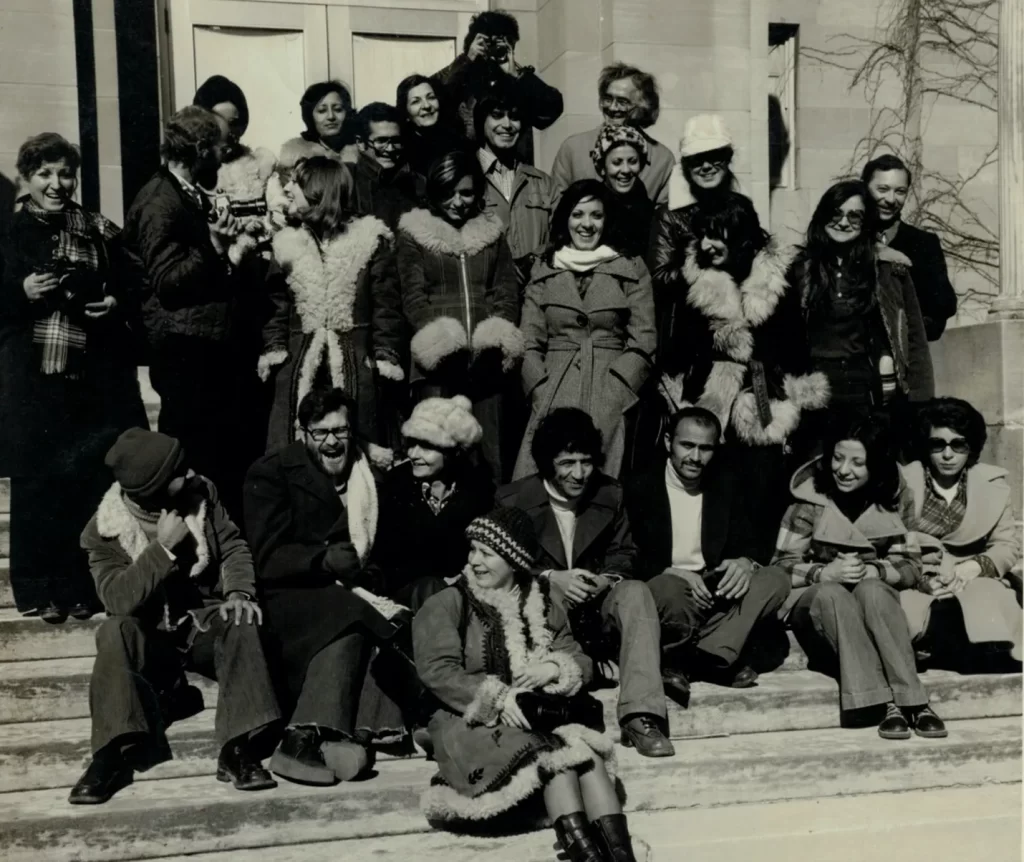
Figure 5.1 Educational technologist trainees and their instructors at Indiana University.

Training in both locations included:

  • Participation in seminars to learn about the principles of educational technology.
  • Producing instructional materials in hands-on workshops.
  • Receiving individual tutoring from instructors at each university.
  • Touring local and regional educational institutions and facilities, as well as public broadcasting stations.

On the way back to Iran, trainees visited educational broadcasting organizations, as well as other cultural and educational institutions in Britain, France, and Germany. Hands-on workshops included active participation in designing, developing, presenting, and evaluating an educational project tailored to the trainee’s chosen topic. Trainees in hands-on workshops selected a broad range of topics that included basic math and science, Farsi literature, history, and social sciences, among others. The programs crafted by educational technologists in these workshops reflected the depth and breadth of their educational background, their expertise in a particular subject matter, and their current professional interests.

For the design and production of their programs, each trainee wrote detailed project specifications that served as a blueprint to steer them in creating the instructional materials. These specifications not only showcased the individual trainee’s level of proficiency, but also revealed how much they had learned about the principles of systems approach to instructional design. Indiana University and Florida State University instructors presented these principles to the trainees in formal seminars. Topics included principles of educational systems design, primary concepts of behavioral, cognitive, and social learning theories, as well as contributions of Piaget to learning psychology, particularly for elementary school students. Other seminars included lectures on the principles of communication theory and their application to instructional system design. Instructors also tutored each of the trainees individually, reviewing their work-in-progress in various stages of development from planning and design to production, utilization, and evaluation. These consultations aimed to help trainees bridge the gap between theoretical principles of educational technology and the practical application of those concepts in their work.

Nevertheless, the final report in 1975 noted:

While the four-month program these NIRT participants took part in provided a wide variety of educational technology experiences, we wish it to be understood that only a beginning has been made. Functional and operational skills for professional work in this area require extensive involvement in the processes of planning, production, utilization, and evaluation of instructional media. (Final report 1975, 16.)

In addition to the final report from Indiana University, Dr. Ely wrote a summative evaluation of the entire UCIDT training program. He presented the results of various questionnaires where trainees were asked to rate their program both in Iran and in the United States. Overall, the results indicated that all trainees expressed satisfaction with the quality of instruction they received, often referring to it as “well-organized” and “systematic.” Most rated the quality of the program as “high,” while one of the trainees thought the quality was “very high.” A smaller group rated it as “average.” (Ely, 1978.)

These mixed results, however, reflected the personal experiences of the trainees as well. For most of them, this was the first time they were learning in a foreign country. The cultural adjustments they had to make in their personal lives might have impacted their experience of the training program. Also, for most trainees, this was the first time that they had to put their theoretical knowledge into practice and create tangible products to demonstrate their competency in a relatively short time. This marked a significant departure from their previous learning experiences, which likely focused primarily on recall of memorized information. Consequently, most trainees lacked a solid frame of reference from their past educational encounters when assessing the acquisition of practical skills in their responses to the evaluation questions.

Dr. Ely’s summative assessment also included a description of the unusual start of the implementation of the UCIDT training program in Tehran. He reported that initially the principal resident manager of the UCIDT program exhibited unprofessional behavior in fulfilling his assigned duties. For example, he failed to perform his basic responsibilities such as attending planning and coordinating meetings with the ERTI staff. As a result, the start of the training program was postponed several times.

Eventually, this author and Dr. Allen decided to ask Dr. Hudspeth to assume the role of the UCIDT project manager in residence in Tehran. This marked a turning point, as the training of new ERTI personnel commenced in earnest from this moment forward. Dr. Hudspeth’s expertise in the field of educational technology, coupled with his friendly personality and awareness of sensitive issues in cross-cultural communication attracted the cooperation of the ERTI’s administrative and accounting personnel. His professional management of the daily affairs of the project also helped to overcome the communication barrier between ERTI’s administrative staff in Tehran and the USC’s personnel in Los Angeles, working thousands of miles apart in different, inconvenient time zones.

After several long meetings with the author and ERTI unit managers, Dr. Hudspeth was successful in moving the project forward smoothly by coordinating the activities of the ERTI staff with that of USC regarding personnel and financial matters, as well as assignment of personnel to specific curriculum development and training tasks. Nonetheless, the administrative and accounting staff of ERTI had various degrees of proficiency in the English language, which limited their communication with UCIDT advisors in Tehran and USC administrators in the United States. Additionally, only a small number of ERTI administrative and accounting staff were familiar with the cultural norms of American advisors residing in Tehran. They underwent a period of adjustment to understand how to adapt to the informal mannerisms and practical work habits of the UCIDT personnel, which contrasted with their own more formal methods of communication and less practical methods of a government bureaucracy.

Once these initial complications were ironed out, job responsibilities became well-defined for the staff on both sides, allowing the program to gain considerable momentum. Dr. Ely’s report highlighted this momentum and its subsequent positive impact on the overall success of the project. The results of his summative evaluation encapsulated the views of both the American and Iranian staff on this subject. He noted: “Without exception, each respondent indicated in some way that ERTI is now using more systematic approaches in all of its activities.” Furthermore, he observed that the application of IDI’s nine-step system model is now not only recognized within ERTI, but within NIRT as a whole (p.13). The report also complimented ERTI management for trying to assign trainees to positions where they could apply their training in more productive ways:

“There appears to be a more serious attempt to match competencies gained in training with job responsibilities. With some awareness of the knowledge and skills which trainees have gained from the training program, it is easier to make such a match. Likewise, individuals appear to clarify their preferences for certain jobs and are active in seeking those appointments rather than passively accepting any position to which they are assigned.” (Ely 1978, 13.)

Despite these positive results, Dr. Ely’s evaluation report alerted ERTI leaders and managers, including this author, that not all of the trainees who had transitioned into full-fledged staff members were assigned to positions that matched their skills. Further coordination was necessary to ensure they were placed in positions where they could more effectively utilize their newly acquired knowledge and practical skills.

Applying the Principles of Instructional Systems Design

After finishing their program in the United States, the trainees proceeded to the third phase of their training program in Tehran. During this phase, educational technologists underwent on-the-job training by developing and implementing an Iranian version of the Instructional Development Institute (IDI). This was accomplished by adhering to the IDI development model presented in the section below, titled “Stages and Functions of Application of General Systems Theory to Educational Development in ERTI.” This prescriptive model showed the trainees how to apply the systems approach to create new instructional and learning materials and develop the necessary conditions to use them effectively (Harris, 1971). The same model constituted the basic method by which this author managed ERTI. Therefore, educational technologists undergoing on-the-job training were learning a model that also applied to managing the organization in which they worked.

During the third phase of their training program, the educational technologists realized that the methods they were learning for creating instructional materials and designing learning experiences closely mirrored the fundamental management methods and practices adhered to by Mr. Rahmanzadeh and myself. Furthermore, their American instructors and I explained to the trainees that both their current and future efforts would be reinforced and sustained through the implementation of systems approach principles to educational problem-solving, specifically in managing ERTI. They were assured that they wouldn’t encounter the typical obstacles often faced by staff in organizations where management principles clash with the concepts and methods that staff learned during training programs.

The following section clarifies the systems model that the trainees mastered to develop the Iranian version of IDI. It provides examples of how the model was put into use in managing ERTI. This section is based on the original IDI module titled “The Application of General Systems Theory to Instructional Development: A Self-Instructional Program,” written by Thomas Harris (1971).

Stages and Functions of Application of General Systems Theory to Educational Development in ERTI

Stage I: DEFINE

Function 1: IDENTIFYING PROBLEMS

Assess needs, establish priorities, and clearly state a particular problem as agreed upon by all concerned.

In general terms, the problems of education in Iran were very clear. More than 70% of the population were illiterate and in need of education to acquire basic skills in reading, writing, and arithmetic. Half of the school-aged children (9 million) lacked access to education and required some form of teaching and learning. Resolving these massive problems consumed the country’s educational resources. Qualitative issues, such as reforming methods of teaching and learning, as well as revising and updating textbook content, received less attention due to the prioritization of reaching the maximum number of learners with the available resources.

Very quickly, ERTI leadership realized that MOE personnel were facing a massive challenge to broaden educational opportunities for all eligible learners while enhancing the quality of teaching and learning. Furthermore, it became apparent that MOE’s capacity to fulfill these objectives was severely constrained. Acknowledging these pressing needs, ERTI leaders opted to strategically reallocate the organization’s scarce human resources, dedicating 40% of its staff to retraining teachers for the MOE.

Originally, NIRT leadership viewed the responsibility of teacher retraining to lie within the purview of the MOE. However, as the shortcomings of the MOE became increasingly evident, they willingly stepped in to support the significant task of retraining teachers to the fullest extent possible. This was a major strategic change for a broadcasting organization, redirecting a substantial portion of its resources toward conducting in-person workshops for teachers within schools. This strategic pivot was further reinforced when ERTI leaders and their American advisors developed a computer simulation model to forecast the future trajectory of ERTI. The results of the simulation project, presented in Chapter 8, clearly indicated that without direct assistance from ERTI in retraining MOE teachers, ERTI would fail entirely in a matter of a few months.

Function 2: ANALYZE SETTING

Locate and collect information about the educational background of the audience, their learning conditions, and available resources in order to train them to address the problems defined in Function 1.

Now that it was obvious to ERTI leaders that teacher training was a top priority, the author decided to collect data from a small group of teachers in selected schools in Tehran to assess the quality of their instruction. This assessment focused on measuring the ratio of direct versus indirect instructional methods employed by teachers in their daily practices. The collected data revealed that the direct method of teaching was the norm in most schools. This approach consisted of teachers literally dictating information to learners, expecting verbatim recall, and maintaining a unidirectional flow of information from teacher to student. Interaction between teacher and student was minimal or non-existent.

Higher-level learning activities, such as, analytical thinking, problem solving, and decision making were generally absent in these classrooms. It was reasonable to assume that teachers in other cities and villages also adhered to a direct method of teaching. This assumption was grounded in the fact that most teachers followed the same direct method of teaching established by clergy in religious schools centuries ago. Even teachers who were exposed to other methods of instruction during their pre-service education found it challenging to break away from the direct method of teaching advocated and practiced by clergy. It was deeply and widely ingrained in the Iranian educational system.

Obviously, a direct mode of teaching was not applicable to the effective use of educational television in classrooms. However, the data clearly revealed that an indirect method was absent in all classrooms, except in one instance. Optimal utilization of televised programs required an indirect method of teaching when teachers interacted with learners, asked questions from them, and responded to their inquiries. It was also necessary for teachers to prepare students for the viewing of upcoming lesson on the television screen and engage their students in learning activities after they viewed a program. This was to assist them in better comprehension of the contents of each lesson and to enable them to perform higher level cognitive tasks beyond simple recall of information. (The project to assess the direct vs indirect mode of teaching in selected classrooms in Tehran is presented in detail in Chapter 3).

Another example in completing Function 2 was to collect data about the media equipment available in schools and assess the readiness of schools to receive additional equipment. ERTI technical staff also needed to know to what extent the MOE required a cadre of trained electronic technicians to service schools’ television receivers, coaxial network installations, and other media equipment. It became quickly evident that the MOE would not be able to service the hardware technologies in schools without receiving substantial technical assistance from ERTI. In addition, it became clear that certain school buildings did not have adequate access to electricity. Their electrical system had to be upgraded if they wanted to use audio-visual equipment.

Implementation of Function 2 at the program production level included assessing learning needs of individual students. This assessment was necessary for producers to improve the quality of their program by addressing the diverse learning needs of as many students as possible across various subjects. Conducting a needs assessment was a highly specialized task and members of the newly formed Evaluation Unit took on the responsibility of implementing this critical job. The small group of evaluators began a methodic process of collecting data on the needs of students in schools across different neighborhoods in Tehran, each with varied socio-economic conditions. This data collection included students’ knowledge of specific subjects in selected Guidance Schools. Dr. Safaeddin Jahanbani, a proactive manager of NIRT’s Fars Center in the Shiraz, initiated a comparable process to assess the needs of learners in selected schools in the Fars province. Details of this project are presented in Chapter 8.

Function 3: ORGANIZE MANAGEMENT

Organize all activities necessary for resolving the identified educational problems, such as setting goals, classifying tasks to reach the goals, setting timelines for achieving goals, and assigning responsibilities to specific staff members for reaching the stated goals.

NIRT requested educational communication researchers at Stanford University to develop a long-term development plan for ERTI. This plan included identifying the educational problems of Iran in detail and presenting specific areas for creating and broadcasting radio and television programs to address these problems. The long-term plan also included using a telecommunication satellite to expand radio and television transmission nationwide, including the most remote cities and villages. Details of this project are presented in Chapter 9.

To respond to the MOE’s immediate needs, this author requested Dr. Root from Syracuse University to collaborate with members of ERTI’s Planning Unit in a reorganization effort. This allowed Stanford University planners the necessary time to complete their long-term planning process and present it to ERTI. The short-term reorganization involved creating a new organizational chart for ERTI; defining the operational functions of its staff; and implementing a system modeling and simulating project to assess the conditions under which ERTI could succeed. Details of these tasks are presented in Chapter 8.

Stage II: DEVELOP

Function 4: IDENTIFY OBJECTIVES

Identify the specific final and enabling objectives that learners or staff are expected to achieve as the result of a learning program or reorganization effort.

An example of Function 4 was when ERTI’s Evaluation Unit developed a model of assessment. This assessment model had several applications, one of which was to assist program producers and MOE subject matter experts in defining learning objectives for each program more precisely. During the assessment process, evaluators also offered feedback to producers about how well the contents of their new programs were meeting the students’ learning needs. With that information, producers could define more targeted learning objectives when they revised existing programs or produced new ones in the future. Initially, the available data on needs assessment and program evaluation was meager. Nonetheless, the information was sufficient for producers to revise objectives of some programs in consultation with MOE subject matter experts. This process, however, was delicate for two reasons. First, the revised learning objectives had to align closely with the approved MOE curriculum. Second, ERTI Unit managers needed to reassure producers that the evaluation data would not impact their retention, promotion, or other personnel matters; it was solely intended to improve the quality of their programs.

Function 5: SPECIFY METHODS

Determine which instructional strategies, materials, and resources will maximize learning of specific objectives for particular content areas, for specific learners under certain learning conditions. Function 5 was also applicable to managing ERTI: Determine which management strategies and operational conditions will maximize the efforts of the staff to reach their organizational goal of assisting the MOE and other client institutions.

Leaders of ERTI applied the same system model to manage the organization that producers and educational technologists employed for creating their radio and television programs or conducting in-person training workshops for teachers. In turn, school administrators and teachers who participated in IIDI workshops implemented the same system model in their schools and classrooms, creating a multiplier effect to serve more students in less time with more effective results.

As the educational technologists became more competent, Mr. Azadan, the Production Unit manager, guided them to assist radio and television producers in selecting specific instructional and learning strategies in their programs, based on the needs assessment data collected in Stage II Function 4. This task of selecting instructional and learning strategies was intricate, requiring a comprehensive understanding of learning theories and their applications to instructional message design for radio and television. Initially, achieving full implementation of this function at an ideal level was not feasible. However, with time, the educational technologists enhanced their knowledge of instructional system design and its underlying principles in psychology, sociology, and related disciplines, becoming more competent in executing this function.

The leadership of NIRT showed remarkable patience and foresight in allowing educational technologists to develop their professional tasks. They provided ample time and support for the trainees to fully grasp the complexity of their roles and tasks.

Function 6: CONSTRUCT PROTOTYPES

Design, produce, and assemble all materials for an instructional program and construct a prototype of the program.

An example of this function was creating and delivering either a full IIDI workshop or segments of it to a small group of MOE teachers and administrators. Educational technologists invited these small groups of teachers and administrators to tour ERTI facilities, where they presented either the complete IIDI workshop or specific segments, while also assessing their reactions. This practice aimed to improve the effectiveness of IIDI during its design, development, and production phases. Each presentation session elicited feedback from the audience, which educational technologists used to modify various segments of the workshop’s materials. They also adjusted modes and procedures of their presentations based on this feedback. Incorporating input from an Iranian audience also ensured that the workshop became more culturally relevant to the needs of teachers and administrators. While the initial participants in IIDI workshops were all from Tehran, there were variations in cultural perspectives among teachers and administrators who served students from different neighborhoods with distinct socio-economic backgrounds. In this scenario, a one-size-fits-all approach was not suitable. Each workshop had to be slightly different to address the specific cultural, social, and economic needs of students in different areas of the city.

Another example of this function was evident in how producers revised their previously produced programs. In 1974, as the small Evaluation Unit of ERTI took shape, evaluators reviewed some of the earlier television programs created for the first year of the Guidance Cycle. These programs were regarded as “prototypes,” providing feedback to their producers to revise and reproduce them. This process was formalized by Ms. Monjazeb, the manager of the Evaluation Unit in later years.

Stage III: EVALUATE

Function 7: TEST PROTOTYPES

Evaluate instructional prototypes with a representative sample of the student audience. Collect and record evaluation data.

From the early stages of training educational technologists, UCIDT instructors emphasized the importance of testing and evaluation. Even during the short period that this practice was implemented, ERTI gained a reputation as an academic organization where formal testing and evaluation of radio and television programs was taken seriously. Instructional technologists regularly hosted student groups for tours of ERTI headquarters in Tehran. During these visits, students listened to segments of radio programs or previewed video clips and other multimedia materials, such as slide-tape presentations. Members of the Evaluation Unit guided producers and educational technologists in interviewing students to gauge their reactions to the previewed materials.

In addition to these efforts in Tehran, Dr. Jahanbani, the manager of NIRT’s Fars province center, invited Pahlavi University faculty and staff to independently evaluate the impact of ERTI television programs on Guidance Cycle students, specifically in schools in Shiraz and other cities in Fars province. The results of this evaluation project are presented in Chapter 8.

Function 8: ANALYZE RESULTS

Analyze and interpret data from the program prototype trials. Revise all previous instructional development functions based on the collected data.

The Evaluation Unit staff provided producers and educational technologists with the results of evaluation studies from Function 7, aiding in the improvement of the design and development of their future programs. Educational technologists regularly revised the materials they presented in IIDI workshops based on both formal evaluation results and informal interactions with workshop participants. As they gained more field experience and collected formal data from teachers and school administrators, they made minor adjustments to each workshop to better meet the learning needs of the audience. With growing confidence in their work, they began producing different versions of IIDI for audiences beyond the teachers and administrators of the MOE. These new audiences included personnel of NIRT Network One and Network Two, as well as Radio Kabul personnel who came to Tehran to participate in an IIDI workshop. Additionally, educational technologists produced and presented a specialized iteration of IIDI for 200 officers of the Imperial Iranian Ground Forces, who were to receive additional training in the United States to serve as educational technologists in their respective units.

Function 9: IMPLEMENT/REVISE

Implement the completed program for its intended audience. Review all of the instructional development functions. Revise and modify the instructional materials and instructional development process. Decide to expand the implementation of the program on a wider scale as designed.

A prime example of this function was presenting IIDI workshops to a broader group of school administrators and teachers in Tehran and a few other cities. The initial goal of ERTI was to train 60,000 teachers through at least one IIDI workshop. Achieving this required ERTI to increase participation from schoolteachers and administrators. Without the involvement of a pioneering group of educators, it would have taken ERTI personnel decades to introduce educational systems design principles to tens of thousands of teachers nationwide. To fulfill the initial goal of retraining 60,000 teachers, MOE personnel needed to become completely self-sufficient in offering IIDIs to their colleagues. Therefore, the first groups of teachers and administrators who participated in at least one workshop were tasked with introducing the concept of instructional system design to others in their schools.

Having teachers and administrators offer IIDIs to their peers was essential to eventually allow ERTI staff to transition into a supporting role. For example, as teachers conducted more workshops for their peers, it became clear to educational technologists that most schools lacked the necessary equipment for optimal presentations. Some even required additional electrical power for using multiple slide and film projectors simultaneously. As a result, ERTI staff assumed a logistical role in providing media equipment to various schools in Tehran and other cities. They also assisted school administrators in installing and utilizing this equipment properly. Additionally, they alerted ERTI leadership to the need for helping schools gain access to more electrical power.

Certainly, at the beginning, educational technologists and producers did not apply the IDI development model perfectly. Most producers were unfamiliar with the model, requiring time to adjust their production procedures to include specific steps from the system model into their workflows. Also, certain aspects of the model, such as collecting data in schools to assess the effectiveness of television programs, proved to be time consuming. Producers, educational technologists, and evaluators had to obtain permits from schools to collect data – a process that often took weeks to complete.

Their hope was that by offering IIDIs in schools, MOE personnel would gradually overcome their reluctance to allow ERTI staff to collect data in their classrooms and become more receptive to hosting evaluation sessions. These challenges, however, were typical when implementing new procedures in any organization. The leaders of ERTI believed that both ERTI staff and their counterparts in schools needed more time to gain experience with the new production-to-evaluation cycle and understand how it was improving the outcomes of their work.

Despite this, ERTI staff consistently faced the challenge of balancing their mission to produce more radio and television programs to cover the entire MOE curriculum with integrating the specific steps of the IDI system model into their workflow. This issue sparked numerous discussions between this author and Mr. Azadan, the manager of the Production Unit. One of his primary responsibilities was to increase the quantity of educational materials while improving their quality. His tireless efforts to achieve these seemingly conflicting goals were focused on integrating the IDI system model into the production workflow of producers as a solution to boost productivity while enhancing the program quality. However, he always emphasized to the author that meeting these goals “could not be done overnight.” It required his sustained and patient coaching of producers to gradually enhance their understanding of novel production techniques and the underlying systems principles that made their production more efficient and effective.

Implementing the Iranian Instructional Development Institute in Schools

As indicated in this chapter, educational technologists followed the nine functions of the instructional systems design and development model during their on-the-job training. Their training consisted of creating the Farsi version of IDI or the Iranian Instructional Development Institute (IIDI). This Farsi version included narrated slide presentations, simulation exercises, role-playing events, and reading materials. These resources instructed future workshop attendees on how to independently implement the nine functions of the instructional design and development model in their own schools.

The media materials, role-playing and simulation exercises, and other learning activities had a distinctly Iranian flavor, look, and feel compared to the original materials in English designed for an American audience. All audio and visual materials were produced in ERTI studios or local school settings, featuring volunteer teachers and administrators from the MOE. The role-play scenarios, which were designed to promote team building and collaborative problem-solving skills among workshop participants, adhered to Iranian cultural norms in social mannerism and interpersonal communication.

In translating the materials from the original English version, a major issue arose in finding Farsi equivalents of common terms in the field of educational technology. At the request of NIRT, the Ministry of Science and Higher Education formed a special committee of elder experts in Farsi literature to assist ERTI in this important and sensitive matter.

During the 1960s and ‘70s, Iranians adopted many new technologies from other countries, resulting in the incorporation of foreign words associated with these technologies into written and spoken Farsi. The literary elite, however, disapproved of these alien terms and campaigned to replace them with Farsi words. For example, radio was referred to as rådio because there was no Farsi equivalent for it, and television was called televizion, adopting the French pronunciation.

While some educational technology terms could be easily translated, the experts found it difficult to find and agree on Farsi translations for others. Deciding on a Farsi equivalent for each English term required extensive discussion and deliberation. Given the reverence that the committee of Farsi experts had for their beloved language, this task could not be completed quickly. Additionally, it was uncertain whether practitioners and others, such as journalists, would readily accept the committee’s proposed words. New words needed to sound natural and fit the melodic sound of spoken Farsi.

ERTI leaders expected that as IIDI workshops were offered in schools across various provinces, local teachers and administrators would produce instructional materials that reflected their own cultural norms. They could also incorporate local expressions in Azari, Kurdish, and other regional languages. Although all the IIDI materials were originally produced in Farsi, it was conceivable that teachers and administrators in different provinces would want to create versions of IIDI in their regional languages and dialects. However, in doing so, they would also face the same challenge of finding equivalent terminologies.

Despite the linguistic challenges, the key point was that future attendees of IIDI workshops across all provinces would follow the nine steps of the instructional model, based on universal concepts in science. Still, in following the model, workshop participants had significant freedom to create instructional materials and learning events tailored to their immediate needs, reflecting their local customs, manners, and norms of social behavior and interpersonal communication. In essence, the success of the entire project depended on the extent to which they engaged in data-based needs assessment and decision-making while conducting the workshops.

Taking IIDI to the Field

The dedication and hard work of educational technologists led to the development of the Iranian version of Instructional Development Institute in Farsi within a few months. Educational technologists Ms. Fahimeh Farzam, Mr. Mahmoud Kayhani, and Mr. Masoud Vayes-Zadeh, took leadership roles in designing, producing, and field-testing the IIDI. To begin the process of preparing IIDI workshops in schools, educational technologists held a seminar for 160 school principals in Shahram Guidance School on November 3, 1976. During this seminar, they briefed the participants about on-air programs of ERTI as well as its non-broadcast workshops. At the end of the seminar, the administrators were invited to visit and take an extensive tour of ERTI’s headquarters.

Several school principals responded immediately, requesting visits to ERTI and expressing interest in bringing some of their teachers and students along. The schools that responded included Amouzesh, Apadana, Behbahani, Firouzkuhi, Forough Khavar, Jam-e-Jam, Kamal, Kamran Noush, Khalij-e-Fars, Khashayar Shah, Ravesh-e-Now, Meshkot, Motarjemoldoleh, Movvahed, Nezam Mafi, Pirouzi-e-Naft, and Shahab.

This author held daily conversations with educational technologists as they guided administrators, teachers, and students on tours of ERTI in preparation for offering IIDI workshops in their schools. During these visits, some teachers and administrators volunteered to participate in an entire IIDI workshop, providing formative evaluation data to help refine the workshops. The educational technologists also conducted individual interviews with participants to gather more detailed feedback on how to make the workshops more relevant to their needs.

As a result, most participants became very interested in transferring their experiences back to their own schools and holding IIDI workshops for their peers and students. During these early days, educational technologists involved in conducting workshops reminded this author that they could only accommodate a small fraction of the teachers, administrators, and students interested in participating in the first round of field trips. They also reported that the enthusiastic response to touring ERTI and participating in an IIDI workshop indicated a need to prepare for many more eager visitors in the weeks and months to come.

Over time, the outstanding performance of educational technologists in hosting field trips to ERTI and holding IIDI workshops became legendary. Their reputation spread throughout NIRT, and producers of various popular programs on Network One and Network Two also began attending IIDI workshops voluntarily. Eventually, participation in these workshops became part of the orientation for all new NIRT employees.

After several in-house trials, educational technologists became convinced that they were ready to venture out and hold IIDI workshops in schools beyond the ERTI headquarters. To facilitate this, they created an efficient logistical system to present the workshops to MOE teachers and administrators in their own schools throughout the ever-growing city of Tehran. While conducting IIDI workshops in various schools throughout Tehran, they developed an outstanding rapport with teachers and administrators, motivating them to independently hold IIDI workshops for their peers and students.

As teachers and administrators became proficient in running IIDI workshops for their peers and students, the day-to-day operations of offering workshops were gradually transferred to MOE personnel in some schools in Tehran. However, educational technologists and NIRT technicians assigned to ERTI continued to oversee the general management of the program and provide logistical support, particularly in shipping slide projectors, audio recorders, television sets, and other equipment to the schools as needed.

The Appeal of IIDI

The novel hands-on and learning-by-doing approach introduced by educational technologists quickly became a hit among educators and their students. As a result, holding IIDI workshops became a routine event at ERTI, as well as in selected schools in Tehran and a few other cities. During each workshop, participants actively learned how to create their own instructional materials for conducting IIDIs for their colleagues and students in their own schools. This hands-on approach involved creating booklets, posters, narrated slide presentations, simulations, educational games, and role-playing events. This mode of learning-by-doing was a significant departure from what teachers and administrators had previously experienced, and they took great pride in what they were able to produce and accomplish on their own. No longer mere passive observers in a lecture hall or a classroom, their learning-by-doing yielded tangible results in their schools.

The train-the-trainer model of IIDI required participants not only to become active creators of instructional materials but also to take ownership of the IIDI program in their schools. This responsibility for holding future workshops for their peers and students proved to be a major motivating factor for school administrators and teachers. Some began to offer workshops in schools on their own initiative, with only backup support from ERTI. To be sure, there were many challenges in some schools due to a lack of technical equipment and facilities, especially in the older sections of Tehran and other cities. Some schools reportedly lacked sufficient electric power to run the audiovisual equipment required for the workshops, while others did not have adequate space for staging hands-on activities, as many MOE schools were in rental properties not designed to house a school.

Despite these limitations and the small number of educational technologists working at ERTI, the train-the-trainer model proved to be a logical method for developing a sustainable multiplier effect, creating an effective cadre of motivated and creative educators throughout the country. The enthusiasm of teachers and administers to learn new competencies and enable their peers and students to perform these newly acquired skills largely compensated for the lack of physical facilities, promising a steady growth in the transfer of systemic instructional methods to schools.

The systems approach to the creation, dissemination, utilization, and evaluation of instructional materials was a significant departure from the recite-and-recall method of education traditionally employed by the MOE. This difference became more pronounced as IIDI workshops were offered to schools, highlighting the pedagogical barriers to expanding collaboration with the MOE. The next chapter will discuss these barriers in detail.
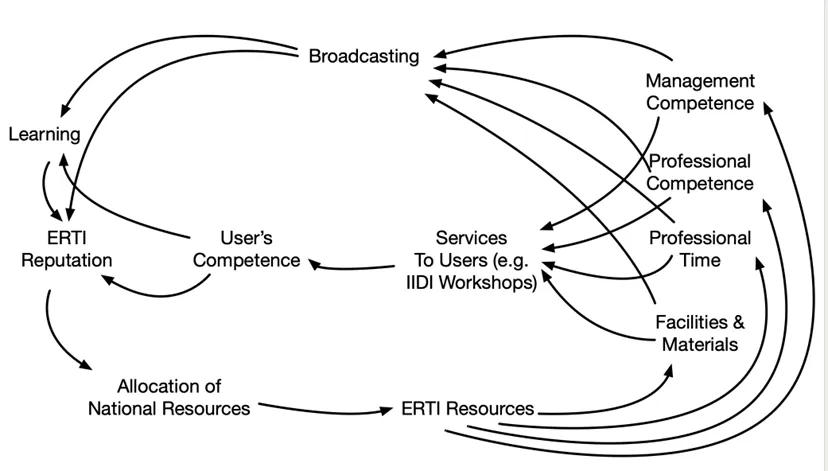
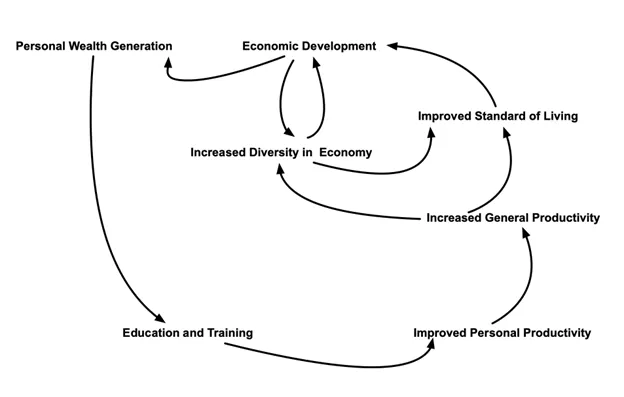
References

Ely, D. P. (1978). Evaluation report of the educational technologist training program conducted by the University Consortium for Instructional Development and Technology. Educational Radio and Television of Iran.

Harris, T. (1971). The application of general systems theory to instructional development: A self-instructional program. Unit 3 Module 1 [ERIC Document No. 132 642]. National Special Media Institute.

Rostow, W. W. (1960). The stages of economic growth, a non-Communist manifesto. University Press.

Williams, D. G. (1959). Syracuse University contract terminal report. The Fine Arts Administration and Syracuse University.

Pedagogical Barriers Between the MOE and ERTI

Pedagogical Principles of ERTI

By 1975, educational technologists and producers had begun applying the ADDIE model to create radio and television programs, achieving varying levels of competency and success. They also conducted IIDI workshops for a small group of MOE teachers and administrators, gathering feedback to refine the workshops further. However, as the coordinating committee meetings progressed, pedagogical differences between ERTI and the MOE began to surface (Saba, 1975).

In MOE-managed schools, teaching and learning were rooted in a traditional model that originated in religious schools or maktabs, where students primarily memorized their teachers’ dictations. In contrast, ERTI’s approach was grounded in the principles of educational technology, emphasizing the engagement of learners’ cognitive, affective, and behavioral faculties in unison. This approach aimed to cultivate and enhance their analytical thinking, problem solving skills, and decision-making competencies, while also motivating students to pursue independent inquiry (Saba, 1976).

During the 1960s and 1970s, educational technologists benefited from emerging theories and research-based insights into learning and instruction. While B. F. Skinner (1969) advanced behavioral principles of learning, models of learning during this period expanded beyond mere behavior modification to encompass cognitive skills and motivation as integral, dynamic components of behavior. (Bourne et al., 1971).

Robert Gagne (1965) further delineated the conditions for learning, organizing them into nine hierarchical levels that ranged from simple signal learning to more complex concept learning. These levels also incorporated the development of analytical skills and problem-solving competencies. Later, John Keller (1979) introduced key motivational components in education, emphasizing the importance of capturing and sustaining learners’ attention, making learning relevant, building students’ confidence, and ensuring they experience intrinsic or extrinsic satisfaction from their learning. Additionally, Robert Kuhn (1970) argued that knowledge is not a static set of facts but a dynamic phenomenon that evolves over time, driven by new scientific observation and evidence.

The introduction of these principles of learning and knowledge coincided with the development of learning taxonomies. Krathwol et al. (1974) categorized learning objectives under six major headings: Knowledge, Comprehension, Application, Analysis, Synthesis, and Evaluation. These widely accepted taxonomies provided educators with a structured framework to clearly articulate learning objectives and establish assessment criteria for students.

Concurrently, a comprehensive study of learning psychology by Hilgard and Bower (1966) identified  the following principles that could significantly enhance instructional effectiveness and learning aptitude:

  1. Perceptual features of instructional materials: Learning is facilitated when written materials and images are sharp and clear.
  2. Organization of knowledge: Coherent instructional information, related to a central organizing theme, is easier to learn than fragmented knowledge.
  3. Learning with understanding: Instruction is more effective when the material is meaningful and valuable to the learner.
  4. Cognitive feedback: Learning proceeds more rapidly when learners can practice applying new knowledge and receive feedback on their performance.
  5. Goal setting: Learning is more rapid and effective when learners set their own goals (or participate in goal setting) and when activities are directed toward reaching those goals.
  6. Divergent thinking: Divergent thinking, which involves finding multiple solutions to a problem, facilitates learning more effectively than convergent thinking, which focuses on a single solution.
  7. Predisposition to learn: When learning experiences are motivating, they create a context that increases the learner’s willingness and eagerness to learn, leading to higher skill acquisition and better performance.
  8. Structure of knowledge: Learning is enhanced when instructors present a body of integrated, cohesive knowledge.
  9. Sequence: Presenting learning materials in a sequence from simple to more complex concepts is more conducive to learning.
  10. Reinforcement: Establishing a schedule for reward contingencies, progressing from extrinsic reinforcement to intrinsic or self-controlled reinforcements, enhances learning achievements.

To emphasize ERTI’s teaching and learning approach, based on the principles of educational technology, this author developed the Pathfinder System of Education (PSE) (nezam-e-amoozesh-e-pishro) (Saba, 1975). The PSE framework encompassed the following key elements:

  • Offering multiple means and sources of learning to students.
  • Presenting knowledge as a multifaceted, dynamic, and growing concept.
  • Providing an opportunity to learners to use their cognitive abilities beyond rote memorization.
  • Nurturing analytical thinking skills among students to help them choose among various learning resources and perspectives.
  • Fostering diverse problem-solving approaches among students to teach them to view problems from multiple angles and apply their learning to solve novel challenges.
  • Cultivating decision-making competencies among learners.
  • Promoting self-awareness to help students recognize their talents and capabilities.
  • Creating opportunities for learners to demonstrate their knowledge and skills in different scenarios.
  • Encouraging students to value their unique abilities, enabling them to chart their own independent paths in society.
  • Equipping students with the social skills necessary to thrive in their school environment and beyond (Saba, 1975, p. 2).

In August 1975, the annual Conference on the Evaluation of Educational Revolution, held in the resort town of Ramsar, provided a unique opportunity to present PSE to a broad audience of influential policymakers. During this conference, the principles of PSE garnered focused attention from the highest-ranking government officials, university presidents, and other prominent decision-makers in educational and cultural institutions.

The Maktab Style of Teaching and Learning

ERTI’s approach to teaching and learning was in sharp contrast to how teachers taught, and students learned in the MOE-managed schools, which followed the antiquated and outdated form of education in maktabs or religious schools. In his comprehensive study of Iranian culture and education, Sadiq (1971) described maktabs as single-classroom schools where students of different ages received the same lesson from a clergy member—either a mullah or an akhund. The quality of instruction depended heavily on the theological knowledge and teaching ability of the Mullah, resulting in a highly inconsistent educational experience.

The maktabs primarily served boys, although girls also attended until around the age of nine. After they reached puberty, girls’ formal education typically ended, unless their parents could afford to hire a tutor. These tutors, usually women with limited knowledge and teaching skills, would continue the girls’ education at home. For many older teenage girls, learning ceased altogether as they married early and became responsible for raising their own children.

For centuries, since the advent of Islam, learners in maktabs were largely passive observers in their education. Mullahs dictated what was taught, relying on the limited materials available in their personal libraries. As a result, there was no standardized curriculum across different maktabs. Instruction was based on a few handwritten manuscripts that each mullah possessed, as printing presses only reached Iran in the 19th century.

These manuscripts were often riddled with errors, omissions, and additions, leading to significant variations in content even among copies of the same work with the same title in the hands of other maktab instructors. Students’ learning materials were primarily their own handwritten notes, taken from the mullah’s dictations as he read aloud passages from his books. Occasionally, a student who garnered special attention from the mullah might be allowed to borrow a manuscript to make a handwritten copy for himself.

Mullahs regarded their manuscripts as sacred and insisted that students adhere strictly to their content, leaving no room for deviation or independent thought. From their perspective, the primary goal of attending a maktab was to memorize what was dictated as precisely as possible and repeat it back faithfully. Analytical or creative thinking was neither required nor encouraged.

A prime example of this approach was memorizing the Quran. Mullahs instructed students to commit the Quran to memory and recall it word for word. Although Farsi and Arabic alphabets are almost the same, most Iranians did not speak or understand Arabic. As a result, students could pronounce Arabic words of the Quran with some accuracy, but often had no comprehension of their meaning. For many, memorizing the Quran became a rote exercise devoid of understanding[1]. Unless a mullah chose to interpret certain versus, which was neither comprehensive nor systematic, the exercise remained largely meaningless for most students.

Learning by memorizing was not limited to the Quran. Mullahs required students to memorize their lessons in other subjects, such as Persian literature and mathematics. Comprehension was not necessarily expected; the ability to recite the material from memory was considered sufficient proof of learning for the mullah. If students did happen to understand or think analytically about the material, it was purely incidental. Overall, the emphasis in maktabs was on rote learning rather than on fostering deeper understanding or analytical thinking.

If a student chose to pursue further education beyond the maktab, he would enroll in a madrasah. At this more advanced level, the curriculum expanded to include the study of hadith (stories related to Prophet Muhammad and his immediate disciples), jurisprudence (fiqh), and its supporting disciplines such as logic, or in the Shi’a tradition, kalam. However, the application of kalam as an exercise in logical reasoning was limited to the study of hadith and fiqh, with little exploration beyond these subjects.

Other subjects were taught strictly from a theological perspective. For instance, in Persian literature, mullahs directed students to focus on selected passages that praised God and supported the core tenets of Shi’ism. Students studied mathematics only to the extent that was necessary for performing religious rituals, such as determining the correct times for daily prayers (Deen, 2007).

If a learner wanted to progress beyond the traditional madrasah education, he could pursue further studies with one of the ulema (knowledgeable clergymen) and work towards attaining the status of a seeker of knowledge (mujtahid). At this level, he would engage in limited speculative thinking within the framework of Islamic jurisprudence. Although he would be involved in making conjectures or interpretations, these ideas were examined by his teacher and other ulema carefully to ensure they adhered closely to established doctrines. Deviations from accepted beliefs or dogma were minimal or, simply not permitted.

Education and Political Philosophy of Islam

The discouragement of independent thinking and creative learning in maktabs and madrasahs can be traced back to Islam’s political philosophy, particularly the ideas of Al-Farabi, who lived between 870 and 950. Al-Farabi is considered the founder of Islamic political philosophy, and his doctrine gained prominence in Shi’a Islam over the centuries and is still followed today in theological circles worldwide (Mahdi, 2001).

Al-Farabi acknowledged individual differences in thinking and disposition toward life. However, he adopted an elitist approach, distinguishing between the masses and the elites. He and his philosophical successors believed that while all individuals had the capacity for basic education, a deeper understanding of the divine was reserved for a chosen few. This advanced knowledge was thought to come from direct inspiration and perhaps even revelation, although receiving revelation itself was considered the exclusive domain of the prophets. Thus, the masses were limited to a cursory education, with further study for deeper divine knowledge reserved for those privileged enough to advance beyond the maktab and madrassah to become seekers of knowledge (Mahdi, 2001, p. 25).

Because no other institutions consistently provided general mass education nationwide, mullahs for centuries offered rudimentary education to those few individuals who took the initiative to learn in a maktab. Even fewer males attended a madrasah, and only a handful elevated themselves in scholarship to join the ranks of the ulema. Throughout Iran’s long history, very few other institutions offered formal educational services consistently, and those that did were heavily influenced by the clergy not designed for mass education. As a result, most people in the country, over the ages, remained illiterate, and any education they received was primarily from the clergy.

Al-Farabi’s political philosophy contributed to setting the clergy apart from the rest of society, granting them an exalted social status. This social stratification persisted for centuries and remained evident throughout the latter part of the 20th century, including the 1970s. Personnel of the MOE who managed schools also enjoyed a higher social status due to their profession. Teachers and administrators were highly esteemed by society, and students generally held them in great respect.

Students typically followed their teachers’ instructions closely and adhered to their admonishments. In classrooms, students were expected to remain silent, listen attentively, and take notes. Those who spoke up were often reprimanded and instructed to stay quiet, with persistent talking sometimes leading to punishment. Corporal punishment was common in maktabs and in the few MOE-managed schools in the 19th century. Although corporal punishment largely disappeared in MOE schools during the latter half of the 20th century, other less severe forms of discipline took its place. As a result, the educational environment largely involved a one-way flow of information from teacher to student, with little expectation of feedback from learners.

Determining the Extent of Direct Teaching Methods

In 1974, this author conducted a small study to collect empirical, quantitative evidence for direct teaching methods in classrooms, using Amidon and Flanders’ indirect and direct categories of “teacher talk” (Amidon & Flanders, 1967). The goal was to determine how closely teachers adhered to the maktab form of direct teaching, characterized by a unidirectional flow of information from teacher to learner.

The success of this research project was largely due to the scholarly and managerial expertise of Ms. Vida Amini, a member of ERTI’s small Research Unit, which at the time consisted of only two employees. Ms. Amini played a crucial role in persuading school principals to participate, earning the trust of teachers who were initially apprehensive about the aim of the project. She received their consent to be observed while teaching and also supervised the classroom observers, who were new to the sensitive task of data collection.

To gather data, Ms. Amini and I trained 20 observers from the MA program at the Graduate School Cinema and Television, the formal academic unit of NIRT. These students who became observers conducted fieldwork in 16 elementary, guidance cycle, and high schools across different neighborhoods in Tehran, representing a range of socioeconomic conditions (SEC).

We anticipated that classroom interactions in all school levels and in all neighborhoods would yield very low indirect/direct (I/D) ratios. A low I/D ratio would suggest limited teacher-student interaction, while a high I/D ratio indicated more frequent, constructive exchanges between teachers and students.

The analysis of the data confirmed that in all observed elementary classrooms, teachers primarily directed students to sit silently and follow instructions, rarely engaging in discussions or even simple dialogues. Any interactions were mostly centered around classroom management rather than the lesson content. Communication was typically between the teacher and the entire class, with little to no engagement with individual students. Moreover, there were no interactions among students themselves. Teachers did not cultivate behaviors that could enhance students’ communication skills leading to social learning.

The average I/D ratio in the guidance cycle classrooms was also low, similar to those observed in elementary classrooms. Less than one-third of teachers’ total activities were conducive to student participation. Guidance schools in higher SEC neighborhoods showed a slightly higher I/D ratio. Nevertheless, even in these better-resourced schools, teachers spent an inordinate amount of time managing what they perceived as inappropriate student behavior. This was despite the fact that the curriculum for guidance schools emphasized the importance of engaging students in making decisions about their future careers. In principle, the guidance cycle was meant to develop students’ analytical thinking and decision-making skills, enabling them to plan a future career path and chart an academic course to acquire the necessary competencies, whether that involved attending a technical school or pursing further education at a university. However, there were no formal interaction between teachers and students, nor among students themselves, to discuss career options, analyze academic requirements, or make informed choices about future study paths. Teachers either lacked adequate training to foster interaction or were reluctant to engage students in constructive discussions for fear of losing control of the classroom.

Data collected in high schools revealed a marginally higher I/D ratio compared to elementary and guidance cycle schools. There was at least one instance of effective teacher-student interaction observed in an algebra class, where the teacher solved a problem on the blackboard while students actively participated. In this rare case, students were highly engaged and genuinely interested in collaborating with the teacher.

In contrast, the situation in science classes was markedly different. In one physics class, the teacher slowly dictated a lesson, allowing time for students to transcribe it word-for-word. The classroom was noisy, and students seated at the back paid little attention to the teacher’s instructions. A similar scenario occurred in a chemistry class, where, lacking laboratory facilities to demonstrate experiments, the teacher recited the procedure for a chemical reaction from a textbook that was available to students, while they took notes. During this process, the teacher expelled two students for not taking notes and distracting their peers (Saba, 1976, pp. 81–89).

In all the schools observed, classroom overcrowding was a significant barrier to meaningful teacher-student interaction. Class sizes ranged from 65 to 70 students in schools across all three SECs. Even in schools located in high-SEC neighborhoods, the teacher-to-student ratios were not any better. Although this study was small and focused solely on Tehran, its findings aligned with those of other researchers examining teaching and learning conditions in Iran during the same period (Asrari, 1973; Hendershot, 1975; Mowahed-Ardabilli, 1975; Szyliowiez, 1973).

Bias Toward Literature Arts

Direct versus indirect teaching was not the only pedagogical difference between the MOE and ERTI. Traditionally, Maktab education generally deemphasized sciences and mathematics, a trend that continued in MOE-managed schools even into the 1970s. Teachers and administrators devoted more time and effort to Persian literature than to subjects like physics, biology, chemistry, or geology. This focus was partly due to the teachers’ own educational backgrounds, which were heavily skewed toward Persian poetry and romantic prose. Their ability to deepen their knowledge of the sciences was also constrained by the limited availability of scientific publications in Farsi. Bookstores in Tehran and other cities were filled with works by illustrious Persian poets and literary luminaries, spanning from antiquity to the present day. While original sentimental novels written by Iranians were relatively rare in bookshops, Farsi translations of European and Russian novels were widely available, filling this gap on the bookshelves.

In high schools, students learned about Omar Khayyam primarily as a poet, not necessarily as a mathematician. Even when teachers highlighted poems containing scientific concepts, the focus was on praising the poet’s mastery of lyrical form rather than his scientific acumen. The discussion rarely extended to the scientific significance of the poem. For example, among the sages frequently invoked in literature and history classes was Hatef-e-Esfahani, an 18th century poet born in the heartland of Iran. Hatef’s poetry was memorized by many educated Iranians, and a particular segment of his odes seemed especially relevant to events in the 1950s, when this author was in elementary school in Tehran. At that time, the United States, Britain, Russia, and France were actively testing nuclear weapons, each detonation demonstrating the potential to destroy humanity. A segment of Hatef’s poetry, which this author can still recall from his high school days, in original Farsi with a rough translation in English, illustrates this point:

Del har zareh keh beshkafi If you open the core of any speck of dust (atom)
Aftabish dar mian bini You will see a sun within it

These lines are a testament to the depth of Hatef’s understanding of the atom’s nucleus and its incredible power, long before scientists split the atom and released its energy. However, when teachers discussed Hatef, it was often to illustrate the elegance of his poetry rather than his scientific insight. The narrative was not about the extraordinary scientific perceptiveness of Hatef, the structure of the atom, the relationship between matter and energy, etc. Rather, it centered around the aesthetic qualities of his verse—its poetic harmony, rhythm, and beauty.

Some more informed teachers spoke about Hatef’s mysticism and esoteric knowledge, suggesting that his inner vision allowed him to see a divine power hidden within a speck of dust. Yet, this conversation rarely extended to a discussion about the structure of the physical world or the properties of atoms. Where did this bias toward pure literary arts, and against science and technology, come from?

Origins of the Bias Against Science in School Curricula

Sayyed Hossein Nasr, a renowned scholar of Islamic civilization who held important academic and administrative positions in Iran during the 1960s and 1970s, provides valuable insights into the nature of knowledge (gnosis) in the world of Islam. His explanation may shed light on how educators developed a bias against the sciences. Nasr referred to the views of medieval Iranian philosopher-scientists who believed the highest form of gnosis was achieved by balancing human reasoning (scientia) and divine wisdom (sapientia).

One of the most notable proponents of this equilibrium was Imam Muhammad Ghazali (1056-1111), a prominent Muslim polymath. As Tibawi notes, “Al-Ghazali’s system is so balanced that its preoccupation with things divine and mystical experience leave room also for rational thinking, logical deduction, and empirical observation” (Tibawi, 1972, pp. 40–41). However, one can hypothesize that an epistemological imbalance emerged in the Islamic world, particularly in Iran under the Safavids, in Turkey under the Ottomans, and in India under the Mughals, from the 16th century to the present (Deen, 2007). As a result:

  • Sages in these lands leaned toward divine wisdom and Platonic, qualitative knowledge expressed through poetry and prose (sapientia), lacking the practical know-how to solve concrete problems.
  • Western scientists gravitated toward Aristotelian, analytical observation of the physical world, primarily in quantitative terms (scientia), often lacking insights inspired by divine wisdom.

This inverse relationship is illustrated in Figure 6.1.

Figure 6.1—Inverse Relationship Between Scientia and Sapientia in Epistemology.

Vocational and Technical Education

Nowhere was the imbalance between rationalism and sentimentalism more evident than in the general social attitude of Iranians toward technical and vocational education. During its initial expansion in 1973, ERTI unit managers devoted their resources to supporting guidance cycle schools through their radio and television programs. This focus was due to the guidance cycle’s critical role in bridging what students learned in elementary school with their future studies in high school.

Teachers and counselors in the guidance cycle were responsible for helping students choose a path in high school that would lead to their future professions. They were tasked with assessing the aptitude of learners for various career paths and guiding them toward high schools specializing in one of the four areas: mathematics, natural sciences, literature arts, or vocational education. However, despite Iran’s aspirations for industrialization and mechanized agriculture,  there were limited opportunities for students to receive high-quality technical education at the secondary level.

In a survey of selected students in Tehran, Lotfipour (1977, p. 149) observed:

“The quality of vocational-technical training in Iran is low. At the present time, technical high schools, technical colleges, and other technical centers cannot meet the needs of the students and the society. The data indicated that about one-half of the vocational-technical students were not satisfied with their vocational-technical schools. Furthermore, 731 (64%) of the students [surveyed] felt that their schools did not prepare them for future employment and about two-thirds of the students believed that the lack of technical books, teachers, equipment, and buildings contributed to the serious problem in Iranian vocational-technical schools.”

The dismissive social attitude toward the value of vocational and technical education among the upper-class intelligentsia, elite clergy, and other privileged, educated Iranians was the primary reason for the lack of attention to this crucial area of workforce development. For decades, dating back to the Qajar era in the 19th century, both the elite and the common people—seemingly imitating the elite—looked down upon manual labor and associated it with poverty. They believed that only the “lower class” (tabageh-ey-pai’in) engaged in manual labor and that this was done out of necessity.

This mindset was reinforced over the centuries by a political philosophy rooted in Islam, which viewed society as a hierarchical structure. Only those at the pinnacle of this social pyramid were deemed capable of intellectual work, while the rest were considered to have a lower status. Those at the bottom were believed to exist on earth solely to perform manual labor. Consequently, those who worked with their hands were not held in high regard by the clergy, intellectuals, or the educated elite—despite their claims to the contrary.

Due to these prevailing social attitudes toward manual labor, students with high grades in the guidance cycle were granted access to high schools specializing in science, math, and the literary arts. Only students with lower exam scores during their guidance cycle enrolled in vocational and technical high schools. Most of these students were not truly motivated to learn a trade; rather they hoped that a high school diploma would land them a desk job in a government office or business, sparing them the perceived humiliation of working with their hands in a factory or a workshop (Mowahed-Ardabilli, 1975).

Despite this negative social attitude toward technical training, government planners appropriated funds to support existing technical high schools and build new ones (Asrari, 1973). Nevertheless, because of the shortage of qualified teachers and a chronic mismatch between the curriculum offered in technical schools and the needs of the newly established industrial units, these technical and vocational schools suffered from high dropout rates. The number of graduates with marketable skills was far below the demand for such positions in industries.

Social Impact of the Maktab Style of Education

Beyond its pedagogical shortcomings, the Maktab style of teaching and learning failed to cultivate social skills necessary for a self-governing society. On the contrary, it:

  • Inhibited democratic behavior among students;
  • Prevented the formation of representative social groups and clubs in schools;
  • Curtailed the inclusion of students, particularly girls, in formal social groups and activities; and
  • Discouraged divergent thinking and problem-solving in real-life situations.

Furthermore, the Maktab form of education fostered uniform thinking and did not encourage students to form independent opinions—an essential quality for responsible citizenship in a democratic society. It also denied learners the opportunity to engage in organized social interaction, which was essential for them to:

  • Develop effective communication skills;
  • Learn how to debate and discuss issues;
  • Make persuasive arguments for or against a particular point; and
  • Arrive at a commonly accepted resolution.

Learning that resulted from group discussions were deemed unnecessary or redundant in the maktab system. Learners missed out on acquiring social skills essential for a self-governing society and graduated without the ability to assume responsibility in their communities.

Moreover, the MOE policymakers enforced gender segregation in schools, keeping male and female students in separate institutions. This policy further limited socialization and made it even more challenging for students to develop social skills. The rationale behind this segregation was to appease the clergy and to adhere to the norms of traditional rural and urban communities who opposed their sons and daughters sitting on the same bench in classrooms. The clergy’s belief was that females had no role in the public sphere and did not require education. However, under pressure from the MOE to provide educational services to girls, the policy was to keep boys and the girls in separate schools. This separation of male and female students during their formative years hindered the development of the social skills needed to treat each other fairly as equal members of society later in life. Learning in separate schools left little opportunity for students of either gender to negotiate and understand power dynamics between them in the calm educational setting.

Political Impact of Maktab Form of Education

The political class largely overlooked how the pedagogy in schools influenced political reality. Many political leaders, both supporters of the status quo and those opposing it, passionately advocated for democracy. Yet, they failed to link the shortcomings of the maktab system to foster democratic behavior among students to their broader political goals.

As the 1970s drew to a close, various activist groups called for opening “the political atmosphere” (fazay-e-siasi). Political leaders of all persuasions, along with university professor and student activists, were the most vocal supporters of this cause, demanding freedom and democracy from the government. However, few of them, if any, connected outdated educational policies with their desire for greater freedom and formation of a democratic society. They did not recognize that the direct method of teaching, lack of alternative learning sources, the view of knowledge as static, and the separation of students in different schools based on their gender obstructed their political aspirations. They failed to see that the maktab style was fundamentally incompatible with preparing individuals for a free and democratic society. No amount of rhetorical advocacy for freedom and democracy could overcome this major educational impediment.

In summary, significant pedagogical differences existed between ERTI and the MOE, and meaningful collaboration between the two organizations could only occur if these differences were addressed and resolved. The next chapter will outline the first steps toward bridging these gaps.

Footnotes

  • As Nasr (Nasr, 1983, p. 67) suggests, teaching the Quran in schools was also problematic in regions like Spain and certain African countries where Arabic was not the native language. It is not clear to what extent children in those countries could understand the meaning of the Quran.

References

Amidon, E., & Flanders, N. A. (1967). The role of the teacher in the classroom. Association for Productive Teaching.

Asrari, A. (1973). The impact of educational development on the economic progress of modern Iran [Unpublished Dissertation], University of Northern Colorado.

Bourne, L. E., Ekstrand, B. R., & Dominowski, R. L. (1971). The psychology of thinking. Prentice-Hall.

Deen, S. M. (2007). Science under Islam: Rise, decline and revival (Lulu, Ed.). Lulu.com.

Gagne, R. (1965). The conditions of learning. Holt, Rinehart and Winston.

Hendershot, C. (1975). Politics, polemics, and pedagogs: A study of United States technical assistance in education to Iran, including negotiations, political considerations in Iran and the United States, programming, methods, problems, results, and evaluation (1st, Ed.). Vantage Press.

Hilgard, E. R., & Bower, G. H. (1966). Theories of learning (3rd, Ed.). Appleton-Century-Crofts.

Keller, J. M. (1979). Motivation and instructional design: A theoretical perspective. Journal of Instructional Development, 2(4), 26–34.

Krathwol, D. R., Bloom, B. S., & Massia, B. B. (1974). Taxonomy of educational objectives, Handbook II: Affective domain (10th, Ed.). David McKay Company, Inc.

Kuhn, T. S. (1970). The structure of scientific revolutions. University of Chicago Press.

Lotfipour, K. (1977). A study of vocational-technical education in Iran (Tehran) [Unpublished Dissertation]. Iowa State University.

Mahdi, M. (2001). Alfarabi and the foundation of Islamic political philosophy. University of Chicago Press.

Mowahed-Ardabilli, M. (1975). Education and pattern of modernization in Iran, 1945-1974 [Unpublished Dissertation]. Arizona State University.

Nasr, S. H. (1983). Science and civilization in Islam. Suhail Academy.

Saba, F. (1975). Educational activities of National Iranian Radio and Television 1974-1975. National Iranian Radio and Television.

Saba, F. (1976). The evolution of educational technology in Iranian education [Unpublished Dissertation]. Syracuse University.

Sadiq, I. (1971). History of Iranian culture. Tehran University Press.

Skinner, B. F. (1969). Contingencies of reinforcement: A theoretical analysis. Appleton-Century-Crofts.

Szyliowiez, J. S. (1973). Education and modernization in the Middle East. Cornell University Press.

Tibawi, A. L. (1972). Islamic education. Luzac and Company.

Bridging the Pedagogical Gap Between ERTI and the MOE

Introduction

Bridging the pedagogical gap between the MOE and ERTI was essential for fostering successful collaboration between the two organizations. The decision-making process within the MOE was highly formalized and hierarchical, creating challenges for aligning with ERTI’s more flexible approach. To reconcile these differences, a formal agreement was needed between the Minister of Education and the NIRT Chief Executive Officer.

To facilitate making such an overall agreement, Mr. Rahmanzadeh and this author organized a two-day conference that brought together the leadership and managers from both NIRT and the MOE. Planning for the conference sparked new vigor and enthusiasm among ERTI personnel. Producers and educational technologists selected their best programs and projects, showcasing them in ERTI studios and offices for the invited MOE guests to review.[1]

First Conference on the Application of Television in the Educational System of the Country

On the morning of April 25, 1976, there was tremendous anticipation and excitement among the ERTI staff as Dr. Manouchehr Ganji, the new Minister of Education, arrived. He was welcomed by Mr. Reza Ghotbi to attend the First Conference on the Application of Television in the Educational System of the Country. The ERTI building’s foyer was gleaming that day, adorned with vibrant posters illustrating the diverse roles and functions of the ERTI staff.

To showcase ERTI’s commitment to innovation, state-of-the-art equipment was also on display, highlighting the advanced hardware available to support educational initiatives nationwide. The agenda for the conference included a comprehensive discussion of issues crucial to the collaboration between ERTI and the MOE, setting the stage for a meaningful exchange of ideas.

Figure 7.1—From left to right Farhad Saba, Manouchehr Ganji, and Reza Ghotbi at the First Conference on the Application of Television in the Educational System of the Country.

The Rocky Start

Mr. Ghotbi opened the conference with his usual warm demeanor, extending a sincere welcome to the MOE representatives. He emphasized that education was a priority not only for the MOE, but for NIRT as well. He then highlighted the challenges NIRT faced in defining the educational role of television. Referring to a recent study by NIRT’s Public Opinion Survey Unit, he stated: “We asked children from the ages of 5 to 13 what they expected from television. About 60% mentioned education as their primary choice.”

However, Mr. Ghotbi noted that when the interviewers asked what kind of educational programs they wanted to see, the respondents were not very clear. He suggested that a key area for collaboration between the two organizations should be to answer a fundamental question: What does it mean to present education on television? He acknowledged that addressing this question in practice had been a significant challenge for producers and program managers.

Drawing from NIRT’s experience, Mr. Ghotbi explained that creating television programs for general audiences involves a conceptual hierarchy. For example, producing comedies that mock undesirable or foolish social behaviors is relatively straightforward. However, as content becomes more abstract—such as producing programs about history—the task becomes much more challenging. Mr. Ghotbi added:

“It is not clear why we encounter severe difficulties when our producers try to present the philosophical aspects of our rich literary heritage on television. Is it because we have not had a long background in motion picture production, in live theatre, or in other performing arts? Or is it the nature of television that makes it difficult to present attractive educational programs that are as popular as comedies?” (Educational Radio and Television of Iran, 1976a)

Mr. Ghotbi continued, explaining that over the last 10 years, NIRT had experimented with various forms of educational programming. Some formats presented content directly from textbooks on television, while other formats covered basic concepts related to the MOE curriculum without following textbooks word-for-word. But these efforts were not very successful. “Now that we are rapidly expanding an independent educational unit in NIRT,” he stated, “I hope with the collaboration of the MOE we can produce and present more attractive and effective television programs in the future.”

Mr. Ghotbi highlighted that his colleagues at ERTI believed that applying the principles of educational technology would enhance the appeal and effectiveness of future programs. He elaborated:

“Principles of educational technology are not limited to the physical aspect of, for example, placing a television set in a classroom. They also include applying what we know from all sciences to enhance educational experiences of students. Educational technology is an eclectic concept that draws from psychology, sociology, education, and even biology and ecology to solve educational problems.” (Educational Radio and Television of Iran 1976)

He further stated that based on the principles of educational technology, “I agree with Dr. Ganji that television should not replace the teacher in the classroom.” Rather, it should be used to facilitate the teacher’s work and enhance student learning.

Despite Mr. Ghotbi’s welcoming and optimistic tone and his call for collaboration, the conference got off to a rocky start. The initial discussions between the representatives of ERTI and the MOE were marked by a cold and uninspiring atmosphere. In hindsight, it might have been better to invite Dr. Ganji at a later time, once he had a chance to become more familiar with ERTI’s mission and vision. However, the dialogue had already begun, revealing the conceptual divide between the two organizations. A significant point of contention in the early conversations was the different meanings that each group attributed to the word “technology.

The Concept of Technology

During this period, even in the most technologically advanced countries, the term technology” typically conjured up images of hardware in the minds of most educators—often reduced to audiovisual equipment. Many officials in the MOE held this narrow view, believing the role of ERTI was merely to supply and install hardware in classrooms. In contrast, ERTI’s educational technologists were learning a more holistic and inclusive understanding of technology from their mentors. This perspective extended far beyond the simple use of hardware in education. It encompassed a much broader domain, integrating principles from various scientific fields to solve educational problems. This included a combination of general systems theory, the psychology of learning, mass communication, and the management of educational organizations.

This more comprehensive concept of educational technology developed in the 1960s, primarily in scholarly literature from the United States, Canada, and Australia, as well as some European countries such as the United Kingdom, Germany, and Sweden. One of the most prominent voices defining this holistic approach was Dr. Donald Ely, a professor in the Department of Instructional Design, Development, and Evaluation at Syracuse University (Januszewski & Persichitte, 2010). Dr. Ely was a key figure in planning ERTI’s training program and in guiding its staff toward becoming educational technologists. These staff members were familiar with the then state-of-the-art definition of educational technology, which Ely played a significant role in shaping. Ely defined educational technology as follows:

“Educational technology is a complex, integrated process, involving people, procedures, ideas, devices, and organization for analyzing problems and devising, implementing, evaluating, and managing solutions to those problems involved in all aspects of human learning. In educational technology, the solution to problems takes the form of all the Learning Resources that are designed and/or selected and/or utilized to bring about learning; these resources are identified as Messages, People, Materials, Devices, Techniques, and Settings. The processes for analyzing problems, and devising, implementing, and evaluating solutions are identified by the Educational Development Functions of Research, Theory, Design, Production, Evaluation Selection, Logistics, Utilization, and Utilization Dissemination. The processes of directing or coordinating one or more of these functions are identified by the Educational Management Functions of Organizational Management and Personnel Management.” (Januszewski & Persichitte, 2010, p. 270)

Nevertheless, during the initial hours of the conference, it became clear that the MOE staff held a narrow, hardware-focused view of technology. They did not share the more holistic understanding of the term embraced by their counterparts at ERTI. As a result, much of the early debate centered around the definition of “technology” and its application in education. These discussions involved not only Dr. Ganji and Mr. Ghotbi, but also many other participants. Ultimately, the leaders of both organizations agreed that their teams needed to bridge this conceptual divide and reach a common understanding of the role of technology in education in the coming days and weeks. The formal agreement signed between NIRT and the MOE at the end of the conference included a provision for the formation of a committee to address this conceptual gap and bring the two organizations closer on this fundamental issue.

However, this conceptual disagreement was not the only source of misalignment between the MOE and ERTI. Another key issue that emerged during the early hours of the conference was the role of the teacher in the classroom.

Were Teachers Dispensable?

At the time, a common myth in educational circles, both in economically advanced and developing countries, was that educational technologists aimed to replace teachers with hardware systems. However, research in the field made it clear that effective learning from media technologies required active involvement from teachers. Teachers were needed to engage students in specific activities before, during, and after viewing or listening to a mediated program, such as a motion picture (Salomon, 1969). Despite this evidence, MOE officials continued to believe that teachers were dispensable and that technology could soon take their place. To counter this belief, an important clause in the agreement between the two organizations affirmed the teacher’s central role in the classroom, emphasizing that television programs were intended to enhance, not replace, teachers’ efforts to help students succeed.

Meeting of the Minds

As the conference entered its second day, a noticeable shift occurred in the dynamic between the two organizations’ participants. Discussions grew less contentious and more collaborative, evolving into friendly exchanges by the afternoon. Both sides reached a consensus that the use of educational technology should extend far beyond the traditional school environment. They agreed that television programs and other media materials should be made accessible to school-age children wherever they are and whenever they are ready and willing to learn. Additionally, these resources should serve a broader purpose—supporting the development of a more skilled workforce by expanding vocational education not only in schools, but also in workplaces (Educational Radio and Television of Iran, 1976a).

Perhaps the most remarkable idea to emerge from the discussions was the proposal to establish open schools at the elementary, middle, and high school levels. These schools would welcome anyone seeking education, regardless of age or prior learning experience. Although the specifics of this concept were not fully outlined during the conference or afterward, the core idea was to leverage media to extend educational opportunities beyond the boundaries of formal schooling, reaching as many people as possible, including adults. The significance lay not just in the proposal to create open schools but in the collaborative spirit that had developed between the two groups. Both organizations were now committed to working together, combining their strengths and complementing each other’s efforts to tackle the immense educational challenges of the future.

Conference Outcomes

On the second day of the conference, under the expert guidance of Mr. Rahmanzadeh, seven joint working committees were established to deliberate on a broad range of important issues. Each committee focused on specific areas of concern, including:

  • Addressing the conceptual differences between the two organizations
  • Tackling the shortage of subject matter experts, particularly in the sciences, to cover the entire MOE’s first to twelfth-grade curriculum on television
  • Placing more subject matter experts from the MOE in ERTI to increase their access to radio and television producers
  • Sourcing instructional science films from other countries to compensate for limited domestic production resources
  • Transitioning student assessments from rote memorization to evaluations based on cognitive, affective, and behavioral skills
  • Distributing and maintaining audiovisual equipment in schools

By the end of the conference, there was a notable improvement in the relationship between the representatives of the MOE and ERTI. The committee meetings provided an opportunity for both sides to openly discuss their differences and explore ways to bridge them.

The final agreement reached at the conference outlined a wide range of collaborative efforts between the two organizations’ staff. These efforts included initiatives such as training programs to familiarize MOE teachers nationwide with the principles of educational technology and preparing a cadre of technicians to install and repair television sets once the MOE could hire such personnel. For the first time since its establishment a decade ago, ERTI’s formal role in supporting the MOE was affirmed in the conference agreement. Specific MOE staff members were designated to collaborate with ERTI staff to implement the agreements made during the conference.

The positive outcomes of the conference brought renewed optimism to producers and educational technologists, motivating them to enhance the quality of their programs.

ERTI Producers Take Center Stage[2]

By the end of the conference, there was a clear sense of pride, accomplishment, and enthusiasm among the ERTI producers. They felt confident that the MOE representatives now had a better understanding of their work, increasing the likelihood of future support in the days and weeks ahead. Another indicator of their success was Network Two’s decision to follow Network One’s lead and broadcast some of their documentaries during primetime, allowing ERTI programs to reach a wider general audience on both NIRT channels during peak evening viewing hours.

Additionally, to provide classroom teachers with greater opportunities to align their lessons with broadcast content, NIRT decided to rebroadcast the daytime programs between midnight and 8 AM via its national microwave network. Previously unused during these hours, this transmission resource became available since Networks One and Two typically concluded their broadcasts at midnight. The overnight rebroadcasts enabled local stations to record and replay the programs within their coverage areas, giving teachers a better chance to synchronize their lessons with the televised content. As a result, a significant portion of NIRT’s 24-hour transmission capacity was dedicated to educational programming. Some proactive local NIRT centers, such as Fars, went further by providing schools with videocassette copies of programs, allowing teachers to use these videos on demand as they deemed necessary.

The increased visibility of ERTI programs across all NIRT broadcast channels, including during prime-time hours, elevated the producers’ sense of professional satisfaction. It was evident that NIRT leadership highly valued their work, as the nation’s substantial investment in establishing a nationwide microwave transmission capacity was primarily used for educational purposes. The popularity of these programs was partly due to their high production values and pedagogically sound sequences, which attracted both classroom teachers and general audiences during daytime and prime-time hours.

Much of this success could be attributed to the tireless and persistent efforts of Mr. Azadan, the manager of the Production Unit. Months of coaching producers in the latest television production techniques had resulted in more creative and instructionally effective programs. Mr. Azadan’s leadership encouraged his team to move beyond the traditional format of “talking head” lectures. He paved the way for producers to enhance on-camera teacher presentations with imaginative production values, resulting in programs that were both engaging and educationally impactful.

New Programming Efforts

The History Group—Led by producers Ms. Hayedeh Nasehi-Nejad, Mr. Ghazanfar Hazrati, and Mr. Hadi Gharavi, the History Group pioneered the use of dramatic reenactments of historical events for elementary school students. They integrated video footage from numerous historical sites across Iran to enrich their storytelling and bring the country’s long and colorful history to life. The History Group also broke new ground by introducing animation to depict historical figures. Creating animated motion pictures in the 1970s was a slow process, requiring several talented illustrators and countless hours of effort to produce just a few seconds of animation. Despite these challenges, this art form gained popularity among graphic artists. Animated segments began to appear not only in the History Group’s programs but also in productions from other groups. The inclusion of animations and dramatic sketches proved to be both engaging and attractive to students, as reflected in their preferences during formative evaluation sessions. When it came to presenting more recent history, particularly stories from the Qajar dynasty and the Reza Shah era, producers Mr. Ghazanfar Hazrati and Mr. Hadi Gharavi took the initiative to conduct their own research using archival documents. Their efforts marked the beginning of a shift towards creating original content that was independent of the MOE’s official texts. This highlighted the speed and flexibility of television production compared to the slow process of revising and updating textbooks.

MOE officials became increasingly aware of how quickly television programs could be updated compared to textbooks, which raised concerns about losing control over the curriculum content on television. Nevertheless, the producers’ willingness to delve into archival materials and experiment with new content allowed for fresh perspectives and enriched programming.

The Geography Group—Members of the Geography Group, Mr. Akbar Moghrae-Abed, Mr. Sayed Mehdi Raoofi, and Mr. Fereydoun Nazeri, traveled extensively across Iran, capturing long film clips that showcased the diverse geographic features of the vast Iranian plateau. Their footage included natural landscapes, historic sites, as well as both modern and traditional neighborhoods in cities and villages. This valuable footage was shared with other production groups and incorporated into various programs across different subjects and grade levels.

In addition to their collaborative efforts, the Geography Group produced documentary programs about historic cities like Tabriz and Rezaieh, which have rich traditions dating back centuries. These documentaries also highlighted new developments, such as the emergence of new industries and the establishment of state-of-the-art manufacturing plants that were creating job opportunities in these municipalities.

Figure 7.2—A Segment of ERTI Weekly Schedule Published in NIRT’s Tamasha Magazine.

The Vocational Education Group: A primary goal of ERTI was to introduce students to various professions in emerging industries, including those related to processing and packaging agricultural products for domestic and international markets. Producers Mr. Javad Zahiri Tusi, Ms. Farzaneh Tajbakhsh, and Ms. Zahra Asadian from the Vocational Education Group created a series of programs focused on the economic and industrial aspects of agriculture. They also visited food processing and packaging factories with video cameras to document the workflow of professionals, providing students with an inside look at these industries.

The Rural Education Group: ERTI, along with NIRT, produced radio and television programs aimed at improving the lives of people in rural areas, where formal education was often unavailable. Programs targeting the vast farming communities were broadcast on Radio Iran and Network One television. These initiatives began in the 1960s with a Rural Education Unit at Radio Iran and expanded to television following the 1971 merger of Radio Iran with the national television organization. ERTI responded to the needs of rural audiences, especially after land reform, which left many farmers managing their lands independently, free from the control of feudal landlords. While they gained newfound freedom, they also faced the challenge of developing new skills to maintain productivity and profitability. ERTI’s Rural Education Group designed programs to help farmers adapt to mechanized farming techniques, pesticide use, and other modern agricultural methods. Producers Ms. Farzaneh Tajbakhsh, Ms. Zahra Asadian, and Mr. Mohammad Maasoomi Fakhar created instructional episodes to introduce technical, financial, and managerial skills to farmers. Recognizing the critical role of agriculture in Iran’s economic development, Stanford University planners recommended expanding the Rural Education Group to increase the scope and diversity of its educational offerings to farmers. This expansion was part of a broader strategy, including collaborations with the Free University of Iran, to enhance rural education via radio and television broadcasts.

The Social Science Group: Comprised of Mr. Behrooz Darvish-Zadeh, Mr. Hosien Salili, Mr. Gholamhussain Mirzadeh, and Ms. Simin Ahmadi Panjaki, this group undertook the task of revising previously produced programs for the guidance cycle and enhancing them with updated production techniques and values. These revisions were based on newly collected evaluation data from students, enabling producers to make data-based decisions on program content and format which better addressed the evolving learning needs of students.

As rural and urban societies evolved, the Social Science Group shifted focus to produce several documentaries exploring the social and political organizations of the time. They also hosted roundtable discussions featuring prominent political figures and commentators, addressing emerging trends in both rural and urban areas. One of the key developments they highlighted was the formation of village councils—elected bodies that gradually replaced the traditional authority of feudal landlords and clergy. These councils were intended to directly represent the will of the villagers, laying the groundwork for a new social structure in the long run.

The Mathematics Group: Led by Mr. Rajabali Taravati, Mr. Gholamreza Nakhaizadeh, and Mr. Khosro Ghazi-Tehrani, in collaboration with one of the MOE’s most talented on-camera instructors, Mr. Alaedin Dolatshahi, the Mathematics Group revolutionized the way mathematics was taught on television. They achieved this by creating short, engaging vignettes that demonstrated how mathematics could be applied in everyday life. Some of the stories were specifically designed to capture the attention of younger students, especially those in elementary school, and featured animated clips to enhance their appeal. The creative efforts of the Mathematics Group sparked the imagination of both students and teachers, transforming the learning experience. Their creativity and impact were so significant that they drew the attention of Prime Minister Amir Abbas Hoveyada, who recognized their innovative work by presenting them with an unexpected and unprecedented award.

The Physical Sciences Group: Led by producers Mr. Masoud Nikpuor and Ms. Havva Sami’i, the Physical Sciences Group successfully developed a comprehensive series of laboratory experiments to enhance classroom instruction in physics, chemistry, and biology. These programs proved invaluable to science teachers across the country, many of whom lacked access to proper laboratory equipment for hands-on demonstrations. The experiments were filmed in a newly added section of the ERTI building, which housed three state-of-the-art science laboratories. These labs served as prototypes for future Learning Resources Centers, which ERTI planned to establish throughout the nation. The goal was for teachers and students to utilize these facilities for practical science experiments until the MOE could equip each school with its own laboratories.

Beyond directly supporting the MOE’s curriculum, ERTI producers also created over 122 documentary programs showcasing notable Iranian figures in arts and sciences. Many of these documentaries were aired during prime time on Network Two, further expanding their reach. One standout contributor, Mr. Jamshid Sepahi, a prolific member of the Production Unit, produced an entire series dedicated to Iranian museums and the diverse art forms they exhibited. These museums and their collections were powerful symbols of Iran’s rich historical legacy, spanning from the earliest civilizations on the Iranian plateau to modern times. One of Mr. Sepahi’s most acclaimed programs focused on miniature paintings depicting scenes from the Persian epic, Shahnameh. This program gained international recognition and was awarded the highest honor in its category at the Rome Film Festival, a testament to the global appeal and cultural significance of his work.

The Mobile Film Production Group: A key contributor to the success of many educational programs was the relentless dedication of the Mobile Film Production Group. This small but highly productive team played a crucial role in adding fresh and relevant film footage to various productions. The group was composed of talented individuals, including Mr. Mohammad Hassan Salim-al-din Sepehri, Mr. Masoud Nezakati Rezvani, Mr. Armen Piramazadian, Mr. Raphael Arzoumanian, Mr. Mohamad Ali Setvan-Zadeh Yazdi, and Mr. Mohammad Ali Khadem al-Hussaini.

English Language Instruction: In 1976, ERTI producers Mr. Hasan Byrami and Ms. Farah-dokht Fakhr-e-yazdi took on the challenge of producing programs for English-language instruction. For nine years, the British Council had been responsible for providing English language lessons for NIRT and ERTI audiences. However, at the start of the 1976-77 academic year, the British Council, in a memo to this author, declared that ERTI had become “self-sufficient” and no longer needed its support. While it was true that ERTI producers had significantly honed their production skills, surpassing the British Council’s expertise in English instruction seemed a formidable task. Nevertheless, the ERTI producers and instructional technologists took over the British Council’s responsibilities with determination and successfully continued to deliver English language programs on the air.

Supporting Higher Education: The year 1976 marked a pivotal expansion in ERTI’s collaboration with institutions of higher education. A key achievement was producer Mr. Hosien Salili’s work with representatives from the Ministry of Science and Higher Education, which led to the broadcast of a 16-part television series aimed at assisting graduating high school students with their transition to universities across the country. However, it was ERTI’s collaboration with the Free University of Iran that had the most significant impact, especially in radio programming. This partnership greatly expanded ERTI’s offerings for university students, providing accessible educational content through the airwaves.

Expanding Radio Broadcasts

In 1976, ERTI’s newly constructed radio studios enabled a significant expansion of educational radio programming. The Free University of Iran (FUI) was the first to fully utilize these new facilities, requesting ERTI to broadcast their courses via radio. Initially, FUI’s programs targeted students training to become paramedical professionals, with a focus on expanding health services in rural areas and smaller cities. Radio proved to be an ideal medium, as NIRT had achieved full radio coverage throughout Iran by the mid-1970s and radio receivers were widespread in rural areas. The first programs included first-year courses in biology, health sciences, physics, English, and Iranian history. Production quickly expanded to cover the full university curriculum, fueled by the professionalism and collaboration between FUI and ERTI staff. Both teams were composed of young, highly educated professionals, which facilitated a productive working relationship, though their cooperation was short-lived.

To further enhance post-secondary education, ERTI producers Mr. Hoomaan Dariush, Mr. Behzad Ghadimi, and Mr. Ataolah Danaii created a series of radio programs on general psychology and sociology. Additionally, they developed formal Farsi lessons aimed at foreign nationals, who were increasingly involved in providing technical assistance to the thousands of Iranians working on development projects across the country.

Science Education: One of the most innovative radio programs produced during this period was led by Mr. Esmail Mirfakhrai, who introduced a talk-show format focused on general science education. The concept of calling a radio station and interacting live with an on-air personality was new to Iranian audiences, but it quickly captivated young listeners. They eagerly participated, engaging in lively discussions on science and technology with Mr. Mirfakhrai, turning the program into an exciting and interactive learning experience.

However, as political tensions began to rise in 1977, the focus of the show shifted. The audience, reflecting the evolving political climate, started moving away from scientific topics and began discussing current events. With Iran undergoing a period of political upheaval and opening its political space, conversations on science felt less relevant to listeners. Responding to the moment, Mr. Mirfakhrai adjusted the program, transforming it into a platform for discussing the country’s pressing political issues. The show continued to air until 1978, when a mass strike among ERTI staff brought it to an end.

Despite its short lifespan, the program signaled the potential for more interactive and participatory radio formats at a time when Iranians were increasingly seeking avenues for political engagement. The turmoil of 1978 also stalled plans for a proposed independent nationwide radio network dedicated to educational content, which could have significantly broadened access to educational programming. The widespread affordability of radio receivers at the time made this a promising project, though it was ultimately derailed by the political events that unfolded.

Assessing the Quality of ERTI Programs

A key factor in the producers’ success in making their new programs instructionally effective was the valuable feedback provided by the Evaluation Unit. From its inception, NIRT, through its Public Opinion Survey Unit led by Dr. Ali Asadi, regularly conducted surveys and structured interviews to assess the overall impact of its programs on the audience. However, evaluating educational programs required specialized skills in both quantitative and qualitative analysis, which differed somewhat from traditional public opinion surveys. These skills included:

  • Knowledge of learning theory
  • Skill in developing data-collection questionnaires for students and teachers
  • Proficiency in applying statistical analysis to the collected data
  • Competence in conducting structured interviews with children and teenagers
  • Strong interpersonal communication skills to persuade hesitant teachers to allow data collection in their classrooms
  • Expertise in translating evaluation results into actionable insights for producers and educational technologists to refine their programs

As a result, ERTI management carefully selected members of the Evaluation Unit from candidates who held at least a master’s degree in psychology, educational assessment, mathematics, or related fields. Despite the unit’s significant responsibilities, it was composed of only four members, including Ms. Parichehr Monjazeb, a mathematician and data analyst who managed the team both skillfully and graciously. The small size of the unit was largely due to the limited pool of candidates with the necessary qualifications. Recruiting for the unit was further complicated by intense competition from other educational institutions, all vying for evaluators from this scarce group of highly skilled individuals.

Despite their small numbers, the staff of the Evaluation Unit had a significant impact on professionalizing the production of instructional materials at ERTI. They methodically gathered data on the effects of programs across all grade levels, carefully analyzing the results before sharing them with producers and educational technologists. As producers and technologists increasingly recognized the value of revising their programs based on rigorous, theory-based, and data-driven assessments, they became more committed to formal formative evaluations.

Producers Ms. Manijeh Alizadeh, Ms. Narges Sajjadi, and Ms. Jaleh Esmailzadeh were among the first to take advantage of the Evaluation Unit’s findings. They used this feedback to revise and enhance programs they had previously created for 5th-grade students. These earlier programs, produced during ERTI’s formative stages, lacked the advanced production values and instructional development features that later became standard.

Program assessment in any organization is often a sensitive matter. The credit for fostering the acceptance of the evaluation process within the Production Unit largely goes to Ms. Monjazeb. Through seminars and training sessions, she made it clear to the production staff that her role was to support them in making more informed decisions to enhance their programs based on student feedback. These decisions involved:

  • More methodically and selectively choosing learning objectives
  • Implementing learning strategies that effectively guided students toward achieving those objectives
  • Ensuring that each program’s content was directly aligned with its learning objectives
  • Embedding production values that enhanced the overall learning effectiveness of each program

Ms. Monjazeb reassured producers that adopting a more systematic, data-driven approach in selecting objectives, learning strategies, program content, and production values would significantly enhance the usefulness of their programs to the audience. In the seminars and workshops she led for producers and educational technologists, she emphasized that the sole purpose of evaluation was to assess the effectiveness of their programs. She made it clear that the evaluation data would not be used in decisions related to promotions or other personnel matters.

Facilitative Method of Formative Evaluation

Verbal assurances alone were not sufficient. Formal program evaluation was a new concept for ERTI producers, and they needed to experience its benefits firsthand to fully appreciate its value. To foster their collaboration and engagement in the process, Ms. Monjazeb and the author reviewed traditional evaluation methods and developed a facilitative approach to formative evaluation. This adapted version aligned the classical evaluation process with Iranian cultural norms of communication and collaboration.

The facilitative method consisted of four phases: the first phase occurred before a producer began production of a program; the second phase took place during the program’s production; the third phase followed the completion of the program; and the fourth phase was conducted after the program had been presented to its intended audience. Figure 7.3 below illustrates ERTI’s evaluation process and the terms used for each of its functions.

Figure 7.3—ERTI’s Facilitative Method of Formative Evaluation Process

Phases of the Evaluation Process

Phase 1: In alignment with classical evaluation models, the evaluation staff conducted a needs assessment among a sample of the program’s intended audience, selecting schools from various socioeconomic backgrounds. The purpose of this assessment was to quantify learners’ knowledge gaps in a specific subject area and to determine suitable learning objectives aimed at addressing those gaps.

Phase 2: During program production, producers presented segments of their programs to a small group of students. Depending on the students’ age, evaluators either conducted informal interviews or asked them to complete a questionnaire. The evaluators then shared the collected data with producers and worked collaboratively to revise the scripts, ensuring they better aligned with the learning needs of the target audience.

Phase 3: After the entire program was produced, a team consisting of the producer, subject matter specialist, educational technologist, and evaluator reviewed it. The goal of this review process was to validate the program’s content in relation to the needs assessment and formative evaluation data. Validation also ensured that the program included all the design specifications outlined in its script and storyboard, such as learning objectives, learning strategies, content, and production values.

This validation step, which was unique to ERTI’s model, was not typically found in most standard evaluation textbooks. Ms. Monjazeb introduced it to align the evaluation process with the cultural norms of communication and collaboration within the production team. In doing so, she maintained the core theory-driven, data-based principles of standard educational evaluation while enhancing them with a collaborative validation process that strengthened the overall method.

Phase 4: In the final phase, students provided feedback after watching the entire program in a classroom setting. For younger students in grades 1 through 3, evaluators conducted interviews to gather summative evaluation data, while older students in grade 4 and above completed questionnaires with the consent of their teachers. Mr. Azadan shared the results of this summative evaluation with producers through a refereeing process.

Ms. Monjazeb introduced this refereeing step to the classical evaluation model to support producers in making informed decisions about how to improve their programs. This process also adapted the formal quantitative and qualitative evaluation methods to better fit the personal and collaborative communication style among the staff. By personalizing the use of data, the refereeing process fulfilled a cultural need for a more intimate yet structured mode of communication.

Evaluating Organizational Effectiveness of ERTI

The evaluation function at ERTI also encompassed an assessment of the entire organization, focusing on how well the staff were performing their functions. The criteria used to assess ERTI’s overall effectiveness included:

  • Access: To what extent was ERTI fulfilling its primary mission of assisting the MOE in expanding access to educational opportunities for the school-aged population?
  • Relevance to Needs and Expectations: To what extent were ERTI’s programs, both broadcast and non-broadcast, meeting the expectations of the various constituencies it served?
  • Quality of Program Offerings: To what extent did ERTI’s programs adhere to international quality standards for educational broadcasting, as set by organizations such as UNESCO, the Asia-Pacific Broadcasting Union, and professional associations like the Association for Educational Communications and Technology?
  • Learner Outcomes: To what extent was learning improved in classrooms that received ERTI’s programs and services?
  • Cost Effectiveness: To what extent were the programs produced for broadcast or presented in workshops and training sessions cost-effective?
  • Impact: To what extent did ERTI’s activities influence the performance of other NIRT units and other organizations at large? For example, how did ERTI’s activities contribute to the adoption of a systems approach to management and program production throughout NIRT and the MOE?
  • Generation of Knowledge: To what extent did ERTI contribute to generating knowledge useful for solving the country’s educational problems?

Toward Consolidation

The year 1976 was pivotal for ERTI. Starting in 1973, the organization undertook significant changes: it reorganized itself; launched a new training program to add educational technologists to its staff; bridged its conceptual gap with the MOE; developed innovative formats for its radio and television programs; implemented a robust evaluation process; and established specific criteria for assessing overall organizational performance.

As 1976 progressed, the support from the highest levels of the MOE and NIRT motivated producers and educational technologists to increase their productivity. They developed new program concepts and enhanced their programs with instructionally sound production values. By the time 1977 approached, ERTI was consolidating its gains and expanding its services, a process that will be detailed in the next chapter.

Footnotes

  • Information in this chapter about the First Conference on the Application of Television in the Educational System of the Country is based on 2 volumes of the Daily News bulletin that reflected the proceedings of the conference in detail. (Educational Radio and Television of Iran, 1976b)
  • Information in this section is from the 1975-1976 annual report of NIRT about the educational activities of the organization. (Educational Radio and Television of Iran, 1977).

References

Educational Radio and Television of Iran. (1976a). Daily news: First conference on the application of television in the educational system of the country. Tehran, Iran.

Educational Radio and Television of Iran. (1976b, April 25, 1976). Opening remarks of Mr. Ghotbi. Daily news: First Conference on the Application of Television in the Educational System of the Country, 1. Tehran, Iran.

Educational Radio and Television of Iran. (1977). Educational activities of National Iranian Radio and Television 1975-1976. Educational Radio and Television of Iran.

Januszewski, A., & Persichitte, K. A. (2010). A history of the AECT’s definitions of educational technology. (A. Januszewski & M. Molenda, Ed.), Educational Technology: A Definiton with Commentary (pp. 259–282). Routledge.

Salomon, G. (1969). What does it do to Johnny? Retreived from: https://files.eric.ed.gov/fulltext/ED034734.pdf. [ERIC Document Number ED 034 734

Consolidating the Gains

Introduction

In the Spring of 1976, ERTI staff celebrated a significant milestone: the successful completion of the first Conference on the Application of Television in the Educational System of the Country (as discussed in the previous chapter). There was a palpable sense of accomplishment, and the outlook for the year ahead was one of consolidation and growth. As the year progressed, the stellar work of the ERTI staff caught the attention of key decision-makers in organizations other than the MOE. Several government agencies and universities formalized partnerships with ERTI to enhance their own staff training programs. The impact of ERTI’s success also reached beyond Iran’s borders. Radio Kabul sent 50 of its staff members to ERTI for training, and the Director General of UNESCO, along with representatives of the Radio and Television Ministry of the People’s Republic of China, visited ERTI to observe and learn from its achievements.

Expanding the Scope of Staff Training

This period was marked by tremendous cultural and social change. Villagers, traditional merchants, the religiously devout, and the less educated were uneasy about the unfamiliar events transforming the feudal society they had long known. Farmers were becoming landowners, women were taking on public roles, and a growing number of rural residents were migrating to cities to work in factories. These changes evoked a sense of nostalgia among these groups—and even among some of the educated elite and intelligentsia—for a past that felt more familiar and secure. Meanwhile, a few leaders within the educated elite were advocating a break from the customs and habits that upheld the old feudal order. They championed innovations that, in their view, would propel Iranians toward an industrial and post-industrial future, free from the chronic poverty and social stagnation prevalent since the turn of the century.

Nevertheless, most Iranians—both educated and uneducated—held their cultural values in high regard, as these values had sustained their social cohesion for centuries. They feared that a reckless pursuit of innovation could undermine this cohesion. Preserving their cultural identity amidst rapid change thus became the focal point of a growing political storm, as traditional ways and beliefs clashed with new ideas. It was essential that this upheaval be addressed in the training of ERTI’s new and existing staff, to prevent it from hindering the progress they had achieved and obstructing their efforts at consolidation.

To initiate this critical discussion, Mr. Rahmanzadeh and this author selected three prominent figures, each deeply engaged in scientific, educational, and political endeavors that had profound and far-reaching implications. Below is a summary of their presentations based on this author’s personal notes who was in attendance.

Importance of Innovative Ideas: The first speaker to address the staff and trainees was Dr. Akbar Etemad, Deputy Prime Minister and President of the Atomic Energy Organization of Iran. He represented an institution that was pioneering the development of a new energy infrastructure for the country, with the goal of replacing fossil fuel-burning power plants with nuclear energy. This initiative came at a time when rural electrification and industrial expansion were driving a growing demand for electricity.

In his presentation in April 1976, Dr. Etemad focused on the future. He expressed concern about political leaders and religious figures who criticized the introduction of innovation through technology-based development projects, such as building nuclear power plants. These critics argued that such projects were either irrelevant to the needs of society or incongruent with the cultural values of the people. In response, Dr. Etemad emphasized that an advanced and educated society must remain at the forefront of innovation. He urged his audience to resist regressive actions and to avoid reverting to outdated practices that had historically kept Iran impoverished and socially stagnant.

Personal Bond Between Students and Teachers: The second speaker was Dr. Mohammad Mashayekhi (1913-2013), President of the Teacher Training University (Danesh-Sara-ye-Aali). Representing the academic tradition of formal institutions, he addressed the audience in May 1976. Dr. Mashayekhi reminded them that while introducing changes to the educational system, they must uphold the traditional respect that students have long held for their teachers. He emphasized that this reverence for teachers is a deeply rooted cultural trait, dating back to the earliest days of Iranian civilization—a value that must be cherished and preserved.

He further elaborated that “direct and personal communication between teachers and students is crucial in the classroom,” asserting that this human connection cannot be replaced by interactions with machines. In his concluding remarks, Dr. Mashayekhi acknowledged the significant mission of the Teacher Training University: to supply the necessary number of educators for the country’s entire school-age population, despite the many challenges the university faced in achieving this goal.

Political Evolution and Economic Growth: In his June 1976 presentation, Mr. Mahmoud Jaafarian (1928-1979), Deputy Director General of NIRT for News and Political Affairs, addressed the root causes of the unsettling political and economic trends that had been simmering for years. He explained that recent economic development had outpaced political maturation, creating significant public dissatisfaction. Mr. Jaafarian argued that political evolution must progress in tandem with economic development to maintain a healthy socio-political environment. He criticized the prevailing belief that economic growth is a prerequisite for democratization, asserting that this approach was not suitable for Iran’s current situation.

He emphasized that as people’s material conditions improve, they must also have greater opportunities to participate in the political affairs of their nation. Without this balance, the political infrastructure would struggle to bridge the gap between economic progress and political engagement. In conclusion, Mr. Jaafarian highlighted the crucial role of educators and communicators in fostering greater political participation among the people while simultaneously supporting their economic growth.

These presentations encapsulated the key cultural and political issues of the time, highlighting their interrelationship. Each speaker represented the conflicting cultural currents that prevailed in the country: innovation versus tradition, technology versus humanism, and economic growth versus political maturation. Meanwhile, a burgeoning middle class was emerging, enjoying newfound economic prosperity, but lacking adequate avenues for meaningful political participation. Compounding the issue was the fact that over 60% of the population was still functionally illiterate in the mid-1970s. This widespread illiteracy hindered their ability to engage as informed citizens in the political process. Therefore, expanding educational opportunities was of utmost importance to empower people to take a more active and effective role in their social and political affairs.

Television Set Distribution and Installation

One of the challenges ERTI faced in expanding educational opportunities was the lack of television receivers in schools. To address this, the Plan and Budget Organization began providing funding to the MOE in 1973 for the purchase and installation of 3,000 black-and-white television sets. These were installed in schools in Rasht, Shiraz, and Tehran. Rasht and Shiraz were specifically chosen due to the exceptional leadership skills of the local NIRT Center managers, who effectively coordinated the distribution and proper use of the sets with local MOE officials, school administrators, and teachers.

In 1974, as color television sets became more available, the Plan and Budget Organization approved the purchase of an additional 2,500 color sets. These were distributed to schools in Mahabad, Mashhad, and Tabriz. With guidance from NIRT technical staff, the MOE contracted local electricians and radio repair shop owners to install and maintain the sets. Additionally, Mr. Rahmanzadeh led ERTI staff in developing detailed guidelines for equipment distribution and utilization in schools, and held numerous meetings with MOE officials in Tehran and other cities to ensure the sets were properly distributed, securely installed, and remained in the schools. The distribution and installation guidelines included:

  • Eligibility and readiness requirements for schools to receive television sets.
  • Standards for securing TV sets on classroom walls, including the type of harness and retainers to be used.
  • Specifications for a master antenna and coaxial cable distribution system for large school buildings to optimize the use of the limited number of sets.
  • Guidelines for placing television sets on carts in larger schools.
  • Instructions for periodic testing and maintenance of the television sets.
  • Standards for appropriate viewing distance between students and television sets. (See Figure 8.1). (Educational Radio and Television of Iran, 1977).

These detailed specifications were necessary as the use of television sets in schools was unprecedented, and even the smallest aspects of installation and use needed to be clearly outlined.

Figure 8.1—Schematic of the Appropriate Distance of Learners from a TV Set. Reproduced from (Educational Radio and Television of Iran, 1977).

Center for Information Services

The enhanced collaboration with the MOE in distributing television sets highlighted the need for ERTI to adopt a more proactive approach in supporting schools nationwide. This support extended beyond merely providing hardware and software; it also involved training personnel to effectively use these resources. The 1970s saw a diverse array of media formats, including transparencies, slides, filmstrips, motion pictures, audiotapes, and videotapes, each requiring specific equipment and skills for proper utilization. For example, showing a motion picture to students in a school involved threading a projector—a skill that required both training and practice. Additionally, given the fragility of film, operators needed to know how to unjam projectors, splice broken film, and rethread the projector to ensure smooth operation.

To support educators in the use of hardware and software, ERTI established the Center for Information Services in Tehran, serving as a model for Learning Resource Centers (LRCs) across the provinces to be established in the future. These LRCs would be used to familiarize teachers and administrators with various media equipment and software and provide Iranian Instructional Development Institute (IIDI) workshops. They would also facilitate teachers in utilizing media production equipment and conducting science experiments in on-site laboratories. Moreover, LRCs offered learning opportunities for school-age children and adults who did not have access to formal education.

Initially, the center in Tehran operated with just three staff members to manage this monumental task. In anticipation of the rapid growth of its media collection, the entire ground floor of the ERTI building was allocated to house its expanding hardware and software resources. By 1976, the center’s collection had grown from a modest selection of media materials to several thousand unique items, including still pictures, slides, filmstrips, motion pictures, and transparencies, as well as books and periodicals on various subjects in Farsi, English, and French. The most rapidly expanding segment was scholarly journals and professional periodicals in Farsi, primarily published by the University of Tehran. By the following year, the collection included 4,000 unique titles of scholarly periodicals.

In addition, ERTI purchased a set of microfiche transparencies of the Educational Resources Information Center (ERIC) database from the US federal government. ERIC contained a vast collection of scientific journal articles, research papers, and conference proceedings on education, all in English. Today, the collection has grown to include more than a million documents and is available online at ERIC.ed.gov. This resource provided invaluable information to the staff of the Evaluation, Research, and Planning units, who were proficient in English and began utilizing it immediately. However, a formidable translation effort was needed to make the most relevant ERIC materials accessible in Farsi for staff members who could not read English.

Learning Resource Centers

One of the major achievements of ERTI’s Center for Information Services was the establishment of Learning Resource Centers in 18 cities, including Abadan, Ahvaz, Bandar-e-Abbas, Firouzabad, Isfahan, Jahrom, Kerman, Kermanshah, Khorramabad, Mahabad, Rasht, Rezaieh, Sanandaj, Sari, Shiraz, Tabriz, and Zahedan. These LRCs were initially housed within NIRT centers. However, ERTI’s long-term plan was to construct dedicated facilities specifically designed for this purpose, equipped with media production facilities and science laboratories.

The center in Tehran initiated a systematic and ongoing process to stock these LRCs with instructional materials and media equipment. This included duplicating and regularly shipping books, print-based materials, slides, transparencies, films, videotapes, and videocassettes to the LRCs. Some of the more active LRCs, such as the one in Shiraz, took the initiative to duplicate videocassette recordings of ERTI programs and distribute them to schools in their regions, enabling teachers to schedule viewings according to their class activities.

Fars Learning Resource Centers

Establishing LRCs was only possible with the full support and long-term commitment of the NIRT managers overseeing the local centers. Dr. Safaeddin Jahanbani, the first NIRT Center Manager to offer substantial and enthusiastic support, played a pivotal role in organizing two LRCs in Shiraz and Firouzabad. On November 7, 1974, he hosted a large seminar for government officials of Fars Province to inaugurate the Shiraz LRC at NIRT’s Fars center. The audience included managers from the local MOE offices, as well as teachers and school principals.

During the seminar, Dr. Jahanbani explained the objectives of distributing television sets to schools and demonstrated effective teaching techniques using television. At that time, 500 television sets had already been distributed to Guidance Cycle schools throughout the Fars Province. Dr. Jahanbani’s efforts in supporting these schools were exemplary. Following the seminar, he maintained regular contact with school principals, providing them with technical support services and guidance to effectively utilize the educational materials.

The LRC in Shiraz further supported schools by providing a large collection of educational resources, including films, filmstrips, slides, audio and video tapes, illustrations, and three-dimensional models for teaching biology, chemistry, and physics. Teachers and administrators could borrow these materials and use them in their classrooms. The center also hosted a series of hands-on workshops for school-age children, enrolling 500 participants. These students engaged in numerous sessions to learn skills such as drawing, painting, sculpting, and playing various musical instruments. Many also took ballet lessons and participated in acting and puppeteering workshops, while others explored photography and cinematography, as well as scriptwriting for movies, radio,  and television programs.

Pahlavi Open University Radio and Television Courses

Dr. Jahanbani also successfully established the Pahlavi Open University Radio and Television Courses. Beginning in September 1976, 2,763 female and 2,554 male students in Fars Province enrolled in courses on Farsi literature, economics, and psychology. Each course spanned 16 weeks, during which students watched weekly television programs that were 24 minutes long and listened to related supplemental lectures on the radio. Additionally, they met with their professors in person twice during the 16-week period, providing an opportunity to ask questions and receive further clarification on course materials.

The highest number of enrollees were professional K-12 educators and other government employees. Students received one credit unit for each completed course, and the university issued a certificate of completion to those who passed the final exam. These credits could be applied toward a degree program, if the students were formally admitted to Pahlavi University. Due to the tremendous interest in these broadcasts, additional courses in library science, accounting, and English were later introduced. The general public, who were not formally enrolled, also showed great enthusiasm for these telecasts. The NIRT Fars Center received numerous informal reports indicating that the total number of viewers of the Pahlavi Open University Radio and Television Courses far exceeded the number of officially enrolled students.

First Comprehensive Summative Evaluation Studies

Dr. Jahanbani leveraged his professional association with Dr. Farhang Mehr (1923-2018), president of Pahlavi University, to recruit faculty and graduate students to conduct two data-driven evaluation studies on the effectiveness of ERTI’s programs in selected Guidance Cycle schools in Fars Province. These were the first formal comprehensive summative evaluations of educational television ever conducted in Iran. Dr. Nikou Farahmand (1977) led one study, while Ms. Shahpar-Zahra Razavi-Zadeh, Ms. Leelee Bakhtyar, and Mr. Cyrus Hamidi guided the other (Razavi-Zadeh, 1977).

The results provided valuable insights into how students and teachers perceived the value of the programs and their expectations for future televised content in their classrooms. Unsurprisingly, both groups expressed the need for better alignment between televised lessons and the schools’ instructional schedules. ERTI unit managers were already aware of this significant issue in utilizing televised programs and were working on solutions, such as rebroadcasting programs overnight for local stations to record and air them in better coordination with schools. The findings from this summative evaluation confirmed the necessity for ERTI to implement new practices, such as equipping schools with videocassette players to optimize program use.

Another challenge identified was the number of television sets that remained unused due to technical issues. The survey revealed that only 6% of the sets required a technician’s attention to become functional. However, since these sets had never been used before, most needed only minor adjustments to be operational. Nonetheless, the evaluation highlighted an urgent need to find local skilled technicians to repair defective sets.

Regarding program content, 72% of the students surveyed found the television programs useful, while 28% did not. Students suggested several improvements:

  1. Better synchronization: Align the televised lessons more closely with classroom instruction.
  2. Enhanced production value: Include more creative elements, such as dramatic reenactments in history lessons and animated segments in science classes.
  3. Expanded language programs: Offer more content on reading and writing Farsi, as well as reading Arabic, particularly on how to read the Quran.
  4. Practical documentaries: Feature more footage of factories and industrial centers to showcase the work of different craftsmen and women.
  5. Extended broadcasts: Increase the airtime for educational programs outside school hours, including on Fridays and holidays.

A significant majority of teachers (81%) also found the television programs generally beneficial. They recommended:

  1. Improved alignment: Better synchronization of televised lessons with class schedules.
  2. Clearer pronunciation: Ensure that television teachers pronounce scientific terms clearly and accurately.
  3. Arabic language focus: Students showed a strong interest in learning Arabic, particularly how to read the Quran aloud with proper diction and pronunciation.
  4. Religious education: Include programs on sharia and fiqh to enhance students’ understanding of these subjects.
  5. Health education: Emphasize the importance of personal hygiene for maintaining student health and well-being.
  6. Laboratory substitution: Since most schools lacked adequate laboratory facilities, televised experiments were especially helpful for teaching scientific concepts and principles.
  7. Homework integration: Include test questions at the end of each program for students to use as homework assignments.

These evaluation studies were significant for two main reasons:

  1. NIRT’s Fars Center successfully collaborated with Pahlavi University to conduct the first independent, comprehensive summative evaluation of ERTI programs.
  2. Although these studies were just a preliminary step in formal program evaluation,

they provided important actionable data for:

  1. Improving the synchronization of television programs with school schedules,
  2. Improving program quality by boosting elements in program production,
  3. Broadening the variety of subjects covered in programs, and
  4. Responding to specific requests from students and teachers for learning Arabic, Quran, sharia, and fiqh, subjects that ERTI had not considered televising before.

Moreover, Dr. Jahanbani’s exemplary leadership established a prototype for an effective local Learning Resource Center in Shiraz, serving as a model for replicating similar centers in other cities.

System 80

The success of NIRT’s Fars Center was crucial for ERTI’s efforts to expand its operations across the country, not only by offering quality radio and television programs but also by providing a range of learning opportunities to support teachers and students. For example, in the 1970s, programmed instruction emerged as a new approach to making instructional media more responsive to the individual learning needs of students in real time. It was essential for ERTI to explore this innovative method and offer it as a valuable learning resource.

One of ERTI’s talented staff members, Ms. Farangis Foroutanpour, demonstrated exceptional skill in teaching reading at the kindergarten and first-grade levels. On her own initiative, she wrote and produced several books for these young learners, addressing a significant shortage of suitable materials. She also conducted formal evaluations to assess the effectiveness of these books in selected schools (Foroutanpour, 1976). ERTI subsequently published and distributed these books widely to schools across the country.

In 1974, during a visit to Borg-Warner, a design and manufacturing firm in Chicago, IL, the author encountered an integrated audiovisual system called System 80. The demonstration featured a programmed instruction method for teaching first graders how to read English (Department of Research and Evaluation, 1971). A key element of its effectiveness was the immediate supportive and corrective feedback provided to learners while using the machine.

Figure 8.2—Borg-Warner System 80 Programmed Instruction Machine.

This programmed instruction machine featured a screen that displayed a sequence of 80 slides; hence the name System 80. Users could advance these slides in sync with audio instructions provided by a phonograph mounted on top of the machine. This mechanical analog audio-visual device operated in a manner similar to more sophisticated and expensive programmed instruction systems, such as PLATO (Programmed Logic for Automated Teaching Operations), which had been available on networked computers in the U.S. since the 1960s.

In contrast, System 80 was a standalone, relatively inexpensive device with limited instructional capability. It required only electricity to operate and was intuitive enough that even very young children could use it without much guidance. Depending on the instructions they heard from its record player, learners could advance the slide plate by pressing one of the five mechanical buttons at the bottom of the screen. The perforated slide would then respond to the input, moving forward to display a new image on the screen.

In a short span of time, Ms. Foroutanpour, with the assistance of Borg-Warner technicians, adapted the official MOE first-grade Farsi reader for use on System 80. In the fall of 1976, she held a well-attended seminar where she explained the principles of programmed instruction to MOE officials, along with a group of teachers and administrators, while demonstrating the use of System 80. Following this, the MOE designated 20 elementary schools in Tehran for the experimental use of programmed instruction under Ms. Foroutanpour’s supervision. Additionally, the MOE and ERTI conducted an experimental project in Rezaieh to assess the effectiveness of System 80 for students who spoke Azeri at home but learned Farsi in school.

Formal evaluation studies conducted in both Tehran and Rezaieh demonstrated that learners using System 80 could complete their first-grade Farsi reader in less time than the standard nine-month school year. Some students mastered the material in as little as six months with high proficiency, and others required even less time. In light of these positive results, ERTI purchased 5,000 System 80 units and distributed them to schools across the country.

Going Beyond Schools

By late 1976, ERTI had established a reputation as an effective organization for introducing educational innovations across various institutions. This reputation attracted leaders from a diverse range of organizations who visited ERTI to see firsthand if its accomplishments matched its acclaim. These organizations included:

  • The Ministry of Agriculture and Rural Development
  • Organization for Development of Gifted Children
  • University of Bu Ali Sina (Avicenna) in Hamadan
  • Aryamehr Technical University in Tehran
  • Graduate Nursing School of Shams Pahlavi
  • University of the White Revolution Corps, which trained hundreds of military servicemembers in the Knowledge Corps to provide educational services in rural areas.
  • The Imperial Iranian Ground Force (IIGF)

Decision-makers in these organizations recognized the importance of workforce development through a systems approach to training and chose to collaborate with ERTI to implement IIDI workshops within their institutions. The IIGF was the first to take action, assigning 200 mid-level officers to complete an IIDI workshop.

Based on her leadership in introducing IIDI workshops to schools, ERTI leaders appointed Ms. Fahimeh Farzam to manage this project. Initially, Ms. Farzam and the other female educational technologists felt apprehensive about how the all-male group of military officers would respond to their instruction. However, their professionalism and expertise in the training process helped establish a strong professional rapport with the officers, allowing them to gain confidence.

After an initial period of unease, professionalism prevailed on both sides, and discussions quickly shifted to topics such as educational system design, operating audiovisual equipment, and organizing IIDI workshops in military units. Upon completing the IIDI workshop in Tehran, the army officers continued their education in educational technology in the United States.

Training Professionals for Radio Kabul

In the spring of 1976, an agreement between NIRT and the Afghan government brought 50 personnel from Radio Kabul to ERTI for a specialized version of the IIDI workshop. Fortunately, creating this custom edition for Afghan professionals was relatively straightforward, as most participants were fluent in Dari, a close linguistic relative of Farsi. However, educational technologists still dedicated themselves to crafting a unique version of IIDI tailored to their specific needs. Their hard work and attention to detail were rewarded, as the personnel of Radio Kabul praised the program for its success and the special care taken to accommodate guests from a neighboring country with centuries of shared historical and cultural ties to Iran.

These projects also demonstrated that educational technologists had achieved self-sufficiency in developing and delivering new versions of the IIDI program. They successfully adapted the institute’s educational materials to meet the instructional needs and objectives of diverse learners, including NIRT staff, members of the Imperial Iranian Ground Force, and personnel from Radio Kabul. The absence of involvement from their American instructors in these projects highlighted a new level of competency among the educational technologists.

People’s Republic of China Ministry of Radio and Television

In 1971, a series of diplomatic exchanges between Iran and the People’s Republic of China (PRC) led to Iran’s formal recognition of the PRC and an exchange of high-level delegations between the two countries. In April 1977, a delegation led by Mr. Chien Chao of the PRC’s Ministry of Radio and Television visited NIRT headquarters in Tehran. Their packed schedule included a visit to ERTI on April 11, followed by a trip to the NIRT Center in Mazandaran province the next day. During various meetings and demonstrations, the performance of ERTI’s educational technologists and producers so impressed the Chinese delegation that they requested to return the following day for additional presentations and discussions. This rare alteration in the official visitors’ schedule provided the Chinese guests a valuable opportunity to become more acquainted with ERTI’s systemic method of program development.

In the discussions that followed, the leaders of China’s radio and television sector and ERTI agreed to exchange professional knowledge on training their staff and enhancing the effectiveness of their educational radio and television programs in a future collaborative effort. However, language barriers between the two organizations slowed communication during the meetings in Tehran and in subsequent follow-up correspondences. As a result of these delays, no formal cooperation agreement was signed. Despite this, the Chinese delegation expressed significant interest in the systems approach to the production of educational materials. Had it not been for the seismic political changes in both China and Iran in the late 1970s, the systems approach to education, originally developed in the United States, could have been successfully transferred to China by Iranian educational technologists. This situation exemplified the universality of effective know-how, demonstrating that countries adopt valuable technologies based on pragmatic needs, regardless of geopolitical or ideological considerations.

Director General of UNESCO Visits ERTI

In the 1970s, ERTI, as a member of UNESCO, gained recognition for its effectiveness in human capital development, drawing the attention of Mr. Amadou-Mahtar M’Bow, the Director General of UNESCO from 1974 to 1978. On June 22, 1977, he visited ERTI, accompanied by Dr. Ehsan Naraghi, who was then the Director of Iran’s Organization for Scientific and Educational Research. Like many other recent visitors, Mr. M’Bow was highly impressed by the progress ERTI’s educational technologists and producers had made in building an effective training and educational organization. His enthusiasm was not an empty gesture; he proposed establishing a formal partnership to designate ERTI as a regional UNESCO center for training trainers.

Asia-Pacific Broadcasting Union

During its consolidation period, ERTI significantly elevated its international standing within the Asia-Pacific Broadcasting Union (ABU). Although NIRT had been a member of ABU since its inception, in 1975, ERTI joined as a separate entity under the guidance of Mr. Ghotbi and Dr. Mahmoudi. Established in 1964 as a non-profit, non-governmental professional association, ABU’s mission was twofold: (1) to assist in the development of broadcasting in member countries, and (2) to promote the collective interests of radio and television broadcasters in the Asia-Pacific region. In the following years, ABU members became increasingly proactive in sharing professional experiences through conferences and meetings across the region, though the focus was primarily on general programming.

At the 1973 ABU meeting in Abu Dhabi, United Arab Emirates, Dr. Mahmoudi, representing NIRT, proposed shifting the focus towards the educational use of broadcasting. His suggestion received enthusiastic support from the conference attendees. The following year, in 1974, ABU members gathered in Tokyo to celebrate the organization’s 10th anniversary, where Dr. Mahmoudi as the presiding officer, dedicated the conference agenda to exploring the educational applications of radio and television broadcasting.

In Tokyo, after extensive discussions, conference participants adopted a resolution to expand educational programming on radio and television within their respective organizations. To implement this resolution, representatives from Australia, Bangladesh, Fiji, Hong Kong, India, Indonesia, Iran, Iraq, Japan, Jordan, Korea, Malaysia, New Guinea, New Zealand, Pakistan, Sri Lanka, Thailand, and Turkey, as well as UNESCO, agreed to hold a series of future workshops aimed at enhancing their capacity for educational broadcasting.

In 1976, two years after this agreement was reached, NIRT hosted the first workshop on the educational use of radio and television in the Asia-Pacific region in Tehran. Funded by UNESCO and NHK (Nippon Hōsō Kyōkai), Japan Broadcasting Corporation, the workshop was organized at ERTI headquarters. Mr. Rahmanzadeh represented ERTI and managed the workshop proceedings. ERTI staff, who were well-versed in conducting workshops on the educational uses of radio and television, played a crucial role in the success of this inaugural ABU workshop in Tehran.

Moving Toward Self-Sufficiency

Three years after ERTI began its expansion in 1973, its personnel had firmly established their professional reputation as leaders in educational broadcasting, both within Iran and internationally. In this short time, they demonstrated their effectiveness as a highly skilled group of professionals capable of building human resource capacity through broadcasting and in-person educational and training services. NIRT’s leadership expected that as the staff gained more field experience and received feedback from various audiences, they would gain the confidence to suggest modifications to the methods and procedures they had initially borrowed from abroad, adapting them to better align with the cultural and social values of their fellow countrymen.

However, ERTI was not alone in facing the challenges of technology transfer and adaptation to local needs, political conditions, and cultural contexts. Other rapidly developing countries, such as China, were also considering the import of Western technologies. The complexities surrounding technology transfer are explored further in the next chapter.

References

Department of Research and Evaluation. (1971). An evaluation of the  borg-warner system 80 program [ERIC document number ed 064 706]. Washington, D.C.

Educational Radio and Television of Iran. (1977). Educational activities of national Iranian radio and television 1975-1976. Educational Radio and Television of Iran.

Farahmand, N. (1977). Karbord vasael ertrbat jamii (televioson) dar amr yad giri. Application of the use of media of mass communcation (television) in learning in Shiraz guidance cycle schools. Retrieved from Shiraz, Iran.

Foroutanpour, F. (1976). Attitude of K to 5 grade students towards color, size, and the form of books. National Iranian Radio and Television.

Razavi-Zadeh, S. (1977). Barrasi chegoonegi karbord television va estefadeh as barnamehaey television amoozeshi dar madares rahnami shiraz. Evaluation of the use of television and programs of educatonal television in Shiraz guidance cycle schools. Retrieved from Shiraz, Iran.

Transfer of Knowledge and Technology to ERTI

Introduction

The transformation of ERTI into a world-class organization relied heavily on adopting the latest advancements in educational technology from abroad and adapting them to the cultural norms of Iran. A straightforward approach to achieving this was by inviting American instructors to train the staff. However, these efforts unfolded during the height of the Cold War, complicating what might have otherwise been a purely academic endeavor. From the critics’ perspective, this project took on political dimensions, as Iran in the 1970s was one of the key battlegrounds in the ongoing rivalry between Russia and the United States. This geopolitical tension significantly influenced how government organizations like ERTI could transfer technology, especially from the United States.

The discord between Russia and the West in Iran was not merely a product of the Cold War—it had deeper historical roots. Dating back to the 19th century (Lenczowski, 1968), this tension continues to manifest in various forms even in the post-Cold War era. In the 1850s, Russia sought to extend its influence toward the Persian Gulf, threatening British colonial possessions in India and Egypt. In response, Britain used Iranian territory as a buffer to protect its interests from Russian encroachment. Both powers repeatedly violated Iran’s sovereignty, undermining its central government and weakening its institutions.

Continued East-West Rivalry in the Twentieth Century

During World War I, despite Iran’s declaration of neutrality, Russia and Britain—this time as allies within the Triple Entente—disregarded this stance and divided the country into two spheres of influence. Their actions caused severe economic and social distress for the Iranian people. The presence of foreign troops led to widespread famine and disease, resulting in a significant loss of life, with Iran losing nearly half of its population by 1918 (Majd, 2013).

In 1941, Anglo-Russian forces once again violated Iran’s neutrality, occupying the country under the pretext of wartime alliance. To be sure, the American army had a major presence in Iran as well. However, it did not have a combat role. The American armed forces were there to transport lend-lease war material from the ports of the Persian Gulf in the southern shores of Iran to its northern border with the Soviet Union.

The British, however, forced the abdication of Reza Shah Pahlavi, leading to political instability. Meanwhile, the Soviet Union exploited the political turmoil to transform Iran into a Soviet colony (Bouscaren, 1952)Russia’s primary instrument in this effort was the Tudeh Communist Party, founded in 1941. The party built an influential network of members, including high-ranking police and military officers, as well as industrial workers, particularly in the oil sector.

In addition to its political efforts, the Soviet Union also sought to influence Iran’s educated class and intellectual elite through the Soviet Iranian Society for Cultural Relations. This society, a branch of the Russian cultural organization VOKS, or the All-Union Society for Cultural Relations with Foreign Countries, worked to promote Soviet ideology through cultural means. It established “Cultural Centers” across Iran, featuring libraries, lectures, concerts, art exhibitions, and theatrical performances. These centers became gathering places for many young Iranian intellectuals (Bouscaren, 1952, p. 271). Under the influence of the Tudeh Party and Soviet sponsored cultural organizations, many Iranian intellectuals began promoting communist ideals through newspapers, books, speeches, and artistic media, such as poetry, films, and stage plays. By the 1950s, Soviet efforts had significantly shaped the mindset of Iran’s intelligentsia and educated youth. For many, being a conscientious intellectual meant aligning with communist ideals and opposing the Iranian government and its constitutional parliamentarian monarchy.

After World War II, despite the agreement reached between Roosevelt, Churchill, and Stalin at the Tehran Conference in 1943, the Soviet Union refused to withdraw its forces from Iran. Moreover, it actively supported communist separatist movements, particularly in the northern Iranian province of Azerbaijan and among Kurdish tribes in the west. The Soviet defiance in remaining in Iran led to the first issue ever addressed by the newly formed United Nations Security Council.

Iranian diplomacy, with backing from Britain and the United States, ultimately succeeded in expelling Soviet forces. However, this outcome did not come about without the West pursuing its own interests. British influence persisted in Iran, primarily to protect its oil interests in the Anglo-Iranian Oil Company (AIOC), while the U.S. gained strategic leverage against the Soviet Union by positioning itself along Iran’s lengthy border with Russia (Amanat, 2017; Brown, 1951; Deutschmann, 2016).

Recognizing the rapid spread of communism worldwide, U.S. President Harry S. Truman (1884-1972) aimed to contain it across Europe, Asia, Africa, and the Americas, particularly in nations with underdeveloped economies. In his second inaugural address on January 20, 1949, President Truman outlined the framework for U.S. postwar foreign policy, centered on four key points:

  1. Supporting the United Nations,
  2. Assisting in the postwar recovery of the global economy,
  3. Strengthening “freedom-loving” nations against the threat of aggression, and
  4. Offering scientific knowledge and technical aid to developing countries to improve the lives of their people (Truman, 1949)

To implement the fourth point of President Truman’s speech, the U.S. Department of State established the Technical Cooperation Administration (TCA). Known locally in Iran as “Point 4” (asl-e-chahar), the TCA’s program focused primarily on assisting rural populations in improving agricultural, healthcare, and educational practices Thus, the postwar transfer of knowledge from the United States to Iran emerged within the broader context of the Cold War  (McFarland, 1980; Warne, 1999; Westad, 2017).

Another key factor intensifying East-West rivalry in mid-20th century Iran was British control of the country’s oil wealth. In the early 1950s, as Point 4 projects in Iran were thriving, Tudeh Party deputies in the Majlis pressured the government, led by the very popular Prime Minister Mohammad Mossadegh (1882-1967), to offer the Soviet Union the same kind of oil concession that Britain enjoyed in Iran. This demand escalated the East-West rivalry, triggering a major political and economic crisis.

Despite these pressures, Dr. Mossadegh pursued a policy of national independence and self-determination, refusing to grant oil concessions to the Soviet Union, but also demanding nationalization of Iran’s oil industry. He became a champion of anti-colonialist sentiments, which were widespread in the 1950s among developing nations. Although Iran was never a colony, Dr. Mossadegh successfully redirected Iranians’ deep-seated animosity toward British control of oil through the Anglo-Iranian Oil Company (AIOC). He called for the transfer of AIOC operations to the National Iranian Oil Company (NIOC).

The educated class, representing a wide spectrum of political beliefs and affiliations, overwhelmingly supported Dr. Mossadegh’s policy of dissolving AIOC and transferring the management of the oil industry to NIOC. Through a series of political and parliamentary maneuvers, Mossadegh successfully secured the Majlis deputies’ vote to nationalize Iran’s oil resources. Following this decision, he expelled the British managers overseeing the oil industry. While this move garnered widespread popular support, it also halted oil exports, severely reducing government revenues needed to pay government employees and manage its daily affairs.

Additionally, Iran quickly exhausted its foreign exchange reserves, making it impossible to import essential goods, such as sugar, which people relied on. Political unrest followed, with demonstrations and clashes between various factions taking over the streets of Tehran. British intelligence agents further fueled these tensions, helping to keep the demonstrations, many involving members of the Tudeh Party, active not only in Tehran but in Shiraz and other major cities as well. The prominent involvement of the Tudeh Party in these protests heightened public fears that communists, acting on behalf of the Soviet Union, were poised to seize power in Tehran and annex Iran to Russia as “Iranistan.”

In response to the escalating crisis, Dr. Mossadegh took several extraconstitutional steps. He dissolved the Majlis and declared himself the commander-in-chief of the armed forces—a role constitutionally reserved for the monarch. These actions amounted to a coup d’état, though led by a sitting prime minister who had been duly appointed by the Shah and legally voted into office by the Majlis (Mokhtari, 2008). With his constitutional powers in question, Shah Mohammad Reza Pahlavi left the country in protest.

With the Majlis dissolved and the monarch in exile, Iran’s political system descended further into chaos. Street clashes in Tehran intensified, involving forces loyal to the constitution, members of the Tudeh Party, and far-right political agitators. To further complicate the situation, Kermit Roosevelt, a CIA operative, entered the fray. While his actions had little essential impact, leftist and communist Iranians continue to refer to the 1953 events as a CIA-engineered coup d’état. Roosevelt himself, however, never made such a claim, instead describing his involvement as a “counter-coup” at best (Roosevelt, 1979).

In the end, a retired military general, designated by the Shah to replace Dr. Mossadegh, led a national uprising. Active-duty military officers loyal to the constitution joined him, helping to stabilize the situation. The Shah returned, and for a time, communist agitation subsided. However, the involvement of British and American intelligence services in the events of 1953 gave communists, the clergy, and their sympathizers a reason to question the legitimacy of Iran’s constitutional monarchy, viewing it as subservient to Western interests.

This distrust provided radical clergy and their communist allies with the justification to rise again in 1963, protesting the Shah’s land reform, the integration of women into public life, the expansion of educational services, the industrialization of manufacturing, and the mechanization of agriculture. They criticized these policies as imperialist schemes designed to impose Western values on Iran and detach Iranians from their traditional cultural heritage and national identity. From 1963 through the 1970s, new communist, Maoist, and radical violent clerical groups engaged in violent resistance to thwart the Shah’s social reforms and economic revival efforts. Eventually, in 1979, their revolutionary fervor led to the destruction of Iran’s constitutional parliamentary monarchy and its replacement by an absolute Islamic dictatorship, which remains in power today.

Amid the political violence of the 1970s, Iran, like many countries in Asia, Latin America, and Africa, sought to continue transferring scientific and technological advancements from more developed nations to accelerate its economic development projects. During this period, the People’s Republic of China, the largest nation in Asia, was actively formulating strategies to transfer technology from the West. Ironically, however, Iranian Maoists and Islamic Marxists vehemently protested the transfer of technology from Western countries to Iran.

A Day at Beijing University

On a delightful sunny day in early September of 1975, officials from China’s Ministry of Radio and Television welcomed members of a visiting NIRT delegation for a tour of Beijing University. During this visit, which included this author, NIRT delegates participated in several meetings with the university’s faculty and administrators. These discussions provided the visiting Iranians with a firsthand understanding of the emerging changes in China.

A particularly revealing conversation took place with the faculty of economics. Though the dialogue was slow due to the need for interpretation, the NIRT representatives learned that China was gradually turning toward the West to embrace foreign investment, adopt cutting-edge manufacturing technologies, and implement certain aspects of a market economy. While the full impact of these groundbreaking decisions would not be visible until the 1990s, the NIRT delegates could already sense the transformative shifts on the horizon.

Later in the day, the delegation toured the university library, where they were taken to the English collection. What caught their attention were textbooks from prominent U.S. publishers, primarily dating back to the early 1950s, with no more recent additions. It was evident that the university had ceased acquiring American publications for over 20 years. However, a conversation with the university librarian revealed that she was preparing to restock the library shelves with current books authored by American and European academics.

Transfer of Technology to Developing Countries in the 1970s

From the 1970s onward, communist China emerged as a leading example among developing countries in transferring technology from capitalist nations (Conroy, 1985; Daniels, Krug, & Nigh, 1985; Phillips, 1985; Shi, 1985; Wen, 2000). By the dawn of the 21st century, China rivaled Western Europe in manufacturing and became the largest economy in the world, following only the United States (Leith, 2006; Mittal, Gao, & Shah, 2015; Muhlhahn, 2019; Prasad, January 10, 2016 Sunday).

South Korea also exemplified successful technology transfer during this period, importing automotive and electronic manufacturing technologies, and eventually establishing itself as a major exporter of cars and electronics. Additionally, India developed its national capabilities across various sectors, including pharmaceuticals, information technology, and space exploration, leveraging technology transfers from both Western sources and Russia.

By adopting new technological innovations and advanced knowledge, these countries significantly elevated the income of a notable segment of their populations in a relatively short time. Smaller Asian nations, such as Taiwan, as well as former colonies like Hong Kong and Singapore, also experienced rapid economic development through the adoption of Western technologies. By the turn of the 21st century, these nations joined the ranks of economically developed countries, characterized by high-income levels among their populations (Friedman, 2005).

Sources of Technology During the Cold War

In the 1960s and 1970s, many development projects in Iran required importing foreign technologies. Those responsible for these economic initiatives based their decisions on the structures of First and Second World economies. Western First World nations, with their advanced economies, had both heavy and light industries as well as process technologies like management and training systems that contributed to their success. Their open market systems and supportive government policies facilitated the transfer of knowledge and technology to developing nations, as long as national security was not at risk. In contrast, the Second World, led by the Soviet Union, operated under a centralized, command-and-control economy. This model supported heavy industry but hindered the development of light manufacturing and process technologies. Additionally, the Soviet block of countries existed behind an Iron Curtain that impeded normal commerce and the exchange of ideas and technologies with the outside world. For developing countries like Iran, the pragmatic approach during the Cold War was to look to the Soviet Union for heavy manufacturing while importing light industries and process technologies from the West. This strategy also served to balance Soviet influence with that of the West in the polarized global atmosphere.

However, members of the countercultural movements, communists, and the clergy in Iran viewed technology transfer from the West through the ideological lens of the Cold War. For them, it was an axiom that technology transfer from Western First World nations fostered dependency, particularly when the donor country had an open market economy and liberal democratic governance. Yet, this critique was selectively applied. When Iran acquired steel production technology from the Soviet Union in 1971 in exchange for natural gas, these critics remained silent, not invoking the dependency theory.[1] Conversely, they strongly condemned the transfer of industrial and agricultural technologies from the West, aligning their objections with dependency theory.

Transfer of Technology and Dependency Theory

In the polarized political climate of the 1970s Cold War, ERTI leaders had to justify the transfer of educational technology from the United States to Iran to leftist critics and the literary elite. Both groups held influential positions in the government and could obstruct the progress of new organizations like ERTI. The literary elite, generally unfamiliar with technology—especially communication and education systems—harbored a fear of the unknown. They worried that the infusion of technology would disfigure the aesthetic appeal of Iran’s cultural heritage.

To address these concerns this author presented the rationale for adopting educational technology in radio and television programs that were directed to general audience in prime time. ERTI staff also invited high profile members of the literary elite to visit ERTI and review their educational programs firsthand. Soon these skeptics realized that communication media, combined with a systems approach to education, could provide valuable opportunities for students and teachers to engage with Iran’s cultural legacy. After witnessing the creative work of ERTI, even if they didn’t fully embrace educational technology, their hostility diminished. This shift became apparent in their contributions to NIRT policy-setting and decision-making sessions, where they had a strong presence. Their more moderate views likely influenced other high-level government discussions where they also held significant sway.

Counter-culturalists and communists, on the other hand, viewed reality through an ideological lens. Their beliefs were rooted in a key tenet of dependency theory, which posits that technology transfer is a one-way process from wealthier countries to poorer ones, designed to make the latter financially, technologically, and ideologically dependent on the former. Convincing them of the benefits of technology transfer, especially from the United States, was extremely difficult, if not impossible. They feared that accepting capital and technology from Western institutions would lead to Iran becoming dependent on foreign powers, thereby compromising its freedom and sovereignty (Alavi & Shanin, 1982; So, 1990). This ideological blind spot prevented them from recognizing that the goal of technology transfer to ERTI was not to create dependency on American advisors or the universities they represented. On the contrary, the aim was to foster an independent and self-reliant staff. ERTI only selected and implemented technologies that aligned with its mission to train a world-class, effective workforce

Emergence of the Post-Industrial Age

The leaders of NIRT approached technology transfer with pragmatism and optimism. They believed that such projects were not inherently unfair, nor did they have an unavoidable tendency to disadvantage receiving organizations. While some poorly planned and executed projects did indeed harm the recipients, the real challenge for leaders in developing countries was to design initiatives that benefited both donors and receivers alike. In the transformative decade of the 1970s, NIRT/ERTI leaders were well positioned to leverage a historic shift in the global economy that reinforced their positive outlook.

In his remarkable book, The Coming of Post-Industrial Society: A Venture in Social Forecasting, Daniel Bell (1973) argued that the world was transitioning from an industrial to a post-industrial era. In this new epoch, service sector institutions, such as education, would become the primary drivers of wealth creation. Bell envisioned that in educational organizations, donors and receivers of technology could engage in mutually beneficial exchanges and collaborate on research and development projects. Over time, such cooperation could potentially strengthen both parties to the point where the distinction between both the donor and the receiver organizations would become indistinguishable (Schumpeter, 2017).

However, this was not a guaranteed outcome of the post-industrial economy. Successful technology transfers, particularly of process technologies like educational technology, needed to be designed with the interests of both the donor and receiver in mind. These projects had to be managed collaboratively, ensuring equal participation and a reciprocal exchange of information. ERTI’s training program exemplified this approach, becoming one of the early instances of post-industrial technology transfer to a developing country, with a focus on partnership and mutual benefit.

ERTI Model of Technology Transfer

ERTI management developed a seven-step model for technology transfer. The first three steps involved screening, selecting, and adopting new technology. The next four steps focused on adapting the technology to meet organizational needs, successfully implementing it, assessing the results, and sharing those outcomes with the donor and other relevant professionals. Figure 9.1 below illustrates this model.

Figure 9.1: Model of Technology Transfer at ERTI.

Screening Technologies

To implement its technology transfer model, NIRT/ERTI carefully screened donor organizations and selected only projects that aligned with its mission and vision. The aim was to enhance ERTI’s institutional capacity to meet the needs of the MOE and its other clients. Three key areas of immediate need guided the screening and selection process:

  1. Training ERTI staff to apply state-of-the-art educational technology concepts to produce radio and television programs and conduct in-person training workshops.
  2. Short term planning to manage current ERTI operations while long-term strategies were being developed.
  3. Overseeing the long-term planning and development of ERTI.

In the 1970s, numerous international development agencies, universities, private companies, and consulting firms from the United States, Britain, France, Germany, Italy, Japan, and other advanced nations actively engaged in technology transfer to Iran. Representatives from these organizations frequently approached ERTI with project proposals. For instance, Children’s Television Workshop, the producer of Sesame Street in New York, proposed creating an Iranian version of the show. A dairy processing firm from California suggested producing a series of bilingual television programs, while a French company proposed making ERTI’s programs interactive.

Despite careful consideration, ERTI leaders ultimately rejected all three proposals, as well as many others, as they did not align with the organization’s core objectives. The idea of creating an Iranian version of Sesame Street with characters based on the country’s rich folkloric and classical literature was intriguing, but the proposal lacked essential components such as organizational and human resource capacity building. Furthermore, producing children’s content outside the MOE curriculum fell under the domain of NIRT’s Network One, Children’s Group, managed by Mr. Mohammad Naficy. This unit was already producing innovative children’s programs using techniques like puppeteering and animation, similar to those of Sesame Street. As a result, the Children’s Group was better positioned to undertake such a project. In the case of the dairy company from Oakland, California, ERTI found it puzzling that a dairy firm was venturing into bilingual television production. ERTI informed the company that, as a national network, it broadcasted only in Farsi. However, the company was encouraged to present its project to NIRT centers in provincial capitals, where regional languages such as Azeri and Kurdish were used in broadcasting.

Lastly, a French company proposed making ERTI’s television programs interactive. While ERTI managers and technical staff were curious about the technology behind this idea, the French delegation surprisingly showed up with a cardboard tabletop board game as their “interactive” solution! They were offered some tea for their trouble, and were informed that ERTI was launching a new research initiative to make live broadcasts interactive between teachers and students once telecommunication satellite access was available.

Selecting and Adopting Technologies

NIRT leaders chose the University Consortium for Instructional Development and Technology (UCITD) to train ERTI staff due to its faculty’s pioneering research in educational technology and their ability to transfer this research into engaging professional workshops (see Chapter Five). NIRT also selected Stanford University for its long-term planning support, given Stanford’s excellent reputation in studying the effectiveness of educational television (see Chapter Ten). Furthermore, Stanford housed cutting-edge laboratories for telecommunication research, making it a key partner in NIRT’s expansion of telecommunication capacity through deploying a communication satellite. Furthermore, Harvard University, with its extensive experience in educational facility planning, was selected to assist NIRT in designing its future campus. Each of these institutions was a global leader in its respective field, offering technologies that aligned with ERTI’s goals and could be adapted to Iran’s cultural customs and social norms.

ERTI’s newly hired and trained educational technologists and producers quickly mastered the technologies provided by UCIDT. Once proficient, they implemented these technologies independently, without relying on foreign advisors (see Chapter Eight). As they gained experience in applying educational technology in Iranian schools, they refined their own workshop presentations and shared these insights with UCIDT faculty. This exchange of knowledge demonstrated that the flow of information between ERTI and UCIDT was not one-sided. UCITD faculty also benefited from the lessons learned by their Iranian trainees, applying these insights to educational technology transfer in other developing countries. This was evident to the author when, in the early 1980s, a group of students from Indonesia arrived at Syracuse University to learn about educational technology and transfer that knowledge back to their home country.

In the meantime, ERTI’s Planning Unit collaborated with experts from Stanford University to establish the organization’s long-term goals. These objectives included:

  • Defining ERTI’s national role,
  • Identifying program areas for both its broadcast services and in-person training, and
  • Acquiring a state-of-the-art telecommunication satellite to expand its broadcast services.

Additionally, ERTI’s existing building, constructed in the 1950s for a local television station, was insufficient to support its future national-scale operations. To address this, ERTI enlisted architectural planners from Harvard University, who had decades of experience designing campuses for complex organizations, to assist in planning and constructing a new headquarters.

Implementing Transfer of Technology Projects

Meticulous attention was given to managing these projects after they were screened and tailored for adaptation, implementation, and evaluation. Training educational technologists, long-term planning for ERTI, and designing the future national headquarters were complex, multidimensional initiatives that carried significant risks if mismanaged. ERTI leadership and staff closely monitored the progress of these projects, ensuring that managers from donor organizations met their commitments and fulfilled their responsibilities on time. They played an active role in guaranteeing the projects adhered to the terms outlined in the agreements between NIRT/ERTI and these donor organizations.

Mr. Rahmanzadeh took the lead in daily monitoring of the American personnel, ensuring they adhered to their contractual obligations. A few months into implementing the UCIDT training project, he informed this author that it was falling behind schedule. His investigation revealed that the delays were due to the resident American project manager in Tehran, appointed by UCIDT, failing to perform his duties effectively. ERTI leadership approached Dr. William Allen from the University of Southern California, who oversaw the UCIDT project in both Iran and the United States, to address the issue. During a meeting in Tehran, it quickly became clear that Dr. Allen was also dissatisfied with the project’s slow progress. By mutual agreement, they decided to replace the resident manager. This change proved to be extremely beneficial. Dr. Delayn Hudspeth from Syracuse University took over management of the training project in Tehran and promptly brought it back on track. His efforts earned the admiration of his UCIDT colleagues and the respect of ERTI staff and trainees alike.

ERTI managers also realized that the principal investigators appointed by Stanford University had made no effort to engage with ERTI leadership and showed little interest in involving them in the long-term planning process. Repeated attempts by this author to contact them were ignored, a lack of communication and attention deemed unacceptable by the NIRT leadership. During a visit to Stanford University, this author raised these concerns with Dr. Lyle M. Nelson, then Chair of the Department of Communication. He immediately recognized the issue and took responsibility for managing the remainder of the project.

As a result, the original principal investigators were replaced with a new team whose members were much more responsive to ERTI’s needs. The new team prepared a 69-page final report, outlining ERTI’s future vision and providing specific, actionable recommendations for long-term activities. Additionally, Dr. Nelson’s team created a subsequent document, Statement of Purpose for Educational Radio and Television of Iran, which contained detailed plans that complemented the university’s final report and proved instrumental in charting a long-term future for ERTI (Cooney, Nelson, & Starlin, 1978) (See Chapter Ten).

Assessment of the implementation of UCIDT and Stanford University projects went beyond evaluating their programmatic progress; it also involved meticulous scrutiny of every dollar spent. Mr. Kaveh Dejkam, ERTI’s Accounting Unit manager, closely monitored the financial progress of these projects. With the support of the Planning Unit, he only authorized payments to the contractors when he was satisfied that they had met their contractual obligations. In several instances, payments to Stanford University were withheld until their responsibilities were fulfilled. Additionally, Mr. Dejkam supervised the disbursement of per diems to the American consultants in Tehran with utmost care.

His meticulous accounting practices, however, revealed a stark pay disparity between ERTI personnel and their American counterparts, despite comparable education and experience. ERTI’s American consultants were paid the normal salaries they earned in the United States, which were significantly higher than the compensation of similarly qualified Iranians. Mr. Rahmanzadeh and this author had to explain this disparity to the Accounting Unit staff and others who frequently raised concerns. The difference reflected the unequal economic conditions between the United States and Iran at the time, which made it necessary for ERTI to hire foreign advisors in a large-scale effort to enhance Iran’s educational and training services.

Nevertheless, this issue became a point of political contention in the late 1970s. As general dissatisfaction grew and Iran entered a period of increasing instability, the focus of the discussion shifted from the high salaries of the foreign advisors to their very presence in ERTI. Despite this, ERTI succeeded in transferring valuable technologies and advancing its goals in a relatively short period, thanks to a continuous commitment to both short-term and long-term planning—a subject that will be discussed in the next chapter.

Footnotes

  • For a sweeping discussion of dependency theory and its origins and consequences see So (1990).

References

Alavi, H., & Shanin, T. (1982). Introduction to the sociology of “developing societies”. Monthly Review Press.

Amanat, A. (2017). Iran: A modern history. Yale University Press.

Bell, D. (1973). The coming of post-industrial society: A venture in social forecasting.

            Basic Books.

Bouscaren, A. T. (1952). Soviet policy in Iran. Current History, 22(129), 271–277.

Brown, E. R. (1951). The Iranian question before the United Nations Security Council

  1. Retrieved from https://scholarworks.umt.edu/etd/8646.

Conroy, C. (1985). Technology transfer to China: Legal and practical considerations. Stanford Journal of International Law, 21(2), 594–567.

Cooney, S., Nelson, L. M., & Starlin, D. G. (1978). A developmental plan for educational radio and televivion of Iran. Retrieved from Stanford, CA.

Daniels, J. D., Krug, J., & Nigh, D. (1985). U.S. Joint ventures in China: Motivation and management of political risk. California Management Review, XXVII(4), 46–58.

Deutschmann, M. (2016). Iran and Russian imperialism: The ideal anarchists, 1800-1914. Routledge Taylor & Francis Group.

Friedman, T. (2005). The world is flat: A brief hisory of the twenty-first century. Macmillan.

Leith, L. H. (2006). China’s changing economy. Monthly Labor Review, 129(6), 56-57.

Lenczowski, G. (1968). Russia and the west in Iran, 1918-1948: A study in big-power rivalry. Greenwood Press.

Majd, M. G. (2013). The great famine & genocide in Iran: 1917-1919 (Second Edition, Ed.). University Press of America.

McFarland, S. L. (1980). A peripheral view of the origins of the Cold War: The crises in Iran, 1941–47. Diplomatic History, 4(4), 333–351.

Mittal, H., Gao, Z., & Shah, R. (2015). Innovation, entrepreneurship, and the economy in the U.S., China, and India. Academic Press: Elsevier.

Mokhtari, F. (2008). Iran’s 1953 coup revisited: Internal dynamics versus external intrigue. Middle East Journal, 62(3), 457–488.

Muhlhahn, K. (2019). Making China modern. The Belknap Press of Harvard University.

Phillips, C. H. (1985). China in transition. Columbia Journal of World Business, 20(4), 53–56.

Prasad, E. S. (January 10, 2016, Sunday). China’s economy. The Washington Post. Retrieved June 5, 2023 from https://advance-lexis-com.libproxy.sdsu.edu/api/document?collection=news&id=urn:contentItem:5HTN-J2W1-DXXY-328R-00000-00&context=1516831

Schumpeter, J. A. (2017). The theory of economic development: An inquiry into profits, capital, credit, interest, and the business cycle. Transaction Books.

Shi, J. (1985). Future prospects for broadening U.S.-China economic and trade cooperation. Columbia Journal of World Business, 20(4), 57.

So, A. Y. (1990). Social change and development. Sage Publications.

Truman, H. S. (1949). Inaugural address. Retrieved from https://www.trumanlibrary.gov/library/public-papers/19/inaugural-address

Warne, W. E. (1999). Mission for peace: Point 4 in Iran. Ibex.

Wen, G. J. (2000). New frontier of economic globalization: The significance of China’s assession to WTO. China Economic Review, 11(2000), 432–436.

Westad, O. A. (2017). The Cold War: A world history (First Edition, Ed.). Basic Books.

Reorganizing ERTI

Organization Development

In the 1960s, the systems approach to analyzing organizational functions was in full bloom. Systems philosophy, methodology, and technology captured the attention of university scholars, as well as managers, organizational developers, and consultants across both private and public sectors. Embracing the systems philosophy, managers viewed organizations as integrated wholes, where departments supported and relied on each other. This marked a departure from the previous notion of each division operating as an isolated island. Instead, each department contributed to the collective effort, allowing the entire organization to pool resources to achieve common goals.

To better understand organizations as systems, J. W. Forrester at the Massachusetts Institute of Technology (MIT) developed a method that represented institutions through visual and mathematical models. For instance, a factory could be represented visually in a simple diagram showing two departments: production and sales. The model also mathematically defined the relationship between these departments’ functions. For example, an increase in goods produced by the production department would raise the factory’s inventory, subsequently increasing the sales department’s workload to sell those goods.

Forrester also created a computer language that ran the mathematical models on a computer. For example, data collected from a factory—such as the number of production line workers, daily production units, current inventory level, number of salespeople, and daily sales figures—were used to represent the factory’s current status. When a manager or a researcher ran the model, it generated a graph depicting the organization’s current production, inventory, and sales status. Based on this data, managers and researchers could forecast future performance of the factory (Forrester, 1961).

These models could also be run with different sets of initial data to predict performance of an organization under varying conditions. For instance, they could simulate the effects of a sudden increase in market demand or the emergence of a competing factory producing similar goods nearby. The resulting graphs from each simulation illustrated how these new conditions impacted each part of the organization and how the organization as a whole responded over time. By analyzing these outcomes, managers and staff could implement changes to improve actual organizational performance.

Rationale for Implementing the Systems Approach in NIRT

By the early 1970s, the theories, methods, and techniques of the systems approach to management had matured (Ackoff and Emery 1981; Churchman 1968). The leadership of NIRT recognized an opportunity to enhance organizational performance by applying principles of system science, philosophy, and methodology. Evidence suggested that organizations adhering to systems philosophy and methods were more efficient (Bennett and Stout 1971, 42-48; Jenkins and Youle 1968, 5-21; Mantell 1972, 43-51; Somerville 1974, 367-371; Zeira 1974, 64-80). These organizations spent less money, time, and effort to achieve specific goals compared to those that did not implement systemic management principles. For example, producing a well-planned television program that followed a structured workflow took less time in a studio. In contrast, poorly scripted shows with minimal pre-production planning required more time and effort, resulting in higher costs. The systems approach emphasized careful planning and coordination, which streamlined workflows and reduced inefficiencies. By integrating the systems approach to its management practice, NIRT aimed to achieve similar efficiencies, thereby improving overall performance and reducing operational costs.

Strategy and Planning Unit

To introduce systemic management practices to NIRT, Dr. Mahmoudi established a Planning and Strategy Unit. I participated in meetings of this unit regularly. In 1973, the unit consisted of five system analysts and planners. Their mission was to plan for the growth of NIRT’s personnel and to launch systemic techniques of radio and television production throughout the entire organization. To support the activities of Strategy and Planning Unit, NIRT enlisted Dr. Jamshid Gharachedaghi as a consultant. He was a systems scientist with a doctoral degree from the University of California, Berkeley, who led the Industrial Management Organization (IMO), a forward-looking private consulting firm staffed entirely by Iranians. IMO’s young and highly educated consultants provided systemic planning and development assistance to various industries, businesses, and government organizations.

It soon became evident that a synergy existed between NIRT and IMO. New ideas about systems planning flowed between the two organizations during long and energetic planning and strategy meetings. The systems approach to problem-solving resonated with many educated Iranians, who were familiar with its principles of unity, reflecting their cultural belief in the oneness of creation. Moreover, the mathematical foundations of contemporary system science had been established centuries ago by Iranian polymaths such as Kharizmi (780-850) and Khayyam (1048-1131) (Mousavian et al., 2023). Educated Iranians learned about these luminaries in high school, becoming well-versed with their algebraic equations and algorithms. Consequently, those who studied systems science at the university level demonstrated an intuitive understanding of the field.

However, as the field was rapidly evolving, particularly in the United States, Dr. Mahmoudi also sought advice from experts at Arthur D. Little (ADL), a management consulting firm headquartered in Boston, Massachusetts. ADL consultants Mr. Robert Graff and Dr. Donald Meals played a major role in keeping the Strategy and Planning Unit staff updated on new research in systems approach to management. They also provided systems analysis support services to the unit’s staff.

Implementing the Systems Approach in ERTI

Implementing a systems approach to reorganizing ERTI required identifying its critical functions and creating a new organizational structure that allowed staff to enhance and maximize each other’s performance. This involved developing a flexible and adaptable organization where staff members in all units could readily collaborate. Ideally, in such an organization, the performance of each unit’s staff supported the functions of all other units. When the entire organization performed cohesively, its total output exceeded the sum of the performance of its parts. This holistic approach was well-suited to radio and television production, which involved the collaborative effort of professionals from various technical and creative fields to create a program. Consequently, it was natural for the staff to work within an organization that streamlined their work systemically. Implementation of the systems approach was also a necessity for ERTI. The core functions of educational technology were based on systems philosophy, methodology and technology and it was of utmost importance that ERTI would be managed following the systems approach as well.

Determining the Functions of the ERTI Staff

From this author’s perspective, the task of determining the functions of the ERTI staff began in 1969, three years before I joined the organization. Although I had no connection with NIRT at the time, I dedicated my doctoral dissertation to developing a conceptual model for a nationwide educational technology organization. The study included:

  • Conducting a detailed analysis of Iran’s educational conditions,
  • Presenting a case for instituting a nationwide educational technology organization to respond to those conditions, and
  • Defining and describing in detail the functions of the staff of such an organization (Saba, 1976).

In 1973, in consultation with Dr. Mahmoudi, as well as members of the Strategy and Planning Unit, I revised and updated the system model in the dissertation to determine the functions of ERTI’s personnel.

Functions of the Personnel of ERTI

At that time, ERTI operated with two units: Administration and Production. It needed seven new functions to fulfill its mandate. All of these functions are presented in Figure 3.1 and are described below:

A flow chart of primary functions

Figure 3.1 Primary functions of the personnel of Educational Radio and Television of Iran.

Administration. The Administrative Unit of ERTI provided comprehensive support to the entire organization. Their responsibilities included arranging for interviews and selecting new staff members, maintaining staff records, conducting periodic evaluations for staff retention and promotion, and managing budgeting and accounting services. Dr. Gus Root, a consultant to ERTI from Syracuse University, presented an extensive training program to the administrative staff.  The staff acquired a variety of new skills such as developing questionnaires, organizing interview sessions, supervising data collection, and managing personnel retention and promotion procedures. To complement the on-the-job training, some staff members received formal training in systems theory, methodology and technology through the MBA program at IMO. As a result, the Administrative Unit played a pivotal role in implementing systems approach management principles to ERTI, which included organizing several seminars and conferences to coordinate ERTI’s activities with the MOE.

Coordination. The primary task of ERTI’s leadership and staff was to provide educational technology and communication support services to the MOE. Coordinating with the MOE, an institution established at least 60 years before ERTI, was challenging due to the persistence of old ideas within the MOE. Introducing new methods and procedures into the schools managed by the MOE required significant effort. To address these challenges, numerous conferences and meetings were held between the two organizations to align their activities. The scope and results of these efforts are detailed in Chapter Seven.

In the long term, NIRT leadership anticipated that other institutions would also be interested in collaborating with ERTI to enhance their educational and training capabilities through the use of communication media. These potential collaborators included The Free University of Iran, as well as government agencies such as the Ministry of Labor and Social Services who had a major role in workforce training. Therefore, planning for a future where ERTI not only collaborated with the MOE, but also with a wide range of other organizations was vital.

Planning. In 1973, ERTI had a very limited number of personnel relative to its immense national mission. Therefore, careful short-term planning was necessary to maximize the effectiveness of its resources. NIRT also had a contract with Stanford University to develop a long-term plan for ERTI. This plan included expanding educational and communication services throughout the country using a telecommunications satellite. The scope and results of these short-term and long-term planning processes are detailed in Chapter Ten.

Development. In the 1970s, educational broadcasters increasingly incorporated research on the effectiveness of media in learning when developing their programs. The success of programs like Sesame Street exemplified this practice. Similarly, the BBC produced successful educational radio and television programs for the British Open University by utilizing research in educational technology. Practitioners in the field demonstrated that media materials developed based on the principles of systems theory and learning psychology were significantly more effective than those produced solely on the instinctive and creative impulses of their producers (Gagne 1965, Kemp 1971, and Merrill 1971).

Successful producers, following research findings, began by identifying the specific learning needs of their audience and clearly stating the learning objectives of each program. Clear objectives informed learners of the main points and expectations after viewing a television program or listening to an instructional segment on radio. Defining these objectives in clear, observable, and measurable terms also guided classroom teachers in developing lesson plans for their students. These well-defined performance objectives also provided evaluators with the necessary criteria to assess learners’ achievement levels, evaluate teachers’ effectiveness, and measure the usefulness of each program.

The development responsibilities of ERTI staff included the following steps:

  1. Collecting data about the learning needs of students.
  2. Defining observable and measurable objectives and performance criteria for learners.
  3. Selecting instructional and learning strategies that lead learners to achieve stated objectives.
  4. Writing scripts that enable learners to reach learning objectives and embedding learning activities that guide learners to:
    • Analyze the content of each program.
    • Synthesize the content of each program in their own words.
    • Engage in problem-solving and decision-making.
    • Generate novel and creative ideas and solutions.
  5. Creating storyboards that embed instructional and learning strategies in each program.
  6. Producing media materials that enable learners to achieve specifically stated performance objectives.
  7. Disseminating programs via broadcasting and other means of communication, such as in-person workshops.
  8. Enabling teachers and students to utilize instructional programs based on development criteria specified in steps 3 and 4.
  9. Evaluating learners to ensure they have mastered the performance objectives delineated in step 2.
  10. Providing supportive feedback to students to refine their performance.
  11. Providing supportive feedback to all the professionals involved in the above processes to improve the quality of their work.

Production. Since its inception, ERTI producers created television programs primarily featuring lectures presented by expert teachers. However, Mr. Azadan, the Production Unit Manager, encouraged producers to further visualize their content by incorporating graphics, animated segments, dramatic sketches, documentary footage, interviews with experts, and other creative production elements. Embedding these production values was essential for producers to clearly illustrate fundamental instructional messages and present complex concepts more lucidly.

As ERTI producers increasingly utilized these techniques, they moved away from the traditional format of placing a teacher in front of the TV camera to present a lecture. Instead, they replaced the “talking head” approach with production values based on systemic program development criteria and principles of effective instructional message design. By incorporating these methods, producers created engaging new programs that addressed the entire range of learners’ behavioral, affective, and cognitive abilities, helping them master the instructional objectives of each lesson. Furthermore, these innovative programs encouraged students to engage in analytical thinking, problem solving, and creative tasks. This new form of teaching differed significantly from the traditional methods used in the MOE-managed schools.

At the time, classroom teaching methods did not engage students in creative and novel learning behaviors. Teachers merely recited content of textbooks to learners and expected them to be passive listeners. Students were supposed to memorize and repeat their teacher’s dictations exactly. Any deviation from the text or the teacher’s words indicated a lack of learning. This “recite and remember” form of teaching and learning was inherited from religious schools or maktabs, where clergy taught the Quran. Clergy strictly prohibited any deviation from the Quran’s words, expecting students to memorize and repeat each verse precisely. Compounding the challenge, the Quran was in Arabic, a language most students did not understand! Consequently, clergy did not require students to necessarily comprehend what they were reading. Most students memorized the verses without understanding or being able to analyze them. When the government established the MOE in the late 1800s, this rigid form of teaching and learning from religious schools fully permeated schools that were managed by the MOE. Even in subjects like science or math, teachers expected their students to memorize their textbooks and repeat the content word by word. Questions, inquiries, skepticism, and novel problem-solving were neither required in religious schools nor in those managed by the MOE.

In contrast, ERTI’s pedagogical approach significantly differed. (For a more detailed explanation of the pedagogical differences between ERTI and the MOE, see Chapter Six.) However, in the 1960s, when the government initiated its social reforms and development projects, the MOE made a modest adjustment to its curriculum to better address students’ needs (Institute for Research and Planning in Science and Higher Education, 1974). After much debate and delays, in 1967 MOE administrators decided to introduce a new three-year instructional period called the Guidance Cycle. This period was placed between the five years of elementary school and the four years of high school.

In the Guidance Cycle, a new class of professionals, or guidance counselors, were to provide career counseling and help students choose a track of study for their high school years. The available high school tracks were: 1) math and physical sciences, 2) biology and life sciences, 3) literature and arts, and 4) vocational education. However, the implementation of the Guidance Cycle progressed sluggishly due to a lack of adequate personnel. The MOE also continued to use the familiar recite-and-recall teaching methods in the Guidance Cycle. After several years of planning and consultation with various stakeholders, the MOE finally launched the Guidance Cycle in the 1971-1972 academic year with newly developed textbooks (General and Vocational Education Group, 1975). Consequently, in 1971, NIRT leaders decided to expand their collaboration with the MOE by focusing on producing and broadcasting television programs that supported the Guidance Cycle.

Dissemination. NIRT allowed ERTI to access its nationwide microwave transmission system to broadcast its programs from 8 a.m. to 5 p.m. Since Network One and Network Two only began broadcasting their news and entertainment programs at 5 p.m., this arrangement facilitated optimal use of broadcasting resources for educational purposes. During school hours, local NIRT centers relayed educational programs broadcasted from Tehran to their respective provinces, ensuring that the investment in covering the country with microwave transmitters and relay stations was primarily dedicated to education. To accommodate school schedules, programs were repeated in 15-minute intervals, enabling schools to align their instructional schedules with the televised content as best as possible. Later, NIRT leadership decided to further enhance the flexibility of local broadcast centers by transmitting ERTI programs from 12 a.m. to 8 a.m. Local stations recorded these overnight programs and rebroadcast them during the day, allowing for better coordination between the subjects taught in local classrooms with the content aired. ERTI staff also printed and distributed lesson plans for each program to teachers in classrooms with television sets. These lesson plans included the learning objectives of each program, as well as instructional and learning strategies that could be used by teachers and students to facilitate student mastery of these objectives. Providing these support materials in advance was essential for teachers to prepare for incorporating television programs into their classes. However, distributing the print materials efficiently proved problematic due to the logistical network that ERTI lacked at the time.

Additionally, NIRT planned to augment its nationwide microwave transmission systems with a telecommunication satellite. This satellite would provide ERTI with additional transmission flexibility, vastly increasing the duration and frequency of educational broadcasts. The satellite could also enable interactive sessions, allowing students to engage with their on-camera teachers and facilitating interactive training sessions for classroom teachers. (Details about the planning and involvement of Stanford University faculty in this project can be found in Chapter Ten.)

Utilization. Although early research confirmed the effectiveness of educational television compared to classroom instruction, further research by (Salomon, 1970). indicated that passive television viewing was less effective than when a teacher would:

  • Present lesson objectives to learners before watching a program,
  • Highlight important points in the lesson content,
  • Engage learners in post-viewing activities, such as class discussions, simulation, and role-playing exercises, or laboratory work directly related to the televised programs’ objectives and content.

Throughout Iran, however, teachers were not trained in the proper use of television for classroom learning. As will be shown in Chapter Ten, it became clear to ERTI staff that professional development for MOE teachers was necessary to prepare them for teaching with television. Also, many school-age children lacked access to teachers, particularly in rural areas. ERTI addressed this by enlisting the Knowledge Corps (sepah-e-danesh) to mentor rural students in using televised instruction. The Knowledge Corps dispatched hundreds of military recruits with formal elementary or secondary education to teach in rural areas as their service to the country. Ideally, if ERTI staff provided service members with rudimentary training about how to teach with television, they could facilitate learning for school-age children in many villages and small towns. However, this plan required close coordination with the Imperial Iranian Ground Forces. At the time, such coordination was lacking, so ERTI leaders decided to postpone the preparation of Knowledge Corps members until ERTI had more qualified staff to handle this important task.

Moreover, government planners quickly realized that very few schools, even in the most prosperous urban neighborhoods, were equipped with television sets for students to view educational broadcasts. To address this problem, the Plan and Budget Organization provided financial resources to the MOE to purchase and distribute 5,000 black-and-white television receivers in 1973. With increased oil income in subsequent years, this number substantially increased, and included color sets. In addition to foreign manufacturers, a new but rapidly expanding domestic electronic manufacturing industry supplied these sets. However, these sets were designed for home use and were expensive. This motivated Mr. Ghotbi, an electronic engineer, to propose a new inexpensive design for television sets that could be mass produced for school use only. He began planning to establish a subsidiary for NIRT to manufacture these sets. Similar to plans for providing print support materials to teachers on a nationwide basis and training Knowledge Corps service members in using educational television in a meaningful number, this plan also did not materialize. The political atmosphere of 1978 slowed ERTI’s progress and eventually brought it to a halt in 1979.

Evaluation. From its inception, NIRT established a unit to gauge public opinion about its programs. However, the unit’s mission did not include evaluating the effectiveness of educational programs. Moreover, educational evaluation was a specialized field that (House, 1973; Popham, 1975) differed significantly from determining public opinion about their likes and dislikes of general television programs. While professionals in both fields used similar methods for creating questionnaires and collecting and analyzing data, ERTI personnel needed to conduct two specific types of educational assessments to fulfill their educational role properly: formative and summative (House, 1973).

The formative evaluation aimed to determine how well programs were developed and produced during these processes. Evaluators invited students to ERTI to view storyboards or preview various program segments in production. Depending on the students’ age and education level, evaluators either interviewed them or asked them to complete a questionnaire. The goal was to collect data on how producers could improve the programs’ likeability and efficacy during their creation.

On the other hand, the summative evaluation aimed to assess to what extent students mastered the objectives of each program after its production was completed. This evaluation inevitably reflected on the performance of ERTI staff who made the programs and classroom teachers who used them, making it a very sensitive process. The Evaluation Unit at ERTI handled their tasks with utmost sensitivity toward the rest of their colleagues at ERTI and the administrators and teachers in the MOE. (Activities of the Evaluation Unit are further explained in Chapter Eight.)

Research. Planners for both the short-term and long-term future of ERTI recognized the need for research projects directly related to its functions. Such research required highly skilled individuals, ideally with doctoral degrees. At the time, there was a shortage of professionals with advanced qualifications in fields relevant to ERTI’s needs, so research activities began modestly and expanded gradually in three phases:

  • Phase One: ERTI staff built a library of contemporary educational research materials, including articles in scholarly journals, monographs, and books in both Farsi and English (see the sections about the Center for Information Services and Learning Resource Centers in Chapter Eight).
  • Phase Two: Researchers extended collecting data on the effectiveness of televised programs in selected classrooms (see the section titled First Summative Evaluation Studies in Chapter Eight).
  • Phase Three: The focus would shift to conducting basic research in the sociology and psychology of education, as well as the systems approach to management and organization development. The aim was for these studies to be published in refereed international professional journals and presented at international scholarly conferences. The initial effort in this area was a paper presented by Dr. Root and this author to an IEEE conference in Washington D.C. (Saba & Root, 1977).This paper detailed the short-term planning and reorganization of ERTI using the systems approach, which included the development of a computer model of ERTI using the simulation language DYNAMO. Additionally, the paper described how the data collected was used to run the DYNAMO model on a mainframe computer in order to simulate ERTI’s organizational behavior in various time intervals in the future.

Reorganization: The Grid Theory of Management

As such, ERTI identified the above nine interrelated functions that were essential for enhancing its organizational effectiveness and improving its responsiveness to the needs of its clients and multiple audiences. However, as a small organization, it lacked the manpower to implement all of these functions simultaneously across all programs. To overcome this challenge, ERTI required a structure that would allow its staff to optimally carry out these nine functions. This author, during a consulting session with Dr. Root, found a solution in the Mouton Grid Model for organizations. Researchers Robert R. Blake and Jane Mouton (1964) introduced this model in 1964, to provide a framework for optimal coordination among staff from various units. This optimization was achieved by placing the staff in collaborative nodes on a grid (see Figure 3.1 ERTI’s Grid Organization Chart).

In this grid structure, staff members from different units, each with distinct expertise, formed groups or nodes to tackle specific projects. As illustrated in Figure 3.1, these nodes allowed for collaborative planning, realistic goal-setting, and efficient role execution, leading to the successful completion of projects or delivery of services. Blake and Mouton’s model not only optimized performance and overall productivity but also reduced staff anxiety by promoting a sense of shared purpose. As such, the grid model supported the concept of the systems approach to managing at ERTI. To implement this model, Mr. Azadan, the Production Unit manager, selected project managers for each node from the pool of producers, later expanding to include educational technologists as they joined the staff. Project managers were selected based on their leadership skills, performance, and ability to earn the respect and loyalty of their teams, which included directors, camera operators, sound technicians, graphic artists, subject matter experts, and on-camera teachers.

While most producers, directors, and graphic artists in a node came from ERTI’s Production Unit, other critical roles came from other units of NIRT, such as camera operators and sound technicians since ERTI lacked its own technical unit. In addition, subject matter experts and on-camera teachers were sourced from the MOE. Despite their varied backgrounds, all professionals in a node shared a common goal: producing a radio or television program. This shared purpose fostered a sense of ownership in the project and commitment to its success. Once a project was completed, the node disbanded, and its members were reassigned to new project nodes. This flexible structure allowed ERTI to deploy staff where they were needed most, mitigating scarcity of human resources as much as possible while leveraging the expertise of the staff responsible for carrying out each of the organization’s nine functions.

An organizational chart for ERTI

Figure 3.2- ERTI Grid Organization Chart

The reorganization of ERTI, based on the systems approach to management, had the full support of NIRT’s leaders. Their backing extended beyond just organizational restructuring to include the adoption of educational technology. The core concept of educational technology was the application of systems theory, methodology, and technology to solve educational challenges. The rationale behind its adoption at ERTI is explained in the next chapter.

References

Ackoff, R. L., & Emery, F. E. (1981). On purposeful systems. Routledge.

Bennett, A. C., & Stout, W. J. (1971). Focus on management methods: How the systems approach aids administrative problem-solving. Hospital Topics, 49(11), 42-48.

Blake, R. R., & Mouton, J. S. (1964). The managerial grid: Key orientations for achieving production through people. Gulf Publishing Company.

Churchman, C. W. (1968). The systems approach. Delacorte Press.

Forrester, J. W. (1961). Industrial dynamics. Pegasus Communications.

Gagne, R. (1965). The conditions of learning. Holt, Rinehart and Winston.

General and Vocational Education Group. (1975). A preliminary study on guidance cycle in the new system of education in Iran. Institute of Scientific and Educational Research and Planning.

House, E. R. (1973). Technology and evaluation. Educational Technology, 13(11), 20-26.

Institute for Research and Planning in Science and Higher Education. (1974). A preliminary study on guidance cycle in the new system of education in Iran. Ministry of Science and Higher Education.

Jenkins, G. M., & Youle, P. V. (1968). A systems approach to management. Decision Making, 19(April), 5-21.

Kemp, J. (1971). Instructional design: A plan for unit and course development. Fearson Publishers.

Mantell, L. H. (1972). The systems approach and good management: An argument for the “whole” approach. Business Horizons, 15(5), 43-51.

Merrill, D. (1971). Instructional design: Readings. Prentice-Hall.

Mousavian, S. N., Sumner, S., Aminrazavi, M., & Van Brummelen, G. (2023). Umar Khayyam. Stanford Encyclopedia of Philosophy. https://plato.stanford.edu/entries/umar-khayyam/

Popham, W. J. (1975). Educational evaluation. Prentice-Hall.

Saba, F. (1976). The evolution of educational technology in Iranian education [Unpublished Doctoral Dissertation.] Syracuse University.

Saba, F., & Root, G. (1977). Educational television: A new frontier. International Conference on Cybernetics and Society, Washington, DC.

Salomon, G. (1970). “What does it do to Johnny?” Viewpoints, 46(5), 33-62.

Somerville, J. D. (1974). A systems approach to management development. Personnel Journal, 53(5), 367-371.

Zeira, Y. (1974). The systems approach to management development: Studies in frustration and failure. Organizational Dynamics, 3(2), 64-80.

Educational Television in Iran

Introduction

Using radio and television for educational purposes, frequently discussed by the Consultative Program Committee, was not a new idea (see the previous chapter). As early as 1941, when Iran Radio was established, the government aimed to use it to educate and enlighten Iranians, guiding them toward a better life. With the advent of television, it became the consensus among the luminaries of the Consultative Program Committee to utilize television for educational purposes as well. The prominent use of broadcasting for education was evident to those involved in program policymaking, as it was obvious to them that the Ministry of Education (MOE), primarily responsible for providing formal education to school-age children, was unable to expand its services to all children. This inability stemmed from a shortage of competent teachers, a gap that would take decades to fill through the higher education system to meet the needs of the MOE and cover the entire school-age population. In the 1970s of the 18 million eligible school-age population, the MOE could only provide educational services to half of them. All of this was happening while 70% of the adult population was still illiterate.

Iran Radio broadcasted many hours of general educational content for children and their parents, as well as specific programs for farmers, industrial workers, members of the armed forces, and other social groups. However, programs based on the MOE curriculum to teach specific subjects in schools did not make it to the radio airwaves. In the early 1960s, Dr. Mahmudi, the CEO of TVI, succeeded in using television for direct educational purposes with programs based on the MOE curriculum.

Beginning of Educational Television in Iran

The educational use of television in Iran originated with the commercial station TVI before the government established NIRT. The motivation to use television for education was not purely scholastic; it also had political and religious aspects. During its operation, TVI program managers relied primarily on television series and movies made in Hollywood to fill their broadcast schedule. These programs were very popular due to their high production quality. In addition, a new art form and industry emerged in Iran in the 1950s to dub foreign language movies into exquisite Farsi. Motion pictures made in other countries became even more popular when the audience could hear their favorite stars speak a language they knew, eliminating the need to guess what the actors were saying in English, French, Italian, or other languages.

As the popularity of foreign-made movies grew among theatergoers and television viewers, some Majlis deputies and other political figures, along with certain members of the religious circles, objected to their pervasiveness and increasing appeal. In their eyes, presenting movies and television series made abroad, particularly on television, was a clear indicator that people were overexposed to media products alien to their culture. Moreover, Mr. Sabet, who established TVI, was of the Baha’i faith, which the entire body of Shi’a clergy did not approve at all. Thus, political and religious personalities put the owner of TVI, as well as its CEO, under heavy pressure to  increase domestically produced programs on TV1 to balance its foreign-made shows.

Under these circumstances, Dr. Mahmoudi decided to address the political, religious, and cultural demands placed on TVI by broadcasting educational programs. Recognizing the thirst for learning among the younger generation, he saw television as an appropriate medium to meet this need. Given the limited resources of TVI, the most expedient way to start educational programming was to invite outstanding teachers from MOE-managed high schools to present their lessons on TVI after school hours.

Thus, in 1962, a nascent form of educational television was born on TVI. Concurrently, Dr. Hadi Hedayati, the Minister of Education, approached Dr. Mahmoudi to assist the MOE in establishing its own independent educational television operation. Almost forgetting the political reasons for presenting high school lessons on TVI, Dr. Mahmoudi agreed to assist the Audio-Visual Department of the MOE in setting up its own television broadcasting service. In 1964, under Dr. Mahmoudi’s leadership and guidance, the MOE began broadcasting educational programs independently of TVI. Mr. Ahmad-Ali Mehrpour who was the general manager of MOE’s Audio-Visual Education Department also began to manage Educational Television (ETV).

With Dr. Mahmoudi’s guidance, ETV acquired a set of modest television broadcasting facilities from Japan. The MOE leadership housed these facilities in a new building under construction for Majlis in the center of Tehran. Construction workers built a makeshift studio and control room for ETV in this building. The MOE also installed a 1,000-watt transmitter to broadcast its programs in black and white throughout the greater Tehran area, limiting ETV’s reach to the capital city only.

In 1962, television receivers were scarce in Tehran. To expand the audience for its televised programs, the MOE established television clubs in different neighborhoods. Some of these clubs, particularly in the less affluent southern parts of Tehran, had 100 seats. For three hours every weekday in the early evening, the best high school teachers from the MOE presented lessons on various subjects, including math and sciences, on ETV. Thousands of high school students watched lessons on algebra, basic mathematics, physics, and chemistry either in the MOE clubs or at home.

The MOE staff, however, had rudimentary knowledge of television production. They asked teachers to present their lectures live on television as they would in a classroom, without creative production values, instructive graphics, or other audiovisual effects to make the material more interesting or engaging. Despite this, placing the best teachers in front of a television camera to present lectures provided a useful source of learning for thousands of students in Tehran.

In due course, the MOE became more ambitious and began broadcasting television programs aimed at the general audience on Fridays, the Islamic Sabbath. These programs, collectively called Recess (zang-e-tafrih), consisted of low-quality feature-length movies, quiz shows, and other forms of entertainment. This mix of high school lessons and low-quality entertainment quickly became confusing to the audience. Some of the shows were deemed inappropriate for a television channel dedicated to education. Audiences, in informal comments to this author, described them as “banal” or even “vulgar.” Nevertheless, ETV continued operating in this manner until 1975. By then, NIRT had established a nationwide educational television operation with programs created by highly trained producers and educational technologists. Consequently, the MOE ceased its broadcasting operations.

The Birth of Educational Radio and Television of Iran in NIRT

NIRT leaders strongly believed in the educational role of broadcasting in Iran. They saw it as essential for both safeguarding and promoting the nation’s historic culture and preparing a skilled workforce for economic development and social reform. Therefore, one of their primary motivations for investing in two nationwide radio and television networks was to expand educational opportunities to as many people as possible, despite the country’s modest income from its wealth in the 1960s. While television production was more expensive than radio, the visual impact of television made it a more effective educational medium, justifying the additional cost.

In 1968, Dr. Mahmoudi, then serving as the Deputy Director General of NIRT, established a small unit of nine producers dedicated to creating educational programs for nationwide broadcasts. This team, which included several former teachers from the MOE, laid the groundwork for the Educational Radio and Television of Iran (ERTI) within the newly built NIRT headquarters. From the outset, they focused on producing programs for students in grades 1 through 12. However, they placed special emphasis on a new syllabus that covered the final year of elementary education and the first two years of high school, a period the MOE referred to as the Guidance Cycle.

Ambitious Vision for ERTI

NIRT leadership had an ambitious vision for ERTI. Recognizing the vast educational needs of the country, they planned a separate facility and organization for NIRT’s educational network. To emphasize ERTI’s importance, they renovated the TVI building that housed the country’s first television station and dedicated it to ERTI. The facilities in this building included two black-and-white television studios.

Earlier, NIRT had acquired two mobile units for broadcasting the Asian Games in color in Tehran. In 1974, NIRT moved one of these units to ERTI, adding color production capacity and significantly enhancing the quality of educational programs. ERTI programs, produced in this separate facility, were transported to NIRT’s main broadcast headquarters on 2-inch quad tapes and aired nationwide on two networks throughout the day. Network One reached a potential audience of 20 million out of a population of 35 million, while Network Two covered some of the major cities with a potential viewership of approximately 7 to 10 million.

By 1977, the black-and-white studios at ERTI were upgraded with color production facilities. Additionally, a newly constructed adjacent facility provided producers with a wide array of state-of-the-art production capabilities. These facilities included four radio studios, three motion picture dubbing studios, a graphics studio with photographic laboratories, a workroom for developing multimedia educational materials, three physical science laboratories, and a behavioral science laboratory. ERTI’s film production crews also benefited from the support of the NIRT film laboratory, which offered a full range of services, including color processing.

Although many homes still lacked television sets, there was optimism that domestic production of TV sets would lower costs, making them affordable for the growing middle class. ERTI also collaborated with the MOE to equip schools in many cities with television receivers. ERTI’s radio programs were broadcast nationwide through NIRT’s 77 transmitters, with a total power of 8,500 kilowatts, making these programs readily available to many people throughout the country.

ERTI Organization

In its early stages, ERTI had a simple organizational structure, similar to most other educational broadcasting operations worldwide. This rudimentary organization had 50 employees divided into two main units.

The Production Unit consisted of nine television producers, 15 studio crew members, and 10 set designers, graphic artists, and stagehands. This team produced educational radio and television programs in collaboration with teachers and subject matter experts from the MOE.

The Administrative Unit included nine staff members responsible for personnel affairs, accounting, and secretarial work. A part-time chief engineer, assigned to ERTI from the main NIRT Technical Unit, supervised three technicians who maintained the production equipment and assisted in guiding the technical staff as they expanded ERTI’s production capacity and upgraded its facilities to color. The remaining employees included groundskeepers and janitorial staff.

The programs produced by these ERTI professionals were 15 minutes in length. Majlis mandated that students watch these programs during their normal classroom hours under the supervision of a teacher. However, it was challenging to match classroom schedules for each subject and grade level in each school with broadcast times on a nationwide basis. To address this, each program was rebroadcast frequently on both NIRT networks from 8:00 AM to 5:00 PM.

As a result, two distinct patterns of utilization emerged among the audience. In formal classrooms, students watched the programs when their teacher chose to turn on the television set. While many parents and grandparents, most of whom had no formal schooling, watched these programs at home alongside their children and grandchildren at various times of the day. Although no data was collected on home viewership, anecdotal evidence suggested widespread popularity of these educational broadcasts.

Effectiveness of Educational Television

Television broadcasting was a costly endeavor for Iran in the 1960s. The government had to invest considerable amounts of money in building production and dissemination infrastructure, as well as training a competent staff. A decade later, dramatically increased oil revenue allowed the country to allocate more resources to this medium. However, at the time, NIRT had to justify the relatively high cost of educational broadcasting against a long list of other economic and social development priorities. Therefore, it was crucial for NIRT leaders to answer the question: Is television an effective medium for education?

Fortunately, social scientists in the 1950s and 1960s were already investigating whether students learn from television. At Stanford University, Wilbur Schramm (1907-1987) pioneered this line of research. He led a team of communication scientists who found that children learned from all sorts of television programs during casual viewing (Schramm, 1961). Moreover, they discovered that students learned as much from instructional television programs as they did from in-person classroom teaching. Early research revealed no statistically significant difference between learning from television and traditional classroom instruction. In a comprehensive study, Schramm summarized the results of more than 400 scientifically designed and statistically treated comparisons of instructional television with classroom teaching. He concluded: “We can say confidently that students learn from it, and that they learn fast and efficiently” (Schramm, 1962, p. 66).

Television: Not a Quick Remedy

While early research showed promising results, further studies in the 1970s offered a more nuanced understanding of educational television. Solomon (1970) observed that younger learners could become passive viewers when watching television. To keep them engaged, instructors needed to provide specific instructions before viewing a lesson on television and involve students in post-viewing activities, such as asking questions about the program’s content. These activities helped students retain information for the long term.

Older students in high school and college, however, benefited more from television instruction due to their more refined study skills and time management. They also had more learning-related interactions with their peers than students in elementary grades. These findings highlighted the limitations of using television as a stand-alone educational tool, particularly for younger learners.

In the 1960s and 1970s, Iran faced a severe shortage of teachers. If a teacher’s presence was necessary to optimize the use of educational television, simply broadcasting lectures was not a quick remedy for the educational woes of the country (see the section titled “Conditions of Education” below for statistics on the severe shortage of teachers). Other researchers also questioned the role of television as a stand-alone educational medium. They argued that it could not replace formal teaching, although it could provide effective support to elementary and secondary teachers for instructing their students (Maloney, 1967).

Research on Interaction with Media

Later, researchers focused on the role of individual learners in media-based education. Studies confirmed the importance of the mental effort each student invested in learning from communication media, including television (Clark, 1975; G.  Salomon, 1970; G. Salomon & Clark, 1977). More detailed research examined the functions of media attributes, such as image, text, and audio in the learning process. This line of research highlighted the importance of the individual’s learning aptitude when interacting with media attributes, revealing that each learner responded differently to media materials based on their unique background and abilities.

As research in educational technology expanded, it became evident that television program producers needed specific skills to design media attributes that would enhance learning effectiveness for diverse learners. Furthermore, the ways in which learners and teachers utilized each medium proved to be crucial. To optimize learning for individual students, both teachers and learners had to follow specific utilization methods (Snow & Salomon, 1968).

Two decades of intensive research revealed that teachers were just as effective when teaching on television as in a classroom. This was an important finding for Iran, which faced a severe shortage of teachers. However, to maximize the effectiveness of televised instruction, trained professionals were needed to plan, design, produce, distribute, utilize, and evaluate educational television programs. Each of these areas required specialized knowledge and training. Keeping up with new research results was also essential. At the time, articles on the effectiveness of educational media were being published at an exponential rate in professional and scholarly journals. It was crucial for the personnel of ERTI to stay informed about these new findings in order to optimize their work.

Given that Stanford University faculty were international leaders in educational broadcasting research at the time, Dr. Mahmoudi sought the expertise of Dr. Lyle Nelson and Dr. Edwin Parker for long-term planning of educational radio and television in Iran. Both Drs. Nelson and Parker were members of Dr. Schramm’s research team at Stanford and were well-positioned to assist ERTI in planning for its future. The results of Stanford University’s work are detailed in Chapter Ten.

Expanding the Organization

In 1973, the leaders of NIRT dramatically expanded the organization’s educational broadcast and non-broadcast services. This expansion included hiring new leadership and staff, as well as training both new and existing personnel. The training program aimed to equip all staff with the latest research findings in educational communication, enhancing their ability to produce effective radio and television programs and offer in-person training. As a result, ERTI grew substantially, expanding from an organization of nine television producers, two unit managers, and 39 administrative, technical, and support staff in 1973 to a workforce of 500 professionals in 1978. During this period, the dedicated and highly motivated women and men of ERTI made a lasting impact on the development of educational radio and television services in Iran.

The main purpose of expanding ERTI was to establish it as a national educational technology resource for the MOE and other institutions involved in workforce training and education. ERTI provided technical assistance to these institutions to address the persistent lack of a competent workforce. The root of this problem was a high rate of illiteracy, which in the early 1970s affected 70% of the adult population. This high illiteracy rate hindered the country’s development and made Iran’s goals for economic expansion and democratization difficult to achieve. Additionally, half of the school-age population had no access to any educational services, and learning was ineffective for the other half. Meanwhile, a growing number of high school graduates demanded access to higher education, but university seats remained very limited. During its expansion period, ERTI staff actively helped teachers in selected schools in Tehran and other cities to begin to reform their outdated teaching methods. ERTI staff also assisted faculty at a few universities to extend their teaching beyond campus. By 1978, ERTI had become a self-sufficient national resource that earned the recognition of the United Nations Educational, Scientific and Cultural Organization (UNESCO) as a regional asset.

New Leadership for ERTI

To accelerate and steer the expansion process, in 1973, Mr. Ghotbi appointed a new leadership team to manage ERTI. He selected this author as the managing director of ERTI. By then, I had completed my doctoral studies in educational technology and instructional system design at Syracuse University. I also held a bachelor’s and a master’s degree from the Department of Radio, Television, and Film at San Francisco State University (SFSU). Mr. Ghotbi also appointed Mr. Firouz Rahmanzadeh (1945-2008) as the deputy managing director of ERTI. Mr. Rahmanzadeh and I were fellow students at SFSU. He had held a prominent position in the Ministry of Foreign Affairs, which aligned with his studies in SFSU’s Department of International Relations. However, ERTI needed someone with exceptional diplomatic and communication skills to oversee coordination with the MOE and other organizations that collaborated with ERTI. Additionally, as ERTI grew, Mr. Rahmanzadeh’s managerial expertise was crucial for supervising the day-to-day operations of ERTI, especially with the increasing number of American advisors assigned to train the staff at ERTI, assist in its reorganization, and help conceptualize its strategic planning for the future. (See Chapter Five for staff training, and Chapter Ten for short-term and long-term planning). Mr. Rahmanzadeh’s contributions to managing all aspects of NIRT’s activities were indispensable. He established many new detailed policies and procedures that a growing organization needed to manage its daily affairs. He held daily meetings with individual staff members or small groups to listen to their issues and quickly resolve their problems. He played a major role in conceptualizing the functions of ERTI and planning for the organization both in the short term and long term. The excellent synergy and rapport that Mr. Rahmanzadeh and I shared allowed us to grow ERTI from a small unit of NIRT into an internationally known and respected organization. By 1978, ERTI was able to offer human resource development services to various organizations using state-of-the-art technologies. In the rest of this book, I refer to Mr. Rahmanzadeh and myself as the leadership of ERTI.

Mr. Ghotbi also appointed Mr. Aliasghar Azadan, a recent graduate of the Department of Radio, Television, and Film at San Diego State University, as ERTI’s new Production Unit manager. Mr. Azadan quickly established his leadership and became a tremendous resource for his staff, introducing imaginative new production methods to represent abstract subject matters. These methods included:

  • Visualizing mathematical concepts with graphics and animated sequences
  • Presenting important historical events through dramatic sketches
  • Supporting social sciences lectures with documentary footage
  • Using film and video segments, both local and international, to present scientific concepts

Adding these production values transformed educational television from the familiar format of a talking head to an attractive and stimulating source of learning. Casual positive feedback from viewers indicated that they noticed and appreciated these remarkable changes, finding the new instructional presentations striking and inspiring.

Further additions to ERTI’s personnel included Mr. Ebrahim Rasouli as Administration Unit manager. In his quiet style, he proved to be a remarkable team player, collaborating with Mr. Azadan to provide the producers and their crews with the administrative support they needed. Additionally, as more funds were allocated to ERTI, the integrity of Mr. Kaveh Dejkam, the new Accounting Unit manager, became indispensable for managing the hundreds of thousands of rials (the Iranian currency) spent on a wide variety of projects to upgrade physical infrastructure, train staff, and increase the production of radio and television programs. (At the time, 70 rials was the equivalent of U.S. $1.)

The expansion process also included hiring dozens of teachers from the MOE and training them to implement research-based production of educational products and services. These hirings and appointments ushered in a new era of professionalism and excitement at ERTI. It also sent a message to the entire staff of NIRT that Mr. Ghotbi and Dr. Mahmoudi were embarking on a new era to enable ERTI to fulfill its educational mission throughout the country.

ERTI’s Exceptional Team

ERTI staff were creative, energetic, enthusiastic, and forward-looking young women and men. They included unit managers, radio and television producers, graphic artists, set designers, educational technologists, educational evaluators, researchers, and broadcast engineers and technicians. They embodied the skills and enthusiasm necessary to develop their very young but rapidly growing organization. They quickly gained the admiration of their counterparts in the MOE and institutions of higher education they served, as well as thousands of television viewers throughout the country. Their success in teaching innovative instructional methods and practices to hundreds of other professionals through television programs and in-person training sessions became exemplary. The rapid growth of ERTI would not have been possible without their enthusiastic dedication to their work.

High-Level Support of NIRT Leadership for ERTI

During my tenure, I had the pleasure of meeting many professionals in the field of educational communication throughout the Asia-Pacific region, as well as in Europe and the United States at various conferences and meetings. These colleagues unanimously agreed that for educational broadcasting to succeed in any developing country, the highest level of support in their respective organizations was essential. Therefore, the political, organizational, and financial backing that NIRT leaders provided to ERTI leadership and staff was indispensable for the rapid growth and success of the organization within just five years. Managers of comparable organizations in other Asia-Pacific countries often did not enjoy the same level of support from their government leaders. My counterparts in these countries were in awe of the high level of support that ERTI was receiving. The commitment that Mr. Ghotbi and Dr. Mahmoudi demonstrated to ensure ERTI’s success was rare among broadcast executives in developing countries at the time.

The support of NIRT was not limited to providing adequate funding and administrative backing during ERTI’s years of expansion. They wholeheartedly embraced systems philosophy, methodology, and technology in managing ERTI to solve educational problems. The systems approach to management required analyzing and strengthening the relationship between staff in different units to optimize their performance. This approach was new to Iranian institutions and had not been tried on a nationwide scale before. Nonetheless, Mr. Ghotbi and Dr. Mahmoudi fervently supported ERTI professionals in employing this methodology.

They encouraged ERTI staff to experiment with state-of-the-art concepts in systems theory, methodology, and technology to grow ERTI into an effective educational organization. The overarching aim was to reach every eligible child and adult, even in the remotest part of the country, with effective educational radio and television programs. Initially, however, ERTI’s role was limited to supporting the MOE. (For a detailed explanation of the application of systems approach in ERTI, see Chapter Three).

The Ministry of Education

Government planners and legislators who funded ERTI designated its primary role as supporting the teachers and administrators of the MOE. The main purpose of ERTI was to enhance the activities of classroom teachers and improve their effectiveness. Thus, its success depended on how well it could collaborate with the MOE. Established in 1893, the MOE was in the heart of historic Tehran on Ekbatan Avenue, housed in a traditional brick building. The conventional architecture of its headquarters reflected its managerial and educational style of preserving the status-quo. In contrast, NIRT’s new headquarters was in fashionable northern Tehran. The campus consisted of a thirteen-story steel and concrete main structure and several other service buildings, with façades adorned in traditional bricks. This blend of modern and traditional elements was a symbolic representation of NIRT’s challenge to promote the new while preserving the familiar.

Those who worked in these two organizations were miles apart geographically and culturally. NIRT, a fledgling organization, was developing a culture of innovation rooted in the most advanced broadcasting technologies and management practices of the mid to late 20th century. In contrast, MOE’s organizational ethos had ossified over the past 70 years. Its administrative personnel were resistant to accepting innovative ideas, continuing to operate at the same dawdling pace as they had for decades.

From its inception, the MOE had to prioritize quantitative growth over improving the quality of instruction due to the country’s woefully inadequate educational services. Qualitatively, the teaching and learning methods were the same as in maktabs, or religious schools controlled by clergy. Similar to maktabs, learning in MOE-managed schools was limited to literal memorization and rote recall of textbook information. Quantitatively, in seven decades of existence, this slow but ever-expanding bureaucracy succeeded in providing formal schooling for only half of the school-age population. Even this inadequate provision placed students in crowded classrooms within substandard buildings, most of which were not designed as schoolhouses.

Conditions of Education

In 1973, when ERTI began its rapid expansion to assist the MOE, Iran’s population was estimated to be 35 million, with 50% under 20 years of age. This youthfulness was due to a 3% annual growth rate. In the 1973/1974 academic year, the 7- to 18-year-old population numbered 11,956,000, but total school enrollment was only 5,436,000. This left 54.5% of the school-age population, or 6,523,000 children, without any educational services (The Ministry of Education, 1974).

From the perspective of MOE managers, these enrollment numbers seemed impressive compared to half a century earlier when the central government first began focusing on education. For example, in 1925, elementary school enrollments (grades 1-6) were only 10,600 (Szyliowiez, 1973, p. 329). Four and a half decades later, in 1974, elementary enrollments (grades 1-5) in both formal and Education Corps schools had reached 3,651,000. While this growth was remarkable for a country plagued with war, disease, and famine during the first half of the 20th century, it was still inadequate relative to the size of its population.

Historic Impediment to the Growth of Education

Historically, the low performance of the MOE was due to the chaotic conditions in Iran during the first two decades of the 20th century. During this period, the last Qajar dynasty kings badly mismanaged the country. In the early 1900s, Iran “entered the new century with a disintegrating central authority and a financially bankrupt central government” (Arjomand, 1988, p. 33). Between 1914 and 1919, during the First World War, British, Russian, and Ottoman armies invaded neutral Iran, further debilitating its already weak economy. During this time, Britain consolidated its control over Iran’s vast oil reserves in the southern province of Khuzestan along the Persian Gulf, depriving the central government of badly needed income to provide essential services to the people (Majd, 2013; Ulrichsen, 2014). Moreover, the devastating flu epidemic of 1917-1919 killed half of the population, reducing it from an estimated 18 million to 9 million. In these disastrous conditions, the central state had no effective governing capability, especially in provinces where tribal chiefs were in control and contested the already feeble power of the Qajar kings. These circumstances severely curtailed the activities of the MOE until Reza Shah managed to centralize state power by establishing the Pahlavi dynasty in 1925. It was only in the early 1930s that the Majlis began to pay particular attention to education by allocating more financial resources to the MOE and passing legislation to improve its operations.

Disaster struck Iran again in 1941 when Britain and Russia invaded its territory. Russian troops advanced as far south as Qazvin, threatening Tehran. While American armed forces were also present in Iran, their mission was non-combatant: transporting war material provided by the United States from the Persian Gulf to the Russian border. In contrast, the aims of Russia and Britain were to subjugate the government of Iran. During this dark time, Britain forced Reza Shah to leave the country in 1941. British diplomats in Tehran ensured that the central government became as ineffective as it had been before Reza Shah’s reign. Furthermore, Russia imposed unfavorable economic and security conditions on Iran and established the communist Tudeh Party to weaken the central government and annex the northern provinces of Iran to the Soviet Union. (Tudeh means mass in Farsi.)

These calamitous conditions once again severely limited expenditure on education, leaving most Iranians, who were living under extremely harsh conditions, illiterate. It was not until 1955 that the MOE began to recover from the chaotic wartime period. But, even by the 1970s, only 30% of the adult population was literate. While the literate could read and write, many could not use their literacy in an economically and socially meaningful way. In the parlance of the time, except for the highly educated elite, most Iranians who could read and write were functionally illiterate. A primary reason for this undesirable situation was the inadequate number of teachers in the MOE.

Instructional Staff of the MOE

In 1974, when the expansion of ERTI was in its early stages, only 173,947 teachers were providing educational services to 11,956,00 students from kindergarten to the 12th grade. For the 4,148,000 preschool children, only 41,000 or 2% were enrolled in a school, served by a mere 947 qualified teachers. In ordinary elementary schools (grades 1-5), 96,000 teachers were responsible for 3,143,000 students, while an additional 19,000 Knowledge Corps officers taught students in rural areas at this level. For the 960,000 students in Guidance Cycle schools (grades 6-8), there were only 33,000 teachers. Meanwhile, 25,000 teachers were tasked with instructing 838,000 high school students. These numbers meant that most classes were overcrowded, particularly in high schools where class sizes of 70 or more were not uncommon (Ministry of Education 1974).

Supporting the MOE under these conditions was a formidable task. Quantitative limitations of the MOE notwithstanding, the primary challenge was transforming the learning culture of the MOE from memorizing textbooks verbatim to one based on comprehension, analysis, and synthesis. Although the MOE received some technical assistance from UNESCO to revise and improve its instructional methods, the pace of change in schools was extremely slow. Consequently, the ERTI leadership, unit managers, and consultants became convinced that they had to dramatically increase their direct support of the MOE.

Before implementing this decision, however, ERTI needed to expand its organizational structure. This reorganization aimed to add new functions necessary to provide adequate help to the MOE and other institutions wishing to collaborate with ERTI. The details of this reorganization and its new functions are explained in the next chapter. Additionally, it was crucial to take a systems approach to conceptualizing the new functions of the organization. The role of this systems approach is also discussed in detail in the next chapter.

References

Arjomand, S. A. (1988). The turban for the crown: The Islamic revolution in Iran. Oxford University Press.

Clark, R. E. (1975). Adapting aptitude-treatment interaction methodology to instructional media research. AV Communication Review, 23(2), 133-137.

Majd, M. G. (2013). The great famine & genocide in Iran: 1917-1919 (Second Edition. Ed.). University Press of America.

Maloney, M. J. (1967). A philosophy of educational television. (R. Hill, B. & A. Koeing, E., Ed.), The Farther Vision: Educational Television Today (pp. 11-31). The University of Wisconsin Press.

Salomon, G. (1970). “What Does It Do to Johnny?” Viewpoints, 46(5), 33-62.

Salomon, G., & Clark, R. E. (1977). Reexamining the methodology of research on media and technology in education. Review of Educational Research, 47(1), 99-120.

Schramm, W. (1961). Television in the lives of our children 2. Stanford University Press.

Schramm, W. (1962). What we know about learning from instructional television. (W. Schramm,  Ed.), Educational Television: The Next Ten Years. The Institute for Communication Research.

Snow, R. E., & Salomon, G. (1968). Aptitudes and instructional media. AV Communication Review, 16(4), 341-356.

Szyliowiez, J. S. (1973). Education and modernization in the Middle East. Cornell University Press.

The Ministry of Education. (1974). The concise educational statistics, 1973-1974. Tehran.

Ulrichsen, K. (2014). The First World War in the Middle East. Hurst & Company.

Television in Iran: An Overview

Introduction

The 1960s marked the era of mass communication. The eyes of the world were captivated by its newest medium: television. Television broadcasting was transforming the world into a global village. In Iran, television’s rapid expansion was largely driven by the ingenuity and boundless energy of Mr. Reza Ghotbi (1938-2024), a young engineer. His exceptional leadership and down-to-earth management style motivated many young engineers, technicians, creative artists, and managers to join his efforts. Together, they established National Iranian Television (NITV), a nationwide network funded by the government and managed as a semi-independent corporation. Radio Iran, established in 1940, merged with NITV in 1971 to form National Iranian Radio and Television (NIRT) (Kimiachi, 1978).

The genesis of television in Iran, however, had more modest beginnings. Before the government took an interest in television broadcasting, entrepreneur Mr. Habib Sabet (1903-1990), established the first television station in Tehran in 1958. This station was housed in a three-story building atop a dusty hill in northern Tehran. The modern architecture of its building, with its steel frame and glass façade, was a departure from the traditional brick structures prevalent throughout the city. Thirteen years later, in 1972, this building became the headquarters of Educational Radio and Television of Iran (ERTI), which is the focus of this book[1].

Mr. Sabet was an industrialist who, like some of his innovative contemporaries, began his career in an ordinary workshop. He made furniture, but  soon expanded to become a manufacturer and distributor of various goods, ranging from household appliances to medical supplies. He transferred the technologies for these products from the United States and Europe to Iran, but he was best known for bringing Pepsi-Cola to the country.

Soon after TVI started broadcasting in Tehran, Mr. Sabet expanded operations by opening a second station in the oil city of Abadan. These stations received a major financial boost when Majlis (the Iranian parliament) exempted TVI from import taxes on essential equipment brought in from abroad. The ability for residents in two major cities to enjoy watching television from the comfort of their homes marked a new era of economic growth and social change in Iran. Television opened a new window to the world, allowing viewers to experience various forms of performing arts from different regions of Iran and around the globe for the first time. It also offered news and information about daily events both domestically and internationally. However, most programs were not produced locally; daily broadcasts primarily featured popular television series and movies imported from Hollywood, due to the limited domestic capacity for producing television content. Developing local production capabilities would take years, requiring extensive training for producers, directors, and studio crew. Moreover, it would take decades to fully adapt this medium to reflect Iran’s rich cultural heritage.

Iranians are heirs to a civilization that has fostered centuries of linguistic and mathematical advancements, producing an awe-inspiring literary and scientific legacies. Throughout history, Iranian artists have excelled in creating magnificent architecture, exquisite calligraphy, illustrated manuscripts, and miniature paintings, as well as world-renowned carpets. They have expressed their religious and cultural sentiments through passion plays, folkloric dances, puppeteering, as well as classical and popular music. Given this rich artistic heritage, scriptwriters and producers needed time to understand how these indigenous art forms could inform the creation of novel programming formats for television.

To manage his new enterprise, Mr. Sabet selected Dr. Kambiz Mahmoudi to be the chief executive officer of TVI corporation. Dr. Mahmoudi held a law degree from the University of Tehran and a doctoral degree in mass communication with an emphasis in education from Indiana University. Beyond his academic credentials, his personality made him the ideal leader for this new organization. Dr. Mahmoudi was a natural communicator who effortlessly related to anyone who entered his office. His unassuming management style proved highly effective among the young TVI staff, who were just beginning to learn this new technology and art form. Additionally, he had a natural presence for television. On the rare occasions that he appeared on screen, he connected with the audience effortlessly, delivering informed narratives with smooth and effective expression.

Off the air, Dr. Mahmoudi engaged with leaders of other companies to make TVI a successful commercial enterprise. Manufacturers and service providers were vital to TVI’s profitability, as their advertisements were crucial for the station’s success. Additionally, TVI relied on the support of the state bureaucracy to maintain its unique broadcast license and continue enjoying tax exemptions for its expensive, imported equipment. Dr. Mahmoudi demonstrated exceptional skill in communicating the possibilities and limitations of this new medium to a wide array of influential figures. These luminaries formed an intricate network within the high-level business and political milieu of the country. Their support was essential for sustaining TVI’s operations, as they influenced public opinion and impacted decision-making in various branches of the government.

For 11 years, TVI provided entertainment, along with a modest amount of news and educational content, to thousands of people in Tehran and Abadan. However, its operations relied on advertising revenue from an embryonic private sector, which often did not require extensive publicity to sell its products and services. During the ’60s and ‘70s, a growing middle class created a new market for consumer goods and services. Local industries and service providers struggled to meet the demand of their expanding customer base. Although publicity was important to these enterprises for introducing new offerings, sustaining sales did not require much advertising. Consequently, TVI revenues barely kept pace with its operational costs. Additionly, by the mid-1960s, the government itself became interested in television broadcasting. It established an office to study the creation of a national network and began planning for it. Eventually, in 1969, an act of Majlis transferred television broadcasting entirely to government control, leading to the purchase of TVI’s assets by the government.

National Iranian Radio and Television (NIRT)

National Iranian Television (NITV) began its broadcasts on March 20, 1967, coinciding with the first day of spring when Iranians celebrate the arrival of a new year. (Kimiachi, 1978).

NIRT was a youthful organization with a dynamic vision. Mr. Ghotbi, the charismatic founder of NIRT, was a graduate of France’s École Nationale Supérieure des Télécommunications in electronic engineering and was in his late twenties when he assumed leadership. He was joined by many young professionals in the monumental task of covering Iran’s 636,372 square miles with at least one radio and one television signal.

By the mid-1970s, with Iran’s population at 35 million, television broadcasts reached 65% of  potential viewers, although receiver ownership was limited to tens of thousands. NIRT joined Intelsat to become the first broadcasting organization in the Middle East to extend its television programs beyond Iran’s borders. At the time, Iran had the fastest growing network in Asia, second only to Japan.

By 1971, NIRT expanded its reach to major provincial cities by adding eight new regional production centers. Three years later, it added 100 transmission and relay stations, rapidly growing its network. This expansion enabled NIRT to offer two television channels with distinct programming. Network One televised programs for general audiences, while Network Two catered to more sophisticated viewers with cultural programs. Initially broadcasting in black and white, producers soon gained access to color production facilities (Kimiachi, 1978).

Broadcasting in Iran relied on technologies that were not produced domestically. As a result, many of the hardware systems needed to build production studios, transmission facilities and relay stations were imported from France, Germany, Italy, Switzerland, Japan, and the United States. These state-of-the-art facilities included the highest quality equipment available at the time. For example, lighting and editing facilities were digitally controlled as early as the mid-1970s. NIRT also utilized a mainframe computer for various purposes, ranging from budgeting and accounting to conducting high-level operations research and strategic planning.

These achievements were possible only through the dedication of the many young men and women of NIRT, who showed exceptional commitment to extending broadcast services to a wide swath of the Iranian population. Often working around the clock, their efforts led to rapid expansion. By 1977, NIRT was growing quickly and might have transitioned into an exponential rate of growth had it not been for the political unrest of 1978. However, before NIRT’s growth was disrupted, engineers and technicians added 120 main and relay stations to its telecommunication network, achieving this by setting up a new transmission tower and support facilities every three days. Dr. Mahmoudi, who was now the Deputy Director General of NIRT, stated, “There were only 80,000 television sets in 1963 in Tehran, whereas now NIRT can count on 97% coverage of urban areas, and 70% overall coverage throughout Iran for television and 100% for radio” (Behrouz, 1977, p. 125)). Additionally, a burgeoning domestic private industry produced tens of thousands of television receivers each year, with production rising from 73,000 sets per year in 1969 to 352,000 in 1975, though it declined to 264,000 in 1977 (Encyclopeadia Iranica).

Leadership

Mr. Ghotbi’s leadership in establishing a nationwide microwave network and building television production centers was exemplary. His vision and dedication attracted highly talented writers, producers, and directors to work in NIRT. He also selected four experts in their respective fields to complete his leadership team:

  • Kambiz Mahmoudi, Deputy Director General for Planning and Strategy: An expert in mass communication (see above for his profile).
  • Farokh Ghaffari, Deputy Director General for Cultural Affairs, and Director of Shiraz Art Festival: A filmmaker and dramatist (see below for his short profile).
  • Mahmoud Jaafarian, Deputy Director General for News and Political Affairs: He had extensive knowledge of Middle Eastern Affairs and command of the Arabic language.
  • Cyrus Hedayat, Deputy Director General for Technical Affairs: Specialized in film processing.

The individual and collective decisions of this team influenced the formation and growth of NIRT until 1978. In the remainder of this book, the author will refer to them as NIRT leadership.

In leading the staff of NIRT, Mr. Ghotbi’s love and respect for the ancient history and culture of Iran guided his decisions. His education as a mathematician and an engineer informed his rational and logical method of decision-making. He held numerous meetings with the leadership team, unit managers, and producers that lasted the entire working day and often went into the late evening hours. In these meetings, he provided great latitude for creativity and imagination to the radio and television producers, who in turn created programs with wide popular appeal. When he was not deliberating with staff on programming policy, Mr. Ghotbi was in the field assisting technicians with expanding television production and microwave transmission capacity throughout the country. His hands-on leadership instilled a sense of loyalty among the personnel, fostering a strong connection to NIRT as a youthful and fast-growing organization.

The Medium of Television

Mr. Ghotbi and his leadership team were well aware of the cultural heritage of their country and its importance for shaping programming policy. They understood their tremendous responsibility to ground NIRT’s daily programs in this long and rich legacy. The key to their success was striking a balance between programs that showcased the cultural heritage of Iran and those that reflected the remarkable social and economic changes that were shaping the country’s future.

They were also among the professionals who studied their medium as an academic discipline. They were cognizant of Marshall McLuhan’s aphorism that “the medium is the message” (McLuhan, 1964) and tried to understand the deeper meaning of this often quoted but less understood phrase. One interpretation was that the print medium ended the monopoly of the religious elite in Europe and made knowledge accessible to the masses. Similarly, television in the mid-20th century shrank the world to the size of a village, albeit on a global scale. Television made it possible for people across the world to share the same sounds and sights on a flickering tube and bond together (Gordon & McLuhan, 1997, p. 173). Regardless of where they lived, people became ever more interdependent in a world where everyone was “irrevocably involved with, and responsible for, each other” (McLuhan and Fiore (1967, p. 24).

National Unity

Could television bring Iranians together and help them coalesce around a shared national identity and a common vision for their future? To move Iran to the next level of economic development and political maturity, national solidarity among its citizens was of utmost importance. In the mid-1960s, Iranians lived mainly in 50,000 scattered villages, most of which did not have paved roads, let alone access to mass media. Their inhabitants were literally cut off from the outside world. Moreover, these villages represented a diverse population, including Azeris, Turkmans, Kurds, Arabs, Sistanis, Baluchis, Lors, Qashqais, Bakhtiaris, Mazandaranis, and Gilaks. Each group had their distinct language with local dialects, accents, and idiomatic expressions, as well as unique social norms, local habits, folklore, and religious sentiments. While the majority adhered to the Shi’a branch of Islam, many Iranians were also Sunni. From centuries past until the present, Zoroastrians, Christians (including Armenians), and Jews also lived in Iran.

In the late 1920s, during the rise of industrialization, Reza Shah Pahlavi (1978-1944) built the Trans-Iranian Railway. This ended the total isolation of Iranian people and promoted national unity, allowing people involved in commerce to connect with each other in various parts of the country. However, its reach left the majority of villagers untouched. By the 1960s, Mr. Ghotbi’s extraordinary efforts to build a national microwave telecommunication network symbolized a contemporary effort to further connect Iranians in the era of mass communication. A primary purpose of expanding mass communication was to enable the people to further solidify their national identity as a unified and cohesive nation. A national radio and television network was intended to bring them together and reflect and promote their common heritage.

Farsi as the Cultural Fulcrum

Farsi was the primary language of broadcasting on radio since its inception in 1940. As television entered the lives of Iranians, NIRT leaders promoted Farsi on television as well. NIRT managers believed that Farsi, in both poetry and prose, reflected the literary and scientific heritage of all Iranians, regardless of their local tribal and linguistic backgrounds. It expressed how Iranians conducted their lives and conveyed their deeply held sentiments toward a common identity, formed during both pre-Islamic and Islamic times. (National Iranian Radio and Teleivison, 1973, p. 42). Farsi reflected the common sensibility and taste of the people and expressed their passions and emotions, as well as their scientific discoveries over many centuries.

“Farsi is the common language of Iranians, as well as the language of some of the nations and people who live outside of the political boundaries of Iran… Farsi is beautiful, melodic, smooth, and elegant, and conjures up fantastic prose and poetry in the mind. The literary heritage of Farsi is the manifestation of this elegance and perfection” (National Iranian Radio and Teleivison, 1973, pp. 16–19).

However, the civilization of Iran was not only preserved in the written word. Ample archeological evidence indicates that Iranians were engaged in organized agricultural practice as far back as 10,000 years ago. Their work in this era also included building a vast network of irrigation canals for farming throughout the immense Iranian plateau, some of which are still in use today. Discoveries in various archeological sites also point to the existence of a technological civilization as far back as 3200 BC (Rezaian, 2014). However, this long history was punctuated by invasions from abroad that disrupted the peaceful growth and development of this civilization, leading to periods of decline.

In light of this long history, NIRT managers stated:

“The history of Iran is one of creation, emergence, and development of a culture whose effective borders extend from the Mediterranean to the Indian Ocean, and from the Central Asia to the lands between the Tigris and the Euphrates. It is the chronicle of a nation that has been the subject of invasions from neighboring tribes, as well as uncivilized marauders from far away, and as such, the people of Iran have experienced many difficult times. In facing these invasions, Iranians have kept their national identity and have guarded the preeminence of their national civilization, and because of this, they have survived and thrived. Therefore, the history of Iran has always been one of struggles, and perseverance; and at times, defeat, but ultimate resurgence and cultural revival… Presentation of historical victories and analysis of periods of development and progress without explaining defeats, failures, and periods of decline is not informative and cannot reveal the value of efforts in gaining victories” (National Iranian Radio and Teleivison, 1973, pp. 8–10).

Poetic Heritage

Iran’s cultural history was best presented in its poetry. Iranians hold their poets in high esteem, making it natural for NIRT managers to feature poetry in various forms on radio and television. However, of particular importance was the epic poetry of Abu-al-Qasem Ferdowsi Tusi (935-1020), whose work greatly influenced programming policy on radio and television. Ferdowsi authored the immortal epic Shahnameh (Book of Kings), which epitomized grand poets in Persian literature. NIRT managers frequently referenced passages from his poems as a guiding compass for forming program policy during high-level NIRT meetings.

Shahnameh is an epic story of battle between its hero, Rustam, and his antagonist Div (demon). The story of Rustam in Shahnameh presented the quintessential heroic persona. In the contemporary period, resurgent Iranians sought to emulate Rustam’s courage and strength to confront and overcome the demons of poverty, economic underdevelopment, and need for strong and independent political institutions. Thus, program managers infused the essence of Shahnameh into their radio and television programs to remind Iranians of their common authentic cultural identity.

Music

NIRT had a specific interest not only in poetry, but in music as well. The melodic form of Persian poetry had a long-standing affinity with classical music of the country. A primary objective of NIRT was to preserve and propagate Iranian classical music as another symbol of national identity. In centuries past, music had been a cornerstone of the formal culture of the court of monarchs. It was also an inextricable part of mystical practices in various Sufi orders. Its presentation and preservation, however, suffered for centuries because of the hostility of Muslim clergy toward this art. In contemporary Iran, however, it was a part of the folklore of many villagers and was seeing a revival among certain segments of urban dwellers.

In the post-WWII period, Abolhasan Saba (1902-1957) revived the classical and regional folkloric music of Iran by documenting it in notations and presenting it on Radio Iran. He was a descendent of Fath-Ali Saba, who brought new life to Persian poetry in the mid-19th century. In the 1960s, a full orchestra was formed in Radio Iran to present the classical music of the country in a format intertwined with classical poetry. Several programs, dubbed Colorful Flowers (Golhay-e-Rangarang), featured the works of various classical poets. These included Rudaki (859-940), who reinvigorated Farsi poetry after the Arab invasion of Iran, as well as Rumi (1207-1273), Hafez (1325-1390), and Jami (1414-1492), who were deeply venerated for their mystical works. These poets, along with many others, reflected the Sufi spirit of the nation. Programs that featured them were familiar to a vast swath of the audience and were received with enthusiasm and appreciation.

Motion Pictures and Theatrical Arts

In addition to poetry and music, NIRT producers were naturally interested in drama and motion pictures. American movies and European-style stage plays were staples of television programs worldwide. However, these two art forms were not native to Iran. Setting aside religious passion plays and folkloric puppetry, Iranian artists in centuries past did not express themselves in drama as much as they did in poetry and prose. As a result, no written scripts of dramatic plays in Farsi reached NIRT producers from earlier times. NIRT managers concluded that playwriting and playacting did not have a long history in Iran. Furthermore, they realized that the few contemporary promising theatrical groups and talented filmmakers would require years to perfect their art and increase the volume of their productions. Only then could they become a substantial source of programming for NIRT television networks (National Iranian Radio and Television, 1973, pp. 58-62).

Given the lack of local production, NIRT managers filled a major part of their broadcast time with foreign motion pictures and television series. Most of these were produced in Europe and the United States and had superior production quality as compared to domestic products. Consequently, there was a definite imbalance in both quality and quantity between motion pictures and television series produced in Iran and those imported from abroad. This disparity was unacceptable to NIRT managers. The Iranian cultural elite, clergy, and religious-minded people also criticized the dominance of foreign-made movies and television series on NIRT networks. Therefore, NIRT leadership decided to increase the production of domestic theatrical and motion picture productions, and tasked Mr. Farokh Ghaffari (1922-2006) with implementing this policy. Mr. Ghaffari was impeccably qualified for this position. He was a filmmaker and dramatist who studied theatre and cinematic arts in France. His movies introduced Iran’s New Wave movement in cinema, which carried distinct domestic themes. Moreover, he established the Iranian Film Society in 1949 at the Museum of Ancient Iran, aiming to introduce world cinema to Iranians.

During his years of service at NIRT, Mr. Ghaffari held numerous workshops, seminars, and conferences for a wide group of artists working in theatre and the film industry, as well as within NIRT, including the Graduate School of Cinema and Television. In these sessions, he taught his audience how to integrate essential elements of traditional Iranian arts into the underlying design of motion pictures and television programs. These art forms with distinctly Iranian themes and styles included:

  • Classical epic and romantic poetry
  • Passion plays that eulogized fallen Shi’a saints
  • A joyful variation of passion plays that presented triumphs of pre-Islamic heroes and Islamic religious figures (these were called shabih-khani in Farsi)
  • Folkloric music and dances of different regions of the country
  • Folkloric puppeteering

The pinnacle of his efforts was the Shiraz Art Festival, held in the majestic setting of Persepolis, the seat of the first Iranian empire 2,500 years ago. Each year, artists from Iran and around the world presented a wide variety of classical and avant-garde musical numbers, dances, plays, and movies at the Shiraz Art Festival. Hundreds of attendees enjoyed amazing performances from noted Iranian masters as well as other virtuosos from the East and the West. All the presentations were telecast live and were recorded and played back on NIRT networks frequently.

Cultural Influences Beyond the Arts

Nonetheless, it was apparent to NIRT managers that arriving at a programming mix that balanced world culture with Iranian art, music, literature, and other art forms was not an easy task. People encountered an increasing variety and number of cultural products in magazines, newspapers, movie theaters, and on television screens that were unfamiliar to them. But this imbalance in cultural influence was not limited to the arts. In major cities and smaller towns, onlookers stared at windows of upscale shops displaying products ranging from automobiles to household appliances, most of which had European or American origins. Young patrons in restaurants and coffee shops in fashionable neighborhoods of Tehran and other major cities, such as Shiraz, wore the latest Western fashions and makeup. They interacted with each other in social manners reminiscent of Paris or London, often mixing French or English words with Farsi. In this environment, NIRT managers concluded: “With the increase in the cultural relations among different parts of the world, in our time more than any other period, intermingling of cultures have increased, and has led to the idea of cultural domination, which has threatened our heritage by alien influences” (National Iranian Radio and Teleivison, 1973, p. 1).

NIRT managers were particularly concerned when they heard people using foreign words while speaking Farsi. They stated:

“Farsi is endowed with a unique dynamism that characterizes our national culture. Because of this quality, it has borrowed words that it needs from other languages, and has transformed them, and mainstreamed them. Today, the need for new sciences that have emerged in advanced countries of the world has compelled Farsi to adopt words from foreign languages to become richer. To meet this need, it is important to be cognizant that Farsi’s identity remain intact, and the pillars of this old language do not crumble… In updating and purifying Farsi, we need to keep in mind that innovations do not impede communication, and cause difficulty in conveying ideas, and concepts. In addition, it is important that the relationship of Farsi with the valuable, age-old, and rich Iranian literary legacy remains unbroken” (National Iranian Radio and Teleivison, 1973, pp. 16–19)

In addition, broadcasting managers were constantly aware that Iranian professionals were using recent Western scientific discoveries and technological innovations in their normal practice. They acknowledged that: “Benefiting from the advanced science and technology of the West is necessary for our society,” but also noted that “the very same science and technology has facilitated the dissemination and influence of alien cultures as well, …therefore, in regard to the vulnerability of the Iranian culture, we should not overindulge in presenting various aspects of unfamiliar foreign cultures to the point that our own heritage is compromised by the invasive flood of ideas from other civilizations” (National Iranian Radio and Teleivison, 1973, p. 3).

Instituting Economic and Social Reforms

Broadcasting managers and producers faced these cultural challenges during a time of fundamental economic and social change. These changes made their task of balancing the old and the new even more complex. After decades of political indecision and economic stagnation,  in 1963, the Iranian monarch made a concentrated attempt to open a new chapter in the contemporary history of the country. He directly appealed to the people and asked them to support a series of reforms in a plebiscite. Initially, these reforms were based on six measures designed to move Iranians toward economic prosperity and political maturity. These were:

  • Instituting a land reform that took lands from the feudal owners, with fair compensation, and placed them in the hands of the farmers.
  • Nationalizing forests and pastures, and ensuring they were used for the good of the entire society.
  • Privatizing government factories and using the income from their sale to commercial entities to finance the land reform.
  • Revising the constitution to provide full civil rights to women, including their ability to participate in elections and be elected to office.
  • Offering factory workers shares in the profit of their manufacturing firms.
  • Establishing a Knowledge Corps to dispatch military recruits with high school diplomas to villages to bring basic literacy to children and adults.

Opposition groups declared these reform programs illegal because they did not have the ratification of Majlis deputies. In reality, the Majlis represented the interests of feudal landowners, rich traditional bazaar merchants, and the clergy. Implementation of land reform and expansion of new industries and financial service organizations were diametrically opposed to the way of life of these three influential groups. As such, it was necessary to submit the implementation of these reform projects to the direct vote of the people.

Moreover, the left-of-center opposition groups also portrayed these reforms as an attempt by the government and the monarch to introduce Western ideas and values to society. In short, the seemingly progressive left sided with the most retrogressive social groups to stop the reforms. This was despite the fact that neither the monarch nor those who helped implement these reforms based them either on a specific political ideology or a grand Western theory of national economic development. They did not conceive these programs to modernize or westernize the country in the image of Europe or the United State. They envisaged these pragmatic and common-sense programs to end chronic poverty and provide an opportunity for people to move toward an era of political maturity.

One of the tragedies of contemporary Iranian history was that the highly influential writers, poets, dramatists, musicians, and cultural luminaries became so enamored with Marxism that they lost sight of the political and economic interests of their fellow citizens. They did not use their outstanding talent and influence to offer constructive criticism of the proposed reforms. Instead, their aim was to destroy any efforts to implement them. In doing so, they allied themselves with the radical clergy who had a major political and economic stake in the feudal way of life. Ironically, the progressives became regressive.

Consultative Program Committee

Each week, NIRT managers and producers convened the Consultative Program Committee to analyze this complicated social, political, and cultural environment. Mr. Ghotbi enhanced the inclusivity and comprehensiveness of the committee’s deliberations by inviting leading notables who represented a broad spectrum of ideas and perspectives. These included intellectuals, poets, authors, print journalists, university professors, as well as political, social, and ideological leaders.

Among them were guardians and passionate defenders of traditional Iranian culture. These traditionalists emphasized that Iran’s cultural influence extended far beyond its current geographic boundaries, touching significant populations in neighboring countries. For instance, millions of people in Central Asia and the Indian subcontinent spoke Farsi. In addition, the educated classes in these regions were well-versed in Persian literature and were well aware that they shared a historical connection with Iran. They also shared the Islamic faith with the majority of the Iranian population.

Although grand ayatollahs or their clerical representatives were not present in the Consultative Program Committee, some traditionalists presented their viewpoints in shaping broadcasting policy. They ensured that religious holidays were observed on radio and television. On these special days, people mourned the passing of the Shi’a Imams and descendants of Prophet Muhammad who lived from the 7th to the 9th century. Broadcast managers respected this popular sentiment by reducing regular program time, removing music and other entertainment, and presenting programs with clear religious themes.

Other committee members advocated for mainstream classical Western culture. They argued that Western classical music, literature, painting, as well as science and technology, have shaped the modern world. Therefore, they believed it was important for the NIRT audience to understand the significance of Western classical heritage and its impact on contemporary life. They also emphasized that modern European political ideas influenced Iran’s current constitution, reminding their colleagues that the authors of the 1906 Iranian constitution chose the Belgian and French constitutions as their models.

Meanwhile, other committee members promoted avant-garde movements that were in vogue in Europe and the United States during the ‘60s and ‘70s, particularly highlighting the youth movement in the West. They noted that young political activists and avant-garde artists in these regions were transforming social and political lives of the people. They asserted that the counterculture movement was not only popular among Western youth, but also evident in other parts of the world. Counterculturalists emphasized the presence of an underclass and pockets of severe poverty within the First World and highlighted the vast economic disparities between the affluent in the First World and those in Third World nations. They questioned the concept of the Westphalian nation-state as a recognized unit of statehood, advocating for the poor to unite globally, dismantle established power structures, and claim their rightful ownership of natural wealth and prosperity of the land they inhabited, regardless of artificial political boundaries.

Point of Agreement

The Consultative Program Committee brought together luminaries from many divergent viewpoints, presenting a wide spectrum of cultural, social, and political ideas. Each week, they advised program managers to modify their scripts to reflect their perspectives, making it a daunting, if not unattainable, task to achieve a balanced programming mix. However, there was one area of unanimous agreement: the necessity of educating all the people. In the early 1970s, 70% of Iran’s 30 million people could not read or write, and half of the population was under 20 years of age, requiring some form of education. The Ministry of Education (MOE) could only serve half of the school-age population. Consequently, there was general agreement in the Consultative Program Committee that NIRT leadership and personnel had a major obligation to reach out to this population through the powerful media they commanded. Although details of how to develop educational programs were never discussed in committee meetings, there was broad agreement—except from a very few staunch traditionalists, Luddites, and habitual naysayers—that NIRT producers and program managers should use radio and television for educational purposes.

Footnotes

  • Dr. Kambiz Mahmoudi is the primary source of information about the formation and growth of television in this book. The author held numerous conversations with him about the role of television broadcasting in Iran. Dr. Mahmoudi served as the CEO of TVI, and then as the Deputy Director General of NIRT from 1958 to 1978. His short profile is presented later in this chapter.

References

Behrouz, J. (1977). Iran almanac and book of facts. Echo of Iran.

Encyclopædia Iranica. Economy ix. In the Pahlavi Period. https://www.iranicaonline.org/uploads/files/Economy/economy-09-tab06.jpg

Gordon, W. T., & McLuhan, M. (1997). Marshall McLuhan: Escape into understanding: A biography. Basic Books.

Kimiachi, B. (1978). History and development of broadcasting in Iran (Doctoral Dissertation). Bowling Green State University.

McLuhan, M., & Fiore, Q. (1967). The medium is the message. Touchstone.

National Iranian Radio and Television. (1973). Perspectives and methods: Background for discussion and discourse [Did ha va Revesh Ha: Zamin-e-i Baraya Bahs va Goftegoo]. NIRT.

Rezaian, F. (2014). 5000 years of Iranian engineering. Sunrise Visual Innovations Ltd.

Chapter Summaries

Preface

Presents the historical time frame of the book and how its contents reflect the zeitgeist of the time. Explains how the book was written based on the documents and information that was generated and available during the operation of Educational Radio and Television of Iran (ERTI) in the 1960s and 1970s. Describes why this author did not refer to many studies that have been conducted and published about Iran since the demise of ERTI in 1978. Clarifies why only recent publications that reflected the spirit of the 1960s and 1970s were used in writing the book.

Chapter 1: Television in Iran: A Brief Overview

Presents a brief overview of the establishment of television broadcasting in Iran. Explains the historical evolution of television broadcasting from two commercial local stations in the cities of Tehran and Abadan to a government owned and operated national network that covered most of the population of the country with a massive microwave transmission network. Explores the centrality of Farsi literary heritage of Iran in defining the culture of Iranians and how preserving and promoting this literary heritage impacted culture and arts in general and radio and television programing policies in particular. Describes the introduction of social and economic reforms in Iran by the government in the 1960s and 1970s and explains how these reforms programs galvanized opposition to government and defined the political conditions in which radio and television broadcasters operated.

Chapter 2: Educational Television in Iran

Describes the historical condition for broadcasting educational television programs first in the commercial television station in Tehran, and then on the national network of the National Iranian Radio Television (NIRT) that was owned and operated by the government. Explains the parallel effort of the Ministry of Education (MOE) to broadcast educational television programs independently. Presents the expansion of ERTI from a unit of NIRT with 50 professionals in 1973 to a unit consisting of 500 professionals in 1978.

Chapter 3: Reorganizing ERTI

Introduces the men and women who managed ERTI and the role they played in its reorganization along nine primary functions: administration, coordination, planning, development, production, dissemination, utilization, evaluation, and research. Each of these functions are fully explained. Presents the rationale for adopting systems philosophy, methodology, and technology for managing ERTI.

Chapter 4: Adopting Educational Technology

Introduces the conceptual foundations of the field of educational technology. Describes the role of systems philosophy, methodology and technology as conceptual foundations of the field of educational technology. Explains how Iranian sages and mathematicians laid the groundwork for systems philosophy and its mathematical methodology in the Middle Ages. Explains the role of educational technology to reform legacy educational systems. Explicates the role of the University Consortium for Instructional Development (UCITD) to introduce reform in elementary, middle, and secondary schools through presenting Instructional Development Institute (IDI) workshops in the United States. Explains how political and religious opposition to the government vehemently objected to the adoption of educational technology by ERTI as an alien idea, although its original concepts and methods were rooted in the philosophical and scientific legacy of Iran.

Chapter 5: Training Educational Technologists

Details the primary role of faculty and instructional designers from Syracuse University as well as five other institutions of higher education in training educational technologists for ERTI in Tehran, as well as in Bloomington, Indiana (Indiana University), and Tallahassee, Florida (Florida State University). Explains how the train-the-trainer nature of the program was designed to create a multiplier effect in the MOE to introduce reform in the antiquated method of teaching and learning in schools that were managed by the MOE. Clarifies why even in these schools that were run by the government, the primary mode of instruction had its roots in the religious mode of literally dictating to students as teaching.

Chapter 6: Pedagogical Barriers

Explores the pedagogical differences between ERTI and the MOE. This discord stemmed from ERTI’s method of teaching and learning to foster analytical thinking among students instead of the archaic recite and recall form of teaching and learning that was prevalent in schools that were managed by the MOE. Explains the role of Islamic schools (maktabs and madrasahs) in institutionalizing rote memorization as the only form of learning. Clarifies the philosophical basis of the opposition of clergy to introducing educational reform in Iran.

Chapter 7: Bridging the Pedagogical Gap Between ERTI and the MOE

Presents steps that ERTI and the MOE leaders took to bridge their pedagogical gap. Explains the outstanding and tireless efforts of ERTI producers to create and present effective educational television programs to students throughout the country. Explains how ERTI evaluated the effectiveness of its programs by evaluating learners on a routine basis.

Chapter 8: Consolidating Gains

Describes how ERTI consolidated its gains in offering educational technology services beyond the MOE to several other universities and government institutions. Presents why UNESCO recognized ERTI as a regional resource center. Describes the establishment of learning resource centers in several cities in Iran. Presents the expansion of broadcasting services to Pahlavi University in Shiraz, presents the collaboration with the university to conduct a summative evaluation of educational broadcasts, presents the use of programmed instruction to first graders for learning how to read Farsi.

Chapter 9: Transfer of Knowledge and Technology to ERTI

Explains the role of transfer of technology from advanced countries of the world in elevating ERTI to become a world class organization. Presents the rationale for developing countries to rely on research and development in advanced countries at least at the initial stage of their development before they become self-sufficient in generating new knowledge. Describes a day at Beijing University where a group of NIRT officials, including the author, learned how the People’s Republic of China planned to transfer technology from The United States and European countries despite its deep ideological differences with them. Frames the process of transfer of technology from the West to Iran during the Cold War. Describes the origins of the Cold War in Iran. Explains the objection of political and religious opposition groups to the transfer of technology to Iran in terms of dependency theory. Describes the model of ERTI for the transfer of technology that negated the dependency theory.

Chapter 10: Short-Term and Long-Term Planning

Explains the use of computer simulation modeling for short-term planning in ERTI. Describes the long-term plan for the expansion of ERTI in the 1980s and beyond that was developed by Stanford University. Details the plan for building a new campus for ERTI in Mazandaran that was developed by Harvard University.

Chapter 11: Demise of ERTI

Explains the sudden change in the political condition of Iran that led to the demise of ERTI in 1978. Describes the role of reactionary clergy, traditional bazaar merchants, feudal landowners, and radical violent Marxist-Maoist revolutionary groups in opposing and ultimately stopping development programs in Iran in 1978.

Chapter 12: Lessons Learned

Describes the lessons that the author learned in managing ERTI from 1973 to 1978. These were:

  • A very long incubation time was required for reform and development projects to show results.
  • Leapfrogging from conditions of underdevelopment to development was not an option for all staff members of ERTI.
  • Adequate financial resources were necessary but not sufficient for skill development among the staff of ERTI.
  • Technology was synonymous with human skills, not hardware and software.
  • Change was the only constant!
  • A national narrative to support government reforms required years of cultivation before it could compete with Marxism and radical Islamism.

Table of Acronyms

Acronym Expansion
NITV National Iranian Television
NIRT National Iranian Radio and Television
ERTI Educational Radio and Television of Iran
MOE Ministry of Education
ETV Educational Television
UNESCO United Nations Educational, Scientific, and Cultural Organization
SFSU San Francisco State University
MIT Massachusetts Institute of Technology
IMO Industrial Management Organization
ADL Arthur D. Little
ADDIE Analyze, Design, Develop, Implement, and Evaluate
UCIDT University Consortium for Instructional Development and Technology
IDI Instructional Design Institute
IIDI Iranian Instructional Design Institute
USC University of Southern California
IDD&E Department of Instructional Design, Development, and Evaluation
SU Syracuse University
FAA Fine Arts Administration
AV Audiovisual
PSE Pathfinder System of Education
SEC Socioeconomic conditions
I/D Indirect/direct
FUI Free University of Iran
LRC Learning Resource Center
ERIC Educational Resource Information Center
PLATO Programmed Logic for Automated Teaching Operations
IIGF Imperial Iranian Ground Force
PRC People’s Republic of China
ABU Asia-Pacific Broadcasting Unit
AIOC Anglo-Iranian Oil Company
TCA Technical Cooperation Administration
NIOC National Iranian Oil Company
NHK Nippon Hōsō Kyōkai (Japan Broadcasting Corporation)
DYNAMO Dynamic Models
RSL Stanford University’s Radio Science Laboratory
R&D Research & Development
NWLC United Nations’ National World Literacy Campaign
FUI Free University of Iran
OU British Open University
BBC British Broadcasting Corporation
RSKU Reza Shah Kabir University
CCP China’s Communist Party
ICDI Iran Communications and Development Institute

Acknowledgements

This manuscript is the product of several decades of reflection on the growth and development of Educational Radio and Television of Iran (ERTI). Throughout my service at the National Iranian Radio and Television (NIRT), and even after the events of 1979, I benefited greatly from numerous formal and informal meetings, conversations, and discussions with two of my direct supervisors who had the most profound influence on the development of ERTI: Mr. Reza Ghotbi, Director General of NIRT, and Dr. Kambiz Mahmoudi, Deputy Director General of NIRT.

Dr. Mahmoudi was not only a supervisor but also a mentor and teacher. He generously participated in several interviews with me during the preparation of this manuscript and provided valuable historical as well as contemporary insights. His perspective is especially significant, as he had been involved in shaping television broadcasting in Iran from its inception. I am also deeply grateful to Mr. Ghotbi, who engaged in many lengthy and thoughtful conversations with me—some lasting several hours. His reflections were enriched by his distinctive outlook as a policymaker directly involved in shaping communication and education at the highest levels of government.

Mr. Ghotbi’s generosity extended beyond his time and conversations. He actively supported my research by locating and sharing relevant materials and guiding me toward important sources. His deliberate logic, introspection, and commitment to educational broadcasting in Iran made him a remarkable leader and an enduring role model, remembered with admiration by all who worked with him.

Over the years, as I gathered information for this manuscript, I also had the privilege of engaging in sustained discussions with Dr. Sohrab Ramtin, Pastor of the Iranian Christian Church of San Diego and Professor at Southern California Seminary. Our frequent conversations helped me recall and document many events that occurred prior to 1979, while his insights proved invaluable in exploring the theological and philosophical dimensions of Iran’s long and complex history. In addition, Dr. Ramtin carefully reviewed both early drafts and the completed manuscript, providing detailed and constructive feedback that significantly strengthened the work.

I am likewise indebted to Mr. Mohammad Naficy, my colleague at NIRT and long-time friend since our days as classmates studying broadcasting at San Francisco State University in the 1960s. Mr. Naficy meticulously reviewed this manuscript and offered many insightful comments. His deep knowledge of NIRT—gained from serving in several important roles, including Manager of NIRT’s Network One Television and Head of the Television Production Division—was invaluable in shaping this account.

I also extend my gratitude to colleagues and friends who reviewed sections of this manuscript and shared their expertise: Dr. James King, who played a central role in training educational technologists at ERTI; Dr. Rick L. Shearer, my collaborator in distance education research at Pennsylvania State University’s World Campus; and Dr. Nancy Moreno-Derks, with whom I worked on developing an online university. Their comments and insights contributed meaningfully to the refinement of this work.

During my many years of teaching at San Diego State University, I was fortunate to work with inquisitive students who frequently asked about current events in Iran, particularly in relation to educational technology, broadcasting, and economic development. Their questions created valuable opportunities for reflection and discussion about the circumstances under which ERTI was established and expanded, as well as the political conditions that eventually undermined its progress. Their sustained interest over the years has been a continual source of contemplation and intellectual engagement for me.

It has now been forty-six years since I left ERTI, and the passage of time has inevitably affected my memory. While I have drawn extensively on original documents in writing this manuscript, some events may have been omitted. More importantly, the absence of certain records may have led to the inadvertent exclusion of colleagues who played significant roles in shaping ERTI’s projects and history. For these omissions, I offer my sincere apologies. I hope that those who were witnesses to ERTI’s development will take the time to share their recollections with me at fsaba@sdsu.edu, so their perspectives may be incorporated into future editions of this manuscript.

I must also thank Ms. Kristina Killian, an alumna of the Department of Educational Technology at San Diego State University immensely. She edited the current version of this manuscript with great care and provided valuable assistance in making it available online. Completion of this project is greatly due to her knowledge of the field, skills in online publishing and continued support and assistance.

Dedication

This manuscript is dedicated to my mother, Dr. Mahindokht Bozorgmher-Saba, and my father, Dr. Mohsen Saba, whose example instilled in me the values of personal competence and life-long learning.

Preface

Introduction

This manuscript presents a first-hand account of the development and growth of Educational Radio and Television of Iran (ERTI) as a unit of the National Iranian Radio and Television (NIRT). Although the use of radio for educational purposes dates to the 1940s, and the genesis of the use of television for education can be traced back to the late 1950s, this manuscript focuses on the use of broadcasting in the 1960s and 1970s. In this period, Iran showed signs of transitioning from an economically underdeveloped country to a newly developed nation. Many professionals worked on economic development projects and social reform programs with substantial impact on the growth of the country. Also, during this time, several visionaries and trailblazers used broadcasting to improve education in the country. They served in critical positions and made important contributions to improve educational services and bring them to millions of people who were previously deprived of educational opportunity. Their valiant efforts are a part of the history of social and economic development in the mid 20th century Iran. Their triumphs and failures also provide valuable lessons to those who in the future would strive to place Iran on its rightful path for growth and development again, as it was prior to the 1979 Islamic Marxist uprising.

Contrary to its claim, this so-called revolution was the revolt of the wealthy and the privileged against the poor and the marginalized in Iran who constituted the majority of the population. A coalition of wealthy feudal landowners, and bazar merchants revolted against the economic development projects and the social reform programs that were bound to free the poor serfs in agricultural villages and bring women into the mainstream of society. In their reactionary effort they had the backing of the regressive Muslim clergy and the support of most of the privileged intellectual elite who wittingly or otherwise were at the service of the Soviet Union. In recent years there have been major attempts to rebuild social and economic structure of several countries in the Middle East. Example includes Iraq and Afghanistan in which the United States and its European partners tried to build democratic institutions, establish new economic development projects, and transfer knowledge and know how to make such effort succesful.

Generally known as nation building, as of this writing, these efforts completely failed in Afghanistan. In the case of Iraq, there are more signs of hope for some social reform and economic development in the future, but nation building has not been a success in Iraq by any stretch of imagination. Each country is unique, and lessons learned in the pre-revolutionary Iran cannot be directly applied to other countries. Even within Iran, conditions in the the 21 st century is vastly different now than what they were in the 1960 and 1970s. However, a detailed account of how transfer of educational technology from several American institutions of higher education to ERTI, as presented in this manuscript, could shed considerable light on how similar efforts in the future could succeed or fail.

Background

Broadcasters in Iran used radio for educational purposes from the 1940s. Also limited educational programs appeared on television in the late 1950s and throughout the 1960s. However, educational use of broadcasting saw a substantial improvement between 1971 and 1978. In this span of time, leaders of NIRT embarked upon a massive effort to change the antediluvian system of education of Iran. Their purpose was to change instructional practices that were primarily focused on students memorizing information and repeating it verbatim to enhancing their cognitive, affective, and behavioral faculties so they could become independent thinkers and agents of change. This effort met initial enthusiastic acceptance among some of the teachers and students who took part in the project. However, the political environment of the late 1970s did not prove to be conducive to its further growth and development.

Segments of the urban middle class, including many among the intelligentsia, university students, grand bazar merchants, major feudal landowners, and Muslim clergy became increasingly vocal in their opposition to development projects and social reform programs. They opposed assimilating women in society and implementing land reform. They also objected to using scientific methods and technological solutions for improving education. Erroneously, they perceived these measures to be Western and alien to Iran’s indigenous traditions. They neglected the foundational achievements of Iranians in science and mathematics in centuries past that led to the amazing technological advancements of the modern time. Surprisingly, many among the educated elite who considered themselves to be historically aware, broadminded, and forward-looking joined forces with the close-minded, and reactionary traditionalists. In collaboration with the backward-looking religious extremists, they brought efforts of those professionals who aimed to improve the socio-economic conditions of the people to an end without replacing it with a viable alternative.

I am not the only one of my generation who believes that if the development projects launched in the 1950s through the 1970s had continued, despite the many obstacles for their success, Iran would have achieved steady moderate economic growth and gradual reasonable political maturity until today. Its political and economic insinuations would have resembled that of countries like South Korea which despite serious internal difficulties, and outside pressures, have strengthened their democratic practices and improved their economies over the past fifty years.

ERTI’s Exceptional Team

Radio and television producers, graphic artists and set designers, educational technologists, educational evaluators and the many broadcast engineers and technical professionals who made ERTI possible were creative, energetic, enthusiastic, and forward-looking young women and men. They embodied the skills and enthusiasm that was necessary to grow an organization that was to support and nurture training of human resources in other organizations in the country at a time of rapid economic development. They gained the admiration of millions of radio and television audiences throughout the country and were instrumental in teaching innovative instructional methods and practices to hundreds of other professionals through television programs, as well as non-broadcast training services. ERTI professionals represented a cross section of the educated middle class; some were loyal to their professional practice, while others were disillusioned and supported various leftist and Islamic movements that were seeking a new regime. In my five years of service as the Managing Director of ERTI between 1973 to 1978, however, I was proud to work with all of them, although I did not agree with those who sympathized with the revolutionary stance of the clerics or the communists.

The High-Level Support of NIRT Leadership for ERTI

Dr. Reza Ghotbi 1 , Director General of National Iranian Radio and Television, and Dr. Kambiz Mohit Mahmoudi, NIRT’s Deputy Director General supported ERTI’s adoption of systems method of management, and the systemic process of educational development. Their professional, financial, and organizational assistance were indispensable in the successful efforts of ERTI management and staff. Although the systems approach to instructional technology was very new in Iran and had not been tried at a nationwide scale before, they did not hesitate to offer their enthusiastic support to professionals who worked in ERTI to experiment with this state-of-the-art concept and method. In international conferences that I attended at the time, my counterparts in other countries were envious of the highest level of support that ERTI was receiving. Although professional literature was emphatic that for educational broadcasting to succeed in any developing country the highest level of political and financial backing was of utmost necessity, such assistance was lacking in many other developing countries of Asia, Latin America, and Africa. The support and care of Dr. Ghotbi and Dr. Mahmoudi for ERTI to succeed was rare at the international level. I owe a debt of gratitude to Dr. Ghotbi and Dr. Mahmoudi, who trusted me with managing ERTI when I was noticeably young.

Time Frame of Authoring the Manuscript

This volume might well have been authored in the 1980s, right after the dissolution of ERTI. However, its publication several decades ago would have been disregarded as irrelevant amid the pervasive negative critique directed at economic development initiatives and social reform programs implemented in Iran prior to the Islamic Marxist uprising of 1979. At the time, a broad spectrum of political analysts, social scientists, journalists, historians, and experts in communication and development held the conviction that Iran’s attempt in economic and social development was misguided; one that was not in line with its traditional culture. They also believed that ayatollah Khomeini’s so-called “third way” would engender a novel social order that would transcend the obsolete paradigms of Western capitalism and Eastern communism. A prime example was Michel Foucault, who was among French philosophers who heralded the advent of postmodern society. He believed that the Islamic Republic was poised to offer unprecedented solutions to the inadequacies of modernism!

Now after nearly five decades since the onset of the Islamic Republic in Iran it is evident that Khomeini’s “third way” constituted not a visionary blueprint but a conspicuous illusion. The Islamic Republic has severely thwarted material growth of Iran by the total mismanagement of its resources. It has also imposed severe constraints on spiritual well-being of its people by its rampant corrupt practices. In the Islamic Republic corruption is not a malady. It is the dominant modus operandi. It is the primary method by which the Muslim clergy manage their aggressive policies towards the people of Iran, and their perceived enemies abroad. In nearly its five decades of existence, The Islamic Republic has offered the people of Iran little beyond the ravages of two wars so far, and the promise of another war at the time of this writing. It has brought widespread inflation, pervasive under employment, and acute deficiencies in fundamental public services such as provision of water and electricity. It also has damaged the environment of the country to an extent that in certain instances, such as the disappearance of Lake Uremia it might be irreversible. Today, with passage of time, the development efforts of Iran prior to the advent of the Islamic Republic do not look irrelevant anymore. In fact, knowledge related to the development efforts during the growth of Iran from the mide-1950s throughout most of the 1970s may become relevant again in the future when Iranians give themselves a chance to reinstate their normal course of progress once again. Although I wrote this manuscript in the second decade of the 21st century, it reflects the zeitgeist of the 1950s through the 1970s. The manuscript is based on the professional and scholarly literature of the time, as well as official documents of ERTI, and personal notes during my service in NIRT.

For example, discussion of educational technology in this volume reflects the status of the field in the mid-20th century. Today, practice of educational technology has evolved into novel areas, some of which were not even conceivable in the 1960s and 1970s. Also, since the 1960s systems thinking, which constitutes a main theme in this manuscript, has permeated many contemporary management practices. However, today organizations large and small have adopted practices that are based on principles of complex adaptive and self-regulating systems. Implementation of such systems were not technically feasible in the 1960s and 1970s, whereas now artificial intelligence applications as an example of a complex adaptive and self-regulating system is at the fingertip of every student who has access to the Internet. Lastly, the discussion of political events in this manuscript is based on the available information at the time of my service in NIRT. Since the events of 1979 in Iran, many scholars have commented in substantial volumes on the reasons behind the dramatic change in the direction of the country in the past 46 years. Our understanding of the events, both internal Iranian developments, and external foreign interventions, is now vastly different than what it was in the late 1970s and early 1980s. Particularly, some aspects of direct intervention by the United States and its European allies, as well as Canada, to increase the chances of ayatollah Khomeini to dominate the political scene in Iran are just beginning to emerge. Therefore, I have strived to write this manuscript as if though I wrote it right after the demise of ERTI in 1978 and not with the understanding that we have of the events of the time today. I hope the readers would keep this in mind when studying the manuscript.

Sources and Documents

The information presented here are from original source materials, such as, annual reports of ERTI, reports of the Ministry of Education (MOE) regarding implementation of educational television, long term plans of the Plan and Budget Organization and correspondences between ERTI and MOE. Sources also included the many books, journal articles, government reports, dissertations, and theses in academic libraries. I am also indebted to Dr. Mahmoudi who provided me the opportunity to formally interview him several times and hold innumerable informal conversations with him over the years. I consider him the living encyclopedia of television broadcasting in Iran.

The perspective and analysis that I offer, however, is personal, as I was remarkably close to the events presented here. Thus, this manuscript provides a first-hand description of a project in human resource development via educational radio and television from the perspective of one of its most active participants and proponents. But more importantly, it offers the detailed story of successes and failures of ERTI staff and an in-depth explanation of antecedent events that led to their victories and defeats. I hope current and future generations of Iranians who are active in developing their country, despite all the immense obstacles that the Islamic Republic has put in their path, would benefit from reading about the triumphs and failures of ERTI.

Farhad Saba

San Diego, California 2025

Footnotes

  • Reza Ghotbi was a beloved leader who gained the solid admiration of most if not all of those who worked with him. He earned a doctoral degree in France. However, all of those who served in NIRT affectionally called him Mr. Ghotbi.