Short-Term and Long-Term Planning
Introduction
By 1976, ERTI had experienced three years of steady growth, adding hundreds of new staff members and embarking on a significant technology transfer project to train them. This training initiative confirmed the effectiveness of the systems approach in building human resource capacity (see Chapter Five). Additionally, managing the organization through a systems approach required meticulous short-term planning, as consultants from Stanford University were concurrently developing a long-term strategy.
In the short term, the organization needed to address several key questions:
- How should ERTI allocate its limited resources to achieve its goals over the next two to four years?
- How could the management and staff better understand the relationships between the various units of ERTI to optimize their effectiveness?
- How could management and staff improve their understanding of how ERTI’s operations interacted with the MOE?
To address these questions, it was necessary to build a model of the organization using the systems approach. System models illustrated how the core activities within the organization were interrelated, highlighting which actions reinforced or weakened others. Moreover, the models helped clarify the broader context in which the organization operated, including its relationships with clients and how it secured the financial resources needed to sustain its operations.
System Dynamics Method of Model Building
In the 1960s, Jay W. Forrester (1918–2016) pioneered the concept of understanding organizational behavior through mathematical modeling at the Massachusetts Institute of Technology (Forrester, 1961; Roberts, Andersen, Deal, & Shaffer, 1994). His approach, known as System Dynamics, proved to be highly versatile, applicable to a wide range of institutions—from industrial units and government agencies to private corporations, urban systems, and even entire countries (Meadows, 1974 , et al.)
System modeling enabled professionals within an organization to:
- Represent the functions of their organization as multiple interacting, non-linear feedback loops.
- Incorporate delays between actions in one part of the system and the reactions they triggered in other parts.
- Observe the current performance of the organization over different time intervals.
- Analyze the organization’s performance under various hypothetical conditions or policy changes.
- Adjust conditions or policies to optimize the organization’s performance.
Limitations of the System Dynamics Method of Model Building
While using System Dynamics to build organizational models offers valuable insights, it also has several limitations. First, social organizations are inherently complex, involving many individuals performing interconnected functions. To maintain clarity, modelers can only include a small subset of these interactions, which presents the challenge of identifying the most critical functions.
Second, organizations are dynamic and evolve over time due to fluctuating internal and external factors. Modelers must account for these changes, some of which may not be immediately apparent or predictable.
Third, modelers may unintentionally introduce bias, especially if they are also decision-makers within the organization. This can result in models that fail to accurately represent reality, leading to misleading conclusions about the organization’s current and future performance.
In addition, critics of system modeling often view it as an impersonal, computer-driven process. However, this critique frequently stems from poorly designed or biased models, rather than an inherent flaw in the method itself.
Implementing the Model Building Effort
As stated, many critics of system modeling often view it as an impersonal, computer-driven process. However, to enhance the realism of models and minimize bias, it is essential to involve multiple stakeholders in the model-building process. Model creation is a collaborative effort aimed at deepening the understanding of an organization’s complexities. While computer models are tools for understanding these complexities, they are not the soulless, mechanical products that people often perceive them to be, but rather, a reflection of the people who build them.
To manage the short-term planning process by building a system model of ERTI, this author enlisted Mr. Rahmanzadeh to chair a steering committee. This committee included Dr. Augustin (Gus) Root, a seasoned professor from Syracuse University specializing in systems modeling, and Mr. Djalil Salamatian, a system analyst from NIRT’s Strategy and Planning Unit (Saba & Root, 1977; Salamatian & Root, 1976).
In constructing a more comprehensive and realistic model, the steering committee made a concerted effort to inform as many staff members as possible about the importance of incorporating their perspectives—not only on their own roles, but also on the roles of others in the organization. These staff perspectives were crucial for building a representative model of ERTI.
The committee further emphasized that running the model on a computer would reveal both the desirable and undesirable effects of each unit’s performance on the organization’s overall functioning, both in the present and in the future. In real life, by the time the negative effects of a policy become apparent, it is often too late to make meaningful changes. However, through repeated simulations using different assumptions, the computer model can show how the organization may behave under various conditions, extending far into the future. If a new policy or decision produces negative results in the model, managers and staff will have the opportunity to adjust before real harm is done. In this sense, computer models serve as laboratories, allowing organizations to test the potential outcomes of decisions and policies before implementing them in the real world.
Building the Model
To initiate the model-building process, members of the steering committee conducted one-on-one interviews with a broad cross-section of staff, including unit managers, producers, educational technologists, graphic artists, technicians, and others. These interviews prompted each staff member to contemplate their role and how their work related to the work of the others. This reflective process was as significant as the final model itself, as it helped clarify the role of each individual within the larger organization.
Testing the model on a computer served two main purposes:
- It allowed staff members to observe the behavior of the organization as a whole under its current conditions.
- It provided a platform to experiment with alternative policies aimed at improving the organization’s future performance.
The interviews revealed that most staff had a strong understanding of the complex challenges they were facing. They were also acutely aware of what needed to be done to support the MOE on a nationwide scale. However, they recognized that ERTI, in its current capacity, could only address a small fraction of the MOE’s needs.
Based on staff feedback and observations, the steering committee developed a causal loop diagram that illustrated ERTI’s current operations and its interactions with organizations such as the MOE that utilized its services, and the government, which provided its funding (see Figure 10.1).
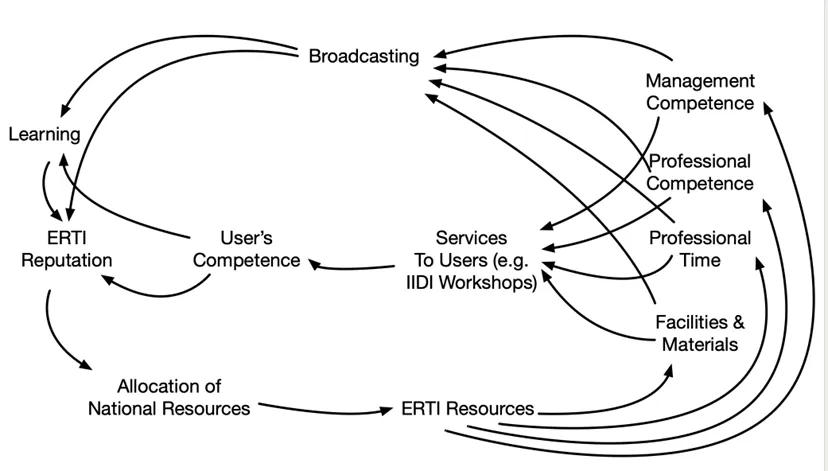
Figure 10.1 Causal Loop Diagram of ERTI’s Operations, updated from Salamatian and Root (1976).
The causal loop diagram showed that the ultimate goal of ERTI was to improve learning of students in schools. Achieving this goal would boost ERTI’s reputation among learners, trainees, and the broader audience who watched or listened to its broadcasts at home. In turn, this enhanced reputation would prompt government policymakers to allocate more resources to ERTI.
These additional resources would improve four critical factors in ERTI’s operations:
- The materials and facilities available to the organization.
- The professional time that staff could dedicate to program development.
- The professional competence with which staff carried out their tasks.
- The management competence among both staff and leadership.
Elevating these four factors would lead to better broadcasting services and improved direct services for users. These improvements, in turn, would enhance the users’ competence, ultimately resulting in increased learning.
Coding the Model
The steering committee then prepared a computational flow diagram based on the previously developed causal loop diagram and translated it into mathematical equations using the System Dynamics modeling language DYNAMO (DYNAmic MOdels) (Salamatian & Root, 1976). Mr. Salamatian ran the model using initial values that reflected the current performance levels of the factors in the flow diagram. These values were derived from interviews with unit managers and staff, representing their best estimates of each factor’s performance at the time. For instance, the staff assessed ERTI’s current reputation as 20 on a scale of 0 to 50.
The results of the first simulation run showed that ERTI’s reputation steadily declined over a two-year period. In just 18 months of simulated time, the organization’s reputation dropped to such a low point that the allocation of national resources became insufficient to sustain its operations. This outcome made it clear to the unit managers involved in the project that new policies and procedures were necessary to prevent this likely scenario. Attention then shifted to the question: Which new strategies could improve ERTI’s performance and enhance its reputation? To explore potential solutions, the model was run multiple times with different initial values.
Model Modification
During deliberations to assess the model’s performance under various scenarios, the steering committee concluded that over the next four years, the MOE would not be able to retrain enough teachers to fully maximize the use of educational television in classrooms. Additionally, after running several policy simulations, it became evident that ERTI would need to allocate at least 40% of its staff to improving the skills of MOE teachers by offering them IIDI workshops. Those teachers who participated in IIDI workshops would then be able to use educational television programs more effectively in their classrooms. Without this investment, ERTI would struggle to secure sufficient government resources to sustain itself. In other words, ERTI needed to prioritize teacher retraining for the MOE far more than originally anticipated.
Initially, ERTI unit managers were optimistic that the MOE would retrain enough teachers and establish effective classroom policies to support the use of educational television. This confidence was partly driven by UNESCO’s offer of technical assistance. However, progress on the UN program was slow, and it quickly became clear that the MOE’s plans for scaling up teacher retraining were inadequate. In response, ERTI unit managers shifted their strategy. They focused on increasing IIDI workshops for teachers in select schools in Tehran, with the hope that, as more educational technologists were trained, these workshops could be expanded to other cities. Additionally, they organized more field trips to ERTI headquarters, where participants gained insights into how television programs were produced. These trips were designed to demonstrate to students, teachers, and administrators the value and importance of television programs as an educational resource.
A Second Look at the Causal Loop Diagram
The need for allocating a substantial number of educational technologists and their administrative staff to retrain MOE teachers was an unexpected outcome of the simulation exercise. Steering committee members, unit managers, and other key personnel felt that this development warranted further analysis of the model. They also observed that the modeling exercise coincided with an unprecedented increase in ERTI’s budget, driven by rising oil revenues.
Suddenly, the government had the financial resources to support expanded social services, including the provision of education to a broader segment of the population, particularly those living in agricultural villages. Other beneficiaries of these services included industrial workers, as well as others who lived in urban areas. With this increased revenue, the government also declared that education would be free for all school-aged children. However, this policy placed additional strain on the already overburdened MOE, which struggled to provide educational services to half the school-aged population, let alone to all of them.
These developments underscored the reality that increased financial resources for ERTI or the MOE did not automatically translate into improved organizational performance to meet the needs of underserved segments of society. Both organizations’ ability to improve performance hinged on raising the competency levels of their staff, rather than simply having more financial resources at their disposal.
Money Was Not Enough!
Emerging from a prolonged period of poverty, many professionals in developing countries believed that the primary barrier to achieving national development goals was a lack of adequate financial resources. This belief was reflected in the causal loop diagram of ERTI operations (Figure 10.1). The underlying assumption in creating this diagram was that ERTI needed to maintain its reputation to secure more government funding which would lead to successfully expanding its operations.
However, with the surge in oil revenue generating unprecedented wealth for the government, the steering committee came to a new realization; the critical resource for ERTI’s success was not financial, but human—specifically, skilled personnel. The challenge now was how effectively ERTI could leverage its increased financial resources to enhance the skills of its current staff and train new employees within a relatively short period of time.
This realization led the steering committee, unit managers, and ERTI staff to conclude that two primary factors would determine their short-term success:
- Their professional competence in producing and distributing effective educational radio and television programs, as well as delivering in-person training workshops.
- Their management competence in executing these and other professional tasks.
A New Direction for ERTI?
Reallocating up to 40% of its staff to in-person training for MOE teachers marked a major shift for ERTI. This change brought a renewed sense of purpose to the staff, visibly boosting their activity and enthusiasm as they worked to offer more IIDI workshops to as many teachers and administrators as possible. However, the system modeling and simulation project also sparked a deeper conversation among unit managers and key staff, leading some to question the wisdom of continued cooperation with the MOE.
Some producers and educational technologists argued that instead of allocating scarce human resources to supporting an inefficient MOE, ERTI could serve school-aged children and adults outside of the formal education system. By doing so, ERTI could directly provide vital educational services to the broader population. Dr. Hudspeth, the lead UCIDT consultant, suggested expanding the number of learning resource centers (LRCs) across the country to offer direct learning support to those engaged with ERTI’s educational programs.
Informal observations and anecdotal reports supported these ideas. Many parents and grandparents, along with their children, were reportedly using educational television programs at home during the day. However, no systematic survey had been conducted to confirm the extent of this phenomenon. Moreover, there was no government-approved budget to support these viewers, as the Majlis allocated funds to ERTI specifically for supporting the MOE, not for serving the broader NIRT audience. Despite this, many within both ERTI and NIRT believed that radio and television could play a more significant role in educating people outside the confines of MOE classrooms.
ERTI personnel and their consultants were not alone in rethinking the role of radio and television in education. In a memo to the author, Dr. Amiri, Director of the MOE’s Institute for Research and Innovation in Education, also advocated for a shift in ERTI’s focus from classroom students to the general audience (exact date of the memo is unclear). Dr. Amiri urged ERTI to produce supplemental educational programs rather than duplicating the MOE’s role by broadcasting the exact school curriculum on television. He also suggested that ERTI develop content to help parents better support their children’s education.
The lengthy memo contained additional recommendations, such as creating programs to provide “learning assistance” to preschool children to increase their readiness for formal schooling. It also called for a series of programs aimed at encouraging students to attend technical and vocational schools, introducing them to various career paths in business and industry. Lastly, the memo emphasized the importance of motivating teachers to improve their performance through targeted programming.
However, the memo failed to address the core issue—the MOE’s inability to provide formal education for all eligible children due to a severe shortage of teachers. It also overlooked the fact that, from the perspective of NIRT leaders, Majlis deputies, and the prime minister, ERTI’s primary purpose was to directly support the MOE in the classroom. Any shift in this policy would require meticulously collected evidence to prove that ERTI could be more effective outside the framework of formal education.
Increased Broadcast of ERIT Programs in Prime Time
Although ERTI’s primary mission was to provide educational programs for classroom use, the organization invited network and production managers from its sister channels, Networks One and Two, for a visit. By 1976, ERTI staff had perfected the art of showcasing their capabilities through field trips. These trips highlighted ERTI’s extensive range of broadcast and non-broadcast services, including radio and television programs, books, printed instructional materials, multimedia sound-slide presentations, real-time in-person role-playing and simulations, audio and video tapes, and programmed instruction via System 80. The highly articulate educational technologists and producers presented these materials in a well-organized seminar and workshop to their colleagues from Networks One and Two, as well as other high-ranking NIRT officials in attendance. The demonstration of ERTI’s capabilities was awe-inspiring for most attendees.
As a result, in the summer of 1976, Mr. Touraj Farazmand (1922-2006), the manager of NIRT’s Network One, decided to further increase the broadcasts of ERTI programs during prime time for general audiences. Mr. Farazmand, a witty and skeptical figure not easily impressed, declared that ERTI’s programs were so creatively designed and developed that they would be well-received by both adults and school-aged children during evening broadcast hours. Mr. Farazmand had often argued that NIRT’s use of high-culture formal Farsi alienated much of the audience, appealing only to the elite. However, he asserted that ERTI’s programs were created with the broader audience in mind. Despite dealing with complex concepts, they were easily understood by both children and adults.
Long-Term Planning
The 1970s marked a pivotal era for the adoption and use of satellites to expand national and regional telecommunications’ infrastructures worldwide. In 1972, NIRT signed a contract with Stanford University’s Radio Science Laboratory (RSL) to design, build, and launch a telecommunications satellite. NIRT leadership envisioned ERTI as a major user of this satellite to disseminate educational programs. Consequently, a key component of the RSL project was to develop a 20-year master plan (1972–1992) for ERTI’s long-term growth and development (Cooney, Nelson, & Starlin, 1978). Recognizing the project’s importance, NIRT appointed Mr. Robben Hakopian, a high-ranking engineer from its Technical Unit, to reside in Palo Alto, California, to oversee the design, development, and launch of the proposed satellite.
Stanford University was chosen for this critical project due to its groundbreaking research and development (R&D) in various forms of communications, particularly in the emerging field of information and communication technologies. These advanced R&D initiatives positioned the university as a key contributor to the rise of Silicon Valley as a world-renowned center of innovation.
Additionally, from the early days of educational television experimentation, Wilbur Schramm (1907–1987), a professor of communication at Stanford, conducted seminal research on the use of television in education. His work demonstrated the effectiveness of educational television and laid the foundation for continued research in the field for decades to come (National Educational Television and Radio Center. & Schramm, 1960; Saba, 2000; Schramm, 1962).
Conceptualizing the Long-Term Role of ERTI
As work progressed on procuring a satellite, consultants from Stanford University created two reports to shape the future of ERTI. The first, a Master Plan, presented three organizational concepts for NIRT to consider in building the future of ERTI (Cooney et al., 1978). The second report, Statement of Purpose for Educational Radio and Television of Iran, outlined in great detail specific educational program areas for broadcasting over the next 20 years (Brekka, 1976).
The Master Plan envisioned ERTI’s role extending beyond producing and broadcasting educational programs for the MOE. It proposed transforming ERTI into the primary national organization for educational technology services, supporting key institutions such as the Ministry of Labor and the Ministry of Agriculture and Rural Development.
At the time, Iran was rapidly industrializing. New manufacturing enterprises needed skilled managerial staff and specialized workers in emerging fields unfamiliar to most Iranians. Meanwhile, the land reforms of the 1970s had fundamentally changed the lives of farmers. Many who had lived in serfdom for centuries now needed new knowledge and skills to manage their own affairs. Additionally, new companies with large farming operations that now had access to capital and modern equipment required a skilled agricultural workforce to thrive.
To address this critical demand for workforce development across agriculture, industry, and an expanding service economy, Stanford University planners envisioned ERTI taking on a broad mandate. The Master Plan proposed three options for NIRT/ERTI to consider. The educational broadcast arm of NIRT could become:
- A Service Agency: Focused on producing instructional materials for other organizations.
- A Comprehensive Agency: A self-contained agency responsible for managing all aspects of national educational technology.
- A Hybrid Model: Combining elements of the first two types of organizations.
Option 1: ERTI as a Service Agency
In this concept, ERTI would function primarily as a production and dissemination center. Its primary role would be to respond to the needs of other organizations by producing and distributing mediated educational materials. While this approach allowed ERTI to focus on meeting specific demands, it came with significant drawbacks.
As a purely service-oriented agency, ERTI would not take on a leadership role, leaving strategic direction to other organizations. This model risked failing to deliver a “coherent, rational, quality service” on a national scale. Without a mechanism to prioritize the most critical national needs, the results would likely be inconsistent in quality and impact. Furthermore, ERTI would be heavily reliant on content specialists from client organizations who often lacked expertise in educational technology and media production. These specialists, who would “rotate through the production process,” could inadvertently introduce inconsistencies in program quality and fail to address the nation’s most pressing problems effectively (Cooney et al., 1978, p. 50).
Despite these limitations, the service agency model aligned more closely with the traditional mission of NIRT and broadcasting organizations worldwide. Historically, such organizations primarily focused on delivering entertainment, information, and news rather than addressing a country’s comprehensive educational needs. However, NIRT had already begun to transcend the conventional role of a broadcasting organization, engaging in a variety of initiatives that demonstrated its potential to lead in education and workforce development. For instance, NIRT managed the annual Shiraz Art Festival, which showcased a diverse range of traditional and experimental works by Iranian musicians, singers, dancers, and actors, as well as avant-garde contributions from international artists. Additionally, NIRT engaged in research on the role of communication in national development, published works by prominent literary figures, offered degree programs at its Graduate School of Cinema and Television, and provided technical assistance to neighboring countries. It was even exploring the possibility of manufacturing affordable television sets for schools.
These wide-ranging activities highlighted NIRT’s capacity to assume a broader role. Expanding its efforts into education and workforce development seemed a natural extension of its evolving mission.
Option 2: ERTI as a Comprehensive Educational Agency
The comprehensive educational agency model proposed by Stanford University consultants envisioned ERTI as an autonomous organization with sweeping authority. In this model, ERTI would “establish a new, autonomous organization, bypassing and in some cases supplanting existing ones. In this case, the new organization has independent authority as well as responsibility for the total educational development from concept to final certification of achievement. This includes determining needs, within established national priorities, design and content of programming, utilization, and finally evaluation and certification” (Cooney et al., 1978, p. 51).
The primary advantage of this concept was that it allowed for “central planning along with concentration of effort and resources on specific and well-defined objectives.” However, significant challenges undermined its feasibility. ERTI lacked the legal authority to award formal degrees or credentials beyond the academic programs offered by NIRT’s Graduate School of Cinema and Television. While the Ministry of Sciences and Higher Education had authorized the graduate school to confer degrees, this permission did not extend to certifying learners who completed coursework via radio, television, or in-person workshops.
Additionally, the concept of ERTI as a comprehensive educational agency clashed with NIRT’s organizational ethos. NIRT prided itself on fostering collaboration with other government agencies and an increasing number of private organizations, striving to assist rather than compete or supplant. A shift to an autonomous and overarching educational role would inevitably place ERTI in direct competition with established institutions such as the MOE, creating unnecessary conflict and duplication of efforts. During early discussions of the Master Plan, Dr. Mahmoudi always reminded planners and managers that NIRT’s primary mission was broadcasting. He cautioned against adopting a strategy that could lead NIRT to “lose its identity and become redundant itself.” By overextending its role, ERTI risked compromising the core functions and collaborative spirit that had defined its success. Ultimately, the comprehensive educational agency model was deemed misaligned with ERTI’s mission and broader institutional goals.
Option 3: ERTI as a Primary Educational Technology Agency
This option was the most complex and challenging, yet it aligned most closely with the organizational culture of NIRT. It emphasized building relationships with large-scale, national organizations and supporting their educational and workforce training initiatives through education and communication technologies. Under this approach, ERTI would:
- Assess the national educational and workforce training needs of the country in collaboration with its client organizations.
- Define national educational and workforce training objectives of the country in consultation with the client organizations.
- Evaluate the readiness of its client organizations to meet their educational and workforce training objectives.
- Introduce innovations in educational technology and communication to help client organizations succeed in their training missions.
This model also offered the potential for ERTI to co-certify the performance of students and trainees in participating organizations, avoiding the need for ERTI to grant academic degrees independently. The goal would be to make each client organization self-sufficient in its educational and workforce training efforts as quickly as possible. Once an organization was able to function without ERTI’s support, the agency would gradually phase out its assistance and move on to serve other organizations in need. This approach mirrored ERTI’s existing relationship with the MOE and was closest to its primary role in educational technology support. Furthermore, it represented a more efficient use of ERTI’s limited resources, allowing for gradual expansion over the next decade as ERTI built its capacity in educational technology and communication.
As the Stanford University consultants stated: “Instead of absolute authority and responsibility, the organization is required to enlist the cooperation—which means the talents and other resources—of other agencies of government primarily the so-called ‘user agencies’ with active field staffs. At the same time, it has the initiative to proceed if necessary, without coordinate sign-off of competing agencies. Obviously, initiative is crucial under this operating pattern because it enables movement whereas joint or coordinate approval can and very often does result in immobilization. Indeed such immobilization often is one of the many political weapons for territorial infighting, a preoccupation of most established bureaucracies” (Cooney et al., 1978, p. 54).
Areas of Programming for ERTI
Stanford University consultants supplemented the Master Plan with a comprehensive 154-page document titled Statement of Purpose (Brekka, 1976). This report provided a detailed analysis of the workforce needs of an agricultural society transitioning to industrialization and, eventually, to a service-based economy requiring diverse job roles. Brekka’s analysis was rooted in the Plan and Budget Organization’s Fifth Five-Year Development Plan (1973–1978) and projections for the Sixth Five-Year Development Plan (1978–1983). These plans prioritized implementing social programs and addressing the needs of previously unserved or underserved segments of society.
Best Audience for Educational Broadcasting
A key priority of the Sixth Five-Year Development Plan was extending educational services and workforce training to unserved and underserved populations. These included the 41.13% of the population who were illiterate in 1976, villagers continuing as farmers in rural areas, and unemployed or displaced farmers who either stayed in rural communities or migrated to urban centers.
Research results presented in the Statement of Purpose revealed that educational broadcasting was particularly effective for adult learners. Compared to adolescents and pre-teens, adults demonstrated greater autonomy and motivation to engage with educational radio and television programs. Younger learners, on the other hand, required teacher supervision to benefit fully from such broadcasts. Moreover, educational broadcasting, was most effective for individuals with higher levels of education, such as pre-service teachers studying in institutions of higher education. These learners exhibited strong motivation, autonomy, and time management skills, making them exceptionally well-suited to benefit from educational programming.
Teacher Training: The Statement of Purpose highlighted the severe shortage of teachers across all three levels of education, particularly in mathematics and science. Other critical areas included occupational and vocational education as well as adult literacy, where thousands of additional specialized teachers were urgently needed. A review conducted by this author of elementary through high school statistics provided a clearer picture of the MOE’s future teach requirements.
In the 1973–1974 school year, out of a school-age population of 11.96 million, only 45.5% (5.44 million) were enrolled in MOE schools. These students were served by an instructional staff of 173,943, resulting in an average student-to-teacher ratio of 68.7 to 1. However, this ratio varied significantly by school level. While primary schools accommodated 79.3% of their age group, guidance cycle schools served just 37.6%, and high schools only 29.3%. To reach the 54.5% of school-age children not enrolled, thousands of new teachers were required, especially in specialized subject areas critical to the guidance cycle and high schools.
The Statement of Purpose provided a detailed analysis of the skills needed at each school level and identified subject areas with the greatest demand for teachers. Additionally, it proposed the use of television in formal university programs to reduce teacher preparation time by half. Pre-service and in-service teachers were considered ideal candidates for televised instruction, as they were generally self-motivated, demonstrated strong time management, and possessed the learning skills necessary to benefit from educational broadcasts.
Literacy Education: Another area of focus in the Statement of Purpose was literacy education. In the 1970s, Iran’s adult literacy program included instruction in reading, writing, and mathematics. This initiative was part of the United Nations’ National World Literacy Campaign (NWLC) targeting populations not enrolled in formal schools. Its goal was to reduce illiteracy by 15% among individuals aged 7 to 44 by 1988. At that time, an estimated 10 million people fell within this age group, while the country’s population had surpassed 30 million and was growing more quickly than in previous decades.
To meet this significant challenge, the NWLC programs in urban and rural areas provided:
- Primary school equivalent courses for children aged 7–10 who did not have access to the MOE schools.
- Prevocational literacy courses for adolescents aged 11–14.
- Adult mass literacy courses for individuals aged 12–50.
- Work-oriented functional literacy programs for individuals aged 15–50.
- Basic literacy programs tailored for stationary and seasonally migrating tribal populations.
The Statement of Purpose proposed that ERTI support these programs through broadcasts and off-air services. Recommended broadcast initiatives included direct literacy instruction and motivational radio and television spots to encourage enrollment in programs suited to local community needs.
Non-broadcast services suggested in the document included producing films, videocassettes, slides, and print materials to support classroom instruction in local literacy classes, learning resource centers, and other local institutions. The document particularly emphasized the use of mobile vans to distribute educational materials in rural areas—a strategy inspired by Brazil’s successful implementation of mobile units for education.
Also, the document highlighted the potential of radio clubs, drawing from examples in countries with large illiterate populations, such as India, where literacy students showed greater motivation and learning outcomes when participating in group settings. Radio clubs encouraged collaborative learning as participants listened to broadcasts and followed printed instructions alongside peers. Stanford University consultants recommended that ERTI establish similar radio clubs in both urban and rural areas.
Agricultural Training: In the mid-1970s, farming was the largest single occupation in Iran. Approximately 3.3 million farmers worked directly on the land, supporting their families in rural areas where households had an average of three children. These farmers managed 2.5 million small- and medium-sized traditional farms, which accounted for 84% of cultivated agricultural land and produced over 77% of the country’s food supply.
In addition to farmers, thousands of other individuals in rural areas—referred to as khosh-neshines—earned their livelihoods through various occupations such as shopkeeping, baking, repairing, and crafting, including production of coveted Persian rugs. While several government agencies provided agricultural extension services to support rural populations, these programs addressed only a small fraction of the needs of the millions of farmers, their dependents, and khosh-neshines.
To augment these extension services, the Statement of Purpose recommended that ERTI dedicate a large segment of its future instructional programming to agricultural topics, including:
- Farm management
- Animal husbandry
- Utilization of agricultural machinery
- Soil science and conservation
- Water conservation and crop irrigation
- Fertilizer application
- Weed control
- Plant disease
- Pest and insect control
The Stanford University planning document offered additional specific details for each of these topics. For example, in the area of animal husbandry, suggested instructional modules covered subjects such as the economic benefits of livestock, proper livestock housing, and effective feeding practices.
The Statement of Purpose underscored the importance of comprehensive and detailed program planning for agricultural education to address the vast needs of Iran’s rural population and ensure the long-term sustainability of its agricultural sector.
Occupational and Vocational Training: A major part of the long-term plan was devoted to occupational and vocational training that would address the immense need in a rapidly industrializing country. The Statement of Purpose detailed statistics on the projected demand for professionals across 17 major fields, including medical doctors and their nursing staff, engineers, technicians, economists, statisticians, system analysts, administrators, managers, transportation workers, and other service personnel. The report offered a comprehensive breakdown of the workforce required in each category.
Examples of the needs assessment highlighted requirements for instructional services to train both pre-service and in-service workers, such as carpenters, electricians, house painters, and hairdressers, among other occupations. The scale of training necessary to equip millions of professionals in such diverse vocations was both impressive and daunting, demanding the full mobilization of ERTI resources—and more.
However, the report cautioned that workforce estimates provided by government and private organizations were volatile, influenced by shifting organizational priorities, variable market conditions, and evolving government policies. In light of this uncertainty, consultants from Stanford University advised ERTI to focus on empowering client organizations to develop their own training capabilities rather than directly conducting large-scale professional training programs. This recommendation, though prudent, required additional clarification on how to evaluate the risks of committing to workforce education programs under changing conditions. The long development cycle—from completing a needs assessment to producing and distributing instructional materials—necessitated careful consideration of policy and market shifts that could affect program viability.
Expansion of Higher Education: The need to expand higher education was articulated in terms of increasing the capacity of colleges and universities from 20,102 students in 1972 to 31,000 by 1977 across all areas of sciences and arts. This represented significant growth in a short span of five years. However, even this ambitious target fell far short of the estimated 114,000 eligible students who could potentially enter higher education nationwide to meet the goals of the Fifth Five-Year Development Plan.
ERTI’s role in this expansion was envisioned as providing support to higher education institutions, particularly the newly established Free University of Iran (FUI). Founded in 1972 under the leadership of Dr. Abdol-al-Rahim Ahmadi, FUI was modeled after the British Open University (OU) and tasked with preparing graduates to deliver paramedical and educational services to rural communities. Dr. Ahmadi prioritized radio as the primary medium for reaching FUI students, avoiding television due to its higher production costs and time demands. To enhance and accelerate student learning, FUI supplemented its radio broadcasts with printed materials and laboratory kits, a combination that proved very successful in the case of the British Open University’s collaboration with the British Broadcasting Corporation (BBC). Following this method in the early 1970s, radio programs augmented by printed materials and lab kits, helped non-traditional students achieve their educational objectives when formal institutions in Britain could not accommodate the demand.
However, most universities in Iran were more interested in televising their courses. In this area, Stanford University consultants drew upon their own experience with academic programs that supported businesses and industries in Northern California through televised courses. During the 1960s and 1970s, Stanford University experimented with the use of broadcasting to deliver its courses to professionals working in rapidly expanding industries near its campus in what would later become known as Silicon Valley. Over more than two decades, Stanford University instructors taught increasingly sophisticated subjects in engineering and business administration, playing a significant role in the rapid growth and success of several world-class corporations in Silicon Valley.
Based on this success, the consultants recommended that ERTI adopt a similar model of televised courses to support higher education students in Iran. Their Statement of Purpose proposed to equip university classrooms with low-cost video production systems to broadcast courses to students who could not attend in person. They further proposed using the planned telecommunication satellite to distribute these lectures nationwide, enabling thousands of students to access higher education remotely.
The consultants estimated that televised courses could potentially reduce the demand for faculty and laboratory staff by half. This optimistic projection was based on research indicating that higher education students possessed the self-discipline and independent learning skills necessary to benefit from televised instruction, making it a more viable option for them compared to younger, less experienced learners in grade schools.
Moving ERTI to Mazandaran Province
On the afternoon of March 21, 1977, during the Iranian New Year celebrations, Mr. Ghotbi informed this author that ERTI must begin planning to transition into a semi-independent corporation and relocate its headquarters from Tehran to Mazandaran Province. It was a quiet holiday in his office; the usual flurry of activity was absent. The phones on his desk, typically ringing nonstop, were silent, and his secretary was not darting in and out with pressing matters. This rare tranquility allowed Mr. Ghotbi to spend an unusually long time discussing these unexpected plans with this author in an ad-hoc meeting.
Mr. Ghotbi explained that ERTI’s new status as an income-generating entity was not merely symbolic. The organization would need to work toward financial independence by generating revenue through the sale of non-broadcast products and services, such as books, multimedia kits, and consulting services. He envisioned a future where ERTI would capitalize on a growing and diversified domestic marketplace, with opportunities extending beyond Iran to the Asia-Pacific region. This shift required additional strategic planning. ERTI would need to gradually reduce its reliance on government funding while increasing its income from these new ventures.
Mr. Ghotbi further explained that ERTI’s headquarters in Tehran was no longer sufficient to accommodate its expanding activities. Consequently, the organization would relocate to Shir-Kola in Mazandaran Province. The new campus, spanning 2.47 acres, would be shared with the Free University of Iran (FUI) and the newly established Reza Shah Kabir University (RSKU).
The comprehensive campus plan included residential units for the staff of all three institutions, schools for their children, and a hotel and conference center. Additionally, it would feature dormitories to house thousands of RSKU students. While RSKU would serve traditional on-campus students, FUI would continue its focus on distance learning, delivering educational programs via radio to students in villages and towns across the country. Once fully developed, the new campus was envisioned as a thriving community accommodating approximately 50,000 residents. To develop the architectural master plan for relocating the headquarters of ERTI, FUI, and RSKU to Shir-Kola, NIRT selected Harvard University. Harvard assigned the overall management of the project to Mr. Thomas Huf, an architect and facility planner who had previously served in the Peace Corps in Iran from 1967 to 1971.
This author assigned two key staff members to assist Mr. Huff in this project: Ms. Shifteh Karimi, a Stanford University graduate and member of the ERTI Planning Unit, and Mr. Rahmanzadeh. From the start, Mr. Huf demonstrated a strong willingness to collaborate, actively listening to input from ERTI managers and staff regarding the organization’s future needs at the new campus. The general program objectives for the new facilities were ambitious: increasing original educational television production from 500 to 1,200 hours annually and boosting educational radio production to 3,000 hours per year. Additionally, Mr. Ghotbi emphasized the need for decentralization, envisioning the establishment of radio and television production facilities as well as learning resource centers in provinces across the country, separate from NIRT’s central facilities. This decentralization plan included the development of satellite uplink and downlink stations for instructional and administrative purposes. It also aimed to introduce two-way telephony capabilities, enabling real-time interaction between learners in classrooms and instructors located in local radio and television studios.
The decentralization plan aligned with the government’s general policy to move as many offices and personnel out of Tehran as possible. The capital was simply too large, too congested, and too polluted. Decentralizing operations also promised to bring economic opportunities to major population centers in the provinces, particularly those previously neglected but eager to improve their quality of life in the years and decades ahead. An important aspect of decentralization involved participating in a future marketplace driven by new investments in small private-sector enterprises throughout the country. As the 1980s approached, the theory of economic development increasingly emphasized strengthening the private sector in developing countries. International organizations such as the World Bank, the International Monetary Fund, and various United Nations’ agencies began shifting their focus. They moved away from funding large-scale development projects overseen by central governments, and instead prioritized capitalization of small or even micro-enterprises operating within rules set by the ebb and flow of the open market.
This shift presented challenges for ERTI. While a decentralized market populated by thousands of small enterprises scattered across the country was emerging, it was not accounted for in Stanford University’s future strategic plan nor discussed during ERTI’s short-term planning meetings. It was clear, however, that times were changing and ERTI needed to adapt to new social and economic realities. This required a fresh approach to conceptualizing the products and services that consumers in an open and decentralized market may demand, since ERTI’s focus up to now had been on supporting large, centralized entities like the MOE and similar organizations.
In this new environment, the small Planning Unit worked to reconcile the various visions presented by ERTI’s American consultants and NIRT policymakers. Ms. Karimi, one of the two permanent members of the Planning Unit, was tasked with aligning the advice from Stanford University consultants with the short-term goal of assisting the MOE. At the same time, the team had to plan for the relocation of ERTI, the decentralization of its operations in the provinces, and its long-term financial self-sufficiency.
The challenge was to channel all these divergent visions toward a single objective in an ongoing planning and evaluation process without adversely affecting the relationship that ERTI was nurturing with the MOE. This new planning process also had to prevent the silo effect, which was common in many institutions at the time. Government agencies in developing countries often received conflicting advice from various consultants, both domestic and foreign, leading to confusion and inefficiency. In response, organizations created isolated silos to implement different projects based on conflicting recommendations, without coordination, resulting in fragmented efforts.
To avoid creating this costly and confusing silo effect, it was important for ERTI to streamline the implementation of its short-term plans with the new long-term vision of NIRT for relocating and decentralizing ERTI and making it financially self-sufficient.
Results of the Planning Efforts
By the late 1970s, through careful planning, ERTI had grown into an organization of 500. Many of its staff members held advanced degrees in their respective fields, and many of its educational technologists and producers were well-versed in the principles of the systems approach to educational technology and management. This team, composed of dedicated and hardworking women and men, excelled in their roles. They eagerly learned from their American trainers, ultimately exceeding the expectations of NIRT leadership with their outstanding performance.
ERTI staff demonstrated their capabilities by producing high-quality educational radio and television programs and conducting highly effective and popular workshops and seminars on the optimal use of these resources. Their success highlighted the organization’s potential to become self-sustaining, provided it received sufficient financial support from the government for the next several years. With continued funding for at least five more years, ERTI staff could continue to deliver state-of-the-art educational communication and technology support services to a broad spectrum of the Iranian population.
At this point, the only concern for a possible failure was not professional but political. In daily informal conversations with Mr. Rahmanzadeh, we agreed that, barring any adverse political events, ERTI was on a trajectory to expand its services in the years to come. Collaboration with the MOE was already well underway, and despite its problems and shortcomings, ERTI was shaping its new identity as a reliable agency for educational communication and technology, with state-of-the-art expertise.
However, times were changing, and the conditions under which ERTI operated were in flux. Internally, various contending visions for its future were challenging its stability and steady progress. Externally, the environment in which ERTI operated was becoming increasingly volatile. Many among the clergy, even those not part of the counter-traditional radical group, as well as the intellectual elite, argued that the country was implementing too many development projects too quickly. Most of these projects involved adopting new techniques and ideas that were unfamiliar to farmers and workers. Some of these new methods even required people to change their traditional way of life, as technology began to homogenize society and impose its own order on how people lived, learned, and worked. As a result, too many people were losing their connection to their traditional cultural heritage and their sense of personal identity.
Critics argued that the entire country was engulfed in a major conflict between two contradictory forces. A vocal group of intellectuals and clergy sought to return to an idealized, nostalgic form of life believed to have existed at the dawn of Islam. On the other hand, those involved in development projects saw a different future for Iran—one where the country could overcome illiteracy, poverty, and the misery of the past, and step into the 21st century with relative prosperity and the gradual realization of democratic aspirations.
As this conflict took shape, those promoting a return to the past ultimately prevailed, dashing all hopes for a prosperous and democratic future. These events in Iran coincided with changing international relations, which unexpectedly favored regressive forces within the country, pushing it toward a position that made life miserable for the vast majority of its people. In short, both domestic and international circumstances had a profound and adverse effect on ERTI, contributing to its demise. The disintegration of ERTI under these volatile circumstances is discussed in the next chapter.
This sentence is a little confusing. 40% of the staff need to be allocated to improve which skills of MOE teachers? To improve the skills of using educational television programs in the classroom? And the last part of the sentence is confusing “in the short run in thousands of classrooms that were equipped with television receivers”. I’m not sure if there is a word missing between “run” and “in” but I don’t understand what that is trying to say.
References
Brekka, L. T. (1976). Statement of purpose for educational radio and television of Iran. Communication Satellite Planning Center, Stanford Electronic Radioscience Laboratory.
Cooney, S., Nelson, L. M., & Starlin, D. G. (1978). A developmental plan for educational radio and televivion of Iran. Retrieved from Stanford, CA.
Forrester, J. W. (1961). Industrial dynamics. Pegasus Communications.
Meadows, D. L., Behrens, III, W. W., Meadows, D. H., Naill, R. F., Randers, J., & Zahn, E. K. O. (1974). Dynamics of growth in a finite world. Wright-Allen Press.
National Educational Television and Radio Center, & Schramm, W. (1960). The impact of educational television: Selected studies from the research sponsored by the National Educational Television and Radio Center. University of Illinois Press.
Roberts, N., Andersen, D. F., Deal, R. D., & Shaffer, W. A. (1994). Introduction to computer simiulation: A system dyanmics modeling approach. Productivity Press.
Saba, F. (2000). Research in distance education: A status report. International Review of Research in Open and Distance Learning, 1(1), 1–9.
Saba, F., & Root, G. (1977). Educational television: A new frontier. Paper presented at the International Conference on Cybernetics and Society, Washington, DC.
Salamatian, D., & Root, G. (1976). A dynamic systems model for educational television of Iran. National Iranian Radio and Television.
Schramm, W. (1962). What we know about learning from instructional television. (W. Schramm, Ed.), Educatonal television: The next ten years. The Institute for Communication Research.