Pedagogical Barriers Between the MOE and ERTI
Pedagogical Principles of ERTI
By 1975, educational technologists and producers had begun applying the ADDIE model to create radio and television programs, achieving varying levels of competency and success. They also conducted IIDI workshops for a small group of MOE teachers and administrators, gathering feedback to refine the workshops further. However, as the coordinating committee meetings progressed, pedagogical differences between ERTI and the MOE began to surface (Saba, 1975).
In MOE-managed schools, teaching and learning were rooted in a traditional model that originated in religious schools or maktabs, where students primarily memorized their teachers’ dictations. In contrast, ERTI’s approach was grounded in the principles of educational technology, emphasizing the engagement of learners’ cognitive, affective, and behavioral faculties in unison. This approach aimed to cultivate and enhance their analytical thinking, problem solving skills, and decision-making competencies, while also motivating students to pursue independent inquiry (Saba, 1976).
During the 1960s and 1970s, educational technologists benefited from emerging theories and research-based insights into learning and instruction. While B. F. Skinner (1969) advanced behavioral principles of learning, models of learning during this period expanded beyond mere behavior modification to encompass cognitive skills and motivation as integral, dynamic components of behavior. (Bourne et al., 1971).
Robert Gagne (1965) further delineated the conditions for learning, organizing them into nine hierarchical levels that ranged from simple signal learning to more complex concept learning. These levels also incorporated the development of analytical skills and problem-solving competencies. Later, John Keller (1979) introduced key motivational components in education, emphasizing the importance of capturing and sustaining learners’ attention, making learning relevant, building students’ confidence, and ensuring they experience intrinsic or extrinsic satisfaction from their learning. Additionally, Robert Kuhn (1970) argued that knowledge is not a static set of facts but a dynamic phenomenon that evolves over time, driven by new scientific observation and evidence.
The introduction of these principles of learning and knowledge coincided with the development of learning taxonomies. Krathwol et al. (1974) categorized learning objectives under six major headings: Knowledge, Comprehension, Application, Analysis, Synthesis, and Evaluation. These widely accepted taxonomies provided educators with a structured framework to clearly articulate learning objectives and establish assessment criteria for students.
Concurrently, a comprehensive study of learning psychology by Hilgard and Bower (1966) identified the following principles that could significantly enhance instructional effectiveness and learning aptitude:
- Perceptual features of instructional materials: Learning is facilitated when written materials and images are sharp and clear.
- Organization of knowledge: Coherent instructional information, related to a central organizing theme, is easier to learn than fragmented knowledge.
- Learning with understanding: Instruction is more effective when the material is meaningful and valuable to the learner.
- Cognitive feedback: Learning proceeds more rapidly when learners can practice applying new knowledge and receive feedback on their performance.
- Goal setting: Learning is more rapid and effective when learners set their own goals (or participate in goal setting) and when activities are directed toward reaching those goals.
- Divergent thinking: Divergent thinking, which involves finding multiple solutions to a problem, facilitates learning more effectively than convergent thinking, which focuses on a single solution.
- Predisposition to learn: When learning experiences are motivating, they create a context that increases the learner’s willingness and eagerness to learn, leading to higher skill acquisition and better performance.
- Structure of knowledge: Learning is enhanced when instructors present a body of integrated, cohesive knowledge.
- Sequence: Presenting learning materials in a sequence from simple to more complex concepts is more conducive to learning.
- Reinforcement: Establishing a schedule for reward contingencies, progressing from extrinsic reinforcement to intrinsic or self-controlled reinforcements, enhances learning achievements.
To emphasize ERTI’s teaching and learning approach, based on the principles of educational technology, this author developed the Pathfinder System of Education (PSE) (nezam-e-amoozesh-e-pishro) (Saba, 1975). The PSE framework encompassed the following key elements:
- Offering multiple means and sources of learning to students.
- Presenting knowledge as a multifaceted, dynamic, and growing concept.
- Providing an opportunity to learners to use their cognitive abilities beyond rote memorization.
- Nurturing analytical thinking skills among students to help them choose among various learning resources and perspectives.
- Fostering diverse problem-solving approaches among students to teach them to view problems from multiple angles and apply their learning to solve novel challenges.
- Cultivating decision-making competencies among learners.
- Promoting self-awareness to help students recognize their talents and capabilities.
- Creating opportunities for learners to demonstrate their knowledge and skills in different scenarios.
- Encouraging students to value their unique abilities, enabling them to chart their own independent paths in society.
- Equipping students with the social skills necessary to thrive in their school environment and beyond (Saba, 1975, p. 2).
In August 1975, the annual Conference on the Evaluation of Educational Revolution, held in the resort town of Ramsar, provided a unique opportunity to present PSE to a broad audience of influential policymakers. During this conference, the principles of PSE garnered focused attention from the highest-ranking government officials, university presidents, and other prominent decision-makers in educational and cultural institutions.
The Maktab Style of Teaching and Learning
ERTI’s approach to teaching and learning was in sharp contrast to how teachers taught, and students learned in the MOE-managed schools, which followed the antiquated and outdated form of education in maktabs or religious schools. In his comprehensive study of Iranian culture and education, Sadiq (1971) described maktabs as single-classroom schools where students of different ages received the same lesson from a clergy member—either a mullah or an akhund. The quality of instruction depended heavily on the theological knowledge and teaching ability of the Mullah, resulting in a highly inconsistent educational experience.
The maktabs primarily served boys, although girls also attended until around the age of nine. After they reached puberty, girls’ formal education typically ended, unless their parents could afford to hire a tutor. These tutors, usually women with limited knowledge and teaching skills, would continue the girls’ education at home. For many older teenage girls, learning ceased altogether as they married early and became responsible for raising their own children.
For centuries, since the advent of Islam, learners in maktabs were largely passive observers in their education. Mullahs dictated what was taught, relying on the limited materials available in their personal libraries. As a result, there was no standardized curriculum across different maktabs. Instruction was based on a few handwritten manuscripts that each mullah possessed, as printing presses only reached Iran in the 19th century.
These manuscripts were often riddled with errors, omissions, and additions, leading to significant variations in content even among copies of the same work with the same title in the hands of other maktab instructors. Students’ learning materials were primarily their own handwritten notes, taken from the mullah’s dictations as he read aloud passages from his books. Occasionally, a student who garnered special attention from the mullah might be allowed to borrow a manuscript to make a handwritten copy for himself.
Mullahs regarded their manuscripts as sacred and insisted that students adhere strictly to their content, leaving no room for deviation or independent thought. From their perspective, the primary goal of attending a maktab was to memorize what was dictated as precisely as possible and repeat it back faithfully. Analytical or creative thinking was neither required nor encouraged.
A prime example of this approach was memorizing the Quran. Mullahs instructed students to commit the Quran to memory and recall it word for word. Although Farsi and Arabic alphabets are almost the same, most Iranians did not speak or understand Arabic. As a result, students could pronounce Arabic words of the Quran with some accuracy, but often had no comprehension of their meaning. For many, memorizing the Quran became a rote exercise devoid of understanding[1]. Unless a mullah chose to interpret certain versus, which was neither comprehensive nor systematic, the exercise remained largely meaningless for most students.
Learning by memorizing was not limited to the Quran. Mullahs required students to memorize their lessons in other subjects, such as Persian literature and mathematics. Comprehension was not necessarily expected; the ability to recite the material from memory was considered sufficient proof of learning for the mullah. If students did happen to understand or think analytically about the material, it was purely incidental. Overall, the emphasis in maktabs was on rote learning rather than on fostering deeper understanding or analytical thinking.
If a student chose to pursue further education beyond the maktab, he would enroll in a madrasah. At this more advanced level, the curriculum expanded to include the study of hadith (stories related to Prophet Muhammad and his immediate disciples), jurisprudence (fiqh), and its supporting disciplines such as logic, or in the Shi’a tradition, kalam. However, the application of kalam as an exercise in logical reasoning was limited to the study of hadith and fiqh, with little exploration beyond these subjects.
Other subjects were taught strictly from a theological perspective. For instance, in Persian literature, mullahs directed students to focus on selected passages that praised God and supported the core tenets of Shi’ism. Students studied mathematics only to the extent that was necessary for performing religious rituals, such as determining the correct times for daily prayers (Deen, 2007).
If a learner wanted to progress beyond the traditional madrasah education, he could pursue further studies with one of the ulema (knowledgeable clergymen) and work towards attaining the status of a seeker of knowledge (mujtahid). At this level, he would engage in limited speculative thinking within the framework of Islamic jurisprudence. Although he would be involved in making conjectures or interpretations, these ideas were examined by his teacher and other ulema carefully to ensure they adhered closely to established doctrines. Deviations from accepted beliefs or dogma were minimal or, simply not permitted.
Education and Political Philosophy of Islam
The discouragement of independent thinking and creative learning in maktabs and madrasahs can be traced back to Islam’s political philosophy, particularly the ideas of Al-Farabi, who lived between 870 and 950. Al-Farabi is considered the founder of Islamic political philosophy, and his doctrine gained prominence in Shi’a Islam over the centuries and is still followed today in theological circles worldwide (Mahdi, 2001).
Al-Farabi acknowledged individual differences in thinking and disposition toward life. However, he adopted an elitist approach, distinguishing between the masses and the elites. He and his philosophical successors believed that while all individuals had the capacity for basic education, a deeper understanding of the divine was reserved for a chosen few. This advanced knowledge was thought to come from direct inspiration and perhaps even revelation, although receiving revelation itself was considered the exclusive domain of the prophets. Thus, the masses were limited to a cursory education, with further study for deeper divine knowledge reserved for those privileged enough to advance beyond the maktab and madrassah to become seekers of knowledge (Mahdi, 2001, p. 25).
Because no other institutions consistently provided general mass education nationwide, mullahs for centuries offered rudimentary education to those few individuals who took the initiative to learn in a maktab. Even fewer males attended a madrasah, and only a handful elevated themselves in scholarship to join the ranks of the ulema. Throughout Iran’s long history, very few other institutions offered formal educational services consistently, and those that did were heavily influenced by the clergy not designed for mass education. As a result, most people in the country, over the ages, remained illiterate, and any education they received was primarily from the clergy.
Al-Farabi’s political philosophy contributed to setting the clergy apart from the rest of society, granting them an exalted social status. This social stratification persisted for centuries and remained evident throughout the latter part of the 20th century, including the 1970s. Personnel of the MOE who managed schools also enjoyed a higher social status due to their profession. Teachers and administrators were highly esteemed by society, and students generally held them in great respect.
Students typically followed their teachers’ instructions closely and adhered to their admonishments. In classrooms, students were expected to remain silent, listen attentively, and take notes. Those who spoke up were often reprimanded and instructed to stay quiet, with persistent talking sometimes leading to punishment. Corporal punishment was common in maktabs and in the few MOE-managed schools in the 19th century. Although corporal punishment largely disappeared in MOE schools during the latter half of the 20th century, other less severe forms of discipline took its place. As a result, the educational environment largely involved a one-way flow of information from teacher to student, with little expectation of feedback from learners.
Determining the Extent of Direct Teaching Methods
In 1974, this author conducted a small study to collect empirical, quantitative evidence for direct teaching methods in classrooms, using Amidon and Flanders’ indirect and direct categories of “teacher talk” (Amidon & Flanders, 1967). The goal was to determine how closely teachers adhered to the maktab form of direct teaching, characterized by a unidirectional flow of information from teacher to learner.
The success of this research project was largely due to the scholarly and managerial expertise of Ms. Vida Amini, a member of ERTI’s small Research Unit, which at the time consisted of only two employees. Ms. Amini played a crucial role in persuading school principals to participate, earning the trust of teachers who were initially apprehensive about the aim of the project. She received their consent to be observed while teaching and also supervised the classroom observers, who were new to the sensitive task of data collection.
To gather data, Ms. Amini and I trained 20 observers from the MA program at the Graduate School Cinema and Television, the formal academic unit of NIRT. These students who became observers conducted fieldwork in 16 elementary, guidance cycle, and high schools across different neighborhoods in Tehran, representing a range of socioeconomic conditions (SEC).
We anticipated that classroom interactions in all school levels and in all neighborhoods would yield very low indirect/direct (I/D) ratios. A low I/D ratio would suggest limited teacher-student interaction, while a high I/D ratio indicated more frequent, constructive exchanges between teachers and students.
The analysis of the data confirmed that in all observed elementary classrooms, teachers primarily directed students to sit silently and follow instructions, rarely engaging in discussions or even simple dialogues. Any interactions were mostly centered around classroom management rather than the lesson content. Communication was typically between the teacher and the entire class, with little to no engagement with individual students. Moreover, there were no interactions among students themselves. Teachers did not cultivate behaviors that could enhance students’ communication skills leading to social learning.
The average I/D ratio in the guidance cycle classrooms was also low, similar to those observed in elementary classrooms. Less than one-third of teachers’ total activities were conducive to student participation. Guidance schools in higher SEC neighborhoods showed a slightly higher I/D ratio. Nevertheless, even in these better-resourced schools, teachers spent an inordinate amount of time managing what they perceived as inappropriate student behavior. This was despite the fact that the curriculum for guidance schools emphasized the importance of engaging students in making decisions about their future careers. In principle, the guidance cycle was meant to develop students’ analytical thinking and decision-making skills, enabling them to plan a future career path and chart an academic course to acquire the necessary competencies, whether that involved attending a technical school or pursing further education at a university. However, there were no formal interaction between teachers and students, nor among students themselves, to discuss career options, analyze academic requirements, or make informed choices about future study paths. Teachers either lacked adequate training to foster interaction or were reluctant to engage students in constructive discussions for fear of losing control of the classroom.
Data collected in high schools revealed a marginally higher I/D ratio compared to elementary and guidance cycle schools. There was at least one instance of effective teacher-student interaction observed in an algebra class, where the teacher solved a problem on the blackboard while students actively participated. In this rare case, students were highly engaged and genuinely interested in collaborating with the teacher.
In contrast, the situation in science classes was markedly different. In one physics class, the teacher slowly dictated a lesson, allowing time for students to transcribe it word-for-word. The classroom was noisy, and students seated at the back paid little attention to the teacher’s instructions. A similar scenario occurred in a chemistry class, where, lacking laboratory facilities to demonstrate experiments, the teacher recited the procedure for a chemical reaction from a textbook that was available to students, while they took notes. During this process, the teacher expelled two students for not taking notes and distracting their peers (Saba, 1976, pp. 81–89).
In all the schools observed, classroom overcrowding was a significant barrier to meaningful teacher-student interaction. Class sizes ranged from 65 to 70 students in schools across all three SECs. Even in schools located in high-SEC neighborhoods, the teacher-to-student ratios were not any better. Although this study was small and focused solely on Tehran, its findings aligned with those of other researchers examining teaching and learning conditions in Iran during the same period (Asrari, 1973; Hendershot, 1975; Mowahed-Ardabilli, 1975; Szyliowiez, 1973).
Bias Toward Literature Arts
Direct versus indirect teaching was not the only pedagogical difference between the MOE and ERTI. Traditionally, Maktab education generally deemphasized sciences and mathematics, a trend that continued in MOE-managed schools even into the 1970s. Teachers and administrators devoted more time and effort to Persian literature than to subjects like physics, biology, chemistry, or geology. This focus was partly due to the teachers’ own educational backgrounds, which were heavily skewed toward Persian poetry and romantic prose. Their ability to deepen their knowledge of the sciences was also constrained by the limited availability of scientific publications in Farsi. Bookstores in Tehran and other cities were filled with works by illustrious Persian poets and literary luminaries, spanning from antiquity to the present day. While original sentimental novels written by Iranians were relatively rare in bookshops, Farsi translations of European and Russian novels were widely available, filling this gap on the bookshelves.
In high schools, students learned about Omar Khayyam primarily as a poet, not necessarily as a mathematician. Even when teachers highlighted poems containing scientific concepts, the focus was on praising the poet’s mastery of lyrical form rather than his scientific acumen. The discussion rarely extended to the scientific significance of the poem. For example, among the sages frequently invoked in literature and history classes was Hatef-e-Esfahani, an 18th century poet born in the heartland of Iran. Hatef’s poetry was memorized by many educated Iranians, and a particular segment of his odes seemed especially relevant to events in the 1950s, when this author was in elementary school in Tehran. At that time, the United States, Britain, Russia, and France were actively testing nuclear weapons, each detonation demonstrating the potential to destroy humanity. A segment of Hatef’s poetry, which this author can still recall from his high school days, in original Farsi with a rough translation in English, illustrates this point:
| Del har zareh keh beshkafi | If you open the core of any speck of dust (atom) |
| Aftabish dar mian bini | You will see a sun within it |
These lines are a testament to the depth of Hatef’s understanding of the atom’s nucleus and its incredible power, long before scientists split the atom and released its energy. However, when teachers discussed Hatef, it was often to illustrate the elegance of his poetry rather than his scientific insight. The narrative was not about the extraordinary scientific perceptiveness of Hatef, the structure of the atom, the relationship between matter and energy, etc. Rather, it centered around the aesthetic qualities of his verse—its poetic harmony, rhythm, and beauty.
Some more informed teachers spoke about Hatef’s mysticism and esoteric knowledge, suggesting that his inner vision allowed him to see a divine power hidden within a speck of dust. Yet, this conversation rarely extended to a discussion about the structure of the physical world or the properties of atoms. Where did this bias toward pure literary arts, and against science and technology, come from?
Origins of the Bias Against Science in School Curricula
Sayyed Hossein Nasr, a renowned scholar of Islamic civilization who held important academic and administrative positions in Iran during the 1960s and 1970s, provides valuable insights into the nature of knowledge (gnosis) in the world of Islam. His explanation may shed light on how educators developed a bias against the sciences. Nasr referred to the views of medieval Iranian philosopher-scientists who believed the highest form of gnosis was achieved by balancing human reasoning (scientia) and divine wisdom (sapientia).
One of the most notable proponents of this equilibrium was Imam Muhammad Ghazali (1056-1111), a prominent Muslim polymath. As Tibawi notes, “Al-Ghazali’s system is so balanced that its preoccupation with things divine and mystical experience leave room also for rational thinking, logical deduction, and empirical observation” (Tibawi, 1972, pp. 40–41). However, one can hypothesize that an epistemological imbalance emerged in the Islamic world, particularly in Iran under the Safavids, in Turkey under the Ottomans, and in India under the Mughals, from the 16th century to the present (Deen, 2007). As a result:
- Sages in these lands leaned toward divine wisdom and Platonic, qualitative knowledge expressed through poetry and prose (sapientia), lacking the practical know-how to solve concrete problems.
- Western scientists gravitated toward Aristotelian, analytical observation of the physical world, primarily in quantitative terms (scientia), often lacking insights inspired by divine wisdom.
This inverse relationship is illustrated in Figure 6.1.
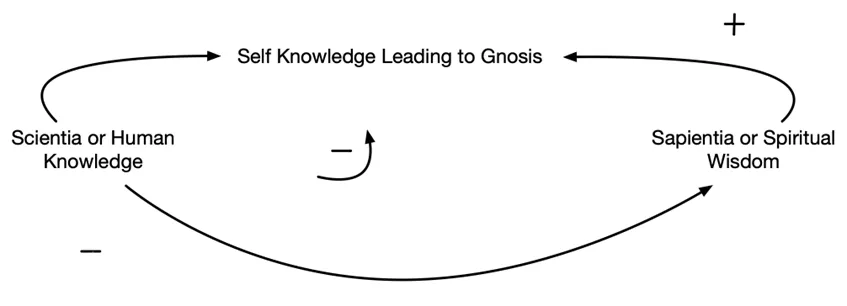
Figure 6.1—Inverse Relationship Between Scientia and Sapientia in Epistemology.
Vocational and Technical Education
Nowhere was the imbalance between rationalism and sentimentalism more evident than in the general social attitude of Iranians toward technical and vocational education. During its initial expansion in 1973, ERTI unit managers devoted their resources to supporting guidance cycle schools through their radio and television programs. This focus was due to the guidance cycle’s critical role in bridging what students learned in elementary school with their future studies in high school.
Teachers and counselors in the guidance cycle were responsible for helping students choose a path in high school that would lead to their future professions. They were tasked with assessing the aptitude of learners for various career paths and guiding them toward high schools specializing in one of the four areas: mathematics, natural sciences, literature arts, or vocational education. However, despite Iran’s aspirations for industrialization and mechanized agriculture, there were limited opportunities for students to receive high-quality technical education at the secondary level.
In a survey of selected students in Tehran, Lotfipour (1977, p. 149) observed:
“The quality of vocational-technical training in Iran is low. At the present time, technical high schools, technical colleges, and other technical centers cannot meet the needs of the students and the society. The data indicated that about one-half of the vocational-technical students were not satisfied with their vocational-technical schools. Furthermore, 731 (64%) of the students [surveyed] felt that their schools did not prepare them for future employment and about two-thirds of the students believed that the lack of technical books, teachers, equipment, and buildings contributed to the serious problem in Iranian vocational-technical schools.”
The dismissive social attitude toward the value of vocational and technical education among the upper-class intelligentsia, elite clergy, and other privileged, educated Iranians was the primary reason for the lack of attention to this crucial area of workforce development. For decades, dating back to the Qajar era in the 19th century, both the elite and the common people—seemingly imitating the elite—looked down upon manual labor and associated it with poverty. They believed that only the “lower class” (tabageh-ey-pai’in) engaged in manual labor and that this was done out of necessity.
This mindset was reinforced over the centuries by a political philosophy rooted in Islam, which viewed society as a hierarchical structure. Only those at the pinnacle of this social pyramid were deemed capable of intellectual work, while the rest were considered to have a lower status. Those at the bottom were believed to exist on earth solely to perform manual labor. Consequently, those who worked with their hands were not held in high regard by the clergy, intellectuals, or the educated elite—despite their claims to the contrary.
Due to these prevailing social attitudes toward manual labor, students with high grades in the guidance cycle were granted access to high schools specializing in science, math, and the literary arts. Only students with lower exam scores during their guidance cycle enrolled in vocational and technical high schools. Most of these students were not truly motivated to learn a trade; rather they hoped that a high school diploma would land them a desk job in a government office or business, sparing them the perceived humiliation of working with their hands in a factory or a workshop (Mowahed-Ardabilli, 1975).
Despite this negative social attitude toward technical training, government planners appropriated funds to support existing technical high schools and build new ones (Asrari, 1973). Nevertheless, because of the shortage of qualified teachers and a chronic mismatch between the curriculum offered in technical schools and the needs of the newly established industrial units, these technical and vocational schools suffered from high dropout rates. The number of graduates with marketable skills was far below the demand for such positions in industries.
Social Impact of the Maktab Style of Education
Beyond its pedagogical shortcomings, the Maktab style of teaching and learning failed to cultivate social skills necessary for a self-governing society. On the contrary, it:
- Inhibited democratic behavior among students;
- Prevented the formation of representative social groups and clubs in schools;
- Curtailed the inclusion of students, particularly girls, in formal social groups and activities; and
- Discouraged divergent thinking and problem-solving in real-life situations.
Furthermore, the Maktab form of education fostered uniform thinking and did not encourage students to form independent opinions—an essential quality for responsible citizenship in a democratic society. It also denied learners the opportunity to engage in organized social interaction, which was essential for them to:
- Develop effective communication skills;
- Learn how to debate and discuss issues;
- Make persuasive arguments for or against a particular point; and
- Arrive at a commonly accepted resolution.
Learning that resulted from group discussions were deemed unnecessary or redundant in the maktab system. Learners missed out on acquiring social skills essential for a self-governing society and graduated without the ability to assume responsibility in their communities.
Moreover, the MOE policymakers enforced gender segregation in schools, keeping male and female students in separate institutions. This policy further limited socialization and made it even more challenging for students to develop social skills. The rationale behind this segregation was to appease the clergy and to adhere to the norms of traditional rural and urban communities who opposed their sons and daughters sitting on the same bench in classrooms. The clergy’s belief was that females had no role in the public sphere and did not require education. However, under pressure from the MOE to provide educational services to girls, the policy was to keep boys and the girls in separate schools. This separation of male and female students during their formative years hindered the development of the social skills needed to treat each other fairly as equal members of society later in life. Learning in separate schools left little opportunity for students of either gender to negotiate and understand power dynamics between them in the calm educational setting.
Political Impact of Maktab Form of Education
The political class largely overlooked how the pedagogy in schools influenced political reality. Many political leaders, both supporters of the status quo and those opposing it, passionately advocated for democracy. Yet, they failed to link the shortcomings of the maktab system to foster democratic behavior among students to their broader political goals.
As the 1970s drew to a close, various activist groups called for opening “the political atmosphere” (fazay-e-siasi). Political leaders of all persuasions, along with university professor and student activists, were the most vocal supporters of this cause, demanding freedom and democracy from the government. However, few of them, if any, connected outdated educational policies with their desire for greater freedom and formation of a democratic society. They did not recognize that the direct method of teaching, lack of alternative learning sources, the view of knowledge as static, and the separation of students in different schools based on their gender obstructed their political aspirations. They failed to see that the maktab style was fundamentally incompatible with preparing individuals for a free and democratic society. No amount of rhetorical advocacy for freedom and democracy could overcome this major educational impediment.
In summary, significant pedagogical differences existed between ERTI and the MOE, and meaningful collaboration between the two organizations could only occur if these differences were addressed and resolved. The next chapter will outline the first steps toward bridging these gaps.
Footnotes
- As Nasr (Nasr, 1983, p. 67) suggests, teaching the Quran in schools was also problematic in regions like Spain and certain African countries where Arabic was not the native language. It is not clear to what extent children in those countries could understand the meaning of the Quran.
References
Amidon, E., & Flanders, N. A. (1967). The role of the teacher in the classroom. Association for Productive Teaching.
Asrari, A. (1973). The impact of educational development on the economic progress of modern Iran [Unpublished Dissertation], University of Northern Colorado.
Bourne, L. E., Ekstrand, B. R., & Dominowski, R. L. (1971). The psychology of thinking. Prentice-Hall.
Deen, S. M. (2007). Science under Islam: Rise, decline and revival (Lulu, Ed.). Lulu.com.
Gagne, R. (1965). The conditions of learning. Holt, Rinehart and Winston.
Hendershot, C. (1975). Politics, polemics, and pedagogs: A study of United States technical assistance in education to Iran, including negotiations, political considerations in Iran and the United States, programming, methods, problems, results, and evaluation (1st, Ed.). Vantage Press.
Hilgard, E. R., & Bower, G. H. (1966). Theories of learning (3rd, Ed.). Appleton-Century-Crofts.
Keller, J. M. (1979). Motivation and instructional design: A theoretical perspective. Journal of Instructional Development, 2(4), 26–34.
Krathwol, D. R., Bloom, B. S., & Massia, B. B. (1974). Taxonomy of educational objectives, Handbook II: Affective domain (10th, Ed.). David McKay Company, Inc.
Kuhn, T. S. (1970). The structure of scientific revolutions. University of Chicago Press.
Lotfipour, K. (1977). A study of vocational-technical education in Iran (Tehran) [Unpublished Dissertation]. Iowa State University.
Mahdi, M. (2001). Alfarabi and the foundation of Islamic political philosophy. University of Chicago Press.
Mowahed-Ardabilli, M. (1975). Education and pattern of modernization in Iran, 1945-1974 [Unpublished Dissertation]. Arizona State University.
Nasr, S. H. (1983). Science and civilization in Islam. Suhail Academy.
Saba, F. (1975). Educational activities of National Iranian Radio and Television 1974-1975. National Iranian Radio and Television.
Saba, F. (1976). The evolution of educational technology in Iranian education [Unpublished Dissertation]. Syracuse University.
Sadiq, I. (1971). History of Iranian culture. Tehran University Press.
Skinner, B. F. (1969). Contingencies of reinforcement: A theoretical analysis. Appleton-Century-Crofts.
Szyliowiez, J. S. (1973). Education and modernization in the Middle East. Cornell University Press.
Tibawi, A. L. (1972). Islamic education. Luzac and Company.