Training Educational Technologists
Introduction
In 1974, Iran’s oil production reached an unprecedented 6 million barrels per day and its income from oil export hovered over 20 billion dollars per year. With this level of revenue, the government dramatically increased the budget of development projects, including ERTI. However, this wealth came at the cost of elevated tension between Iran and the United States. In the mid-1970s, the U.S. was experiencing double-digit inflation, partially because of the increased cost of oil. American drivers, with what appeared to be an insatiable demand for gasoline, found themselves in long lines to purchase the limited supplies, even as prices continued to rise. Furthermore, Americans were experiencing higher levels of unemployment because of monetary policies that sought to decrease inflation. As a result, the U.S. government was displeased with Iran’s desire to secure an even higher price for its oil to fund its future development programs. This was all happening while Saudi Arabia was asking a lower price hike than Iran, which caused tension between these two Middle Eastern countries as well. A major reason for this discord was the great difference in the number of people who lived in these two countries. Iran’s population, at the time, was 23 million, while Saudi Arabia’s was 7 million. Iran needed more revenue than Saudi Arabia to implement its development programs for its much greater population.
Increased income from oil was a double-edged sword. While it financed development projects, it also put more money in the hands of people and increased their demand for goods and services. But the production of non-oil goods in Iran did not go up fast enough to respond to this elevated demand. There was not enough skilled labor to increase the production of industrial goods. In addition, despite implementing land reform, the increase in agricultural output was slow and did not keep up with increased consumption. This was a classic recipe for generating inflation in the marketplace. As prices continued to rise, an increasing number of people, particularly among the burgeoning middle class, found it difficult to maintain their standard of living. This decline in economic conditions eventually led to disenchantment among many urban dwellers, fostering an unsettling political environment. Disillusionment about economic prospects and a perceived lack of opportunity for political expression, especially among the educated class and university students, fueled the narratives of Islamic militant groups and leftist movements. These opposition groups claimed that the government was incompetent and corrupt, incapable of addressing the everyday problems faced by the people.
In this time of increased international tension and heightened potential for domestic political trouble, ERTI began a training program for its new employees. There was no doubt in the minds of NIRT leaders that the services of this new cadre of employees were necessary to improve the quality and quantity of educational offerings by ERTI. In turn, these new professionals would assist government agencies, such as the MOE and the Ministry of Labor, which were directly involved in promoting workforce education and training to meet the demand for a skilled workforce. Admittedly, the initial number of trainees to become educational technologists was quite small compared to the entire country’s demand for training a competent workforce. Nevertheless, it was imperative to train this inaugural group of instructors to create a multiplier effect in ERTI, enhancing its educational effectiveness and efficiency in supporting the MOE and other institutions involved in workforce training.
At this time, many planners, decision-makers, and political leaders believed that education was the primary solution to addressing the underdeveloped economic conditions that prevailed in 1970s Iran. Both government leaders and members of opposition groups thought that improving and expanding educational opportunities were essential to unleash the productive talents of individuals in industry, agriculture, health, and other sectors of the economy. A better skilled workforce would significantly boost production of none-oil goods.
Classical development theorists, such as Walt Rostow (1960), also advocated the belief that education was the primary solution for nurturing economic self-sufficiency among citizens of developing countries. Rostow further contended that people of prosperous developing countries were better equipped to establish sustainable political organizations and exercise democratic principles. However, these sentiments were not shared by the clergy, who opposed the government’s land reform and industrialization initiatives. They had little understanding of the theories and principles of economics. More importantly, their proclaimed model of society harkened back to 1400 years ago, at the advent of Islam as the sole path to the salvation of the people, if not in this world, then in the next.
In contrast, ERTI’s training program for educational technologists was based on contemporary science and practice in systems, communication, and learning and instructional psychology. It was precisely designed to build the capacity for providing better educational services, first within the broadcast organization itself, and then in other institutions, starting with the MOE. Thus, UCIDT advisors – led by several professors from Syracuse University, as well as instructional designers and instructors from Indiana University, Florida State University, and the University of Southern California (USC) – began training the first group of newly employed personnel of ERTI to become educational technologists in 1974. Although USC was the lead institution in managing the entire UCIDT training project in Iran and in the United States, it was the faculty of the Department of Instructional Design, Development, and Evaluation (IDD&E) from Syracuse University (SU) who led the instruction of the trainees in the first phase of the project in Tehran.
Contributions of Syracuse University in the 1950s
This was not the first time that SU instructors participated in training Iranian personnel to produce mediated instructional materials. A generation earlier, in the early 1950s, members of SU’s Audio-Visual Division trained media specialists for Fine Arts Administration (FAA) in Tehran and other locations throughout the country. This project was financed by Point Four, a technical assistance program of the United States.
When SU instructors arrived in Iran in 1950, there were no facilities or trained personnel for audio visual (AV) production for education and training in FAA or even in any other organization. As a result, the SU project started “from an absolute zero point” to build the necessary facilities and train the required personnel (Williams, 1959). Prior to this program, Iranian moviemakers, in a burgeoning film industry, struggled to compete with theatrical motion pictures that came from the United States, Europe, and India. However, the industry’s aim was entertainment, not education. As such, there were no AV specialists in the country who could mobilize the immense power of cinematography and its related arts and crafts for the purpose of educating the public. There were also no comprehensive AV production, curation, and dissemination facilities in one location dedicated to educational and training purposes. Facilities for motion picture production, film processing, and editing were dispersed across various locations in Tehran and a few other major cities, primarily devoted to commercial feature movie making.
The aim of the SU project, on the other hand, was twofold:
- Training a cadre of audio-visual leaders to create effective media materials in support of educational institutions in the cities and rural development agencies.
- Providing educational services to teachers, farmers, and health professionals in major cities and villages.
The entire program employed the instructional services of 10 Syracuse University instructors, technicians, writers, and other creative personnel who trained 22 Iranians as AV specialists. These included instructional and documentary film makers, film editors, audio technicians, film processing and photographic lab technicians, and graphic artists. Other trainees specialized in creative aspects of print media. They also became technicians and operators for printing presses (Williams, 1959). A year into the program, in 1951, the newly trained Iranian crew collaborated with their American counterparts to produce their first instructional film.
The SU project specialists established motion-picture studios, film processing laboratories, editing workrooms, printing presses, and graphic workrooms. These facilities were in a single location in the new building of the Fine Arts Administration, dedicated to the sole purpose of producing educational and public information materials. The SU specialists also trained FAA personnel to curate and disseminate mediated educational materials throughout the country. In addition to motion pictures, media materials included film strips, photographs, slides, posters, pamphlets, and booklets. To put these materials to work, initially, SU instructors and their Iranian counterparts trained 675 teachers from the MOE to utilize audio-visual media in their classrooms. Training sessions took place throughout the country in 19 teacher training institutes in operation at the time.
Furthermore, before implementation of the SU project in the FAA, there was a lack of instructional materials in Farsi regarding the use of AV media for teachers. The final report of the SU project highlighted this gap:
Up to 1959 no printed audio-visual text materials in Persian were available to the educational system. A 150-page manual on audio-visual education has been prepared by the Syracuse utilization advisers and their Iranian counterparts for the guidance of leaders of pre-service and in-service training programs. (Williams 1959, 5).
Because the field of AV education was new in Iran, and educators did not have any appreciable experience with it, the entire project moved very slowly. Also, most of the FAA trainees and teachers from the MOE were not familiar with the English language and could not fully understand the presentations of the SU instructors. An interpreter, therefore, had to translate oral instructions of the SU advisors in orientation sessions, seminars, and other training periods. This interrupted the normal flow of instructional sessions and diminished their quality and effectiveness. It also hindered trainees from asking relevant questions spontaneously, limiting their ability to fully benefit from the training sessions.
In the program’s sixth year, there was another major impediment. In 1956, the integration of the U.S. assistance programs with Iranian governmental departments responsible for health, education, and rural development began. However, one of the major changes during the integration process was that the SU specialists assumed only an advisory role and no longer participated in the day-to-day training of new staff. Also, they were no longer directly involved in production, curation, and dissemination of AV materials. It became clear to the SU instructors that the leaders of government organizations overseeing health, education, and rural development lacked sufficient policies and procedures to independently sustain the media production, curation, dissemination and utilization program. Consequently, there was a steady decline in the quality of field work for production and utilization of materials. Simultaneously, the training of new FAA personnel and teachers within the MOE also suffered a downturn. This decline stemmed from the unpreparedness of these organizations’ staff to assume the complete spectrum of activities previously managed by American advisors within the SU program.
In addition to these organizational shortcomings, a significant factor contributing to the slowdown of the SU program was the agitation by the communist Tudeh Party against the participation of American advisors in training and development programs during the 1950s. Demonstrations, strikes, and work stoppages disrupted the normal workflow of most government organizations in the years prior to the 1953 nationalization of the oil industry.
It was no secret that the primary goal of the Point 4 program was to stop the spread of communism in Iran. Therefore, members of the Tudeh communist party did their best to curtail the activities of the U.S. assistance program in Iran. They used the public media and street demonstrations in Tehran and other major cities to highlight the “imperialist” aim of the United States and publicize their own objectives to free Iran from this “undesirable” influence. (For further explanation of the role of Point 4 to stave off the spread of communism in Iran, see Chapter 7, the section titled The Cold War and the Origins of Contemporary Transfer of Technology.)
Nonetheless, the FAA’s newly trained Iranian media personnel succeeded in setting up liaisons with the staff of other government organizations, such as ministries of health, education, and agriculture, as well as the police administration to provide them with the instructional materials they needed. The SU project’s terminal report listed 320 films produced between 1951 and 1959. The titles varied greatly and included: Why Babies Die, Planting an Orchard, Care and Maintenance of a Village Home, and Modernize Your School. These films, along with other materials, were offered to various government ministries for distribution in city schools and rural areas. The Point 4 assistance program in training audio-visual specialists concluded in 1960, as Iran embarked on a new phase of financing its development projects and gradually reducing its reliance on technical assistance from the United States.
Training Program in ERTI
Fast forward a little over a decade, to 1974, when a new generation of American advisors from Syracuse and other universities came to train the ERTI staff. The aim of the project was to enable the ERTI staff to produce educational media materials and offer in-person training workshops. A significant difference was that this time, the Iranian government paid for the consultancy services. In the 1970s, Iran was no longer receiving technical assistance from the United States and was fully capable of financing its own development projects. Another major difference was that the training program was initiated by NIRT because its leadership perceived a need for advancing the professional skills of the ERTI staff. In contrast, the old Point 4 program of the Truman Administration had a primary goal of stopping the spread of communism in Iran.
The new program that NIRT initiated was integrated into the operations of ERTI from the start. Most of the trainees were proficient in the English language, and the ERTI unit managers who supervised the training program had higher education credentials from American universities. Moreover, in the 1970s, the UCIDT faculty and technical staff brought to ERTI a higher level of understanding and institutional experience in transferring educational technology to a developing country as compared to their predecessors who assisted FAA in the 1950s.
In addition, by the early 1970s, the concept of audio-visual education had transformed into the field of educational technology, which embodied a much wider conceptual ground than just production, curation, and utilization of media materials. The expanded field incorporated learning psychology, communication theory, and systems philosophy, theory, and methodology. Inclusion of principles from these disciplines made the design, development, production, dissemination, utilization, and evaluation of instructional materials more effective than in previous decades.
The prominent educators who introduced this broader and more comprehensive concept of educational technology to ERTI included:
- Dr. Donald Ely, chair of the Department of Instructional Design, Development & Evaluation (IDD&E) at Syracuse University, had a major role in defining the field of educational technology and led its conceptual growth and development for close to four decades from 1960 to 2000.
- Dr. Dennis Gooler, professor in the IDD&E Department, was an international expert in the delicate and sensitive field of program and project evaluation. Dr. Gooler led the group of professionals from UCIDT to design and develop the learning experiences for ERTI staff.
- Dr. Augustin (Gus) Root, professor of IDD&E, was an engineer in General Electric and had several patents in his name before entering academic life. He introduced computer-based systems planning to IDD&E and taught courses in systems design that included pioneering efforts in the application of System Dynamics and the DYNAMO programming language for modeling educational organizations. Dr. Root played a major role in short-term reorganization of ERTI and advised ERTI leaders and unit managers in creating and experimenting with computer model simulation for assessing the conditions under which ERTI could succeed.
- Dr. John Tyo, also an IDD&E professor, was a veteran documentary filmmaker and international expert in instructional message design, cinematography, and media production techniques. Dr. Tyo’s primary role was to provide training in media production for new ERTI employees.
- Dr. DeLayne Hudspeth, also an IDD&E professor, was an expert in instructional system design and transferring educational technology to developing countries. Dr. Hudspeth was the UCIDT principal project manager in residence in Tehran, as well as the senior instructional designer and developer. He managed the day-to-day training of ERTI staff.
As the primary administrator of ERTI, this author had the ultimate responsibility for the success of training educational technologists in ERTI. However, I was also a student of these IDD&E faculty and prior to my appointment to ERTI, had taken doctoral-level courses from all of them. In addition, Dr. Root and Dr. Ely served as the chair and the primary member of my doctoral dissertation committee.
Not all of the faculty were from Syracuse University. Dr. William Allen, professor of Educational Technology, was from the University of Southern California. He managed the entire UCIDT training and organization development project in Iran and the United States. At the time, Dr. Allen was also the editor of Audio-Visual Communication Review (later published as Educational Technology Research and Development). This publication was (and still is) the leading research journal in the field and reflected the most recent developments in educational communications and technology. Also, Dr. James King from Indiana University served an extended tour of duty in Tehran and conducted training sessions for educational technologists. These faculty provided direct technical assistance to ERTI to train educational technologists in Tehran, Bloomington, Indiana (Indiana University), and Tallahassee, Florida (Florida State University).
The role of Syracuse University faculty in ERTI was not limited to training. As new needs emerged, this author asked Dr. Root to offer consulting services to reorganize ERTI for achieving its short-term goals (see Chapter 3, Reorganizing ERTI). Also, Dr. Hudspeth provided invaluable assistance in conceptualizing the establishment of learning resource centers throughout Iran (see Chapter 8, Consolidating the Gains).
Selecting the Trainees
Following Dr. Mahmudi’s instructions, this author placed an announcement for hiring educational technologists in national media. This brought 3,000 applicants, mostly experienced teachers of the MOE who spoke English. A hundred among this relatively large pool were selected to participate in in-person interviews with a panel of high-ranking NIRT unit mangers. After many hours of interviews with the candidates on an individual basis, NIRT unit managers selected 33 finalists consisting of 20 females and 13 males:
| Ms. Mahvash Ardeshiri | Ms. Pourandokht Alimadadi |
| Ms. Shaida Arshadi | Ms. Fahimeh Farzam |
| Mr. Farhad Aghvami | Ms. Farzaneh Farzan |
| Mr. Mohamad Baheri | Ms. Pouran Fazelian |
| Ms. Akram Famil-Zoghi | Ms. Esther Ganjeh |
| Ms. Farideh Golesorkhi | Mr. Jafar Najafi |
| Ms. Fatemeh Hajmirsadeghi | Ms. Fereshteh Nambar |
| Mr. Ahmad Hassanpour | Mr. Ebrahim Pourmansouri |
| Mr. Ebrahim Amir Haydarshah | Ms. Shahla Pashayee |
| Ms. Dina Hovakemian | Mr. Mohammad Sayfee |
| Ms. Jaleh Izadi9 | Ms. Farideh Shabanfar |
| Ms. Manijeh Kamyab | Ms. Farangis Shamsaie |
| Mr. Mahmoud Kayhani | Ms. Manijeh Rahimlou Torabi |
| Ms. Ozra Khazaeli | Mr. Masoud Vays-Zadeh |
| Mr. Ghanbarali Massoumi | Mr. Mola Yazdanpanahi |
| Mr. Abolghasem Motaghi | Ms. Narguesse Zaiim |
| Mr. Bahram Naderi |
Structure of the Training Program
These trainees received a three-phase educational program. In the first phase, UCIDT instructors in Tehran presented the principles of systems and learning theories, and primary concepts of instructional message design. The trainees also participated in creation of media materials based on the principles of communication theory, learning theory, and philosophy, methodology, and technology of system science.
During the second phase of training, select participants underwent four months of instruction, with some attending sessions at Indiana University and others at Florida State University. The Final Report on The National Iranian Radio and Television Educational Technology Workshop issued by Indiana University described the second phase of the training program in Bloomington. The program in Tallahassee was very similar to what was presented in Bloomington.
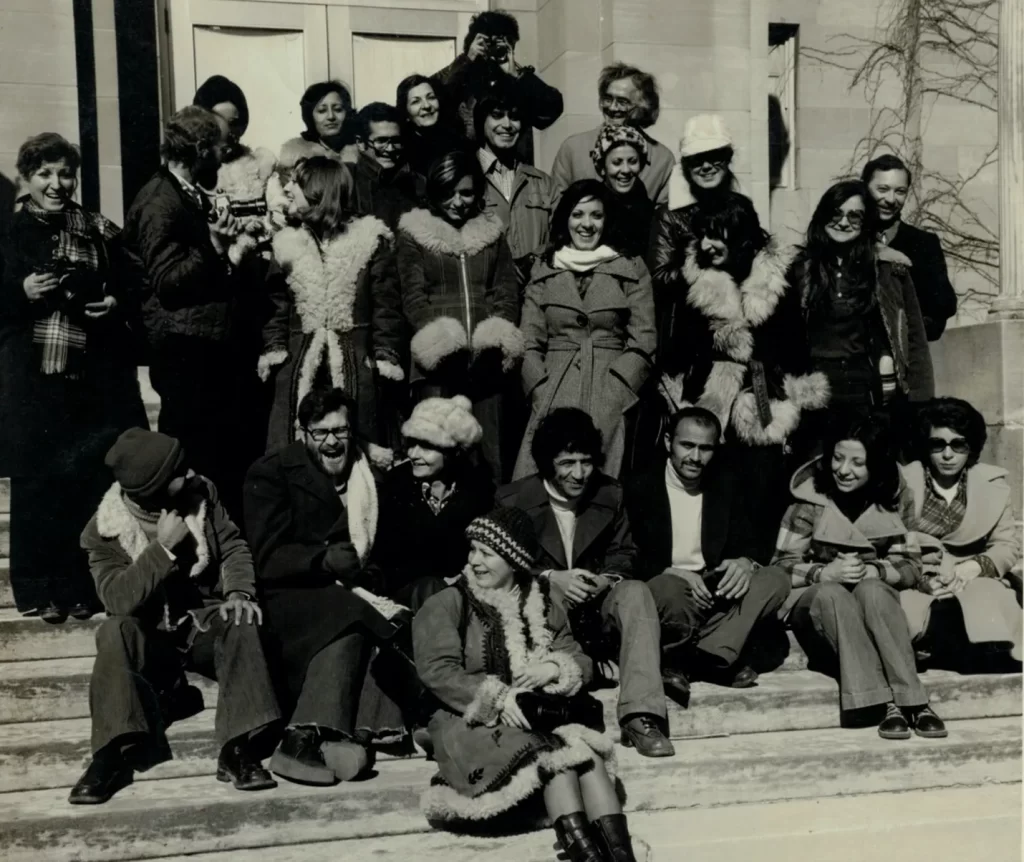
Figure 5.1 Educational technologist trainees and their instructors at Indiana University.
Training in both locations included:
- Participation in seminars to learn about the principles of educational technology.
- Producing instructional materials in hands-on workshops.
- Receiving individual tutoring from instructors at each university.
- Touring local and regional educational institutions and facilities, as well as public broadcasting stations.
On the way back to Iran, trainees visited educational broadcasting organizations, as well as other cultural and educational institutions in Britain, France, and Germany. Hands-on workshops included active participation in designing, developing, presenting, and evaluating an educational project tailored to the trainee’s chosen topic. Trainees in hands-on workshops selected a broad range of topics that included basic math and science, Farsi literature, history, and social sciences, among others. The programs crafted by educational technologists in these workshops reflected the depth and breadth of their educational background, their expertise in a particular subject matter, and their current professional interests.
For the design and production of their programs, each trainee wrote detailed project specifications that served as a blueprint to steer them in creating the instructional materials. These specifications not only showcased the individual trainee’s level of proficiency, but also revealed how much they had learned about the principles of systems approach to instructional design. Indiana University and Florida State University instructors presented these principles to the trainees in formal seminars. Topics included principles of educational systems design, primary concepts of behavioral, cognitive, and social learning theories, as well as contributions of Piaget to learning psychology, particularly for elementary school students. Other seminars included lectures on the principles of communication theory and their application to instructional system design. Instructors also tutored each of the trainees individually, reviewing their work-in-progress in various stages of development from planning and design to production, utilization, and evaluation. These consultations aimed to help trainees bridge the gap between theoretical principles of educational technology and the practical application of those concepts in their work.
Nevertheless, the final report in 1975 noted:
While the four-month program these NIRT participants took part in provided a wide variety of educational technology experiences, we wish it to be understood that only a beginning has been made. Functional and operational skills for professional work in this area require extensive involvement in the processes of planning, production, utilization, and evaluation of instructional media. (Final report 1975, 16.)
In addition to the final report from Indiana University, Dr. Ely wrote a summative evaluation of the entire UCIDT training program. He presented the results of various questionnaires where trainees were asked to rate their program both in Iran and in the United States. Overall, the results indicated that all trainees expressed satisfaction with the quality of instruction they received, often referring to it as “well-organized” and “systematic.” Most rated the quality of the program as “high,” while one of the trainees thought the quality was “very high.” A smaller group rated it as “average.” (Ely, 1978.)
These mixed results, however, reflected the personal experiences of the trainees as well. For most of them, this was the first time they were learning in a foreign country. The cultural adjustments they had to make in their personal lives might have impacted their experience of the training program. Also, for most trainees, this was the first time that they had to put their theoretical knowledge into practice and create tangible products to demonstrate their competency in a relatively short time. This marked a significant departure from their previous learning experiences, which likely focused primarily on recall of memorized information. Consequently, most trainees lacked a solid frame of reference from their past educational encounters when assessing the acquisition of practical skills in their responses to the evaluation questions.
Dr. Ely’s summative assessment also included a description of the unusual start of the implementation of the UCIDT training program in Tehran. He reported that initially the principal resident manager of the UCIDT program exhibited unprofessional behavior in fulfilling his assigned duties. For example, he failed to perform his basic responsibilities such as attending planning and coordinating meetings with the ERTI staff. As a result, the start of the training program was postponed several times.
Eventually, this author and Dr. Allen decided to ask Dr. Hudspeth to assume the role of the UCIDT project manager in residence in Tehran. This marked a turning point, as the training of new ERTI personnel commenced in earnest from this moment forward. Dr. Hudspeth’s expertise in the field of educational technology, coupled with his friendly personality and awareness of sensitive issues in cross-cultural communication attracted the cooperation of the ERTI’s administrative and accounting personnel. His professional management of the daily affairs of the project also helped to overcome the communication barrier between ERTI’s administrative staff in Tehran and the USC’s personnel in Los Angeles, working thousands of miles apart in different, inconvenient time zones.
After several long meetings with the author and ERTI unit managers, Dr. Hudspeth was successful in moving the project forward smoothly by coordinating the activities of the ERTI staff with that of USC regarding personnel and financial matters, as well as assignment of personnel to specific curriculum development and training tasks. Nonetheless, the administrative and accounting staff of ERTI had various degrees of proficiency in the English language, which limited their communication with UCIDT advisors in Tehran and USC administrators in the United States. Additionally, only a small number of ERTI administrative and accounting staff were familiar with the cultural norms of American advisors residing in Tehran. They underwent a period of adjustment to understand how to adapt to the informal mannerisms and practical work habits of the UCIDT personnel, which contrasted with their own more formal methods of communication and less practical methods of a government bureaucracy.
Once these initial complications were ironed out, job responsibilities became well-defined for the staff on both sides, allowing the program to gain considerable momentum. Dr. Ely’s report highlighted this momentum and its subsequent positive impact on the overall success of the project. The results of his summative evaluation encapsulated the views of both the American and Iranian staff on this subject. He noted: “Without exception, each respondent indicated in some way that ERTI is now using more systematic approaches in all of its activities.” Furthermore, he observed that the application of IDI’s nine-step system model is now not only recognized within ERTI, but within NIRT as a whole (p.13). The report also complimented ERTI management for trying to assign trainees to positions where they could apply their training in more productive ways:
“There appears to be a more serious attempt to match competencies gained in training with job responsibilities. With some awareness of the knowledge and skills which trainees have gained from the training program, it is easier to make such a match. Likewise, individuals appear to clarify their preferences for certain jobs and are active in seeking those appointments rather than passively accepting any position to which they are assigned.” (Ely 1978, 13.)
Despite these positive results, Dr. Ely’s evaluation report alerted ERTI leaders and managers, including this author, that not all of the trainees who had transitioned into full-fledged staff members were assigned to positions that matched their skills. Further coordination was necessary to ensure they were placed in positions where they could more effectively utilize their newly acquired knowledge and practical skills.
Applying the Principles of Instructional Systems Design
After finishing their program in the United States, the trainees proceeded to the third phase of their training program in Tehran. During this phase, educational technologists underwent on-the-job training by developing and implementing an Iranian version of the Instructional Development Institute (IDI). This was accomplished by adhering to the IDI development model presented in the section below, titled “Stages and Functions of Application of General Systems Theory to Educational Development in ERTI.” This prescriptive model showed the trainees how to apply the systems approach to create new instructional and learning materials and develop the necessary conditions to use them effectively (Harris, 1971). The same model constituted the basic method by which this author managed ERTI. Therefore, educational technologists undergoing on-the-job training were learning a model that also applied to managing the organization in which they worked.
During the third phase of their training program, the educational technologists realized that the methods they were learning for creating instructional materials and designing learning experiences closely mirrored the fundamental management methods and practices adhered to by Mr. Rahmanzadeh and myself. Furthermore, their American instructors and I explained to the trainees that both their current and future efforts would be reinforced and sustained through the implementation of systems approach principles to educational problem-solving, specifically in managing ERTI. They were assured that they wouldn’t encounter the typical obstacles often faced by staff in organizations where management principles clash with the concepts and methods that staff learned during training programs.
The following section clarifies the systems model that the trainees mastered to develop the Iranian version of IDI. It provides examples of how the model was put into use in managing ERTI. This section is based on the original IDI module titled “The Application of General Systems Theory to Instructional Development: A Self-Instructional Program,” written by Thomas Harris (1971).
Stages and Functions of Application of General Systems Theory to Educational Development in ERTI
Stage I: DEFINE
Function 1: IDENTIFYING PROBLEMS
Assess needs, establish priorities, and clearly state a particular problem as agreed upon by all concerned.
In general terms, the problems of education in Iran were very clear. More than 70% of the population were illiterate and in need of education to acquire basic skills in reading, writing, and arithmetic. Half of the school-aged children (9 million) lacked access to education and required some form of teaching and learning. Resolving these massive problems consumed the country’s educational resources. Qualitative issues, such as reforming methods of teaching and learning, as well as revising and updating textbook content, received less attention due to the prioritization of reaching the maximum number of learners with the available resources.
Very quickly, ERTI leadership realized that MOE personnel were facing a massive challenge to broaden educational opportunities for all eligible learners while enhancing the quality of teaching and learning. Furthermore, it became apparent that MOE’s capacity to fulfill these objectives was severely constrained. Acknowledging these pressing needs, ERTI leaders opted to strategically reallocate the organization’s scarce human resources, dedicating 40% of its staff to retraining teachers for the MOE.
Originally, NIRT leadership viewed the responsibility of teacher retraining to lie within the purview of the MOE. However, as the shortcomings of the MOE became increasingly evident, they willingly stepped in to support the significant task of retraining teachers to the fullest extent possible. This was a major strategic change for a broadcasting organization, redirecting a substantial portion of its resources toward conducting in-person workshops for teachers within schools. This strategic pivot was further reinforced when ERTI leaders and their American advisors developed a computer simulation model to forecast the future trajectory of ERTI. The results of the simulation project, presented in Chapter 8, clearly indicated that without direct assistance from ERTI in retraining MOE teachers, ERTI would fail entirely in a matter of a few months.
Function 2: ANALYZE SETTING
Locate and collect information about the educational background of the audience, their learning conditions, and available resources in order to train them to address the problems defined in Function 1.
Now that it was obvious to ERTI leaders that teacher training was a top priority, the author decided to collect data from a small group of teachers in selected schools in Tehran to assess the quality of their instruction. This assessment focused on measuring the ratio of direct versus indirect instructional methods employed by teachers in their daily practices. The collected data revealed that the direct method of teaching was the norm in most schools. This approach consisted of teachers literally dictating information to learners, expecting verbatim recall, and maintaining a unidirectional flow of information from teacher to student. Interaction between teacher and student was minimal or non-existent.
Higher-level learning activities, such as, analytical thinking, problem solving, and decision making were generally absent in these classrooms. It was reasonable to assume that teachers in other cities and villages also adhered to a direct method of teaching. This assumption was grounded in the fact that most teachers followed the same direct method of teaching established by clergy in religious schools centuries ago. Even teachers who were exposed to other methods of instruction during their pre-service education found it challenging to break away from the direct method of teaching advocated and practiced by clergy. It was deeply and widely ingrained in the Iranian educational system.
Obviously, a direct mode of teaching was not applicable to the effective use of educational television in classrooms. However, the data clearly revealed that an indirect method was absent in all classrooms, except in one instance. Optimal utilization of televised programs required an indirect method of teaching when teachers interacted with learners, asked questions from them, and responded to their inquiries. It was also necessary for teachers to prepare students for the viewing of upcoming lesson on the television screen and engage their students in learning activities after they viewed a program. This was to assist them in better comprehension of the contents of each lesson and to enable them to perform higher level cognitive tasks beyond simple recall of information. (The project to assess the direct vs indirect mode of teaching in selected classrooms in Tehran is presented in detail in Chapter 3).
Another example in completing Function 2 was to collect data about the media equipment available in schools and assess the readiness of schools to receive additional equipment. ERTI technical staff also needed to know to what extent the MOE required a cadre of trained electronic technicians to service schools’ television receivers, coaxial network installations, and other media equipment. It became quickly evident that the MOE would not be able to service the hardware technologies in schools without receiving substantial technical assistance from ERTI. In addition, it became clear that certain school buildings did not have adequate access to electricity. Their electrical system had to be upgraded if they wanted to use audio-visual equipment.
Implementation of Function 2 at the program production level included assessing learning needs of individual students. This assessment was necessary for producers to improve the quality of their program by addressing the diverse learning needs of as many students as possible across various subjects. Conducting a needs assessment was a highly specialized task and members of the newly formed Evaluation Unit took on the responsibility of implementing this critical job. The small group of evaluators began a methodic process of collecting data on the needs of students in schools across different neighborhoods in Tehran, each with varied socio-economic conditions. This data collection included students’ knowledge of specific subjects in selected Guidance Schools. Dr. Safaeddin Jahanbani, a proactive manager of NIRT’s Fars Center in the Shiraz, initiated a comparable process to assess the needs of learners in selected schools in the Fars province. Details of this project are presented in Chapter 8.
Function 3: ORGANIZE MANAGEMENT
Organize all activities necessary for resolving the identified educational problems, such as setting goals, classifying tasks to reach the goals, setting timelines for achieving goals, and assigning responsibilities to specific staff members for reaching the stated goals.
NIRT requested educational communication researchers at Stanford University to develop a long-term development plan for ERTI. This plan included identifying the educational problems of Iran in detail and presenting specific areas for creating and broadcasting radio and television programs to address these problems. The long-term plan also included using a telecommunication satellite to expand radio and television transmission nationwide, including the most remote cities and villages. Details of this project are presented in Chapter 9.
To respond to the MOE’s immediate needs, this author requested Dr. Root from Syracuse University to collaborate with members of ERTI’s Planning Unit in a reorganization effort. This allowed Stanford University planners the necessary time to complete their long-term planning process and present it to ERTI. The short-term reorganization involved creating a new organizational chart for ERTI; defining the operational functions of its staff; and implementing a system modeling and simulating project to assess the conditions under which ERTI could succeed. Details of these tasks are presented in Chapter 8.
Stage II: DEVELOP
Function 4: IDENTIFY OBJECTIVES
Identify the specific final and enabling objectives that learners or staff are expected to achieve as the result of a learning program or reorganization effort.
An example of Function 4 was when ERTI’s Evaluation Unit developed a model of assessment. This assessment model had several applications, one of which was to assist program producers and MOE subject matter experts in defining learning objectives for each program more precisely. During the assessment process, evaluators also offered feedback to producers about how well the contents of their new programs were meeting the students’ learning needs. With that information, producers could define more targeted learning objectives when they revised existing programs or produced new ones in the future. Initially, the available data on needs assessment and program evaluation was meager. Nonetheless, the information was sufficient for producers to revise objectives of some programs in consultation with MOE subject matter experts. This process, however, was delicate for two reasons. First, the revised learning objectives had to align closely with the approved MOE curriculum. Second, ERTI Unit managers needed to reassure producers that the evaluation data would not impact their retention, promotion, or other personnel matters; it was solely intended to improve the quality of their programs.
Function 5: SPECIFY METHODS
Determine which instructional strategies, materials, and resources will maximize learning of specific objectives for particular content areas, for specific learners under certain learning conditions. Function 5 was also applicable to managing ERTI: Determine which management strategies and operational conditions will maximize the efforts of the staff to reach their organizational goal of assisting the MOE and other client institutions.
Leaders of ERTI applied the same system model to manage the organization that producers and educational technologists employed for creating their radio and television programs or conducting in-person training workshops for teachers. In turn, school administrators and teachers who participated in IIDI workshops implemented the same system model in their schools and classrooms, creating a multiplier effect to serve more students in less time with more effective results.
As the educational technologists became more competent, Mr. Azadan, the Production Unit manager, guided them to assist radio and television producers in selecting specific instructional and learning strategies in their programs, based on the needs assessment data collected in Stage II Function 4. This task of selecting instructional and learning strategies was intricate, requiring a comprehensive understanding of learning theories and their applications to instructional message design for radio and television. Initially, achieving full implementation of this function at an ideal level was not feasible. However, with time, the educational technologists enhanced their knowledge of instructional system design and its underlying principles in psychology, sociology, and related disciplines, becoming more competent in executing this function.
The leadership of NIRT showed remarkable patience and foresight in allowing educational technologists to develop their professional tasks. They provided ample time and support for the trainees to fully grasp the complexity of their roles and tasks.
Function 6: CONSTRUCT PROTOTYPES
Design, produce, and assemble all materials for an instructional program and construct a prototype of the program.
An example of this function was creating and delivering either a full IIDI workshop or segments of it to a small group of MOE teachers and administrators. Educational technologists invited these small groups of teachers and administrators to tour ERTI facilities, where they presented either the complete IIDI workshop or specific segments, while also assessing their reactions. This practice aimed to improve the effectiveness of IIDI during its design, development, and production phases. Each presentation session elicited feedback from the audience, which educational technologists used to modify various segments of the workshop’s materials. They also adjusted modes and procedures of their presentations based on this feedback. Incorporating input from an Iranian audience also ensured that the workshop became more culturally relevant to the needs of teachers and administrators. While the initial participants in IIDI workshops were all from Tehran, there were variations in cultural perspectives among teachers and administrators who served students from different neighborhoods with distinct socio-economic backgrounds. In this scenario, a one-size-fits-all approach was not suitable. Each workshop had to be slightly different to address the specific cultural, social, and economic needs of students in different areas of the city.
Another example of this function was evident in how producers revised their previously produced programs. In 1974, as the small Evaluation Unit of ERTI took shape, evaluators reviewed some of the earlier television programs created for the first year of the Guidance Cycle. These programs were regarded as “prototypes,” providing feedback to their producers to revise and reproduce them. This process was formalized by Ms. Monjazeb, the manager of the Evaluation Unit in later years.
Stage III: EVALUATE
Function 7: TEST PROTOTYPES
Evaluate instructional prototypes with a representative sample of the student audience. Collect and record evaluation data.
From the early stages of training educational technologists, UCIDT instructors emphasized the importance of testing and evaluation. Even during the short period that this practice was implemented, ERTI gained a reputation as an academic organization where formal testing and evaluation of radio and television programs was taken seriously. Instructional technologists regularly hosted student groups for tours of ERTI headquarters in Tehran. During these visits, students listened to segments of radio programs or previewed video clips and other multimedia materials, such as slide-tape presentations. Members of the Evaluation Unit guided producers and educational technologists in interviewing students to gauge their reactions to the previewed materials.
In addition to these efforts in Tehran, Dr. Jahanbani, the manager of NIRT’s Fars province center, invited Pahlavi University faculty and staff to independently evaluate the impact of ERTI television programs on Guidance Cycle students, specifically in schools in Shiraz and other cities in Fars province. The results of this evaluation project are presented in Chapter 8.
Function 8: ANALYZE RESULTS
Analyze and interpret data from the program prototype trials. Revise all previous instructional development functions based on the collected data.
The Evaluation Unit staff provided producers and educational technologists with the results of evaluation studies from Function 7, aiding in the improvement of the design and development of their future programs. Educational technologists regularly revised the materials they presented in IIDI workshops based on both formal evaluation results and informal interactions with workshop participants. As they gained more field experience and collected formal data from teachers and school administrators, they made minor adjustments to each workshop to better meet the learning needs of the audience. With growing confidence in their work, they began producing different versions of IIDI for audiences beyond the teachers and administrators of the MOE. These new audiences included personnel of NIRT Network One and Network Two, as well as Radio Kabul personnel who came to Tehran to participate in an IIDI workshop. Additionally, educational technologists produced and presented a specialized iteration of IIDI for 200 officers of the Imperial Iranian Ground Forces, who were to receive additional training in the United States to serve as educational technologists in their respective units.
Function 9: IMPLEMENT/REVISE
Implement the completed program for its intended audience. Review all of the instructional development functions. Revise and modify the instructional materials and instructional development process. Decide to expand the implementation of the program on a wider scale as designed.
A prime example of this function was presenting IIDI workshops to a broader group of school administrators and teachers in Tehran and a few other cities. The initial goal of ERTI was to train 60,000 teachers through at least one IIDI workshop. Achieving this required ERTI to increase participation from schoolteachers and administrators. Without the involvement of a pioneering group of educators, it would have taken ERTI personnel decades to introduce educational systems design principles to tens of thousands of teachers nationwide. To fulfill the initial goal of retraining 60,000 teachers, MOE personnel needed to become completely self-sufficient in offering IIDIs to their colleagues. Therefore, the first groups of teachers and administrators who participated in at least one workshop were tasked with introducing the concept of instructional system design to others in their schools.
Having teachers and administrators offer IIDIs to their peers was essential to eventually allow ERTI staff to transition into a supporting role. For example, as teachers conducted more workshops for their peers, it became clear to educational technologists that most schools lacked the necessary equipment for optimal presentations. Some even required additional electrical power for using multiple slide and film projectors simultaneously. As a result, ERTI staff assumed a logistical role in providing media equipment to various schools in Tehran and other cities. They also assisted school administrators in installing and utilizing this equipment properly. Additionally, they alerted ERTI leadership to the need for helping schools gain access to more electrical power.
Certainly, at the beginning, educational technologists and producers did not apply the IDI development model perfectly. Most producers were unfamiliar with the model, requiring time to adjust their production procedures to include specific steps from the system model into their workflows. Also, certain aspects of the model, such as collecting data in schools to assess the effectiveness of television programs, proved to be time consuming. Producers, educational technologists, and evaluators had to obtain permits from schools to collect data – a process that often took weeks to complete.
Their hope was that by offering IIDIs in schools, MOE personnel would gradually overcome their reluctance to allow ERTI staff to collect data in their classrooms and become more receptive to hosting evaluation sessions. These challenges, however, were typical when implementing new procedures in any organization. The leaders of ERTI believed that both ERTI staff and their counterparts in schools needed more time to gain experience with the new production-to-evaluation cycle and understand how it was improving the outcomes of their work.
Despite this, ERTI staff consistently faced the challenge of balancing their mission to produce more radio and television programs to cover the entire MOE curriculum with integrating the specific steps of the IDI system model into their workflow. This issue sparked numerous discussions between this author and Mr. Azadan, the manager of the Production Unit. One of his primary responsibilities was to increase the quantity of educational materials while improving their quality. His tireless efforts to achieve these seemingly conflicting goals were focused on integrating the IDI system model into the production workflow of producers as a solution to boost productivity while enhancing the program quality. However, he always emphasized to the author that meeting these goals “could not be done overnight.” It required his sustained and patient coaching of producers to gradually enhance their understanding of novel production techniques and the underlying systems principles that made their production more efficient and effective.
Implementing the Iranian Instructional Development Institute in Schools
As indicated in this chapter, educational technologists followed the nine functions of the instructional systems design and development model during their on-the-job training. Their training consisted of creating the Farsi version of IDI or the Iranian Instructional Development Institute (IIDI). This Farsi version included narrated slide presentations, simulation exercises, role-playing events, and reading materials. These resources instructed future workshop attendees on how to independently implement the nine functions of the instructional design and development model in their own schools.
The media materials, role-playing and simulation exercises, and other learning activities had a distinctly Iranian flavor, look, and feel compared to the original materials in English designed for an American audience. All audio and visual materials were produced in ERTI studios or local school settings, featuring volunteer teachers and administrators from the MOE. The role-play scenarios, which were designed to promote team building and collaborative problem-solving skills among workshop participants, adhered to Iranian cultural norms in social mannerism and interpersonal communication.
In translating the materials from the original English version, a major issue arose in finding Farsi equivalents of common terms in the field of educational technology. At the request of NIRT, the Ministry of Science and Higher Education formed a special committee of elder experts in Farsi literature to assist ERTI in this important and sensitive matter.
During the 1960s and ‘70s, Iranians adopted many new technologies from other countries, resulting in the incorporation of foreign words associated with these technologies into written and spoken Farsi. The literary elite, however, disapproved of these alien terms and campaigned to replace them with Farsi words. For example, radio was referred to as rådio because there was no Farsi equivalent for it, and television was called televizion, adopting the French pronunciation.
While some educational technology terms could be easily translated, the experts found it difficult to find and agree on Farsi translations for others. Deciding on a Farsi equivalent for each English term required extensive discussion and deliberation. Given the reverence that the committee of Farsi experts had for their beloved language, this task could not be completed quickly. Additionally, it was uncertain whether practitioners and others, such as journalists, would readily accept the committee’s proposed words. New words needed to sound natural and fit the melodic sound of spoken Farsi.
ERTI leaders expected that as IIDI workshops were offered in schools across various provinces, local teachers and administrators would produce instructional materials that reflected their own cultural norms. They could also incorporate local expressions in Azari, Kurdish, and other regional languages. Although all the IIDI materials were originally produced in Farsi, it was conceivable that teachers and administrators in different provinces would want to create versions of IIDI in their regional languages and dialects. However, in doing so, they would also face the same challenge of finding equivalent terminologies.
Despite the linguistic challenges, the key point was that future attendees of IIDI workshops across all provinces would follow the nine steps of the instructional model, based on universal concepts in science. Still, in following the model, workshop participants had significant freedom to create instructional materials and learning events tailored to their immediate needs, reflecting their local customs, manners, and norms of social behavior and interpersonal communication. In essence, the success of the entire project depended on the extent to which they engaged in data-based needs assessment and decision-making while conducting the workshops.
Taking IIDI to the Field
The dedication and hard work of educational technologists led to the development of the Iranian version of Instructional Development Institute in Farsi within a few months. Educational technologists Ms. Fahimeh Farzam, Mr. Mahmoud Kayhani, and Mr. Masoud Vayes-Zadeh, took leadership roles in designing, producing, and field-testing the IIDI. To begin the process of preparing IIDI workshops in schools, educational technologists held a seminar for 160 school principals in Shahram Guidance School on November 3, 1976. During this seminar, they briefed the participants about on-air programs of ERTI as well as its non-broadcast workshops. At the end of the seminar, the administrators were invited to visit and take an extensive tour of ERTI’s headquarters.
Several school principals responded immediately, requesting visits to ERTI and expressing interest in bringing some of their teachers and students along. The schools that responded included Amouzesh, Apadana, Behbahani, Firouzkuhi, Forough Khavar, Jam-e-Jam, Kamal, Kamran Noush, Khalij-e-Fars, Khashayar Shah, Ravesh-e-Now, Meshkot, Motarjemoldoleh, Movvahed, Nezam Mafi, Pirouzi-e-Naft, and Shahab.
This author held daily conversations with educational technologists as they guided administrators, teachers, and students on tours of ERTI in preparation for offering IIDI workshops in their schools. During these visits, some teachers and administrators volunteered to participate in an entire IIDI workshop, providing formative evaluation data to help refine the workshops. The educational technologists also conducted individual interviews with participants to gather more detailed feedback on how to make the workshops more relevant to their needs.
As a result, most participants became very interested in transferring their experiences back to their own schools and holding IIDI workshops for their peers and students. During these early days, educational technologists involved in conducting workshops reminded this author that they could only accommodate a small fraction of the teachers, administrators, and students interested in participating in the first round of field trips. They also reported that the enthusiastic response to touring ERTI and participating in an IIDI workshop indicated a need to prepare for many more eager visitors in the weeks and months to come.
Over time, the outstanding performance of educational technologists in hosting field trips to ERTI and holding IIDI workshops became legendary. Their reputation spread throughout NIRT, and producers of various popular programs on Network One and Network Two also began attending IIDI workshops voluntarily. Eventually, participation in these workshops became part of the orientation for all new NIRT employees.
After several in-house trials, educational technologists became convinced that they were ready to venture out and hold IIDI workshops in schools beyond the ERTI headquarters. To facilitate this, they created an efficient logistical system to present the workshops to MOE teachers and administrators in their own schools throughout the ever-growing city of Tehran. While conducting IIDI workshops in various schools throughout Tehran, they developed an outstanding rapport with teachers and administrators, motivating them to independently hold IIDI workshops for their peers and students.
As teachers and administrators became proficient in running IIDI workshops for their peers and students, the day-to-day operations of offering workshops were gradually transferred to MOE personnel in some schools in Tehran. However, educational technologists and NIRT technicians assigned to ERTI continued to oversee the general management of the program and provide logistical support, particularly in shipping slide projectors, audio recorders, television sets, and other equipment to the schools as needed.
The Appeal of IIDI
The novel hands-on and learning-by-doing approach introduced by educational technologists quickly became a hit among educators and their students. As a result, holding IIDI workshops became a routine event at ERTI, as well as in selected schools in Tehran and a few other cities. During each workshop, participants actively learned how to create their own instructional materials for conducting IIDIs for their colleagues and students in their own schools. This hands-on approach involved creating booklets, posters, narrated slide presentations, simulations, educational games, and role-playing events. This mode of learning-by-doing was a significant departure from what teachers and administrators had previously experienced, and they took great pride in what they were able to produce and accomplish on their own. No longer mere passive observers in a lecture hall or a classroom, their learning-by-doing yielded tangible results in their schools.
The train-the-trainer model of IIDI required participants not only to become active creators of instructional materials but also to take ownership of the IIDI program in their schools. This responsibility for holding future workshops for their peers and students proved to be a major motivating factor for school administrators and teachers. Some began to offer workshops in schools on their own initiative, with only backup support from ERTI. To be sure, there were many challenges in some schools due to a lack of technical equipment and facilities, especially in the older sections of Tehran and other cities. Some schools reportedly lacked sufficient electric power to run the audiovisual equipment required for the workshops, while others did not have adequate space for staging hands-on activities, as many MOE schools were in rental properties not designed to house a school.
Despite these limitations and the small number of educational technologists working at ERTI, the train-the-trainer model proved to be a logical method for developing a sustainable multiplier effect, creating an effective cadre of motivated and creative educators throughout the country. The enthusiasm of teachers and administers to learn new competencies and enable their peers and students to perform these newly acquired skills largely compensated for the lack of physical facilities, promising a steady growth in the transfer of systemic instructional methods to schools.
The systems approach to the creation, dissemination, utilization, and evaluation of instructional materials was a significant departure from the recite-and-recall method of education traditionally employed by the MOE. This difference became more pronounced as IIDI workshops were offered to schools, highlighting the pedagogical barriers to expanding collaboration with the MOE. The next chapter will discuss these barriers in detail.
References
Ely, D. P. (1978). Evaluation report of the educational technologist training program conducted by the University Consortium for Instructional Development and Technology. Educational Radio and Television of Iran.
Harris, T. (1971). The application of general systems theory to instructional development: A self-instructional program. Unit 3 Module 1 [ERIC Document No. 132 642]. National Special Media Institute.
Rostow, W. W. (1960). The stages of economic growth, a non-Communist manifesto. University Press.
Williams, D. G. (1959). Syracuse University contract terminal report. The Fine Arts Administration and Syracuse University.