Bridging the Pedagogical Gap Between ERTI and the MOE
Introduction
Bridging the pedagogical gap between the MOE and ERTI was essential for fostering successful collaboration between the two organizations. The decision-making process within the MOE was highly formalized and hierarchical, creating challenges for aligning with ERTI’s more flexible approach. To reconcile these differences, a formal agreement was needed between the Minister of Education and the NIRT Chief Executive Officer.
To facilitate making such an overall agreement, Mr. Rahmanzadeh and this author organized a two-day conference that brought together the leadership and managers from both NIRT and the MOE. Planning for the conference sparked new vigor and enthusiasm among ERTI personnel. Producers and educational technologists selected their best programs and projects, showcasing them in ERTI studios and offices for the invited MOE guests to review.[1]
First Conference on the Application of Television in the Educational System of the Country
On the morning of April 25, 1976, there was tremendous anticipation and excitement among the ERTI staff as Dr. Manouchehr Ganji, the new Minister of Education, arrived. He was welcomed by Mr. Reza Ghotbi to attend the First Conference on the Application of Television in the Educational System of the Country. The ERTI building’s foyer was gleaming that day, adorned with vibrant posters illustrating the diverse roles and functions of the ERTI staff.
To showcase ERTI’s commitment to innovation, state-of-the-art equipment was also on display, highlighting the advanced hardware available to support educational initiatives nationwide. The agenda for the conference included a comprehensive discussion of issues crucial to the collaboration between ERTI and the MOE, setting the stage for a meaningful exchange of ideas.
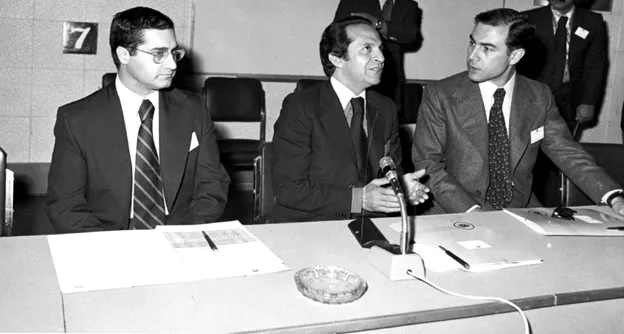
Figure 7.1—From left to right Farhad Saba, Manouchehr Ganji, and Reza Ghotbi at the First Conference on the Application of Television in the Educational System of the Country.
The Rocky Start
Mr. Ghotbi opened the conference with his usual warm demeanor, extending a sincere welcome to the MOE representatives. He emphasized that education was a priority not only for the MOE, but for NIRT as well. He then highlighted the challenges NIRT faced in defining the educational role of television. Referring to a recent study by NIRT’s Public Opinion Survey Unit, he stated: “We asked children from the ages of 5 to 13 what they expected from television. About 60% mentioned education as their primary choice.”
However, Mr. Ghotbi noted that when the interviewers asked what kind of educational programs they wanted to see, the respondents were not very clear. He suggested that a key area for collaboration between the two organizations should be to answer a fundamental question: What does it mean to present education on television? He acknowledged that addressing this question in practice had been a significant challenge for producers and program managers.
Drawing from NIRT’s experience, Mr. Ghotbi explained that creating television programs for general audiences involves a conceptual hierarchy. For example, producing comedies that mock undesirable or foolish social behaviors is relatively straightforward. However, as content becomes more abstract—such as producing programs about history—the task becomes much more challenging. Mr. Ghotbi added:
“It is not clear why we encounter severe difficulties when our producers try to present the philosophical aspects of our rich literary heritage on television. Is it because we have not had a long background in motion picture production, in live theatre, or in other performing arts? Or is it the nature of television that makes it difficult to present attractive educational programs that are as popular as comedies?” (Educational Radio and Television of Iran, 1976a)
Mr. Ghotbi continued, explaining that over the last 10 years, NIRT had experimented with various forms of educational programming. Some formats presented content directly from textbooks on television, while other formats covered basic concepts related to the MOE curriculum without following textbooks word-for-word. But these efforts were not very successful. “Now that we are rapidly expanding an independent educational unit in NIRT,” he stated, “I hope with the collaboration of the MOE we can produce and present more attractive and effective television programs in the future.”
Mr. Ghotbi highlighted that his colleagues at ERTI believed that applying the principles of educational technology would enhance the appeal and effectiveness of future programs. He elaborated:
“Principles of educational technology are not limited to the physical aspect of, for example, placing a television set in a classroom. They also include applying what we know from all sciences to enhance educational experiences of students. Educational technology is an eclectic concept that draws from psychology, sociology, education, and even biology and ecology to solve educational problems.” (Educational Radio and Television of Iran 1976)
He further stated that based on the principles of educational technology, “I agree with Dr. Ganji that television should not replace the teacher in the classroom.” Rather, it should be used to facilitate the teacher’s work and enhance student learning.
Despite Mr. Ghotbi’s welcoming and optimistic tone and his call for collaboration, the conference got off to a rocky start. The initial discussions between the representatives of ERTI and the MOE were marked by a cold and uninspiring atmosphere. In hindsight, it might have been better to invite Dr. Ganji at a later time, once he had a chance to become more familiar with ERTI’s mission and vision. However, the dialogue had already begun, revealing the conceptual divide between the two organizations. A significant point of contention in the early conversations was the different meanings that each group attributed to the word “technology.”
The Concept of Technology
During this period, even in the most technologically advanced countries, the term “technology” typically conjured up images of hardware in the minds of most educators—often reduced to audiovisual equipment. Many officials in the MOE held this narrow view, believing the role of ERTI was merely to supply and install hardware in classrooms. In contrast, ERTI’s educational technologists were learning a more holistic and inclusive understanding of technology from their mentors. This perspective extended far beyond the simple use of hardware in education. It encompassed a much broader domain, integrating principles from various scientific fields to solve educational problems. This included a combination of general systems theory, the psychology of learning, mass communication, and the management of educational organizations.
This more comprehensive concept of educational technology developed in the 1960s, primarily in scholarly literature from the United States, Canada, and Australia, as well as some European countries such as the United Kingdom, Germany, and Sweden. One of the most prominent voices defining this holistic approach was Dr. Donald Ely, a professor in the Department of Instructional Design, Development, and Evaluation at Syracuse University (Januszewski & Persichitte, 2010). Dr. Ely was a key figure in planning ERTI’s training program and in guiding its staff toward becoming educational technologists. These staff members were familiar with the then state-of-the-art definition of educational technology, which Ely played a significant role in shaping. Ely defined educational technology as follows:
“Educational technology is a complex, integrated process, involving people, procedures, ideas, devices, and organization for analyzing problems and devising, implementing, evaluating, and managing solutions to those problems involved in all aspects of human learning. In educational technology, the solution to problems takes the form of all the Learning Resources that are designed and/or selected and/or utilized to bring about learning; these resources are identified as Messages, People, Materials, Devices, Techniques, and Settings. The processes for analyzing problems, and devising, implementing, and evaluating solutions are identified by the Educational Development Functions of Research, Theory, Design, Production, Evaluation Selection, Logistics, Utilization, and Utilization Dissemination. The processes of directing or coordinating one or more of these functions are identified by the Educational Management Functions of Organizational Management and Personnel Management.” (Januszewski & Persichitte, 2010, p. 270)
Nevertheless, during the initial hours of the conference, it became clear that the MOE staff held a narrow, hardware-focused view of technology. They did not share the more holistic understanding of the term embraced by their counterparts at ERTI. As a result, much of the early debate centered around the definition of “technology” and its application in education. These discussions involved not only Dr. Ganji and Mr. Ghotbi, but also many other participants. Ultimately, the leaders of both organizations agreed that their teams needed to bridge this conceptual divide and reach a common understanding of the role of technology in education in the coming days and weeks. The formal agreement signed between NIRT and the MOE at the end of the conference included a provision for the formation of a committee to address this conceptual gap and bring the two organizations closer on this fundamental issue.
However, this conceptual disagreement was not the only source of misalignment between the MOE and ERTI. Another key issue that emerged during the early hours of the conference was the role of the teacher in the classroom.
Were Teachers Dispensable?
At the time, a common myth in educational circles, both in economically advanced and developing countries, was that educational technologists aimed to replace teachers with hardware systems. However, research in the field made it clear that effective learning from media technologies required active involvement from teachers. Teachers were needed to engage students in specific activities before, during, and after viewing or listening to a mediated program, such as a motion picture (Salomon, 1969). Despite this evidence, MOE officials continued to believe that teachers were dispensable and that technology could soon take their place. To counter this belief, an important clause in the agreement between the two organizations affirmed the teacher’s central role in the classroom, emphasizing that television programs were intended to enhance, not replace, teachers’ efforts to help students succeed.
Meeting of the Minds
As the conference entered its second day, a noticeable shift occurred in the dynamic between the two organizations’ participants. Discussions grew less contentious and more collaborative, evolving into friendly exchanges by the afternoon. Both sides reached a consensus that the use of educational technology should extend far beyond the traditional school environment. They agreed that television programs and other media materials should be made accessible to school-age children wherever they are and whenever they are ready and willing to learn. Additionally, these resources should serve a broader purpose—supporting the development of a more skilled workforce by expanding vocational education not only in schools, but also in workplaces (Educational Radio and Television of Iran, 1976a).
Perhaps the most remarkable idea to emerge from the discussions was the proposal to establish open schools at the elementary, middle, and high school levels. These schools would welcome anyone seeking education, regardless of age or prior learning experience. Although the specifics of this concept were not fully outlined during the conference or afterward, the core idea was to leverage media to extend educational opportunities beyond the boundaries of formal schooling, reaching as many people as possible, including adults. The significance lay not just in the proposal to create open schools but in the collaborative spirit that had developed between the two groups. Both organizations were now committed to working together, combining their strengths and complementing each other’s efforts to tackle the immense educational challenges of the future.
Conference Outcomes
On the second day of the conference, under the expert guidance of Mr. Rahmanzadeh, seven joint working committees were established to deliberate on a broad range of important issues. Each committee focused on specific areas of concern, including:
- Addressing the conceptual differences between the two organizations
- Tackling the shortage of subject matter experts, particularly in the sciences, to cover the entire MOE’s first to twelfth-grade curriculum on television
- Placing more subject matter experts from the MOE in ERTI to increase their access to radio and television producers
- Sourcing instructional science films from other countries to compensate for limited domestic production resources
- Transitioning student assessments from rote memorization to evaluations based on cognitive, affective, and behavioral skills
- Distributing and maintaining audiovisual equipment in schools
By the end of the conference, there was a notable improvement in the relationship between the representatives of the MOE and ERTI. The committee meetings provided an opportunity for both sides to openly discuss their differences and explore ways to bridge them.
The final agreement reached at the conference outlined a wide range of collaborative efforts between the two organizations’ staff. These efforts included initiatives such as training programs to familiarize MOE teachers nationwide with the principles of educational technology and preparing a cadre of technicians to install and repair television sets once the MOE could hire such personnel. For the first time since its establishment a decade ago, ERTI’s formal role in supporting the MOE was affirmed in the conference agreement. Specific MOE staff members were designated to collaborate with ERTI staff to implement the agreements made during the conference.
The positive outcomes of the conference brought renewed optimism to producers and educational technologists, motivating them to enhance the quality of their programs.
ERTI Producers Take Center Stage[2]
By the end of the conference, there was a clear sense of pride, accomplishment, and enthusiasm among the ERTI producers. They felt confident that the MOE representatives now had a better understanding of their work, increasing the likelihood of future support in the days and weeks ahead. Another indicator of their success was Network Two’s decision to follow Network One’s lead and broadcast some of their documentaries during primetime, allowing ERTI programs to reach a wider general audience on both NIRT channels during peak evening viewing hours.
Additionally, to provide classroom teachers with greater opportunities to align their lessons with broadcast content, NIRT decided to rebroadcast the daytime programs between midnight and 8 AM via its national microwave network. Previously unused during these hours, this transmission resource became available since Networks One and Two typically concluded their broadcasts at midnight. The overnight rebroadcasts enabled local stations to record and replay the programs within their coverage areas, giving teachers a better chance to synchronize their lessons with the televised content. As a result, a significant portion of NIRT’s 24-hour transmission capacity was dedicated to educational programming. Some proactive local NIRT centers, such as Fars, went further by providing schools with videocassette copies of programs, allowing teachers to use these videos on demand as they deemed necessary.
The increased visibility of ERTI programs across all NIRT broadcast channels, including during prime-time hours, elevated the producers’ sense of professional satisfaction. It was evident that NIRT leadership highly valued their work, as the nation’s substantial investment in establishing a nationwide microwave transmission capacity was primarily used for educational purposes. The popularity of these programs was partly due to their high production values and pedagogically sound sequences, which attracted both classroom teachers and general audiences during daytime and prime-time hours.
Much of this success could be attributed to the tireless and persistent efforts of Mr. Azadan, the manager of the Production Unit. Months of coaching producers in the latest television production techniques had resulted in more creative and instructionally effective programs. Mr. Azadan’s leadership encouraged his team to move beyond the traditional format of “talking head” lectures. He paved the way for producers to enhance on-camera teacher presentations with imaginative production values, resulting in programs that were both engaging and educationally impactful.
New Programming Efforts
The History Group—Led by producers Ms. Hayedeh Nasehi-Nejad, Mr. Ghazanfar Hazrati, and Mr. Hadi Gharavi, the History Group pioneered the use of dramatic reenactments of historical events for elementary school students. They integrated video footage from numerous historical sites across Iran to enrich their storytelling and bring the country’s long and colorful history to life. The History Group also broke new ground by introducing animation to depict historical figures. Creating animated motion pictures in the 1970s was a slow process, requiring several talented illustrators and countless hours of effort to produce just a few seconds of animation. Despite these challenges, this art form gained popularity among graphic artists. Animated segments began to appear not only in the History Group’s programs but also in productions from other groups. The inclusion of animations and dramatic sketches proved to be both engaging and attractive to students, as reflected in their preferences during formative evaluation sessions. When it came to presenting more recent history, particularly stories from the Qajar dynasty and the Reza Shah era, producers Mr. Ghazanfar Hazrati and Mr. Hadi Gharavi took the initiative to conduct their own research using archival documents. Their efforts marked the beginning of a shift towards creating original content that was independent of the MOE’s official texts. This highlighted the speed and flexibility of television production compared to the slow process of revising and updating textbooks.
MOE officials became increasingly aware of how quickly television programs could be updated compared to textbooks, which raised concerns about losing control over the curriculum content on television. Nevertheless, the producers’ willingness to delve into archival materials and experiment with new content allowed for fresh perspectives and enriched programming.
The Geography Group—Members of the Geography Group, Mr. Akbar Moghrae-Abed, Mr. Sayed Mehdi Raoofi, and Mr. Fereydoun Nazeri, traveled extensively across Iran, capturing long film clips that showcased the diverse geographic features of the vast Iranian plateau. Their footage included natural landscapes, historic sites, as well as both modern and traditional neighborhoods in cities and villages. This valuable footage was shared with other production groups and incorporated into various programs across different subjects and grade levels.
In addition to their collaborative efforts, the Geography Group produced documentary programs about historic cities like Tabriz and Rezaieh, which have rich traditions dating back centuries. These documentaries also highlighted new developments, such as the emergence of new industries and the establishment of state-of-the-art manufacturing plants that were creating job opportunities in these municipalities.
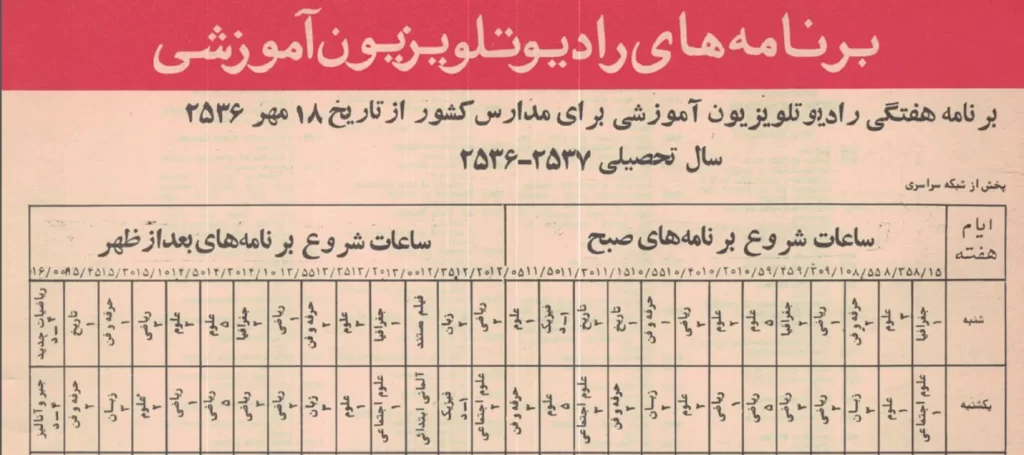
Figure 7.2—A Segment of ERTI Weekly Schedule Published in NIRT’s Tamasha Magazine.
The Vocational Education Group: A primary goal of ERTI was to introduce students to various professions in emerging industries, including those related to processing and packaging agricultural products for domestic and international markets. Producers Mr. Javad Zahiri Tusi, Ms. Farzaneh Tajbakhsh, and Ms. Zahra Asadian from the Vocational Education Group created a series of programs focused on the economic and industrial aspects of agriculture. They also visited food processing and packaging factories with video cameras to document the workflow of professionals, providing students with an inside look at these industries.
The Rural Education Group: ERTI, along with NIRT, produced radio and television programs aimed at improving the lives of people in rural areas, where formal education was often unavailable. Programs targeting the vast farming communities were broadcast on Radio Iran and Network One television. These initiatives began in the 1960s with a Rural Education Unit at Radio Iran and expanded to television following the 1971 merger of Radio Iran with the national television organization. ERTI responded to the needs of rural audiences, especially after land reform, which left many farmers managing their lands independently, free from the control of feudal landlords. While they gained newfound freedom, they also faced the challenge of developing new skills to maintain productivity and profitability. ERTI’s Rural Education Group designed programs to help farmers adapt to mechanized farming techniques, pesticide use, and other modern agricultural methods. Producers Ms. Farzaneh Tajbakhsh, Ms. Zahra Asadian, and Mr. Mohammad Maasoomi Fakhar created instructional episodes to introduce technical, financial, and managerial skills to farmers. Recognizing the critical role of agriculture in Iran’s economic development, Stanford University planners recommended expanding the Rural Education Group to increase the scope and diversity of its educational offerings to farmers. This expansion was part of a broader strategy, including collaborations with the Free University of Iran, to enhance rural education via radio and television broadcasts.
The Social Science Group: Comprised of Mr. Behrooz Darvish-Zadeh, Mr. Hosien Salili, Mr. Gholamhussain Mirzadeh, and Ms. Simin Ahmadi Panjaki, this group undertook the task of revising previously produced programs for the guidance cycle and enhancing them with updated production techniques and values. These revisions were based on newly collected evaluation data from students, enabling producers to make data-based decisions on program content and format which better addressed the evolving learning needs of students.
As rural and urban societies evolved, the Social Science Group shifted focus to produce several documentaries exploring the social and political organizations of the time. They also hosted roundtable discussions featuring prominent political figures and commentators, addressing emerging trends in both rural and urban areas. One of the key developments they highlighted was the formation of village councils—elected bodies that gradually replaced the traditional authority of feudal landlords and clergy. These councils were intended to directly represent the will of the villagers, laying the groundwork for a new social structure in the long run.
The Mathematics Group: Led by Mr. Rajabali Taravati, Mr. Gholamreza Nakhaizadeh, and Mr. Khosro Ghazi-Tehrani, in collaboration with one of the MOE’s most talented on-camera instructors, Mr. Alaedin Dolatshahi, the Mathematics Group revolutionized the way mathematics was taught on television. They achieved this by creating short, engaging vignettes that demonstrated how mathematics could be applied in everyday life. Some of the stories were specifically designed to capture the attention of younger students, especially those in elementary school, and featured animated clips to enhance their appeal. The creative efforts of the Mathematics Group sparked the imagination of both students and teachers, transforming the learning experience. Their creativity and impact were so significant that they drew the attention of Prime Minister Amir Abbas Hoveyada, who recognized their innovative work by presenting them with an unexpected and unprecedented award.
The Physical Sciences Group: Led by producers Mr. Masoud Nikpuor and Ms. Havva Sami’i, the Physical Sciences Group successfully developed a comprehensive series of laboratory experiments to enhance classroom instruction in physics, chemistry, and biology. These programs proved invaluable to science teachers across the country, many of whom lacked access to proper laboratory equipment for hands-on demonstrations. The experiments were filmed in a newly added section of the ERTI building, which housed three state-of-the-art science laboratories. These labs served as prototypes for future Learning Resources Centers, which ERTI planned to establish throughout the nation. The goal was for teachers and students to utilize these facilities for practical science experiments until the MOE could equip each school with its own laboratories.
Beyond directly supporting the MOE’s curriculum, ERTI producers also created over 122 documentary programs showcasing notable Iranian figures in arts and sciences. Many of these documentaries were aired during prime time on Network Two, further expanding their reach. One standout contributor, Mr. Jamshid Sepahi, a prolific member of the Production Unit, produced an entire series dedicated to Iranian museums and the diverse art forms they exhibited. These museums and their collections were powerful symbols of Iran’s rich historical legacy, spanning from the earliest civilizations on the Iranian plateau to modern times. One of Mr. Sepahi’s most acclaimed programs focused on miniature paintings depicting scenes from the Persian epic, Shahnameh. This program gained international recognition and was awarded the highest honor in its category at the Rome Film Festival, a testament to the global appeal and cultural significance of his work.
The Mobile Film Production Group: A key contributor to the success of many educational programs was the relentless dedication of the Mobile Film Production Group. This small but highly productive team played a crucial role in adding fresh and relevant film footage to various productions. The group was composed of talented individuals, including Mr. Mohammad Hassan Salim-al-din Sepehri, Mr. Masoud Nezakati Rezvani, Mr. Armen Piramazadian, Mr. Raphael Arzoumanian, Mr. Mohamad Ali Setvan-Zadeh Yazdi, and Mr. Mohammad Ali Khadem al-Hussaini.
English Language Instruction: In 1976, ERTI producers Mr. Hasan Byrami and Ms. Farah-dokht Fakhr-e-yazdi took on the challenge of producing programs for English-language instruction. For nine years, the British Council had been responsible for providing English language lessons for NIRT and ERTI audiences. However, at the start of the 1976-77 academic year, the British Council, in a memo to this author, declared that ERTI had become “self-sufficient” and no longer needed its support. While it was true that ERTI producers had significantly honed their production skills, surpassing the British Council’s expertise in English instruction seemed a formidable task. Nevertheless, the ERTI producers and instructional technologists took over the British Council’s responsibilities with determination and successfully continued to deliver English language programs on the air.
Supporting Higher Education: The year 1976 marked a pivotal expansion in ERTI’s collaboration with institutions of higher education. A key achievement was producer Mr. Hosien Salili’s work with representatives from the Ministry of Science and Higher Education, which led to the broadcast of a 16-part television series aimed at assisting graduating high school students with their transition to universities across the country. However, it was ERTI’s collaboration with the Free University of Iran that had the most significant impact, especially in radio programming. This partnership greatly expanded ERTI’s offerings for university students, providing accessible educational content through the airwaves.
Expanding Radio Broadcasts
In 1976, ERTI’s newly constructed radio studios enabled a significant expansion of educational radio programming. The Free University of Iran (FUI) was the first to fully utilize these new facilities, requesting ERTI to broadcast their courses via radio. Initially, FUI’s programs targeted students training to become paramedical professionals, with a focus on expanding health services in rural areas and smaller cities. Radio proved to be an ideal medium, as NIRT had achieved full radio coverage throughout Iran by the mid-1970s and radio receivers were widespread in rural areas. The first programs included first-year courses in biology, health sciences, physics, English, and Iranian history. Production quickly expanded to cover the full university curriculum, fueled by the professionalism and collaboration between FUI and ERTI staff. Both teams were composed of young, highly educated professionals, which facilitated a productive working relationship, though their cooperation was short-lived.
To further enhance post-secondary education, ERTI producers Mr. Hoomaan Dariush, Mr. Behzad Ghadimi, and Mr. Ataolah Danaii created a series of radio programs on general psychology and sociology. Additionally, they developed formal Farsi lessons aimed at foreign nationals, who were increasingly involved in providing technical assistance to the thousands of Iranians working on development projects across the country.
Science Education: One of the most innovative radio programs produced during this period was led by Mr. Esmail Mirfakhrai, who introduced a talk-show format focused on general science education. The concept of calling a radio station and interacting live with an on-air personality was new to Iranian audiences, but it quickly captivated young listeners. They eagerly participated, engaging in lively discussions on science and technology with Mr. Mirfakhrai, turning the program into an exciting and interactive learning experience.
However, as political tensions began to rise in 1977, the focus of the show shifted. The audience, reflecting the evolving political climate, started moving away from scientific topics and began discussing current events. With Iran undergoing a period of political upheaval and opening its political space, conversations on science felt less relevant to listeners. Responding to the moment, Mr. Mirfakhrai adjusted the program, transforming it into a platform for discussing the country’s pressing political issues. The show continued to air until 1978, when a mass strike among ERTI staff brought it to an end.
Despite its short lifespan, the program signaled the potential for more interactive and participatory radio formats at a time when Iranians were increasingly seeking avenues for political engagement. The turmoil of 1978 also stalled plans for a proposed independent nationwide radio network dedicated to educational content, which could have significantly broadened access to educational programming. The widespread affordability of radio receivers at the time made this a promising project, though it was ultimately derailed by the political events that unfolded.
Assessing the Quality of ERTI Programs
A key factor in the producers’ success in making their new programs instructionally effective was the valuable feedback provided by the Evaluation Unit. From its inception, NIRT, through its Public Opinion Survey Unit led by Dr. Ali Asadi, regularly conducted surveys and structured interviews to assess the overall impact of its programs on the audience. However, evaluating educational programs required specialized skills in both quantitative and qualitative analysis, which differed somewhat from traditional public opinion surveys. These skills included:
- Knowledge of learning theory
- Skill in developing data-collection questionnaires for students and teachers
- Proficiency in applying statistical analysis to the collected data
- Competence in conducting structured interviews with children and teenagers
- Strong interpersonal communication skills to persuade hesitant teachers to allow data collection in their classrooms
- Expertise in translating evaluation results into actionable insights for producers and educational technologists to refine their programs
As a result, ERTI management carefully selected members of the Evaluation Unit from candidates who held at least a master’s degree in psychology, educational assessment, mathematics, or related fields. Despite the unit’s significant responsibilities, it was composed of only four members, including Ms. Parichehr Monjazeb, a mathematician and data analyst who managed the team both skillfully and graciously. The small size of the unit was largely due to the limited pool of candidates with the necessary qualifications. Recruiting for the unit was further complicated by intense competition from other educational institutions, all vying for evaluators from this scarce group of highly skilled individuals.
Despite their small numbers, the staff of the Evaluation Unit had a significant impact on professionalizing the production of instructional materials at ERTI. They methodically gathered data on the effects of programs across all grade levels, carefully analyzing the results before sharing them with producers and educational technologists. As producers and technologists increasingly recognized the value of revising their programs based on rigorous, theory-based, and data-driven assessments, they became more committed to formal formative evaluations.
Producers Ms. Manijeh Alizadeh, Ms. Narges Sajjadi, and Ms. Jaleh Esmailzadeh were among the first to take advantage of the Evaluation Unit’s findings. They used this feedback to revise and enhance programs they had previously created for 5th-grade students. These earlier programs, produced during ERTI’s formative stages, lacked the advanced production values and instructional development features that later became standard.
Program assessment in any organization is often a sensitive matter. The credit for fostering the acceptance of the evaluation process within the Production Unit largely goes to Ms. Monjazeb. Through seminars and training sessions, she made it clear to the production staff that her role was to support them in making more informed decisions to enhance their programs based on student feedback. These decisions involved:
- More methodically and selectively choosing learning objectives
- Implementing learning strategies that effectively guided students toward achieving those objectives
- Ensuring that each program’s content was directly aligned with its learning objectives
- Embedding production values that enhanced the overall learning effectiveness of each program
Ms. Monjazeb reassured producers that adopting a more systematic, data-driven approach in selecting objectives, learning strategies, program content, and production values would significantly enhance the usefulness of their programs to the audience. In the seminars and workshops she led for producers and educational technologists, she emphasized that the sole purpose of evaluation was to assess the effectiveness of their programs. She made it clear that the evaluation data would not be used in decisions related to promotions or other personnel matters.
Facilitative Method of Formative Evaluation
Verbal assurances alone were not sufficient. Formal program evaluation was a new concept for ERTI producers, and they needed to experience its benefits firsthand to fully appreciate its value. To foster their collaboration and engagement in the process, Ms. Monjazeb and the author reviewed traditional evaluation methods and developed a facilitative approach to formative evaluation. This adapted version aligned the classical evaluation process with Iranian cultural norms of communication and collaboration.
The facilitative method consisted of four phases: the first phase occurred before a producer began production of a program; the second phase took place during the program’s production; the third phase followed the completion of the program; and the fourth phase was conducted after the program had been presented to its intended audience. Figure 7.3 below illustrates ERTI’s evaluation process and the terms used for each of its functions.
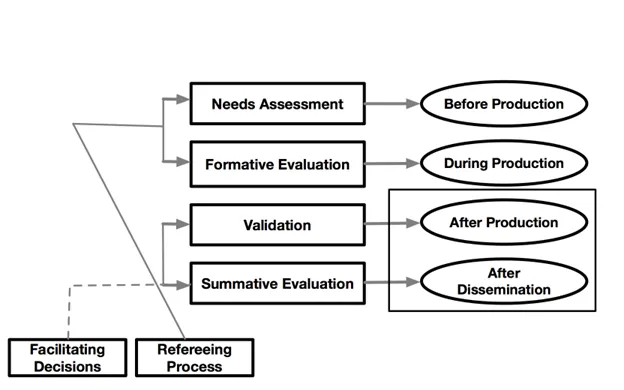
Figure 7.3—ERTI’s Facilitative Method of Formative Evaluation Process
Phases of the Evaluation Process
Phase 1: In alignment with classical evaluation models, the evaluation staff conducted a needs assessment among a sample of the program’s intended audience, selecting schools from various socioeconomic backgrounds. The purpose of this assessment was to quantify learners’ knowledge gaps in a specific subject area and to determine suitable learning objectives aimed at addressing those gaps.
Phase 2: During program production, producers presented segments of their programs to a small group of students. Depending on the students’ age, evaluators either conducted informal interviews or asked them to complete a questionnaire. The evaluators then shared the collected data with producers and worked collaboratively to revise the scripts, ensuring they better aligned with the learning needs of the target audience.
Phase 3: After the entire program was produced, a team consisting of the producer, subject matter specialist, educational technologist, and evaluator reviewed it. The goal of this review process was to validate the program’s content in relation to the needs assessment and formative evaluation data. Validation also ensured that the program included all the design specifications outlined in its script and storyboard, such as learning objectives, learning strategies, content, and production values.
This validation step, which was unique to ERTI’s model, was not typically found in most standard evaluation textbooks. Ms. Monjazeb introduced it to align the evaluation process with the cultural norms of communication and collaboration within the production team. In doing so, she maintained the core theory-driven, data-based principles of standard educational evaluation while enhancing them with a collaborative validation process that strengthened the overall method.
Phase 4: In the final phase, students provided feedback after watching the entire program in a classroom setting. For younger students in grades 1 through 3, evaluators conducted interviews to gather summative evaluation data, while older students in grade 4 and above completed questionnaires with the consent of their teachers. Mr. Azadan shared the results of this summative evaluation with producers through a refereeing process.
Ms. Monjazeb introduced this refereeing step to the classical evaluation model to support producers in making informed decisions about how to improve their programs. This process also adapted the formal quantitative and qualitative evaluation methods to better fit the personal and collaborative communication style among the staff. By personalizing the use of data, the refereeing process fulfilled a cultural need for a more intimate yet structured mode of communication.
Evaluating Organizational Effectiveness of ERTI
The evaluation function at ERTI also encompassed an assessment of the entire organization, focusing on how well the staff were performing their functions. The criteria used to assess ERTI’s overall effectiveness included:
- Access: To what extent was ERTI fulfilling its primary mission of assisting the MOE in expanding access to educational opportunities for the school-aged population?
- Relevance to Needs and Expectations: To what extent were ERTI’s programs, both broadcast and non-broadcast, meeting the expectations of the various constituencies it served?
- Quality of Program Offerings: To what extent did ERTI’s programs adhere to international quality standards for educational broadcasting, as set by organizations such as UNESCO, the Asia-Pacific Broadcasting Union, and professional associations like the Association for Educational Communications and Technology?
- Learner Outcomes: To what extent was learning improved in classrooms that received ERTI’s programs and services?
- Cost Effectiveness: To what extent were the programs produced for broadcast or presented in workshops and training sessions cost-effective?
- Impact: To what extent did ERTI’s activities influence the performance of other NIRT units and other organizations at large? For example, how did ERTI’s activities contribute to the adoption of a systems approach to management and program production throughout NIRT and the MOE?
- Generation of Knowledge: To what extent did ERTI contribute to generating knowledge useful for solving the country’s educational problems?
Toward Consolidation
The year 1976 was pivotal for ERTI. Starting in 1973, the organization undertook significant changes: it reorganized itself; launched a new training program to add educational technologists to its staff; bridged its conceptual gap with the MOE; developed innovative formats for its radio and television programs; implemented a robust evaluation process; and established specific criteria for assessing overall organizational performance.
As 1976 progressed, the support from the highest levels of the MOE and NIRT motivated producers and educational technologists to increase their productivity. They developed new program concepts and enhanced their programs with instructionally sound production values. By the time 1977 approached, ERTI was consolidating its gains and expanding its services, a process that will be detailed in the next chapter.
Footnotes
- Information in this chapter about the First Conference on the Application of Television in the Educational System of the Country is based on 2 volumes of the Daily News bulletin that reflected the proceedings of the conference in detail. (Educational Radio and Television of Iran, 1976b)
- Information in this section is from the 1975-1976 annual report of NIRT about the educational activities of the organization. (Educational Radio and Television of Iran, 1977).
References
Educational Radio and Television of Iran. (1976a). Daily news: First conference on the application of television in the educational system of the country. Tehran, Iran.
Educational Radio and Television of Iran. (1976b, April 25, 1976). Opening remarks of Mr. Ghotbi. Daily news: First Conference on the Application of Television in the Educational System of the Country, 1. Tehran, Iran.
Educational Radio and Television of Iran. (1977). Educational activities of National Iranian Radio and Television 1975-1976. Educational Radio and Television of Iran.
Januszewski, A., & Persichitte, K. A. (2010). A history of the AECT’s definitions of educational technology. (A. Januszewski & M. Molenda, Ed.), Educational Technology: A Definiton with Commentary (pp. 259–282). Routledge.
Salomon, G. (1969). What does it do to Johnny? Retreived from: https://files.eric.ed.gov/fulltext/ED034734.pdf. [ERIC Document Number ED 034 734