Consolidating the Gains
Introduction
In the Spring of 1976, ERTI staff celebrated a significant milestone: the successful completion of the first Conference on the Application of Television in the Educational System of the Country (as discussed in the previous chapter). There was a palpable sense of accomplishment, and the outlook for the year ahead was one of consolidation and growth. As the year progressed, the stellar work of the ERTI staff caught the attention of key decision-makers in organizations other than the MOE. Several government agencies and universities formalized partnerships with ERTI to enhance their own staff training programs. The impact of ERTI’s success also reached beyond Iran’s borders. Radio Kabul sent 50 of its staff members to ERTI for training, and the Director General of UNESCO, along with representatives of the Radio and Television Ministry of the People’s Republic of China, visited ERTI to observe and learn from its achievements.
Expanding the Scope of Staff Training
This period was marked by tremendous cultural and social change. Villagers, traditional merchants, the religiously devout, and the less educated were uneasy about the unfamiliar events transforming the feudal society they had long known. Farmers were becoming landowners, women were taking on public roles, and a growing number of rural residents were migrating to cities to work in factories. These changes evoked a sense of nostalgia among these groups—and even among some of the educated elite and intelligentsia—for a past that felt more familiar and secure. Meanwhile, a few leaders within the educated elite were advocating a break from the customs and habits that upheld the old feudal order. They championed innovations that, in their view, would propel Iranians toward an industrial and post-industrial future, free from the chronic poverty and social stagnation prevalent since the turn of the century.
Nevertheless, most Iranians—both educated and uneducated—held their cultural values in high regard, as these values had sustained their social cohesion for centuries. They feared that a reckless pursuit of innovation could undermine this cohesion. Preserving their cultural identity amidst rapid change thus became the focal point of a growing political storm, as traditional ways and beliefs clashed with new ideas. It was essential that this upheaval be addressed in the training of ERTI’s new and existing staff, to prevent it from hindering the progress they had achieved and obstructing their efforts at consolidation.
To initiate this critical discussion, Mr. Rahmanzadeh and this author selected three prominent figures, each deeply engaged in scientific, educational, and political endeavors that had profound and far-reaching implications. Below is a summary of their presentations based on this author’s personal notes who was in attendance.
Importance of Innovative Ideas: The first speaker to address the staff and trainees was Dr. Akbar Etemad, Deputy Prime Minister and President of the Atomic Energy Organization of Iran. He represented an institution that was pioneering the development of a new energy infrastructure for the country, with the goal of replacing fossil fuel-burning power plants with nuclear energy. This initiative came at a time when rural electrification and industrial expansion were driving a growing demand for electricity.
In his presentation in April 1976, Dr. Etemad focused on the future. He expressed concern about political leaders and religious figures who criticized the introduction of innovation through technology-based development projects, such as building nuclear power plants. These critics argued that such projects were either irrelevant to the needs of society or incongruent with the cultural values of the people. In response, Dr. Etemad emphasized that an advanced and educated society must remain at the forefront of innovation. He urged his audience to resist regressive actions and to avoid reverting to outdated practices that had historically kept Iran impoverished and socially stagnant.
Personal Bond Between Students and Teachers: The second speaker was Dr. Mohammad Mashayekhi (1913-2013), President of the Teacher Training University (Danesh-Sara-ye-Aali). Representing the academic tradition of formal institutions, he addressed the audience in May 1976. Dr. Mashayekhi reminded them that while introducing changes to the educational system, they must uphold the traditional respect that students have long held for their teachers. He emphasized that this reverence for teachers is a deeply rooted cultural trait, dating back to the earliest days of Iranian civilization—a value that must be cherished and preserved.
He further elaborated that “direct and personal communication between teachers and students is crucial in the classroom,” asserting that this human connection cannot be replaced by interactions with machines. In his concluding remarks, Dr. Mashayekhi acknowledged the significant mission of the Teacher Training University: to supply the necessary number of educators for the country’s entire school-age population, despite the many challenges the university faced in achieving this goal.
Political Evolution and Economic Growth: In his June 1976 presentation, Mr. Mahmoud Jaafarian (1928-1979), Deputy Director General of NIRT for News and Political Affairs, addressed the root causes of the unsettling political and economic trends that had been simmering for years. He explained that recent economic development had outpaced political maturation, creating significant public dissatisfaction. Mr. Jaafarian argued that political evolution must progress in tandem with economic development to maintain a healthy socio-political environment. He criticized the prevailing belief that economic growth is a prerequisite for democratization, asserting that this approach was not suitable for Iran’s current situation.
He emphasized that as people’s material conditions improve, they must also have greater opportunities to participate in the political affairs of their nation. Without this balance, the political infrastructure would struggle to bridge the gap between economic progress and political engagement. In conclusion, Mr. Jaafarian highlighted the crucial role of educators and communicators in fostering greater political participation among the people while simultaneously supporting their economic growth.
These presentations encapsulated the key cultural and political issues of the time, highlighting their interrelationship. Each speaker represented the conflicting cultural currents that prevailed in the country: innovation versus tradition, technology versus humanism, and economic growth versus political maturation. Meanwhile, a burgeoning middle class was emerging, enjoying newfound economic prosperity, but lacking adequate avenues for meaningful political participation. Compounding the issue was the fact that over 60% of the population was still functionally illiterate in the mid-1970s. This widespread illiteracy hindered their ability to engage as informed citizens in the political process. Therefore, expanding educational opportunities was of utmost importance to empower people to take a more active and effective role in their social and political affairs.
Television Set Distribution and Installation
One of the challenges ERTI faced in expanding educational opportunities was the lack of television receivers in schools. To address this, the Plan and Budget Organization began providing funding to the MOE in 1973 for the purchase and installation of 3,000 black-and-white television sets. These were installed in schools in Rasht, Shiraz, and Tehran. Rasht and Shiraz were specifically chosen due to the exceptional leadership skills of the local NIRT Center managers, who effectively coordinated the distribution and proper use of the sets with local MOE officials, school administrators, and teachers.
In 1974, as color television sets became more available, the Plan and Budget Organization approved the purchase of an additional 2,500 color sets. These were distributed to schools in Mahabad, Mashhad, and Tabriz. With guidance from NIRT technical staff, the MOE contracted local electricians and radio repair shop owners to install and maintain the sets. Additionally, Mr. Rahmanzadeh led ERTI staff in developing detailed guidelines for equipment distribution and utilization in schools, and held numerous meetings with MOE officials in Tehran and other cities to ensure the sets were properly distributed, securely installed, and remained in the schools. The distribution and installation guidelines included:
- Eligibility and readiness requirements for schools to receive television sets.
- Standards for securing TV sets on classroom walls, including the type of harness and retainers to be used.
- Specifications for a master antenna and coaxial cable distribution system for large school buildings to optimize the use of the limited number of sets.
- Guidelines for placing television sets on carts in larger schools.
- Instructions for periodic testing and maintenance of the television sets.
- Standards for appropriate viewing distance between students and television sets. (See Figure 8.1). (Educational Radio and Television of Iran, 1977).
These detailed specifications were necessary as the use of television sets in schools was unprecedented, and even the smallest aspects of installation and use needed to be clearly outlined.
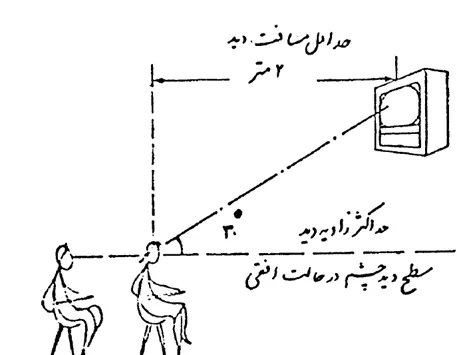
Figure 8.1—Schematic of the Appropriate Distance of Learners from a TV Set. Reproduced from (Educational Radio and Television of Iran, 1977).
Center for Information Services
The enhanced collaboration with the MOE in distributing television sets highlighted the need for ERTI to adopt a more proactive approach in supporting schools nationwide. This support extended beyond merely providing hardware and software; it also involved training personnel to effectively use these resources. The 1970s saw a diverse array of media formats, including transparencies, slides, filmstrips, motion pictures, audiotapes, and videotapes, each requiring specific equipment and skills for proper utilization. For example, showing a motion picture to students in a school involved threading a projector—a skill that required both training and practice. Additionally, given the fragility of film, operators needed to know how to unjam projectors, splice broken film, and rethread the projector to ensure smooth operation.
To support educators in the use of hardware and software, ERTI established the Center for Information Services in Tehran, serving as a model for Learning Resource Centers (LRCs) across the provinces to be established in the future. These LRCs would be used to familiarize teachers and administrators with various media equipment and software and provide Iranian Instructional Development Institute (IIDI) workshops. They would also facilitate teachers in utilizing media production equipment and conducting science experiments in on-site laboratories. Moreover, LRCs offered learning opportunities for school-age children and adults who did not have access to formal education.
Initially, the center in Tehran operated with just three staff members to manage this monumental task. In anticipation of the rapid growth of its media collection, the entire ground floor of the ERTI building was allocated to house its expanding hardware and software resources. By 1976, the center’s collection had grown from a modest selection of media materials to several thousand unique items, including still pictures, slides, filmstrips, motion pictures, and transparencies, as well as books and periodicals on various subjects in Farsi, English, and French. The most rapidly expanding segment was scholarly journals and professional periodicals in Farsi, primarily published by the University of Tehran. By the following year, the collection included 4,000 unique titles of scholarly periodicals.
In addition, ERTI purchased a set of microfiche transparencies of the Educational Resources Information Center (ERIC) database from the US federal government. ERIC contained a vast collection of scientific journal articles, research papers, and conference proceedings on education, all in English. Today, the collection has grown to include more than a million documents and is available online at ERIC.ed.gov. This resource provided invaluable information to the staff of the Evaluation, Research, and Planning units, who were proficient in English and began utilizing it immediately. However, a formidable translation effort was needed to make the most relevant ERIC materials accessible in Farsi for staff members who could not read English.
Learning Resource Centers
One of the major achievements of ERTI’s Center for Information Services was the establishment of Learning Resource Centers in 18 cities, including Abadan, Ahvaz, Bandar-e-Abbas, Firouzabad, Isfahan, Jahrom, Kerman, Kermanshah, Khorramabad, Mahabad, Rasht, Rezaieh, Sanandaj, Sari, Shiraz, Tabriz, and Zahedan. These LRCs were initially housed within NIRT centers. However, ERTI’s long-term plan was to construct dedicated facilities specifically designed for this purpose, equipped with media production facilities and science laboratories.
The center in Tehran initiated a systematic and ongoing process to stock these LRCs with instructional materials and media equipment. This included duplicating and regularly shipping books, print-based materials, slides, transparencies, films, videotapes, and videocassettes to the LRCs. Some of the more active LRCs, such as the one in Shiraz, took the initiative to duplicate videocassette recordings of ERTI programs and distribute them to schools in their regions, enabling teachers to schedule viewings according to their class activities.
Fars Learning Resource Centers
Establishing LRCs was only possible with the full support and long-term commitment of the NIRT managers overseeing the local centers. Dr. Safaeddin Jahanbani, the first NIRT Center Manager to offer substantial and enthusiastic support, played a pivotal role in organizing two LRCs in Shiraz and Firouzabad. On November 7, 1974, he hosted a large seminar for government officials of Fars Province to inaugurate the Shiraz LRC at NIRT’s Fars center. The audience included managers from the local MOE offices, as well as teachers and school principals.
During the seminar, Dr. Jahanbani explained the objectives of distributing television sets to schools and demonstrated effective teaching techniques using television. At that time, 500 television sets had already been distributed to Guidance Cycle schools throughout the Fars Province. Dr. Jahanbani’s efforts in supporting these schools were exemplary. Following the seminar, he maintained regular contact with school principals, providing them with technical support services and guidance to effectively utilize the educational materials.
The LRC in Shiraz further supported schools by providing a large collection of educational resources, including films, filmstrips, slides, audio and video tapes, illustrations, and three-dimensional models for teaching biology, chemistry, and physics. Teachers and administrators could borrow these materials and use them in their classrooms. The center also hosted a series of hands-on workshops for school-age children, enrolling 500 participants. These students engaged in numerous sessions to learn skills such as drawing, painting, sculpting, and playing various musical instruments. Many also took ballet lessons and participated in acting and puppeteering workshops, while others explored photography and cinematography, as well as scriptwriting for movies, radio, and television programs.
Pahlavi Open University Radio and Television Courses
Dr. Jahanbani also successfully established the Pahlavi Open University Radio and Television Courses. Beginning in September 1976, 2,763 female and 2,554 male students in Fars Province enrolled in courses on Farsi literature, economics, and psychology. Each course spanned 16 weeks, during which students watched weekly television programs that were 24 minutes long and listened to related supplemental lectures on the radio. Additionally, they met with their professors in person twice during the 16-week period, providing an opportunity to ask questions and receive further clarification on course materials.
The highest number of enrollees were professional K-12 educators and other government employees. Students received one credit unit for each completed course, and the university issued a certificate of completion to those who passed the final exam. These credits could be applied toward a degree program, if the students were formally admitted to Pahlavi University. Due to the tremendous interest in these broadcasts, additional courses in library science, accounting, and English were later introduced. The general public, who were not formally enrolled, also showed great enthusiasm for these telecasts. The NIRT Fars Center received numerous informal reports indicating that the total number of viewers of the Pahlavi Open University Radio and Television Courses far exceeded the number of officially enrolled students.
First Comprehensive Summative Evaluation Studies
Dr. Jahanbani leveraged his professional association with Dr. Farhang Mehr (1923-2018), president of Pahlavi University, to recruit faculty and graduate students to conduct two data-driven evaluation studies on the effectiveness of ERTI’s programs in selected Guidance Cycle schools in Fars Province. These were the first formal comprehensive summative evaluations of educational television ever conducted in Iran. Dr. Nikou Farahmand (1977) led one study, while Ms. Shahpar-Zahra Razavi-Zadeh, Ms. Leelee Bakhtyar, and Mr. Cyrus Hamidi guided the other (Razavi-Zadeh, 1977).
The results provided valuable insights into how students and teachers perceived the value of the programs and their expectations for future televised content in their classrooms. Unsurprisingly, both groups expressed the need for better alignment between televised lessons and the schools’ instructional schedules. ERTI unit managers were already aware of this significant issue in utilizing televised programs and were working on solutions, such as rebroadcasting programs overnight for local stations to record and air them in better coordination with schools. The findings from this summative evaluation confirmed the necessity for ERTI to implement new practices, such as equipping schools with videocassette players to optimize program use.
Another challenge identified was the number of television sets that remained unused due to technical issues. The survey revealed that only 6% of the sets required a technician’s attention to become functional. However, since these sets had never been used before, most needed only minor adjustments to be operational. Nonetheless, the evaluation highlighted an urgent need to find local skilled technicians to repair defective sets.
Regarding program content, 72% of the students surveyed found the television programs useful, while 28% did not. Students suggested several improvements:
- Better synchronization: Align the televised lessons more closely with classroom instruction.
- Enhanced production value: Include more creative elements, such as dramatic reenactments in history lessons and animated segments in science classes.
- Expanded language programs: Offer more content on reading and writing Farsi, as well as reading Arabic, particularly on how to read the Quran.
- Practical documentaries: Feature more footage of factories and industrial centers to showcase the work of different craftsmen and women.
- Extended broadcasts: Increase the airtime for educational programs outside school hours, including on Fridays and holidays.
A significant majority of teachers (81%) also found the television programs generally beneficial. They recommended:
- Improved alignment: Better synchronization of televised lessons with class schedules.
- Clearer pronunciation: Ensure that television teachers pronounce scientific terms clearly and accurately.
- Arabic language focus: Students showed a strong interest in learning Arabic, particularly how to read the Quran aloud with proper diction and pronunciation.
- Religious education: Include programs on sharia and fiqh to enhance students’ understanding of these subjects.
- Health education: Emphasize the importance of personal hygiene for maintaining student health and well-being.
- Laboratory substitution: Since most schools lacked adequate laboratory facilities, televised experiments were especially helpful for teaching scientific concepts and principles.
- Homework integration: Include test questions at the end of each program for students to use as homework assignments.
These evaluation studies were significant for two main reasons:
- NIRT’s Fars Center successfully collaborated with Pahlavi University to conduct the first independent, comprehensive summative evaluation of ERTI programs.
- Although these studies were just a preliminary step in formal program evaluation,
they provided important actionable data for:
- Improving the synchronization of television programs with school schedules,
- Improving program quality by boosting elements in program production,
- Broadening the variety of subjects covered in programs, and
- Responding to specific requests from students and teachers for learning Arabic, Quran, sharia, and fiqh, subjects that ERTI had not considered televising before.
Moreover, Dr. Jahanbani’s exemplary leadership established a prototype for an effective local Learning Resource Center in Shiraz, serving as a model for replicating similar centers in other cities.
System 80
The success of NIRT’s Fars Center was crucial for ERTI’s efforts to expand its operations across the country, not only by offering quality radio and television programs but also by providing a range of learning opportunities to support teachers and students. For example, in the 1970s, programmed instruction emerged as a new approach to making instructional media more responsive to the individual learning needs of students in real time. It was essential for ERTI to explore this innovative method and offer it as a valuable learning resource.
One of ERTI’s talented staff members, Ms. Farangis Foroutanpour, demonstrated exceptional skill in teaching reading at the kindergarten and first-grade levels. On her own initiative, she wrote and produced several books for these young learners, addressing a significant shortage of suitable materials. She also conducted formal evaluations to assess the effectiveness of these books in selected schools (Foroutanpour, 1976). ERTI subsequently published and distributed these books widely to schools across the country.
In 1974, during a visit to Borg-Warner, a design and manufacturing firm in Chicago, IL, the author encountered an integrated audiovisual system called System 80. The demonstration featured a programmed instruction method for teaching first graders how to read English (Department of Research and Evaluation, 1971). A key element of its effectiveness was the immediate supportive and corrective feedback provided to learners while using the machine.
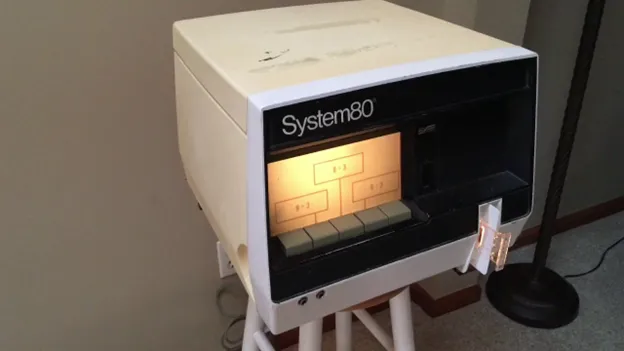
Figure 8.2—Borg-Warner System 80 Programmed Instruction Machine.
This programmed instruction machine featured a screen that displayed a sequence of 80 slides; hence the name System 80. Users could advance these slides in sync with audio instructions provided by a phonograph mounted on top of the machine. This mechanical analog audio-visual device operated in a manner similar to more sophisticated and expensive programmed instruction systems, such as PLATO (Programmed Logic for Automated Teaching Operations), which had been available on networked computers in the U.S. since the 1960s.
In contrast, System 80 was a standalone, relatively inexpensive device with limited instructional capability. It required only electricity to operate and was intuitive enough that even very young children could use it without much guidance. Depending on the instructions they heard from its record player, learners could advance the slide plate by pressing one of the five mechanical buttons at the bottom of the screen. The perforated slide would then respond to the input, moving forward to display a new image on the screen.
In a short span of time, Ms. Foroutanpour, with the assistance of Borg-Warner technicians, adapted the official MOE first-grade Farsi reader for use on System 80. In the fall of 1976, she held a well-attended seminar where she explained the principles of programmed instruction to MOE officials, along with a group of teachers and administrators, while demonstrating the use of System 80. Following this, the MOE designated 20 elementary schools in Tehran for the experimental use of programmed instruction under Ms. Foroutanpour’s supervision. Additionally, the MOE and ERTI conducted an experimental project in Rezaieh to assess the effectiveness of System 80 for students who spoke Azeri at home but learned Farsi in school.
Formal evaluation studies conducted in both Tehran and Rezaieh demonstrated that learners using System 80 could complete their first-grade Farsi reader in less time than the standard nine-month school year. Some students mastered the material in as little as six months with high proficiency, and others required even less time. In light of these positive results, ERTI purchased 5,000 System 80 units and distributed them to schools across the country.
Going Beyond Schools
By late 1976, ERTI had established a reputation as an effective organization for introducing educational innovations across various institutions. This reputation attracted leaders from a diverse range of organizations who visited ERTI to see firsthand if its accomplishments matched its acclaim. These organizations included:
- The Ministry of Agriculture and Rural Development
- Organization for Development of Gifted Children
- University of Bu Ali Sina (Avicenna) in Hamadan
- Aryamehr Technical University in Tehran
- Graduate Nursing School of Shams Pahlavi
- University of the White Revolution Corps, which trained hundreds of military servicemembers in the Knowledge Corps to provide educational services in rural areas.
- The Imperial Iranian Ground Force (IIGF)
Decision-makers in these organizations recognized the importance of workforce development through a systems approach to training and chose to collaborate with ERTI to implement IIDI workshops within their institutions. The IIGF was the first to take action, assigning 200 mid-level officers to complete an IIDI workshop.
Based on her leadership in introducing IIDI workshops to schools, ERTI leaders appointed Ms. Fahimeh Farzam to manage this project. Initially, Ms. Farzam and the other female educational technologists felt apprehensive about how the all-male group of military officers would respond to their instruction. However, their professionalism and expertise in the training process helped establish a strong professional rapport with the officers, allowing them to gain confidence.
After an initial period of unease, professionalism prevailed on both sides, and discussions quickly shifted to topics such as educational system design, operating audiovisual equipment, and organizing IIDI workshops in military units. Upon completing the IIDI workshop in Tehran, the army officers continued their education in educational technology in the United States.
Training Professionals for Radio Kabul
In the spring of 1976, an agreement between NIRT and the Afghan government brought 50 personnel from Radio Kabul to ERTI for a specialized version of the IIDI workshop. Fortunately, creating this custom edition for Afghan professionals was relatively straightforward, as most participants were fluent in Dari, a close linguistic relative of Farsi. However, educational technologists still dedicated themselves to crafting a unique version of IIDI tailored to their specific needs. Their hard work and attention to detail were rewarded, as the personnel of Radio Kabul praised the program for its success and the special care taken to accommodate guests from a neighboring country with centuries of shared historical and cultural ties to Iran.
These projects also demonstrated that educational technologists had achieved self-sufficiency in developing and delivering new versions of the IIDI program. They successfully adapted the institute’s educational materials to meet the instructional needs and objectives of diverse learners, including NIRT staff, members of the Imperial Iranian Ground Force, and personnel from Radio Kabul. The absence of involvement from their American instructors in these projects highlighted a new level of competency among the educational technologists.
People’s Republic of China Ministry of Radio and Television
In 1971, a series of diplomatic exchanges between Iran and the People’s Republic of China (PRC) led to Iran’s formal recognition of the PRC and an exchange of high-level delegations between the two countries. In April 1977, a delegation led by Mr. Chien Chao of the PRC’s Ministry of Radio and Television visited NIRT headquarters in Tehran. Their packed schedule included a visit to ERTI on April 11, followed by a trip to the NIRT Center in Mazandaran province the next day. During various meetings and demonstrations, the performance of ERTI’s educational technologists and producers so impressed the Chinese delegation that they requested to return the following day for additional presentations and discussions. This rare alteration in the official visitors’ schedule provided the Chinese guests a valuable opportunity to become more acquainted with ERTI’s systemic method of program development.
In the discussions that followed, the leaders of China’s radio and television sector and ERTI agreed to exchange professional knowledge on training their staff and enhancing the effectiveness of their educational radio and television programs in a future collaborative effort. However, language barriers between the two organizations slowed communication during the meetings in Tehran and in subsequent follow-up correspondences. As a result of these delays, no formal cooperation agreement was signed. Despite this, the Chinese delegation expressed significant interest in the systems approach to the production of educational materials. Had it not been for the seismic political changes in both China and Iran in the late 1970s, the systems approach to education, originally developed in the United States, could have been successfully transferred to China by Iranian educational technologists. This situation exemplified the universality of effective know-how, demonstrating that countries adopt valuable technologies based on pragmatic needs, regardless of geopolitical or ideological considerations.
Director General of UNESCO Visits ERTI
In the 1970s, ERTI, as a member of UNESCO, gained recognition for its effectiveness in human capital development, drawing the attention of Mr. Amadou-Mahtar M’Bow, the Director General of UNESCO from 1974 to 1978. On June 22, 1977, he visited ERTI, accompanied by Dr. Ehsan Naraghi, who was then the Director of Iran’s Organization for Scientific and Educational Research. Like many other recent visitors, Mr. M’Bow was highly impressed by the progress ERTI’s educational technologists and producers had made in building an effective training and educational organization. His enthusiasm was not an empty gesture; he proposed establishing a formal partnership to designate ERTI as a regional UNESCO center for training trainers.
Asia-Pacific Broadcasting Union
During its consolidation period, ERTI significantly elevated its international standing within the Asia-Pacific Broadcasting Union (ABU). Although NIRT had been a member of ABU since its inception, in 1975, ERTI joined as a separate entity under the guidance of Mr. Ghotbi and Dr. Mahmoudi. Established in 1964 as a non-profit, non-governmental professional association, ABU’s mission was twofold: (1) to assist in the development of broadcasting in member countries, and (2) to promote the collective interests of radio and television broadcasters in the Asia-Pacific region. In the following years, ABU members became increasingly proactive in sharing professional experiences through conferences and meetings across the region, though the focus was primarily on general programming.
At the 1973 ABU meeting in Abu Dhabi, United Arab Emirates, Dr. Mahmoudi, representing NIRT, proposed shifting the focus towards the educational use of broadcasting. His suggestion received enthusiastic support from the conference attendees. The following year, in 1974, ABU members gathered in Tokyo to celebrate the organization’s 10th anniversary, where Dr. Mahmoudi as the presiding officer, dedicated the conference agenda to exploring the educational applications of radio and television broadcasting.
In Tokyo, after extensive discussions, conference participants adopted a resolution to expand educational programming on radio and television within their respective organizations. To implement this resolution, representatives from Australia, Bangladesh, Fiji, Hong Kong, India, Indonesia, Iran, Iraq, Japan, Jordan, Korea, Malaysia, New Guinea, New Zealand, Pakistan, Sri Lanka, Thailand, and Turkey, as well as UNESCO, agreed to hold a series of future workshops aimed at enhancing their capacity for educational broadcasting.
In 1976, two years after this agreement was reached, NIRT hosted the first workshop on the educational use of radio and television in the Asia-Pacific region in Tehran. Funded by UNESCO and NHK (Nippon Hōsō Kyōkai), Japan Broadcasting Corporation, the workshop was organized at ERTI headquarters. Mr. Rahmanzadeh represented ERTI and managed the workshop proceedings. ERTI staff, who were well-versed in conducting workshops on the educational uses of radio and television, played a crucial role in the success of this inaugural ABU workshop in Tehran.
Moving Toward Self-Sufficiency
Three years after ERTI began its expansion in 1973, its personnel had firmly established their professional reputation as leaders in educational broadcasting, both within Iran and internationally. In this short time, they demonstrated their effectiveness as a highly skilled group of professionals capable of building human resource capacity through broadcasting and in-person educational and training services. NIRT’s leadership expected that as the staff gained more field experience and received feedback from various audiences, they would gain the confidence to suggest modifications to the methods and procedures they had initially borrowed from abroad, adapting them to better align with the cultural and social values of their fellow countrymen.
However, ERTI was not alone in facing the challenges of technology transfer and adaptation to local needs, political conditions, and cultural contexts. Other rapidly developing countries, such as China, were also considering the import of Western technologies. The complexities surrounding technology transfer are explored further in the next chapter.
References
Department of Research and Evaluation. (1971). An evaluation of the borg-warner system 80 program [ERIC document number ed 064 706]. Washington, D.C.
Educational Radio and Television of Iran. (1977). Educational activities of national Iranian radio and television 1975-1976. Educational Radio and Television of Iran.
Farahmand, N. (1977). Karbord vasael ertrbat jamii (televioson) dar amr yad giri. Application of the use of media of mass communcation (television) in learning in Shiraz guidance cycle schools. Retrieved from Shiraz, Iran.
Foroutanpour, F. (1976). Attitude of K to 5 grade students towards color, size, and the form of books. National Iranian Radio and Television.
Razavi-Zadeh, S. (1977). Barrasi chegoonegi karbord television va estefadeh as barnamehaey television amoozeshi dar madares rahnami shiraz. Evaluation of the use of television and programs of educatonal television in Shiraz guidance cycle schools. Retrieved from Shiraz, Iran.