Adopting Educational Technology
Introduction
On March 17, 1973, during the dedication ceremony of Iran’s first steel mill, the Shah made a momentous announcement to a large and enthusiastic crowd. He declared that Iran had achieved “total control” over the “real operation” of its oil industry, marking a significant turning point in the nation’s history (“Iran’s Shah Reports ‘Full’ Oil Control,” 1973, p. 1). This declaration came at a pivotal moment, as a 25-year agreement between Iran and a multinational consortium of oil companies was due to expire in 1978.[1] Since 1954, these companies had controlled the majority of Iranian oil assets, managing everything from exploration and extraction to refining and global marketing. With their agreement set to expire in five years, Iran was poised to take complete control of its oil wealth. This achievement was the culmination of decades of struggle by Iranians to free their oil resources from the grips of Western interests. As a result of this newfound control, Iran’s oil revenue increased from $5 billion a year in 1973 to $20 billion within two years (Jakubiak & Dajani, 1976). This dramatic increase in revenue enabled the government to fully fund its economic development projects and social reform programs.
The Importance of Education in Economic Development
In the 1970s, Iran experienced rapid economic growth with estimates ranging between 7% to 10% annually (Amuzegar, 1992). This growth, however, was primarily fueled by a single source of income: oil. “…The oil industry today more than ever before is the backbone of the Iranian social and economic developmental life as evidenced by the allocation of 80 percent of the oil revenues to the current Fourth Development Plan. (March 21, 1968, to March 20, 1973)” (Ramazani, 1970).
Despite the impressive growth, an economy reliant on one raw material is inherently underdeveloped. Furthermore, the income generated from oil was not equitably distributed among Iran’s population. A much more diversified economy was required for a more equitable distribution of wealth. In a diversified economy, people would have access to multiple sources of income through employment in various sectors. However, Iran faced a significant challenge in achieving this diversification: a severe shortage of qualified workers across many professions (Scoville, 1985).
To address this challenge, substantial improvements in educational services were necessary to provide the human capital required for a diversified economy (Emmerij, 1972). See Figure 4.1 below for a system model illustrating the positive influence of education on economic development. Improving the standard of living for the Iranian people hinged on enhancing their skills to perform tasks that would boost productivity and income across various industries. As individuals achieved a higher standard of living, they played a vital role in further diversifying the economy. They created new businesses and industries, providing employment opportunities for previously marginalized individuals and integrating them into the broader economic landscape. This was not just theorical or wishful thinking. Prominent Iranian industrialists, such as Khalil Arjomand (1909-1944), Mohsen Azmayesh (Eshtehardian) (1925-1992), and Habib Sabet (1903-1990), demonstrated this potential. Starting with modest resources, they became successful entrepreneurs, generating employment for thousands and producing goods and services that consumers could buy at lower costs than comparable imports (Milani, 2008).
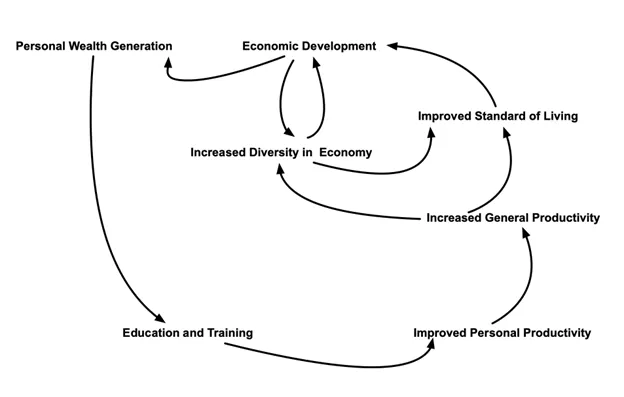
Figure 4.1- Education and Economic Development Model, Circa 1973.
During this optimistic era, stimulated by increased oil revenue, that expansion of ERTI began in earnest. In 1974, the new organizational structure of ERTI was now in place, and NIRT leaders decided to recruit new employees to support its functions. (See the previous chapter for a detailed explanation of ERTI’s organization.) Dr. Mahmoudi spearheaded the hiring process and tasked this author with training the new recruits. The first group of hires was trained as educational technologists, learning how to apply the principles of educational technology to ERTI’s operations. The ultimate goal was for these educational technologists to extend the implementation of these principles to the MOE as well.
Principles of Educational Technology
Pioneers in the field of educational technology developed the principles of their discipline from systems science, methodology, and technology, all while drawing inspiration from John Dewey’s philosophy of pragmatism (Dewey & McDermott, 1973; Ely, 1976; Saettler, 1990). Guided by Dewey’s humanistic approach, they placed the learner at the center of their practice, viewing each individual as an active participant in the learning process. They deeply valued what each learner could contribute to their own education and were particularly concerned with students who had been left behind by the traditional educational system. These educational technologists were especially interested in using media to extend educational opportunities to as many learners as possible, particularly those who were struggling or completely disenfranchised. They emphasized that in educational technology, hardware and software were merely tools—means to an end—used by educators to meet the diverse learning needs of students, wherever they were located and whenever they were ready to learn.
Founding leaders of the field of educational technology also adopted a systems approach to addressing educational challenges. They viewed learners holistically, recognizing that each individual possesses cognitive, affective, and behavioral faculties and abilities. These faculties are interrelated; influencing and being influenced by one another throughout the learning process, creating a unique profile for each learner. The role of the educational technologist was to design and provide personalized learning experiences that allowed each learner to thrive.
To create an effective learning experience, educational technologists followed a systematic process:
- Analyze the specific needs of each individual learner. This analysis involved setting new learning objectives based on the learner’s prior knowledge of the subject matter, as well as his or her socio-economic and cultural background.
- Design learning experiences aligned with the learner’s current needs and future aspirations.
- Develop or select instructional and learning strategies that would best facilitate the learner in achieving his or her educational goals.
- Implement the chosen instructional strategies.
- Evaluate the results to ensure that the learner achieved the learning goals, providing supportive and corrective feedback as necessary.
Analyze, design, develop, implement, and evaluate (ADDIE) became the guiding framework for educational technologists worldwide. By the 1970s, in economically advanced countries, the application of educational technology principles and methods saw dramatic growth. K-12 schools, universities, businesses, and government agencies adopted these principles in various forms, yielding a range of results (Saettler, 1990). The linear ADDIE model remains widely used for many instructional purposes around the world. However, contemporary understanding acknowledges the nonlinear, complex, and adaptive nature of instruction and learning (Saba & Shearer, 2017).
Systems Thinking in Iranian Cosmology
While the systems approach to educational problem-solving was mainly developed in American institutions of higher education, its roots extend much further back, deeply embedded in the scholarship of rational philosophers from the Middle Ages, including Iranians, most of whom were Muslims. This is not to frame the adoption of the systems approach at ERTI in exclusively Islamic terms, but rather to highlight its indigenous origins. It underscores the misrepresentation by clergy, lay intellectuals, and literary elite in the 1970s who portrayed systems thinking as exclusively a Western concept. As Nasr (1983) articulated, the essence of Islamic science was to:
- Demonstrate “the unity and interrelatedness of all that exists,” (p. 22),
- Establish the concept of the unity of creation as the central tenet of Islamic cosmology, and
- Affirm the necessity of mathematics for comprehending the vastness and complexity of creation (Nasr, 1993, p. 44 and 66).
It is no wonder that Khwarizmi, the Iranian mathematician who lived between 780 and 850, laid the early foundations for the unity of knowledge through rational terms and provided the mathematical tools essential for its exploration (Angius et al., 2021). This included what we now recognize in systems science and artificial intelligence as the algorithm, a term derived from the Latinized form of Khwarizmi’s name in Arabic, Al-Khwarizmi. Later, the renowned Iranian mathematician and poet Hakim Omar Khayyam (1048-1131) advanced algebraic equations that are now fundamental in developing system models for contemporary computers (Mousavian et al., 2023).
Gnostic sages of the golden era of Iranian and Islamic science in the Middle Ages posited that the cosmos “is like a cobweb: each part of it lies on a circle, which is a ‘reflection of the center,’ and which relates the existence of that part to Being; at the same time each part is connected directly to the center by a radius, which symbolizes the relation between ‘intelligence’ of that part and the Universal Intellect or Logos” (Nasr, 1983, p. 338). Thus, Iranian and other Muslim scholars defined knowledge (logos) in terms of the universal connectedness of its parts to an intelligent core, originating the philosophy of system science to illustrate the oneness of the universe. Luminaries like Khwarizmi and Khayyam founded the methods and techniques that formulated these principles into mathematical equations.
As the geography of knowledge expanded beyond the Persian, Ottoman, and Indian empires after the Middle Ages, the universal concept and methods of systems science developed further in Europe (Moller, 2019). Gottfried Leibniz, a German mathematician (1646-1716), served as an intellectual bridge between the decline of systems science in these ancient empires and the rise of modern mathematics and systems thinking in Europe in the modern era (Rescher, 1981). He formalized the idea that the universe consists of a web of infinite, dynamic units (monads) that evolve over time (Mousavian et al., 2023). Thus, Leibniz ushered in the era of modern systems science, building on the mathematical foundations established by Khwarizmi and Khayyam.
The University Consortium for Instructional Development
In 1964, leading figures in educational technology in the United States established a consortium to introduce their innovative approach to educational problem-solving in schools. The University Consortium for Instructional Development and Technology (UCIDT) consisted of Florida State University, Indiana University, Michigan State University, Syracuse University, University of Southern California, and the United States International University (now Alliant International University). UCIDT extended its reach both domestically and globally through the Instructional Design Institute (IDI), founded in 1969 by Professors Charles Schuller (Michigan State University) and Donald Ely (Syracuse University).
The IDI was designed to train “teams of administrators, teachers, curriculum developers, and other education specialists in the principles and operations of instructional development programs for public schools” (Schuller, 1985, p. 5)The core idea behind IDI was that educational change in schools should transition from being purely intellectual and theoretical to a “field-based and naturalistic” practice, implemented by teachers and administrators who have direct experience with the challenges and opportunities in their schools. Ely and Schuller perceived “educational institutions as complex organizations,” believing that educational policies within these institutions “were amenable to inquiry and eventual change” by teachers and administrators directly involved with students (Schuller, 1985, p. 3).
Instructional Design Institute
The primary goal of the IDI workshops was to equip teachers and administrators with both conceptual and practical tools to manage and improve the daily operations of their schools. These workshops offered hands-on training, enabling participants to modify their instructional practices systemically to enhance student learning experiences. This field-based approach was innovative for many educators, actively involving them in the diffusion of new teaching methods within their schools.
A 1974 report from the Office of Planning, Research and Evaluation of the Public Schools of the District of Columbia (Public Schools of the District of Columbia, 1974), which implemented an IDI workshop during the 1973-74 school year emphasized the program’s objectives:
“The basic purpose of the I.D.I. Program is to assist school systems with limited resources, substantial numbers of academically or culturally deprived students and a real desire and commitment, to find innovative and effective solutions to consequent learning and instructional problems. To this end it proposes to provide participants with initial skills and competencies in instructional development procedures. Effective training allows participating teams to identify a specific instructional problem and to develop their own plans for solving this problem using a systematic and team approach” (p. 16).
In an IDI workshop, facilitators introduced participants to the ADDIE model, a process technology for designing effective learning solutions. This model guided participants through identifying specific problems and developing tailored learning activities and media materials to address them. Each group from various schools tackled unique challenges, creating relevant resources to solve their specific issues. More importantly, this experience highlighted the participants’ own crucial role in problem-solving, fostering a deeper awareness of their impact on the learning process.
Upon completing an IDI workshop, participating teachers and administrators took on the role of facilitators, leading their own workshops to introduce their peers to the ADDIE process. This transition empowered educators to become change agents and assume leadership roles within their respective schools. The experiential learning model was grounded in pragmatic philosophical principles, placing each participant in the workshop at the heart of the learning process as an active agent of change, rather than a passive spectator (Dewey & McDermott, 1973, p. 442). This grassroots approach to innovation diffusion enabled educators to become more resourceful, particularly in schools facing shortages of human resources and limited budgets for expensive hardware and media materials.
Adopting Educational Technology in NIRT
NIRT leaders envisioned ERTI’s mission as a way to bolster the effectiveness of government agencies directly responsible for education and workforce development. At the outset, their primary focus was on enhancing the MOE’s ability to improve school performance. But before ERTI could assist the MOE on a nationwide basis, it was essential for it to have a well-trained staff in advanced means and methods of education.
In a routine meeting with Mr. Ghotbi in the spring of 1974, he informed the author that NIRT had engaged UCIDT to train the initial group of ERTI employees who were hired as educational technologists. This was a significant development. To the surprise of many, Dr. Donald Ely,[2] a key figure in the field of educational technology, soon arrived at ERTI to assist the author in planning the staff training. Subsequently, experts from five other universities affiliated with UCIDT came to ERTI to implement various aspects of the training program.
These experts helped the new educational technologists adapt IDI to the Iranian context. This adaptation project was integral to their training, culminating in the creation of the Iranian Instructional Design Institute (IIDI). Although IIDI was based on the original IDI model and employed the same systems approach and ADDIE framework, it had a distinct Iranian look and feel. The train-the-trainer model allowed the initial group of educational technologists to first introduce the IIDI to schools in Tehran before expanding its implementation to other cities (see Chapter Five).
Critics of Adopting Educational Technology
The introduction of educational technology at NIRT/ERTI occurred amid significant criticism from social commentators who were wary of what they viewed as the imposition of Western technology on Iran. This skepticism wasn’t new. As early as the 1930s, Lewis Mumford (1934) highlighted the disruptive impact that technology can have on society. Later, Joseph Schumpeter (1942) introduced the concept of “creative destruction,” illustrating how the rise of new industrial and financial institutions often leads to the demise of less efficient and productive enterprises. Alvin Toffler (1970, p. 9) further cautioned about “future shock,” warning that “normal people will face an abrupt collision with the future” as the result of rapid technological change, causing societal upheaval.
In 1970s Iran, the literary elite (odaba), the counter-traditional clergy, and many intellectuals—especially those with leftist ideologies or outright communist beliefs—held a pessimistic view of the country’s economic future. For them, the future appeared particularly bleak if it involved technological innovations. Their elitist gaze was fixed on an idealized past, where the untouched pastoral Iranian villages remained untainted by the specter of technology. They romanticized the simple life of these villages, portraying their inhabitants as content and free from the complexities of scientific knowledge and the perplexities of modern technology.
In reality, life in most of Iran’s 50,000 villages was far from the romanticized ideal. Villagers lived as serfs under the oppressive rule of feudal landlords, trapped in a cycle of abject poverty and illiteracy. Their homes were poorly constructed, often unable to withstand even the weakest earthquake. Access to basic necessities like electricity, clean water, and sanitary sewers was virtually nonexistent. Women, legally and socially, were considered appendages to their husbands, fathers, or brothers, with no rights of their own. The lack of health services and clean water meant that only one in five children survived to adulthood. Despite these harsh realities, many of the elite engaged in bizarre arguments defending a rustic, utopian lifestyle that was a far cry from reality. These urban intellectuals, who enjoyed the benefits of modern science and technology, paradoxically denied the same privileges to the rural population. They feared that technology threatened their idealized and quixotic vision of society.
Uninformed Criticism of Systems Science
The critics of the so-called Western technology distrusted systems science and its theory and methodology that constituted the core principles of the field of educational technology. But, they had a profound misunderstanding of one of the basic ideas of systems science. These critics routinely and insistently argued that systemic problem-solving was narrow in scope and ambition. However, their view was fundamentally flawed. Contrary to their belief, system science offers an inclusive and holistic perspective, examining all aspects of a phenomenon within its broader context.
In practice, systems analysts and designers cast a wide net, gathering extensive information to understand the nature of a phenomenon within its larger environment. They did not view a learner, a school, a broadcasting organization, a business, or a government agency as isolated entities. Rather, they recognized these institutions as integral components of a much larger societal and cultural framework.
Adopting this phenomenological approach, educational technologists in ERTI approached the core issue of human learning by considering all relevant factors. These included the social and cultural backgrounds of students, their learning history, individual characteristics, and their aptitude for specific tasks under particular conditions. This comprehensive approach determined how teachers could effectively use technology to meet the diverse learning needs of their students.
Moreover, the detractors of systems thinking were also opposed to it on theological grounds. Since its inception in the 7th century, a branch of Muslim thinkers known as the Mu’tazila represented a rationalist approach within Islam (Hodgson, 1974b, p. 384). Interestingly, there were early parallels between ethical philosophy of Mu’tazila and Zoroastrianism, the ancient religion of Iran. Perhaps due to this similarity, high-ranking Muslim clergy and theologians objected to rational approaches to knowledge generation, acquisition, and application (Khan, 2017, p. 67) (Ofek, 2011).
Despite this resistance, rationalism thrived among some Muslim philosophers, scientists, mathematicians, and physicians in Iran and in neighboring Ottoman and Indian empires, where Islamic theology took shape and grew. These luminaries expanded the collective scientific knowledge of the world during the Middle Ages, laying the groundwork for modern scientific discoveries. However, even as rational sciences developed in the Islamic world, particularly during the Middle Ages, the clergy—who were the primary purveyors of education—largely ignored these advancements. They feared that rational thinking would undermine the faith of believers.
Over time, these closed-minded clergy narrowed the scope of philosophical inquiry to the study of the Quran, or the revealed word of God, fiqh, or the laws they had established, and hadith, or the stories they had collected about the life of Prophet Muhammad and his early disciples. In their view, the knowledge of the faithful should be limited to these subjects, excluding scientific disciplines and mathematics. Particularly, from the 1500s onward, the clergy increasingly resorted to demagoguery and elaborate religious arguments to discredit philosophers, scientists, and mathematicians. When these tactics failed, they accused members of the scientific community of blasphemy and ensured that rationalists were physically eliminated (Hodgson, 1974a).
Misleading Iranians
In the decades leading up to the mid-20th century, most Iranians were illiterate and unaware of the rich scientific and technological heritage within their own cultural history. This lack of knowledge allowed leading clergy and their educated lay followers to create a false dichotomy between Eastern and Western knowledge. By the 1960s and 1970s, they had firmly positioned the entire body of contemporary science and technology as exclusively Western phenomenon. This portrayal was both disingenuous and misleading, as it ignored the rationalist tradition of Iranian philosophers and scientists, as well as the origins of systems science in the Persian, Ottoman, and Indian civilizations. The general population, largely unaware of these historical contributions, was misled about the true roots of modern science and technology.
Political Objection to the Application of Science and Technology
The introduction of educational technology at ERTI coincided with the height of the Cold War, a period marked by intense rivalry between the United States and the Soviet Union (USSR). During this time, most Iranian intellectual leaders were admirers of Soviet Marxism or Chinese Maoism and held an axiomatic belief that the U.S. and its allies were the primary colonial and imperil aggressors. They argued that adopting technological solutions would only tighten the Western powers’ hegemonic grip on developing countries, including Iran.
This stance was taken even as the USSR maintained complete political and economic control over Eastern Europe. In the polarized world of the Cold War, however, most Iranian intellectuals and opposition political leaders praised the Soviet Union and China as champions of liberation for colonized people, despite the fact that Iran had never been a formal colony, and the USSR had effectively colonized Eastern Europe. Ironically, the Marxist and Maoist critics in Iran voiced their opposition to what they perceived as Western technology, while their benefactors and ideological counterparts in communist China—and to a lesser degree in the USSR—were actively strategizing how to transfer Western capital and technology to their own countries (see Chapter Nine).
Among the high-profile elites who were highly critical of adopting what they perceived as Western science and technology was Dr. Ehsan Naraghi (1926-2012), who oversaw an institute that specialized in the study of science and education in the Ministry of Science and Higher Education. Because of his position and his warm and dynamic personality, he had an influential voice that shaped policy across various cultural institutions, including NIRT. Despite coming from a religious family and not being a communist himself, he shared the skepticism of both the elites and the clergy regarding Western solutions, basing his opposition on strong anti-colonial ideals.
Dr. Naraghi and other elites believed that Western ideas eroded Iranian culture and risked returning the country to an era of colonialization. Educated in Switzerland and France, he argued for rejecting Western scientific influences and proposed the establishment of a purely Iranian science. In a planning meeting presided over by Mr. Ghotbi, he even suggested to this author the development of “an Iranian branch of mathematics independent of Western mathematics.”
Dr. Naraghi was undoubtedly aware that modern mathematics—a universal discipline grounded in basic human reason and logic—was significantly shaped by the contributions of Iranian mathematicians centuries ago. Therefore, his insistence on bifurcating universal human knowledge into Eastern and Western spheres appeared to be more political grandstanding than a genuine intellectual position. This stance, which seemed like personal opportunism, was baffling to this author.
Another notable of the era among social commentators who sought to distinguish between Eastern and Western knowledge was Jalal Al-Ahmad (1923-1969). He took his critique a step further by accusing educated Iranians of being “intoxicated” with the veneer of Western ideas. In one of his most influential books, particularly popular among university students, he coined the term Gharb Zadegi, translated into English as Westoxification (Al-Ahmad, 1962).
Al-Ahmad’s main argument was that many educated youth and their mentors were enamored only with the facade of Western knowledge and technology. He believed that to truly understand Western culture, these Iranians needed to move beyond a superficial grasp and develop a deeper comprehension. However, this subtlety was lost on the overwhelming majority of his audience. Instead, Westoxification became an anti-Western slogan and rallying cry for the detractors of Western science and technology during the Cold War.
It was Dr. Ali Shariati (1933-1977) who escalated the discourse from intellectual debate to revolutionary action, inspiring several groups of young Iranians to engage in armed struggle against the government. Dr. Shariati’s followers regarded him as an intellectual whose writings emphasized the urgency of returning to Islamic principles to resist Western colonialism influences. He considered Islam the “most perfect of Abrahamic faiths,” but argued that a band of reactionary Shi’a Muslim clergy had dominated the faith, reducing its practice to a series of strict rituals devoid of original spiritual meaning. As a result, Dr. Shariati concluded, Islam had become “the most decayed or dilapidated” of all the faiths (Arjomand, 1988, p. 93).
While studying in France on an Iranian government scholarship, Dr. Shariati became deeply influenced by Frantz Fanon (1925-1961), a Marxist revolutionary who became a global symbol of the Algerian struggle against French colonial rule. Mr. Fanon portrayed the people of the Third World as “wretched of the earth” and victims of Western imperialism and colonialism. Dr. Shariati found Fanon’s revolutionary approach a fitting solution for Iran’s political challenges, despite the significant differences between Algeria and Iran. Algeria was a French colony, while Iran was an independent nation-state, with a different level of social, political, and economic development.
Nonetheless, upon his return to Iran, Dr. Shariati delivered numerous lectures to large audiences in religious institutions, finding thousands of followers among the youth, educators (farhangian), seasoned intellectuals, and members of revolutionary armed groups whose aim was the overthrow of the state.
Naraghi, Al-Ahmad, and Shariati were among a larger group of influential intellectuals who shaped the views of teachers, school administrators, and managers in the MOE, as well as faculty and students in institutions of higher education. Their influence, however, extended well beyond educational institutions, permeating a broad swath of educated Iranians. They fostered a general atmosphere of distrust among the educated class towards what they termed Western culture and the science and technology associated with it.
These three figures represented a vocal and influential faction of the intelligentsia that refused to acknowledge that rational sciences, in part, originated in Iran. Furthermore, they either did not want to or could not offer any practical solutions to the social and economic challenges facing their country. They advocated for the creation of an Eastern knowledge through revolutionary means, but failed to articulate what they meant by an exclusively Eastern knowledge or the revolutionary methods to achieve it.
Perhaps they struggled to distinguish Eastern knowledge from Western knowledge because such a distinction was impossible to make. Nonetheless, they sought to mislead teachers, students, and many others by preaching the duality of knowledge and wisdom as Eastern versus Western. The language and literature they propagated created an atmosphere of resentment, hatred, and hostility toward those who introduced rational solutions to various social and economic problems in a logically constructive manner.
Critics in ERTI
Within ERTI, there was a diverse range of opinions about adopting educational technology to develop the human capital necessary for Iran to achieve sustainable social stability and economic prosperity. Some believed that transferring educational technology to the broadcast organization was, in essence, a form of capacity building for human capital. However, they argued that this would be a time-consuming process, potentially taking decades before ERTI could become self-sufficient, let alone provide benefits to other organizations.
Others, including this author, advocated for adopting innovative models, such as train-the-trainer programs as presented in IDI workshops, which could create a multiplier effect and significantly reduce the time needed to achieve self-sufficiency. By doing so, ERTI could expand its capacity to assist the MOE and other organizations in the near future, based on the same model.
In light of these arguments, it was evident that adopting a systems approach and investing in human resource development could potentially transform educational practices in Iran. By equipping ERTI personnel, and eventually teachers and administrators of the MOE, with the principles and methods of educational technology, there was the potential to shift from traditional rote learning—focused on memorizing a fixed set of information—to a more dynamic and creative learning environment.
In this transformation, students would move beyond mere recall and develop analytical thinking skills, gaining access to multiple sources of information that would stimulate their rational abilities. As a result, they would learn to independently assess the validity and reliability of these sources. Gradually, exposure to diverse educational resources would enable students to develop skills in independent inquiry and discovery. Additionally, they could form novel organizations, such as debating clubs, within schools to further enhance their cognitive skills with new social competencies.
Given the scope of these potential future changes, a critical question lingered in the minds of ERTI unit managers: How much change could an individual working in ERTI or in the MOE realistically handle in a short period of time? Some unit managers argued that introducing rapid changes to the educational system was not only unreasonable but perhaps undesirable. They believed that altering the traditional learning style—where students were mere passive observers who relied on their teachers as the sole source of educational authority—could disrupt the established traditional teacher-student dynamic. The introduction of analytical thinking, they feared, might lead students to question their teachers’ expertise, ultimately undermining their authority. This shift in the classroom dynamic could extend beyond the school environment, potentially causing students to question the paternalistic structure of their families and become alienated from their parents.
However, the changes that ERTI leaders and staff were preparing to introduce were not entirely foreign to Iranian culture. The key lay in the manner in which these changes were integrated into the country’s educational institutions. The systems approach to science and technology had its roots in the traditional Iranian and Islamic worldview, and its decision-making and problem-solving methods promoted collaboration between teachers and students.
In this model, the teacher’s authority was not diminished by an external power, but rather expanded. Instead of being merely a presenter of information, the teacher’s role evolved into that of a facilitator, guiding students in acquiring a wide range of skills and competencies from diverse sources of information. Furthermore, teachers would engage students in collaborative learning activities, enhancing their social skills and mitigating any potential feelings of alienation both at school and within their families.
At the time, however, these ideas were largely theoretical among ERTI leaders and staff. To see these desirable outcomes materialize, and to mitigate any undesirable side effects, ERTI first needed to train a sufficient number of competent and skillful educational technologists. The key was to remain vigilant in minimizing unwanted consequences while maximizing the positive impact of these technological solutions. The process of training educational technologists is discussed in the next chapter.
Footnotes
- This consortium consisted of British Petroleum Company, Ltd; Shell Petroleum; Gulf Oil Corporation; Mobil Oil Corporation; Standard Oil of California; Exxon, Inc.; Texaco, Inc.; Compagnie Française des Petroles; and Iricon group of companies.
- Dr. Ely was the author’s academic advisor and a member of his doctoral dissertation committee at Syracuse University.
References
Al-Ahmad, J. (1962). Garb Zadegi [Westoxification]. Ferdowsi Publications.
Amuzegar, J. (1992). The Iranian economy before and after the revolution. Middle East Journal, 46(3), 413–425.
Angius, N., Primiero, G., & Turner, R. (2021). The philosophy of computer science. Stanford Encyclopedia of Philosophy. https://plato.stanford.edu/entries/computer-science/
Arjomand, S. A. (1988). The turban for the crown: The Islamic revolution in Iran. Oxford University Press.
Dewey, J., & McDermott, J. J. (1973). The philosophy of John Dewey. Putnam Sons.
Ely, D. P. (1976). The current status of audiovisual definitions and terminology: An international perspective. International Symposium on Audio-Visual Materials, Strasbour, France.
Emmerij, L. (1972). Some reflections on the link between education and employment. Higher Education, 1(4), 483–495.
Hodgson, M. G. S. (1974a). The gunpowder empires and modern times. University of Chicago Press.
Hodgson, M. G. S. (1974b). The venture of Islam: Conscience and history in a world civilization, The classical Age of Islam (Vol. 1). University of Chicago Press.
Iran’s Shah Reports ‘Full’ Oil Control. (1973). The New York Times. (March 17, 1973. Vol 122, Page 1).
Jakubiak, H. E., & Dajani, M. T. (1976). Oil income and financial policies in Iran and Saudi Arabia: Managing increased oil sector revenues in two developing economies. International Monetary Fund. https://www.elibrary.imf.org/downloadpdf/view/journals/022/0013/004/article-A005-en.pdf
Khan, D. T. (2017). Islamic and Non-Islamic origins of Mu’tazilite ethical rationalism. International Journal of Engineering and Applied Sciences, 4(10), 60–62.
Milani, A. (2008). Eminent Persians: The men and women who made modern Iran, 1941-1979 (Kindle Edition, Ed.). Syracuse University Press.
Moller, V. (2019). The map of knowledge: How classical ideas were lost and found: A history in seven cities (First American Edition, Ed.). Doubleday.
Mousavian, S. N., Sumner, S., Aminrazavi, M., & Van Brummelen, G. (2023). Umar Khayyam. Stanford encyclopedia of philosophy. https://plato.stanford.edu/entries/umar-khayyam/
Mumford, L. (1934). Technics and civilization. Harcourt Brace and Co.
Nasr, S. H. (1983). Science and civilization in Islam. Suhail Academy.
Nasr, S. H. (1993). An introduction to Islamic cosmological doctrines: Conceptions of nature and methods used for its study by the Ikhwān al-Ṣafāʼ, al-Bīrūnī, and Ibn Sīnā (Rev., Ed.). State University of New York Press.
Ofek, H. (2011). Why the Arabic world turned away from science. https://www.thenewatlantis.com/publications/why-the-arabic-world-turned-away-from-science?ssp=1&setlang=en-US&safesearch=moderate
Public Schools of the District of Columbia. (1974). An evaluation of the Instructional Development Institute (I.D.I.) program for the school year 1973-74 [ED 099 357]. P. S. O. T. District of Columbia.
Ramazani, R. (1970). Iran’s changing foreign policy: A preliminary discussion. Middle East Journal, 244, 421–437.
Rescher, N. (1981). Leibniz and the concept of a system. Studia Leibnitiana, 13(1), 114–122.
Saba, F., & Shearer, R. L. (2017). Transactional distance and adaptive learning: Planning for the future of higher education. Routledge.
Saettler, L. P. (1990). The evolution of American educational technology. Libraries Unlimited.
Schuller, C. F. (1985). Some historical perspectives on the instructional technology field. Journal of Instructional Development, 8(3), 3–6.
Schumpeter, J. A. (1942). Capitalism, socialism, and democracy. Harper & Brothers.
Scoville, J. G. (1985). The labor market in prerevolutionary Iran. Economic Development and Cultural Change, 34(1), 143–155.
Toffler, A. (1970). Future shock. Random House.