Menu

Distance-Educator.com

Premier Portal for Professionals Since 1995, Covering Technology-Based Education

Posts Tagged ‘Instructional Systems’

Access Is Not Enough: A Collaborative Autoethnographic Study of Affordances and Challenges of Teacher Educators’ iPad Integration in Elementary Education Methods Courses

Research indicates that preservice teachers’ understandings of how to integrate technology into their classrooms are dependent upon experience in their university methods courses and in their field placements. These findings place a new responsibility on teacher educators for modeling effective integration of technology into methods courses. This study focused on teacher educators’ integration of technology […]


An Evaluation of the Impact of “Learning Design” on the Distance Learning and Teaching Experience

This paper evaluates the implementation of Learning Design on the production of a core FHEQ level 6 (QAA, 2008)[1] unit of study at a UK distance learning institution.  By comparing student (n=656) and tutor (n=42) survey data with questionnaire responses (n=9) from the unit of study’s core production team, this paper assesses the impact of […]

Learning from decades of online distance education: MOOCs and the Community of Inquiry framework

Despite their growing popularity, there are many contradictory arguments between supporters and detractors of MOOCs. Nevertheless, the advent of mass-scale online courses is increasingly credited to have the potential to reshape higher education significantly over time, and recent research analyses how and in which ways such a potential can be leveraged. Aim of this conceptual […]

Teachers´ Acceptance of Educational Video Games: a Comprehensive Literature Review

Educational video games (EVGs) are receiving an increasing attention as an approach to teach new generations of learners, such as millennials, who make an intense use of video games, interactive technologies, and digital networks. Extant academic literature suggest several benefits of using EVGs including increasing students’ motivation towards learning and enhancing engagement in the learning […]

Flow in e-learning: What drives it and why it matters

This paper seeks to explain why some individuals sink further into states of flow than others, and what effects flow has in the context of a virtual education environment. Our findings—gathered from both questionnaire and behavioural data—reveal that flow states are elicited by the e-learners’ senses of controlling the virtual education environment, their attention centred […]

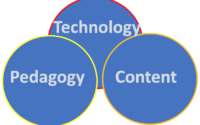
TPACK updated to measure pre-service teachers’ twenty-first century skills

Twenty-first century skills have attracted significant attention in recent years. Student of today and the future are expected to have the skills necessary for collaborating, problem solving, creative and innovative thinking, and the ability to take advantage of information and communication technology (ICT) applications. Teachers must be familiar with various pedagogical approaches and the appropriate […]

Examining the validity of the technological pedagogical content knowledge (TPACK) framework for preservice chemistry teachers

While various quantitative measures for assessing teachers’ technological pedagogical content knowledge (TPACK) have developed rapidly, few studies to date have comprehensively validated the structure of TPACK through various criteria of validity especially for content specific areas. In this paper, we examined how the TPACK survey measure is aligned with the TPACK lesson plan measure and […]

Editorial 33(3): TPCK/TPACK research and development: Past, present, and future directions

Scholarship addressing technological pedagogical content knowledge (TPCK or TPACK) has examined how to develop, apply, and assess it in diverse educational settings and content areas. During the last 12 years, multiple ways to understand this knowledge and support its development have emerged, generating approximately 1,200 publications that utilise the construct, impacting the practice of postsecondary […]

Dropout Rates, Student Momentum, and Course Walls: A New Tool for Distance Education Designers

This paper explores a new tool for instructional designers. By calculating and graphing the Student Momentum Indicator (M) for 196 university-level online courses and by employing the constant comparative method within the grounded theory framework, eight distinct graph shapes emerged as meaningful categories of dropout behavior. Several of the graph shapes identified Course Walls, that […]

Penn State World Campus Taps VR for Educating Teachers

A project at Penn State World Campus immersed teachers into a virtual classroom as part of a graduate-level special education course. Students could use a virtual reality headset to watch 360-degree videos or view them as regular videos on YouTube. Campus Technology