Television in Iran: An Overview
Introduction
The 1960s marked the era of mass communication. The eyes of the world were captivated by its newest medium: television. Television broadcasting was transforming the world into a global village. In Iran, television’s rapid expansion was largely driven by the ingenuity and boundless energy of Mr. Reza Ghotbi (1938-2024), a young engineer. His exceptional leadership and down-to-earth management style motivated many young engineers, technicians, creative artists, and managers to join his efforts. Together, they established National Iranian Television (NITV), a nationwide network funded by the government and managed as a semi-independent corporation. Radio Iran, established in 1940, merged with NITV in 1971 to form National Iranian Radio and Television (NIRT) (Kimiachi, 1978).
The genesis of television in Iran, however, had more modest beginnings. Before the government took an interest in television broadcasting, entrepreneur Mr. Habib Sabet (1903-1990), established the first television station in Tehran in 1958. This station was housed in a three-story building atop a dusty hill in northern Tehran. The modern architecture of its building, with its steel frame and glass façade, was a departure from the traditional brick structures prevalent throughout the city. Thirteen years later, in 1972, this building became the headquarters of Educational Radio and Television of Iran (ERTI), which is the focus of this book[1].
Mr. Sabet was an industrialist who, like some of his innovative contemporaries, began his career in an ordinary workshop. He made furniture, but soon expanded to become a manufacturer and distributor of various goods, ranging from household appliances to medical supplies. He transferred the technologies for these products from the United States and Europe to Iran, but he was best known for bringing Pepsi-Cola to the country.
Soon after TVI started broadcasting in Tehran, Mr. Sabet expanded operations by opening a second station in the oil city of Abadan. These stations received a major financial boost when Majlis (the Iranian parliament) exempted TVI from import taxes on essential equipment brought in from abroad. The ability for residents in two major cities to enjoy watching television from the comfort of their homes marked a new era of economic growth and social change in Iran. Television opened a new window to the world, allowing viewers to experience various forms of performing arts from different regions of Iran and around the globe for the first time. It also offered news and information about daily events both domestically and internationally. However, most programs were not produced locally; daily broadcasts primarily featured popular television series and movies imported from Hollywood, due to the limited domestic capacity for producing television content. Developing local production capabilities would take years, requiring extensive training for producers, directors, and studio crew. Moreover, it would take decades to fully adapt this medium to reflect Iran’s rich cultural heritage.
Iranians are heirs to a civilization that has fostered centuries of linguistic and mathematical advancements, producing an awe-inspiring literary and scientific legacies. Throughout history, Iranian artists have excelled in creating magnificent architecture, exquisite calligraphy, illustrated manuscripts, and miniature paintings, as well as world-renowned carpets. They have expressed their religious and cultural sentiments through passion plays, folkloric dances, puppeteering, as well as classical and popular music. Given this rich artistic heritage, scriptwriters and producers needed time to understand how these indigenous art forms could inform the creation of novel programming formats for television.
To manage his new enterprise, Mr. Sabet selected Dr. Kambiz Mahmoudi to be the chief executive officer of TVI corporation. Dr. Mahmoudi held a law degree from the University of Tehran and a doctoral degree in mass communication with an emphasis in education from Indiana University. Beyond his academic credentials, his personality made him the ideal leader for this new organization. Dr. Mahmoudi was a natural communicator who effortlessly related to anyone who entered his office. His unassuming management style proved highly effective among the young TVI staff, who were just beginning to learn this new technology and art form. Additionally, he had a natural presence for television. On the rare occasions that he appeared on screen, he connected with the audience effortlessly, delivering informed narratives with smooth and effective expression.
Off the air, Dr. Mahmoudi engaged with leaders of other companies to make TVI a successful commercial enterprise. Manufacturers and service providers were vital to TVI’s profitability, as their advertisements were crucial for the station’s success. Additionally, TVI relied on the support of the state bureaucracy to maintain its unique broadcast license and continue enjoying tax exemptions for its expensive, imported equipment. Dr. Mahmoudi demonstrated exceptional skill in communicating the possibilities and limitations of this new medium to a wide array of influential figures. These luminaries formed an intricate network within the high-level business and political milieu of the country. Their support was essential for sustaining TVI’s operations, as they influenced public opinion and impacted decision-making in various branches of the government.
For 11 years, TVI provided entertainment, along with a modest amount of news and educational content, to thousands of people in Tehran and Abadan. However, its operations relied on advertising revenue from an embryonic private sector, which often did not require extensive publicity to sell its products and services. During the ’60s and ‘70s, a growing middle class created a new market for consumer goods and services. Local industries and service providers struggled to meet the demand of their expanding customer base. Although publicity was important to these enterprises for introducing new offerings, sustaining sales did not require much advertising. Consequently, TVI revenues barely kept pace with its operational costs. Additionly, by the mid-1960s, the government itself became interested in television broadcasting. It established an office to study the creation of a national network and began planning for it. Eventually, in 1969, an act of Majlis transferred television broadcasting entirely to government control, leading to the purchase of TVI’s assets by the government.
National Iranian Radio and Television (NIRT)
National Iranian Television (NITV) began its broadcasts on March 20, 1967, coinciding with the first day of spring when Iranians celebrate the arrival of a new year. (Kimiachi, 1978).
NIRT was a youthful organization with a dynamic vision. Mr. Ghotbi, the charismatic founder of NIRT, was a graduate of France’s École Nationale Supérieure des Télécommunications in electronic engineering and was in his late twenties when he assumed leadership. He was joined by many young professionals in the monumental task of covering Iran’s 636,372 square miles with at least one radio and one television signal.
By the mid-1970s, with Iran’s population at 35 million, television broadcasts reached 65% of potential viewers, although receiver ownership was limited to tens of thousands. NIRT joined Intelsat to become the first broadcasting organization in the Middle East to extend its television programs beyond Iran’s borders. At the time, Iran had the fastest growing network in Asia, second only to Japan.
By 1971, NIRT expanded its reach to major provincial cities by adding eight new regional production centers. Three years later, it added 100 transmission and relay stations, rapidly growing its network. This expansion enabled NIRT to offer two television channels with distinct programming. Network One televised programs for general audiences, while Network Two catered to more sophisticated viewers with cultural programs. Initially broadcasting in black and white, producers soon gained access to color production facilities (Kimiachi, 1978).
Broadcasting in Iran relied on technologies that were not produced domestically. As a result, many of the hardware systems needed to build production studios, transmission facilities and relay stations were imported from France, Germany, Italy, Switzerland, Japan, and the United States. These state-of-the-art facilities included the highest quality equipment available at the time. For example, lighting and editing facilities were digitally controlled as early as the mid-1970s. NIRT also utilized a mainframe computer for various purposes, ranging from budgeting and accounting to conducting high-level operations research and strategic planning.
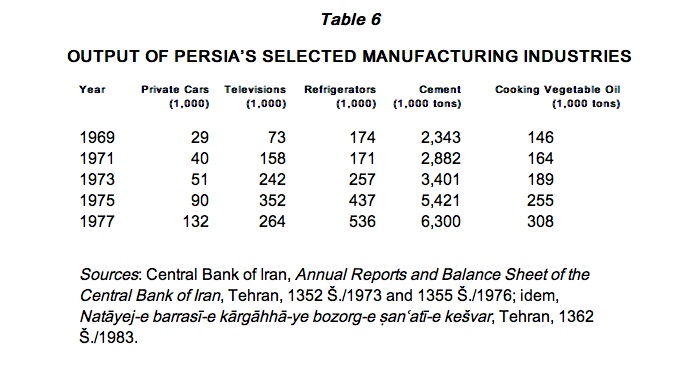
These achievements were possible only through the dedication of the many young men and women of NIRT, who showed exceptional commitment to extending broadcast services to a wide swath of the Iranian population. Often working around the clock, their efforts led to rapid expansion. By 1977, NIRT was growing quickly and might have transitioned into an exponential rate of growth had it not been for the political unrest of 1978. However, before NIRT’s growth was disrupted, engineers and technicians added 120 main and relay stations to its telecommunication network, achieving this by setting up a new transmission tower and support facilities every three days. Dr. Mahmoudi, who was now the Deputy Director General of NIRT, stated, “There were only 80,000 television sets in 1963 in Tehran, whereas now NIRT can count on 97% coverage of urban areas, and 70% overall coverage throughout Iran for television and 100% for radio” (Behrouz, 1977, p. 125)). Additionally, a burgeoning domestic private industry produced tens of thousands of television receivers each year, with production rising from 73,000 sets per year in 1969 to 352,000 in 1975, though it declined to 264,000 in 1977 (Encyclopeadia Iranica).
Leadership
Mr. Ghotbi’s leadership in establishing a nationwide microwave network and building television production centers was exemplary. His vision and dedication attracted highly talented writers, producers, and directors to work in NIRT. He also selected four experts in their respective fields to complete his leadership team:
- Kambiz Mahmoudi, Deputy Director General for Planning and Strategy: An expert in mass communication (see above for his profile).
- Farokh Ghaffari, Deputy Director General for Cultural Affairs, and Director of Shiraz Art Festival: A filmmaker and dramatist (see below for his short profile).
- Mahmoud Jaafarian, Deputy Director General for News and Political Affairs: He had extensive knowledge of Middle Eastern Affairs and command of the Arabic language.
- Cyrus Hedayat, Deputy Director General for Technical Affairs: Specialized in film processing.
The individual and collective decisions of this team influenced the formation and growth of NIRT until 1978. In the remainder of this book, the author will refer to them as NIRT leadership.
In leading the staff of NIRT, Mr. Ghotbi’s love and respect for the ancient history and culture of Iran guided his decisions. His education as a mathematician and an engineer informed his rational and logical method of decision-making. He held numerous meetings with the leadership team, unit managers, and producers that lasted the entire working day and often went into the late evening hours. In these meetings, he provided great latitude for creativity and imagination to the radio and television producers, who in turn created programs with wide popular appeal. When he was not deliberating with staff on programming policy, Mr. Ghotbi was in the field assisting technicians with expanding television production and microwave transmission capacity throughout the country. His hands-on leadership instilled a sense of loyalty among the personnel, fostering a strong connection to NIRT as a youthful and fast-growing organization.
The Medium of Television
Mr. Ghotbi and his leadership team were well aware of the cultural heritage of their country and its importance for shaping programming policy. They understood their tremendous responsibility to ground NIRT’s daily programs in this long and rich legacy. The key to their success was striking a balance between programs that showcased the cultural heritage of Iran and those that reflected the remarkable social and economic changes that were shaping the country’s future.
They were also among the professionals who studied their medium as an academic discipline. They were cognizant of Marshall McLuhan’s aphorism that “the medium is the message” (McLuhan, 1964) and tried to understand the deeper meaning of this often quoted but less understood phrase. One interpretation was that the print medium ended the monopoly of the religious elite in Europe and made knowledge accessible to the masses. Similarly, television in the mid-20th century shrank the world to the size of a village, albeit on a global scale. Television made it possible for people across the world to share the same sounds and sights on a flickering tube and bond together (Gordon & McLuhan, 1997, p. 173). Regardless of where they lived, people became ever more interdependent in a world where everyone was “irrevocably involved with, and responsible for, each other” (McLuhan and Fiore (1967, p. 24).
National Unity
Could television bring Iranians together and help them coalesce around a shared national identity and a common vision for their future? To move Iran to the next level of economic development and political maturity, national solidarity among its citizens was of utmost importance. In the mid-1960s, Iranians lived mainly in 50,000 scattered villages, most of which did not have paved roads, let alone access to mass media. Their inhabitants were literally cut off from the outside world. Moreover, these villages represented a diverse population, including Azeris, Turkmans, Kurds, Arabs, Sistanis, Baluchis, Lors, Qashqais, Bakhtiaris, Mazandaranis, and Gilaks. Each group had their distinct language with local dialects, accents, and idiomatic expressions, as well as unique social norms, local habits, folklore, and religious sentiments. While the majority adhered to the Shi’a branch of Islam, many Iranians were also Sunni. From centuries past until the present, Zoroastrians, Christians (including Armenians), and Jews also lived in Iran.
In the late 1920s, during the rise of industrialization, Reza Shah Pahlavi (1978-1944) built the Trans-Iranian Railway. This ended the total isolation of Iranian people and promoted national unity, allowing people involved in commerce to connect with each other in various parts of the country. However, its reach left the majority of villagers untouched. By the 1960s, Mr. Ghotbi’s extraordinary efforts to build a national microwave telecommunication network symbolized a contemporary effort to further connect Iranians in the era of mass communication. A primary purpose of expanding mass communication was to enable the people to further solidify their national identity as a unified and cohesive nation. A national radio and television network was intended to bring them together and reflect and promote their common heritage.
Farsi as the Cultural Fulcrum
Farsi was the primary language of broadcasting on radio since its inception in 1940. As television entered the lives of Iranians, NIRT leaders promoted Farsi on television as well. NIRT managers believed that Farsi, in both poetry and prose, reflected the literary and scientific heritage of all Iranians, regardless of their local tribal and linguistic backgrounds. It expressed how Iranians conducted their lives and conveyed their deeply held sentiments toward a common identity, formed during both pre-Islamic and Islamic times. (National Iranian Radio and Teleivison, 1973, p. 42). Farsi reflected the common sensibility and taste of the people and expressed their passions and emotions, as well as their scientific discoveries over many centuries.
“Farsi is the common language of Iranians, as well as the language of some of the nations and people who live outside of the political boundaries of Iran… Farsi is beautiful, melodic, smooth, and elegant, and conjures up fantastic prose and poetry in the mind. The literary heritage of Farsi is the manifestation of this elegance and perfection” (National Iranian Radio and Teleivison, 1973, pp. 16–19).
However, the civilization of Iran was not only preserved in the written word. Ample archeological evidence indicates that Iranians were engaged in organized agricultural practice as far back as 10,000 years ago. Their work in this era also included building a vast network of irrigation canals for farming throughout the immense Iranian plateau, some of which are still in use today. Discoveries in various archeological sites also point to the existence of a technological civilization as far back as 3200 BC (Rezaian, 2014). However, this long history was punctuated by invasions from abroad that disrupted the peaceful growth and development of this civilization, leading to periods of decline.
In light of this long history, NIRT managers stated:
“The history of Iran is one of creation, emergence, and development of a culture whose effective borders extend from the Mediterranean to the Indian Ocean, and from the Central Asia to the lands between the Tigris and the Euphrates. It is the chronicle of a nation that has been the subject of invasions from neighboring tribes, as well as uncivilized marauders from far away, and as such, the people of Iran have experienced many difficult times. In facing these invasions, Iranians have kept their national identity and have guarded the preeminence of their national civilization, and because of this, they have survived and thrived. Therefore, the history of Iran has always been one of struggles, and perseverance; and at times, defeat, but ultimate resurgence and cultural revival… Presentation of historical victories and analysis of periods of development and progress without explaining defeats, failures, and periods of decline is not informative and cannot reveal the value of efforts in gaining victories” (National Iranian Radio and Teleivison, 1973, pp. 8–10).
Poetic Heritage
Iran’s cultural history was best presented in its poetry. Iranians hold their poets in high esteem, making it natural for NIRT managers to feature poetry in various forms on radio and television. However, of particular importance was the epic poetry of Abu-al-Qasem Ferdowsi Tusi (935-1020), whose work greatly influenced programming policy on radio and television. Ferdowsi authored the immortal epic Shahnameh (Book of Kings), which epitomized grand poets in Persian literature. NIRT managers frequently referenced passages from his poems as a guiding compass for forming program policy during high-level NIRT meetings.
Shahnameh is an epic story of battle between its hero, Rustam, and his antagonist Div (demon). The story of Rustam in Shahnameh presented the quintessential heroic persona. In the contemporary period, resurgent Iranians sought to emulate Rustam’s courage and strength to confront and overcome the demons of poverty, economic underdevelopment, and need for strong and independent political institutions. Thus, program managers infused the essence of Shahnameh into their radio and television programs to remind Iranians of their common authentic cultural identity.
Music
NIRT had a specific interest not only in poetry, but in music as well. The melodic form of Persian poetry had a long-standing affinity with classical music of the country. A primary objective of NIRT was to preserve and propagate Iranian classical music as another symbol of national identity. In centuries past, music had been a cornerstone of the formal culture of the court of monarchs. It was also an inextricable part of mystical practices in various Sufi orders. Its presentation and preservation, however, suffered for centuries because of the hostility of Muslim clergy toward this art. In contemporary Iran, however, it was a part of the folklore of many villagers and was seeing a revival among certain segments of urban dwellers.
In the post-WWII period, Abolhasan Saba (1902-1957) revived the classical and regional folkloric music of Iran by documenting it in notations and presenting it on Radio Iran. He was a descendent of Fath-Ali Saba, who brought new life to Persian poetry in the mid-19th century. In the 1960s, a full orchestra was formed in Radio Iran to present the classical music of the country in a format intertwined with classical poetry. Several programs, dubbed Colorful Flowers (Golhay-e-Rangarang), featured the works of various classical poets. These included Rudaki (859-940), who reinvigorated Farsi poetry after the Arab invasion of Iran, as well as Rumi (1207-1273), Hafez (1325-1390), and Jami (1414-1492), who were deeply venerated for their mystical works. These poets, along with many others, reflected the Sufi spirit of the nation. Programs that featured them were familiar to a vast swath of the audience and were received with enthusiasm and appreciation.
Motion Pictures and Theatrical Arts
In addition to poetry and music, NIRT producers were naturally interested in drama and motion pictures. American movies and European-style stage plays were staples of television programs worldwide. However, these two art forms were not native to Iran. Setting aside religious passion plays and folkloric puppetry, Iranian artists in centuries past did not express themselves in drama as much as they did in poetry and prose. As a result, no written scripts of dramatic plays in Farsi reached NIRT producers from earlier times. NIRT managers concluded that playwriting and playacting did not have a long history in Iran. Furthermore, they realized that the few contemporary promising theatrical groups and talented filmmakers would require years to perfect their art and increase the volume of their productions. Only then could they become a substantial source of programming for NIRT television networks (National Iranian Radio and Television, 1973, pp. 58-62).
Given the lack of local production, NIRT managers filled a major part of their broadcast time with foreign motion pictures and television series. Most of these were produced in Europe and the United States and had superior production quality as compared to domestic products. Consequently, there was a definite imbalance in both quality and quantity between motion pictures and television series produced in Iran and those imported from abroad. This disparity was unacceptable to NIRT managers. The Iranian cultural elite, clergy, and religious-minded people also criticized the dominance of foreign-made movies and television series on NIRT networks. Therefore, NIRT leadership decided to increase the production of domestic theatrical and motion picture productions, and tasked Mr. Farokh Ghaffari (1922-2006) with implementing this policy. Mr. Ghaffari was impeccably qualified for this position. He was a filmmaker and dramatist who studied theatre and cinematic arts in France. His movies introduced Iran’s New Wave movement in cinema, which carried distinct domestic themes. Moreover, he established the Iranian Film Society in 1949 at the Museum of Ancient Iran, aiming to introduce world cinema to Iranians.
During his years of service at NIRT, Mr. Ghaffari held numerous workshops, seminars, and conferences for a wide group of artists working in theatre and the film industry, as well as within NIRT, including the Graduate School of Cinema and Television. In these sessions, he taught his audience how to integrate essential elements of traditional Iranian arts into the underlying design of motion pictures and television programs. These art forms with distinctly Iranian themes and styles included:
- Classical epic and romantic poetry
- Passion plays that eulogized fallen Shi’a saints
- A joyful variation of passion plays that presented triumphs of pre-Islamic heroes and Islamic religious figures (these were called shabih-khani in Farsi)
- Folkloric music and dances of different regions of the country
- Folkloric puppeteering
The pinnacle of his efforts was the Shiraz Art Festival, held in the majestic setting of Persepolis, the seat of the first Iranian empire 2,500 years ago. Each year, artists from Iran and around the world presented a wide variety of classical and avant-garde musical numbers, dances, plays, and movies at the Shiraz Art Festival. Hundreds of attendees enjoyed amazing performances from noted Iranian masters as well as other virtuosos from the East and the West. All the presentations were telecast live and were recorded and played back on NIRT networks frequently.
Cultural Influences Beyond the Arts
Nonetheless, it was apparent to NIRT managers that arriving at a programming mix that balanced world culture with Iranian art, music, literature, and other art forms was not an easy task. People encountered an increasing variety and number of cultural products in magazines, newspapers, movie theaters, and on television screens that were unfamiliar to them. But this imbalance in cultural influence was not limited to the arts. In major cities and smaller towns, onlookers stared at windows of upscale shops displaying products ranging from automobiles to household appliances, most of which had European or American origins. Young patrons in restaurants and coffee shops in fashionable neighborhoods of Tehran and other major cities, such as Shiraz, wore the latest Western fashions and makeup. They interacted with each other in social manners reminiscent of Paris or London, often mixing French or English words with Farsi. In this environment, NIRT managers concluded: “With the increase in the cultural relations among different parts of the world, in our time more than any other period, intermingling of cultures have increased, and has led to the idea of cultural domination, which has threatened our heritage by alien influences” (National Iranian Radio and Teleivison, 1973, p. 1).
NIRT managers were particularly concerned when they heard people using foreign words while speaking Farsi. They stated:
“Farsi is endowed with a unique dynamism that characterizes our national culture. Because of this quality, it has borrowed words that it needs from other languages, and has transformed them, and mainstreamed them. Today, the need for new sciences that have emerged in advanced countries of the world has compelled Farsi to adopt words from foreign languages to become richer. To meet this need, it is important to be cognizant that Farsi’s identity remain intact, and the pillars of this old language do not crumble… In updating and purifying Farsi, we need to keep in mind that innovations do not impede communication, and cause difficulty in conveying ideas, and concepts. In addition, it is important that the relationship of Farsi with the valuable, age-old, and rich Iranian literary legacy remains unbroken” (National Iranian Radio and Teleivison, 1973, pp. 16–19)
In addition, broadcasting managers were constantly aware that Iranian professionals were using recent Western scientific discoveries and technological innovations in their normal practice. They acknowledged that: “Benefiting from the advanced science and technology of the West is necessary for our society,” but also noted that “the very same science and technology has facilitated the dissemination and influence of alien cultures as well, …therefore, in regard to the vulnerability of the Iranian culture, we should not overindulge in presenting various aspects of unfamiliar foreign cultures to the point that our own heritage is compromised by the invasive flood of ideas from other civilizations” (National Iranian Radio and Teleivison, 1973, p. 3).
Instituting Economic and Social Reforms
Broadcasting managers and producers faced these cultural challenges during a time of fundamental economic and social change. These changes made their task of balancing the old and the new even more complex. After decades of political indecision and economic stagnation, in 1963, the Iranian monarch made a concentrated attempt to open a new chapter in the contemporary history of the country. He directly appealed to the people and asked them to support a series of reforms in a plebiscite. Initially, these reforms were based on six measures designed to move Iranians toward economic prosperity and political maturity. These were:
- Instituting a land reform that took lands from the feudal owners, with fair compensation, and placed them in the hands of the farmers.
- Nationalizing forests and pastures, and ensuring they were used for the good of the entire society.
- Privatizing government factories and using the income from their sale to commercial entities to finance the land reform.
- Revising the constitution to provide full civil rights to women, including their ability to participate in elections and be elected to office.
- Offering factory workers shares in the profit of their manufacturing firms.
- Establishing a Knowledge Corps to dispatch military recruits with high school diplomas to villages to bring basic literacy to children and adults.
Opposition groups declared these reform programs illegal because they did not have the ratification of Majlis deputies. In reality, the Majlis represented the interests of feudal landowners, rich traditional bazaar merchants, and the clergy. Implementation of land reform and expansion of new industries and financial service organizations were diametrically opposed to the way of life of these three influential groups. As such, it was necessary to submit the implementation of these reform projects to the direct vote of the people.
Moreover, the left-of-center opposition groups also portrayed these reforms as an attempt by the government and the monarch to introduce Western ideas and values to society. In short, the seemingly progressive left sided with the most retrogressive social groups to stop the reforms. This was despite the fact that neither the monarch nor those who helped implement these reforms based them either on a specific political ideology or a grand Western theory of national economic development. They did not conceive these programs to modernize or westernize the country in the image of Europe or the United State. They envisaged these pragmatic and common-sense programs to end chronic poverty and provide an opportunity for people to move toward an era of political maturity.
One of the tragedies of contemporary Iranian history was that the highly influential writers, poets, dramatists, musicians, and cultural luminaries became so enamored with Marxism that they lost sight of the political and economic interests of their fellow citizens. They did not use their outstanding talent and influence to offer constructive criticism of the proposed reforms. Instead, their aim was to destroy any efforts to implement them. In doing so, they allied themselves with the radical clergy who had a major political and economic stake in the feudal way of life. Ironically, the progressives became regressive.
Consultative Program Committee
Each week, NIRT managers and producers convened the Consultative Program Committee to analyze this complicated social, political, and cultural environment. Mr. Ghotbi enhanced the inclusivity and comprehensiveness of the committee’s deliberations by inviting leading notables who represented a broad spectrum of ideas and perspectives. These included intellectuals, poets, authors, print journalists, university professors, as well as political, social, and ideological leaders.
Among them were guardians and passionate defenders of traditional Iranian culture. These traditionalists emphasized that Iran’s cultural influence extended far beyond its current geographic boundaries, touching significant populations in neighboring countries. For instance, millions of people in Central Asia and the Indian subcontinent spoke Farsi. In addition, the educated classes in these regions were well-versed in Persian literature and were well aware that they shared a historical connection with Iran. They also shared the Islamic faith with the majority of the Iranian population.
Although grand ayatollahs or their clerical representatives were not present in the Consultative Program Committee, some traditionalists presented their viewpoints in shaping broadcasting policy. They ensured that religious holidays were observed on radio and television. On these special days, people mourned the passing of the Shi’a Imams and descendants of Prophet Muhammad who lived from the 7th to the 9th century. Broadcast managers respected this popular sentiment by reducing regular program time, removing music and other entertainment, and presenting programs with clear religious themes.
Other committee members advocated for mainstream classical Western culture. They argued that Western classical music, literature, painting, as well as science and technology, have shaped the modern world. Therefore, they believed it was important for the NIRT audience to understand the significance of Western classical heritage and its impact on contemporary life. They also emphasized that modern European political ideas influenced Iran’s current constitution, reminding their colleagues that the authors of the 1906 Iranian constitution chose the Belgian and French constitutions as their models.
Meanwhile, other committee members promoted avant-garde movements that were in vogue in Europe and the United States during the ‘60s and ‘70s, particularly highlighting the youth movement in the West. They noted that young political activists and avant-garde artists in these regions were transforming social and political lives of the people. They asserted that the counterculture movement was not only popular among Western youth, but also evident in other parts of the world. Counterculturalists emphasized the presence of an underclass and pockets of severe poverty within the First World and highlighted the vast economic disparities between the affluent in the First World and those in Third World nations. They questioned the concept of the Westphalian nation-state as a recognized unit of statehood, advocating for the poor to unite globally, dismantle established power structures, and claim their rightful ownership of natural wealth and prosperity of the land they inhabited, regardless of artificial political boundaries.
Point of Agreement
The Consultative Program Committee brought together luminaries from many divergent viewpoints, presenting a wide spectrum of cultural, social, and political ideas. Each week, they advised program managers to modify their scripts to reflect their perspectives, making it a daunting, if not unattainable, task to achieve a balanced programming mix. However, there was one area of unanimous agreement: the necessity of educating all the people. In the early 1970s, 70% of Iran’s 30 million people could not read or write, and half of the population was under 20 years of age, requiring some form of education. The Ministry of Education (MOE) could only serve half of the school-age population. Consequently, there was general agreement in the Consultative Program Committee that NIRT leadership and personnel had a major obligation to reach out to this population through the powerful media they commanded. Although details of how to develop educational programs were never discussed in committee meetings, there was broad agreement—except from a very few staunch traditionalists, Luddites, and habitual naysayers—that NIRT producers and program managers should use radio and television for educational purposes.
Footnotes
- Dr. Kambiz Mahmoudi is the primary source of information about the formation and growth of television in this book. The author held numerous conversations with him about the role of television broadcasting in Iran. Dr. Mahmoudi served as the CEO of TVI, and then as the Deputy Director General of NIRT from 1958 to 1978. His short profile is presented later in this chapter.
References
Behrouz, J. (1977). Iran almanac and book of facts. Echo of Iran.
Encyclopædia Iranica. Economy ix. In the Pahlavi Period. https://www.iranicaonline.org/uploads/files/Economy/economy-09-tab06.jpg
Gordon, W. T., & McLuhan, M. (1997). Marshall McLuhan: Escape into understanding: A biography. Basic Books.
Kimiachi, B. (1978). History and development of broadcasting in Iran (Doctoral Dissertation). Bowling Green State University.
McLuhan, M., & Fiore, Q. (1967). The medium is the message. Touchstone.
National Iranian Radio and Television. (1973). Perspectives and methods: Background for discussion and discourse [Did ha va Revesh Ha: Zamin-e-i Baraya Bahs va Goftegoo]. NIRT.
Rezaian, F. (2014). 5000 years of Iranian engineering. Sunrise Visual Innovations Ltd.