Menu

Distance-Educator.com

Premier Portal for Professionals Since 1995, Covering Technology-Based Education

Archive for the ‘Higher Education’ Category

Flow in e-learning: What drives it and why it matters

This paper seeks to explain why some individuals sink further into states of flow than others, and what effects flow has in the context of a virtual education environment. Our findings—gathered from both questionnaire and behavioural data—reveal that flow states are elicited by the e-learners’ senses of controlling the virtual education environment, their attention centred […]
TPACK updated to measure pre-service teachers’ twenty-first century skills

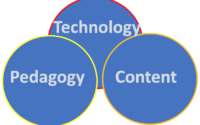
Twenty-first century skills have attracted significant attention in recent years. Student of today and the future are expected to have the skills necessary for collaborating, problem solving, creative and innovative thinking, and the ability to take advantage of information and communication technology (ICT) applications. Teachers must be familiar with various pedagogical approaches and the appropriate […]

Examining the validity of the technological pedagogical content knowledge (TPACK) framework for preservice chemistry teachers

While various quantitative measures for assessing teachers’ technological pedagogical content knowledge (TPACK) have developed rapidly, few studies to date have comprehensively validated the structure of TPACK through various criteria of validity especially for content specific areas. In this paper, we examined how the TPACK survey measure is aligned with the TPACK lesson plan measure and […]

Editorial 33(3): TPCK/TPACK research and development: Past, present, and future directions

Scholarship addressing technological pedagogical content knowledge (TPCK or TPACK) has examined how to develop, apply, and assess it in diverse educational settings and content areas. During the last 12 years, multiple ways to understand this knowledge and support its development have emerged, generating approximately 1,200 publications that utilise the construct, impacting the practice of postsecondary […]

Apex Learning Introduces Adaptive Tutorials for the GED, HiSET and TASC

Apex Learning, known for rigorous, standards-based curriculum proven to increase student outcomes, introduces Tutorials designed to support student success on high school equivalency exams. The Apex Learning Tutorials for the General Education Development (GED), High School Equivalency Test (HiSET) and the Test Assessing Secondary Completion (TASC), are each specifically developed to help students pass the […]

With emerging last-mile training programs, is college necessary?

Over the past few months, I’ve begun to outline the idea of last-mile training: the combination of technical education and placement services that has the potential to fill the skills gap across many sectors of the economy. TechCrunch

Tearing Down Walls to Deliver on the Promise of Edtech

Working toward the full implementation of the NGDLE framework not only will allow the edtech industry to cement the powerful role that technology can play in solving our efficiency and effectiveness issues but also will enable us to achieve an immensely positive impact on education at large. EDUCAUSE Review

International Perspectives on Next Generation Digital Learning Environments

How can higher education institutions worldwide support transforming educational needs with the right tools at the right time? Next generation digital learning environments must meet the requirements of evolving learning methodologies, the realities of the new life-long student demographic, and constantly evolving hardware and software technologies. New, openly defined, and evolving models, standards, and data […]

Dropout Rates, Student Momentum, and Course Walls: A New Tool for Distance Education Designers

This paper explores a new tool for instructional designers. By calculating and graphing the Student Momentum Indicator (M) for 196 university-level online courses and by employing the constant comparative method within the grounded theory framework, eight distinct graph shapes emerged as meaningful categories of dropout behavior. Several of the graph shapes identified Course Walls, that […]

Scientific data from and for the citizen

Powered by advances of technology, today’s Citizen Science projects cover a wide range of thematic areas and are carried out from local to global levels. This wealth of activities creates an abundance of data, for example, in the forms of observations submitted by mobile phones; readings of low-cost sensors; or more general information about peoples’ […]