Reorganizing ERTI
Organization Development
In the 1960s, the systems approach to analyzing organizational functions was in full bloom. Systems philosophy, methodology, and technology captured the attention of university scholars, as well as managers, organizational developers, and consultants across both private and public sectors. Embracing the systems philosophy, managers viewed organizations as integrated wholes, where departments supported and relied on each other. This marked a departure from the previous notion of each division operating as an isolated island. Instead, each department contributed to the collective effort, allowing the entire organization to pool resources to achieve common goals.
To better understand organizations as systems, J. W. Forrester at the Massachusetts Institute of Technology (MIT) developed a method that represented institutions through visual and mathematical models. For instance, a factory could be represented visually in a simple diagram showing two departments: production and sales. The model also mathematically defined the relationship between these departments’ functions. For example, an increase in goods produced by the production department would raise the factory’s inventory, subsequently increasing the sales department’s workload to sell those goods.
Forrester also created a computer language that ran the mathematical models on a computer. For example, data collected from a factory—such as the number of production line workers, daily production units, current inventory level, number of salespeople, and daily sales figures—were used to represent the factory’s current status. When a manager or a researcher ran the model, it generated a graph depicting the organization’s current production, inventory, and sales status. Based on this data, managers and researchers could forecast future performance of the factory (Forrester, 1961).
These models could also be run with different sets of initial data to predict performance of an organization under varying conditions. For instance, they could simulate the effects of a sudden increase in market demand or the emergence of a competing factory producing similar goods nearby. The resulting graphs from each simulation illustrated how these new conditions impacted each part of the organization and how the organization as a whole responded over time. By analyzing these outcomes, managers and staff could implement changes to improve actual organizational performance.
Rationale for Implementing the Systems Approach in NIRT
By the early 1970s, the theories, methods, and techniques of the systems approach to management had matured (Ackoff and Emery 1981; Churchman 1968). The leadership of NIRT recognized an opportunity to enhance organizational performance by applying principles of system science, philosophy, and methodology. Evidence suggested that organizations adhering to systems philosophy and methods were more efficient (Bennett and Stout 1971, 42-48; Jenkins and Youle 1968, 5-21; Mantell 1972, 43-51; Somerville 1974, 367-371; Zeira 1974, 64-80). These organizations spent less money, time, and effort to achieve specific goals compared to those that did not implement systemic management principles. For example, producing a well-planned television program that followed a structured workflow took less time in a studio. In contrast, poorly scripted shows with minimal pre-production planning required more time and effort, resulting in higher costs. The systems approach emphasized careful planning and coordination, which streamlined workflows and reduced inefficiencies. By integrating the systems approach to its management practice, NIRT aimed to achieve similar efficiencies, thereby improving overall performance and reducing operational costs.
Strategy and Planning Unit
To introduce systemic management practices to NIRT, Dr. Mahmoudi established a Planning and Strategy Unit. I participated in meetings of this unit regularly. In 1973, the unit consisted of five system analysts and planners. Their mission was to plan for the growth of NIRT’s personnel and to launch systemic techniques of radio and television production throughout the entire organization. To support the activities of Strategy and Planning Unit, NIRT enlisted Dr. Jamshid Gharachedaghi as a consultant. He was a systems scientist with a doctoral degree from the University of California, Berkeley, who led the Industrial Management Organization (IMO), a forward-looking private consulting firm staffed entirely by Iranians. IMO’s young and highly educated consultants provided systemic planning and development assistance to various industries, businesses, and government organizations.
It soon became evident that a synergy existed between NIRT and IMO. New ideas about systems planning flowed between the two organizations during long and energetic planning and strategy meetings. The systems approach to problem-solving resonated with many educated Iranians, who were familiar with its principles of unity, reflecting their cultural belief in the oneness of creation. Moreover, the mathematical foundations of contemporary system science had been established centuries ago by Iranian polymaths such as Kharizmi (780-850) and Khayyam (1048-1131) (Mousavian et al., 2023). Educated Iranians learned about these luminaries in high school, becoming well-versed with their algebraic equations and algorithms. Consequently, those who studied systems science at the university level demonstrated an intuitive understanding of the field.
However, as the field was rapidly evolving, particularly in the United States, Dr. Mahmoudi also sought advice from experts at Arthur D. Little (ADL), a management consulting firm headquartered in Boston, Massachusetts. ADL consultants Mr. Robert Graff and Dr. Donald Meals played a major role in keeping the Strategy and Planning Unit staff updated on new research in systems approach to management. They also provided systems analysis support services to the unit’s staff.
Implementing the Systems Approach in ERTI
Implementing a systems approach to reorganizing ERTI required identifying its critical functions and creating a new organizational structure that allowed staff to enhance and maximize each other’s performance. This involved developing a flexible and adaptable organization where staff members in all units could readily collaborate. Ideally, in such an organization, the performance of each unit’s staff supported the functions of all other units. When the entire organization performed cohesively, its total output exceeded the sum of the performance of its parts. This holistic approach was well-suited to radio and television production, which involved the collaborative effort of professionals from various technical and creative fields to create a program. Consequently, it was natural for the staff to work within an organization that streamlined their work systemically. Implementation of the systems approach was also a necessity for ERTI. The core functions of educational technology were based on systems philosophy, methodology and technology and it was of utmost importance that ERTI would be managed following the systems approach as well.
Determining the Functions of the ERTI Staff
From this author’s perspective, the task of determining the functions of the ERTI staff began in 1969, three years before I joined the organization. Although I had no connection with NIRT at the time, I dedicated my doctoral dissertation to developing a conceptual model for a nationwide educational technology organization. The study included:
- Conducting a detailed analysis of Iran’s educational conditions,
- Presenting a case for instituting a nationwide educational technology organization to respond to those conditions, and
- Defining and describing in detail the functions of the staff of such an organization (Saba, 1976).
In 1973, in consultation with Dr. Mahmoudi, as well as members of the Strategy and Planning Unit, I revised and updated the system model in the dissertation to determine the functions of ERTI’s personnel.
Functions of the Personnel of ERTI
At that time, ERTI operated with two units: Administration and Production. It needed seven new functions to fulfill its mandate. All of these functions are presented in Figure 3.1 and are described below:
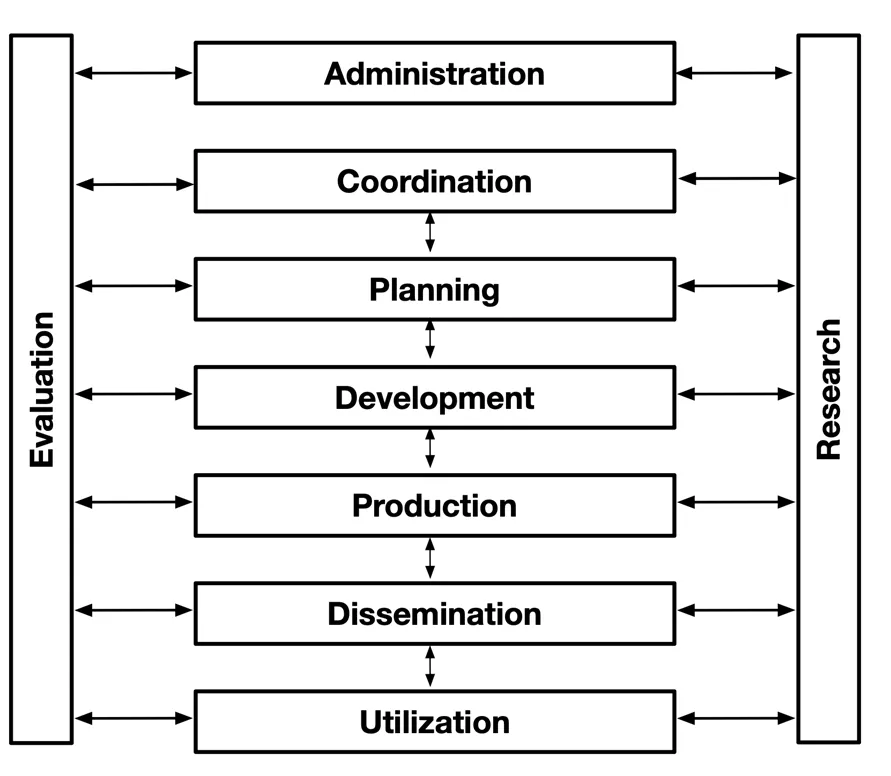
Figure 3.1 Primary functions of the personnel of Educational Radio and Television of Iran.
Administration. The Administrative Unit of ERTI provided comprehensive support to the entire organization. Their responsibilities included arranging for interviews and selecting new staff members, maintaining staff records, conducting periodic evaluations for staff retention and promotion, and managing budgeting and accounting services. Dr. Gus Root, a consultant to ERTI from Syracuse University, presented an extensive training program to the administrative staff. The staff acquired a variety of new skills such as developing questionnaires, organizing interview sessions, supervising data collection, and managing personnel retention and promotion procedures. To complement the on-the-job training, some staff members received formal training in systems theory, methodology and technology through the MBA program at IMO. As a result, the Administrative Unit played a pivotal role in implementing systems approach management principles to ERTI, which included organizing several seminars and conferences to coordinate ERTI’s activities with the MOE.
Coordination. The primary task of ERTI’s leadership and staff was to provide educational technology and communication support services to the MOE. Coordinating with the MOE, an institution established at least 60 years before ERTI, was challenging due to the persistence of old ideas within the MOE. Introducing new methods and procedures into the schools managed by the MOE required significant effort. To address these challenges, numerous conferences and meetings were held between the two organizations to align their activities. The scope and results of these efforts are detailed in Chapter Seven.
In the long term, NIRT leadership anticipated that other institutions would also be interested in collaborating with ERTI to enhance their educational and training capabilities through the use of communication media. These potential collaborators included The Free University of Iran, as well as government agencies such as the Ministry of Labor and Social Services who had a major role in workforce training. Therefore, planning for a future where ERTI not only collaborated with the MOE, but also with a wide range of other organizations was vital.
Planning. In 1973, ERTI had a very limited number of personnel relative to its immense national mission. Therefore, careful short-term planning was necessary to maximize the effectiveness of its resources. NIRT also had a contract with Stanford University to develop a long-term plan for ERTI. This plan included expanding educational and communication services throughout the country using a telecommunications satellite. The scope and results of these short-term and long-term planning processes are detailed in Chapter Ten.
Development. In the 1970s, educational broadcasters increasingly incorporated research on the effectiveness of media in learning when developing their programs. The success of programs like Sesame Street exemplified this practice. Similarly, the BBC produced successful educational radio and television programs for the British Open University by utilizing research in educational technology. Practitioners in the field demonstrated that media materials developed based on the principles of systems theory and learning psychology were significantly more effective than those produced solely on the instinctive and creative impulses of their producers (Gagne 1965, Kemp 1971, and Merrill 1971).
Successful producers, following research findings, began by identifying the specific learning needs of their audience and clearly stating the learning objectives of each program. Clear objectives informed learners of the main points and expectations after viewing a television program or listening to an instructional segment on radio. Defining these objectives in clear, observable, and measurable terms also guided classroom teachers in developing lesson plans for their students. These well-defined performance objectives also provided evaluators with the necessary criteria to assess learners’ achievement levels, evaluate teachers’ effectiveness, and measure the usefulness of each program.
The development responsibilities of ERTI staff included the following steps:
- Collecting data about the learning needs of students.
- Defining observable and measurable objectives and performance criteria for learners.
- Selecting instructional and learning strategies that lead learners to achieve stated objectives.
- Writing scripts that enable learners to reach learning objectives and embedding learning activities that guide learners to:
- Analyze the content of each program.
- Synthesize the content of each program in their own words.
- Engage in problem-solving and decision-making.
- Generate novel and creative ideas and solutions.
- Creating storyboards that embed instructional and learning strategies in each program.
- Producing media materials that enable learners to achieve specifically stated performance objectives.
- Disseminating programs via broadcasting and other means of communication, such as in-person workshops.
- Enabling teachers and students to utilize instructional programs based on development criteria specified in steps 3 and 4.
- Evaluating learners to ensure they have mastered the performance objectives delineated in step 2.
- Providing supportive feedback to students to refine their performance.
- Providing supportive feedback to all the professionals involved in the above processes to improve the quality of their work.
Production. Since its inception, ERTI producers created television programs primarily featuring lectures presented by expert teachers. However, Mr. Azadan, the Production Unit Manager, encouraged producers to further visualize their content by incorporating graphics, animated segments, dramatic sketches, documentary footage, interviews with experts, and other creative production elements. Embedding these production values was essential for producers to clearly illustrate fundamental instructional messages and present complex concepts more lucidly.
As ERTI producers increasingly utilized these techniques, they moved away from the traditional format of placing a teacher in front of the TV camera to present a lecture. Instead, they replaced the “talking head” approach with production values based on systemic program development criteria and principles of effective instructional message design. By incorporating these methods, producers created engaging new programs that addressed the entire range of learners’ behavioral, affective, and cognitive abilities, helping them master the instructional objectives of each lesson. Furthermore, these innovative programs encouraged students to engage in analytical thinking, problem solving, and creative tasks. This new form of teaching differed significantly from the traditional methods used in the MOE-managed schools.
At the time, classroom teaching methods did not engage students in creative and novel learning behaviors. Teachers merely recited content of textbooks to learners and expected them to be passive listeners. Students were supposed to memorize and repeat their teacher’s dictations exactly. Any deviation from the text or the teacher’s words indicated a lack of learning. This “recite and remember” form of teaching and learning was inherited from religious schools or maktabs, where clergy taught the Quran. Clergy strictly prohibited any deviation from the Quran’s words, expecting students to memorize and repeat each verse precisely. Compounding the challenge, the Quran was in Arabic, a language most students did not understand! Consequently, clergy did not require students to necessarily comprehend what they were reading. Most students memorized the verses without understanding or being able to analyze them. When the government established the MOE in the late 1800s, this rigid form of teaching and learning from religious schools fully permeated schools that were managed by the MOE. Even in subjects like science or math, teachers expected their students to memorize their textbooks and repeat the content word by word. Questions, inquiries, skepticism, and novel problem-solving were neither required in religious schools nor in those managed by the MOE.
In contrast, ERTI’s pedagogical approach significantly differed. (For a more detailed explanation of the pedagogical differences between ERTI and the MOE, see Chapter Six.) However, in the 1960s, when the government initiated its social reforms and development projects, the MOE made a modest adjustment to its curriculum to better address students’ needs (Institute for Research and Planning in Science and Higher Education, 1974). After much debate and delays, in 1967 MOE administrators decided to introduce a new three-year instructional period called the Guidance Cycle. This period was placed between the five years of elementary school and the four years of high school.
In the Guidance Cycle, a new class of professionals, or guidance counselors, were to provide career counseling and help students choose a track of study for their high school years. The available high school tracks were: 1) math and physical sciences, 2) biology and life sciences, 3) literature and arts, and 4) vocational education. However, the implementation of the Guidance Cycle progressed sluggishly due to a lack of adequate personnel. The MOE also continued to use the familiar recite-and-recall teaching methods in the Guidance Cycle. After several years of planning and consultation with various stakeholders, the MOE finally launched the Guidance Cycle in the 1971-1972 academic year with newly developed textbooks (General and Vocational Education Group, 1975). Consequently, in 1971, NIRT leaders decided to expand their collaboration with the MOE by focusing on producing and broadcasting television programs that supported the Guidance Cycle.
Dissemination. NIRT allowed ERTI to access its nationwide microwave transmission system to broadcast its programs from 8 a.m. to 5 p.m. Since Network One and Network Two only began broadcasting their news and entertainment programs at 5 p.m., this arrangement facilitated optimal use of broadcasting resources for educational purposes. During school hours, local NIRT centers relayed educational programs broadcasted from Tehran to their respective provinces, ensuring that the investment in covering the country with microwave transmitters and relay stations was primarily dedicated to education. To accommodate school schedules, programs were repeated in 15-minute intervals, enabling schools to align their instructional schedules with the televised content as best as possible. Later, NIRT leadership decided to further enhance the flexibility of local broadcast centers by transmitting ERTI programs from 12 a.m. to 8 a.m. Local stations recorded these overnight programs and rebroadcast them during the day, allowing for better coordination between the subjects taught in local classrooms with the content aired. ERTI staff also printed and distributed lesson plans for each program to teachers in classrooms with television sets. These lesson plans included the learning objectives of each program, as well as instructional and learning strategies that could be used by teachers and students to facilitate student mastery of these objectives. Providing these support materials in advance was essential for teachers to prepare for incorporating television programs into their classes. However, distributing the print materials efficiently proved problematic due to the logistical network that ERTI lacked at the time.
Additionally, NIRT planned to augment its nationwide microwave transmission systems with a telecommunication satellite. This satellite would provide ERTI with additional transmission flexibility, vastly increasing the duration and frequency of educational broadcasts. The satellite could also enable interactive sessions, allowing students to engage with their on-camera teachers and facilitating interactive training sessions for classroom teachers. (Details about the planning and involvement of Stanford University faculty in this project can be found in Chapter Ten.)
Utilization. Although early research confirmed the effectiveness of educational television compared to classroom instruction, further research by (Salomon, 1970). indicated that passive television viewing was less effective than when a teacher would:
- Present lesson objectives to learners before watching a program,
- Highlight important points in the lesson content,
- Engage learners in post-viewing activities, such as class discussions, simulation, and role-playing exercises, or laboratory work directly related to the televised programs’ objectives and content.
Throughout Iran, however, teachers were not trained in the proper use of television for classroom learning. As will be shown in Chapter Ten, it became clear to ERTI staff that professional development for MOE teachers was necessary to prepare them for teaching with television. Also, many school-age children lacked access to teachers, particularly in rural areas. ERTI addressed this by enlisting the Knowledge Corps (sepah-e-danesh) to mentor rural students in using televised instruction. The Knowledge Corps dispatched hundreds of military recruits with formal elementary or secondary education to teach in rural areas as their service to the country. Ideally, if ERTI staff provided service members with rudimentary training about how to teach with television, they could facilitate learning for school-age children in many villages and small towns. However, this plan required close coordination with the Imperial Iranian Ground Forces. At the time, such coordination was lacking, so ERTI leaders decided to postpone the preparation of Knowledge Corps members until ERTI had more qualified staff to handle this important task.
Moreover, government planners quickly realized that very few schools, even in the most prosperous urban neighborhoods, were equipped with television sets for students to view educational broadcasts. To address this problem, the Plan and Budget Organization provided financial resources to the MOE to purchase and distribute 5,000 black-and-white television receivers in 1973. With increased oil income in subsequent years, this number substantially increased, and included color sets. In addition to foreign manufacturers, a new but rapidly expanding domestic electronic manufacturing industry supplied these sets. However, these sets were designed for home use and were expensive. This motivated Mr. Ghotbi, an electronic engineer, to propose a new inexpensive design for television sets that could be mass produced for school use only. He began planning to establish a subsidiary for NIRT to manufacture these sets. Similar to plans for providing print support materials to teachers on a nationwide basis and training Knowledge Corps service members in using educational television in a meaningful number, this plan also did not materialize. The political atmosphere of 1978 slowed ERTI’s progress and eventually brought it to a halt in 1979.
Evaluation. From its inception, NIRT established a unit to gauge public opinion about its programs. However, the unit’s mission did not include evaluating the effectiveness of educational programs. Moreover, educational evaluation was a specialized field that (House, 1973; Popham, 1975) differed significantly from determining public opinion about their likes and dislikes of general television programs. While professionals in both fields used similar methods for creating questionnaires and collecting and analyzing data, ERTI personnel needed to conduct two specific types of educational assessments to fulfill their educational role properly: formative and summative (House, 1973).
The formative evaluation aimed to determine how well programs were developed and produced during these processes. Evaluators invited students to ERTI to view storyboards or preview various program segments in production. Depending on the students’ age and education level, evaluators either interviewed them or asked them to complete a questionnaire. The goal was to collect data on how producers could improve the programs’ likeability and efficacy during their creation.
On the other hand, the summative evaluation aimed to assess to what extent students mastered the objectives of each program after its production was completed. This evaluation inevitably reflected on the performance of ERTI staff who made the programs and classroom teachers who used them, making it a very sensitive process. The Evaluation Unit at ERTI handled their tasks with utmost sensitivity toward the rest of their colleagues at ERTI and the administrators and teachers in the MOE. (Activities of the Evaluation Unit are further explained in Chapter Eight.)
Research. Planners for both the short-term and long-term future of ERTI recognized the need for research projects directly related to its functions. Such research required highly skilled individuals, ideally with doctoral degrees. At the time, there was a shortage of professionals with advanced qualifications in fields relevant to ERTI’s needs, so research activities began modestly and expanded gradually in three phases:
- Phase One: ERTI staff built a library of contemporary educational research materials, including articles in scholarly journals, monographs, and books in both Farsi and English (see the sections about the Center for Information Services and Learning Resource Centers in Chapter Eight).
- Phase Two: Researchers extended collecting data on the effectiveness of televised programs in selected classrooms (see the section titled First Summative Evaluation Studies in Chapter Eight).
- Phase Three: The focus would shift to conducting basic research in the sociology and psychology of education, as well as the systems approach to management and organization development. The aim was for these studies to be published in refereed international professional journals and presented at international scholarly conferences. The initial effort in this area was a paper presented by Dr. Root and this author to an IEEE conference in Washington D.C. (Saba & Root, 1977).This paper detailed the short-term planning and reorganization of ERTI using the systems approach, which included the development of a computer model of ERTI using the simulation language DYNAMO. Additionally, the paper described how the data collected was used to run the DYNAMO model on a mainframe computer in order to simulate ERTI’s organizational behavior in various time intervals in the future.
Reorganization: The Grid Theory of Management
As such, ERTI identified the above nine interrelated functions that were essential for enhancing its organizational effectiveness and improving its responsiveness to the needs of its clients and multiple audiences. However, as a small organization, it lacked the manpower to implement all of these functions simultaneously across all programs. To overcome this challenge, ERTI required a structure that would allow its staff to optimally carry out these nine functions. This author, during a consulting session with Dr. Root, found a solution in the Mouton Grid Model for organizations. Researchers Robert R. Blake and Jane Mouton (1964) introduced this model in 1964, to provide a framework for optimal coordination among staff from various units. This optimization was achieved by placing the staff in collaborative nodes on a grid (see Figure 3.1 ERTI’s Grid Organization Chart).
In this grid structure, staff members from different units, each with distinct expertise, formed groups or nodes to tackle specific projects. As illustrated in Figure 3.1, these nodes allowed for collaborative planning, realistic goal-setting, and efficient role execution, leading to the successful completion of projects or delivery of services. Blake and Mouton’s model not only optimized performance and overall productivity but also reduced staff anxiety by promoting a sense of shared purpose. As such, the grid model supported the concept of the systems approach to managing at ERTI. To implement this model, Mr. Azadan, the Production Unit manager, selected project managers for each node from the pool of producers, later expanding to include educational technologists as they joined the staff. Project managers were selected based on their leadership skills, performance, and ability to earn the respect and loyalty of their teams, which included directors, camera operators, sound technicians, graphic artists, subject matter experts, and on-camera teachers.
While most producers, directors, and graphic artists in a node came from ERTI’s Production Unit, other critical roles came from other units of NIRT, such as camera operators and sound technicians since ERTI lacked its own technical unit. In addition, subject matter experts and on-camera teachers were sourced from the MOE. Despite their varied backgrounds, all professionals in a node shared a common goal: producing a radio or television program. This shared purpose fostered a sense of ownership in the project and commitment to its success. Once a project was completed, the node disbanded, and its members were reassigned to new project nodes. This flexible structure allowed ERTI to deploy staff where they were needed most, mitigating scarcity of human resources as much as possible while leveraging the expertise of the staff responsible for carrying out each of the organization’s nine functions.
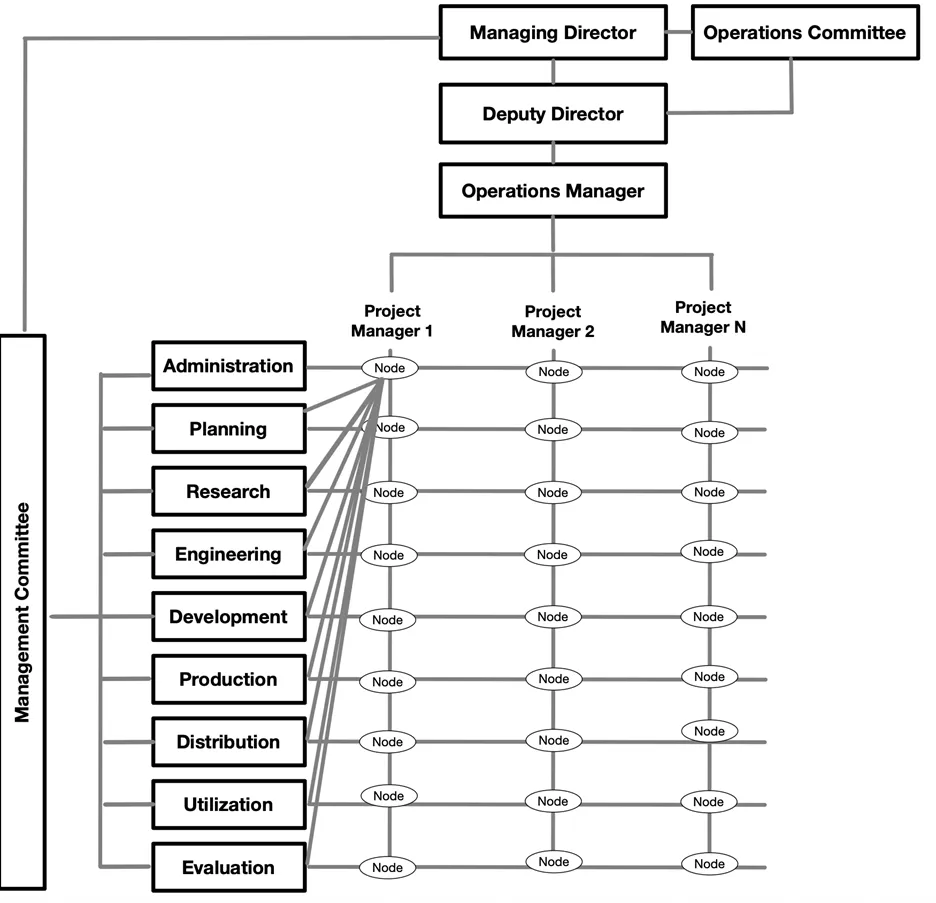
Figure 3.2- ERTI Grid Organization Chart
The reorganization of ERTI, based on the systems approach to management, had the full support of NIRT’s leaders. Their backing extended beyond just organizational restructuring to include the adoption of educational technology. The core concept of educational technology was the application of systems theory, methodology, and technology to solve educational challenges. The rationale behind its adoption at ERTI is explained in the next chapter.
References
Ackoff, R. L., & Emery, F. E. (1981). On purposeful systems. Routledge.
Bennett, A. C., & Stout, W. J. (1971). Focus on management methods: How the systems approach aids administrative problem-solving. Hospital Topics, 49(11), 42-48.
Blake, R. R., & Mouton, J. S. (1964). The managerial grid: Key orientations for achieving production through people. Gulf Publishing Company.
Churchman, C. W. (1968). The systems approach. Delacorte Press.
Forrester, J. W. (1961). Industrial dynamics. Pegasus Communications.
Gagne, R. (1965). The conditions of learning. Holt, Rinehart and Winston.
General and Vocational Education Group. (1975). A preliminary study on guidance cycle in the new system of education in Iran. Institute of Scientific and Educational Research and Planning.
House, E. R. (1973). Technology and evaluation. Educational Technology, 13(11), 20-26.
Institute for Research and Planning in Science and Higher Education. (1974). A preliminary study on guidance cycle in the new system of education in Iran. Ministry of Science and Higher Education.
Jenkins, G. M., & Youle, P. V. (1968). A systems approach to management. Decision Making, 19(April), 5-21.
Kemp, J. (1971). Instructional design: A plan for unit and course development. Fearson Publishers.
Mantell, L. H. (1972). The systems approach and good management: An argument for the “whole” approach. Business Horizons, 15(5), 43-51.
Merrill, D. (1971). Instructional design: Readings. Prentice-Hall.
Mousavian, S. N., Sumner, S., Aminrazavi, M., & Van Brummelen, G. (2023). Umar Khayyam. Stanford Encyclopedia of Philosophy. https://plato.stanford.edu/entries/umar-khayyam/
Popham, W. J. (1975). Educational evaluation. Prentice-Hall.
Saba, F. (1976). The evolution of educational technology in Iranian education [Unpublished Doctoral Dissertation.] Syracuse University.
Saba, F., & Root, G. (1977). Educational television: A new frontier. International Conference on Cybernetics and Society, Washington, DC.
Salomon, G. (1970). “What does it do to Johnny?” Viewpoints, 46(5), 33-62.
Somerville, J. D. (1974). A systems approach to management development. Personnel Journal, 53(5), 367-371.
Zeira, Y. (1974). The systems approach to management development: Studies in frustration and failure. Organizational Dynamics, 3(2), 64-80.